Artwork
Que nous sommes bêtes d'avoir une peur pareille...
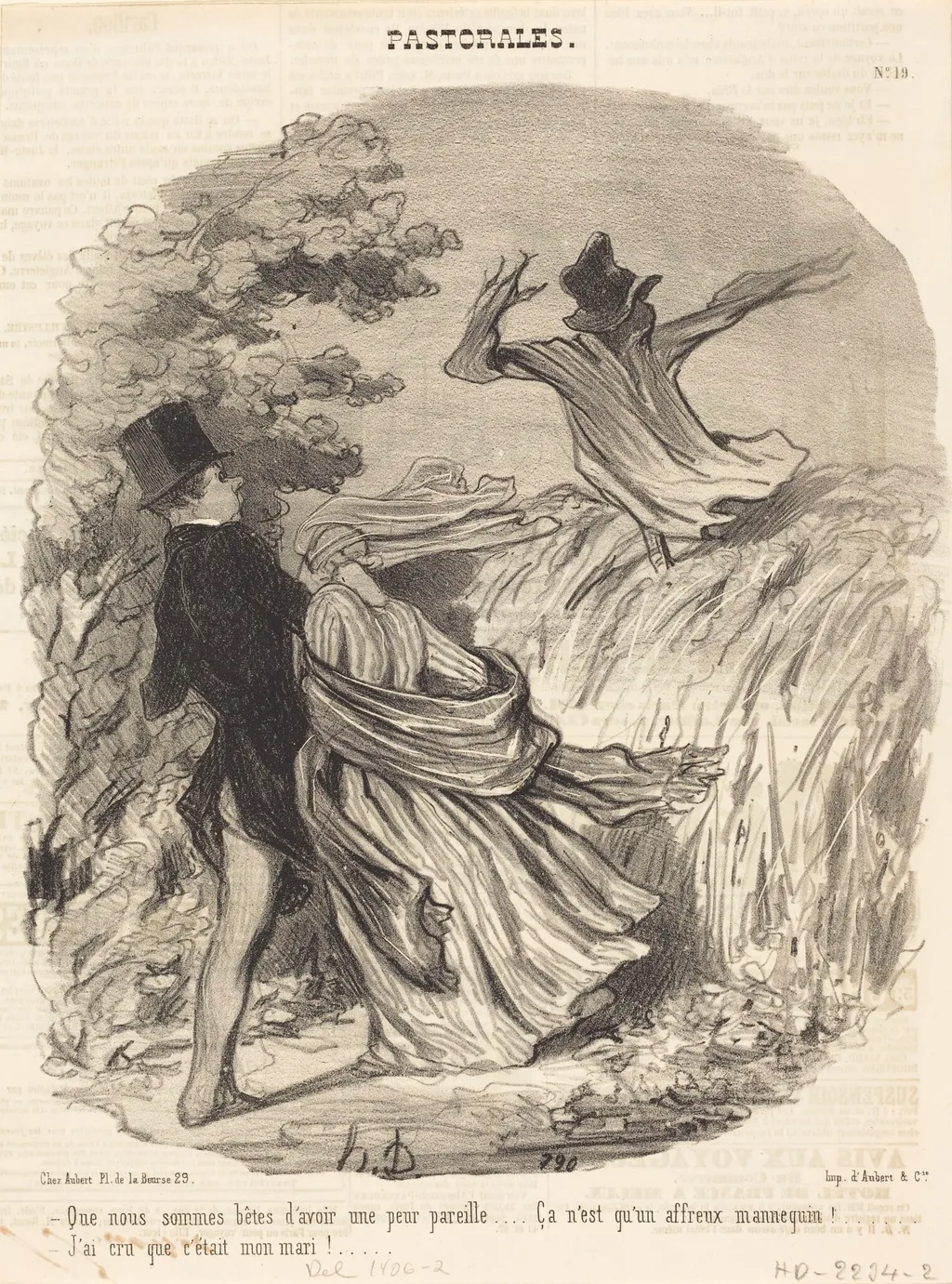
Que nous sommes bêtes d'avoir une peur pareille... is an ink print by the Romanticist artist Honoré Daumier. It dates from 1845 and is held in the collection of the National Gallery of Art.
About this work
Overview
Printed in a mass-circulation format, it was part of Daumier’s broader effort to deliver social critique through accessible visual media.
Created in 1845, this lithograph on newsprint by Honoré Daumier captures a moment of absurd struggle against natural forces. Printed in a mass-circulation format, it was part of Daumier’s broader effort to deliver social critique through accessible visual media. The work belongs to a series of satirical prints published in French periodicals, where political and cultural anxieties were rendered with wit and visual economy.
Subject & Meaning
Two figures, one in a long coat and hat, are caught in a violent gust of wind, while the other clings desperately to prevent his companion from being swept away. The scene mocks irrational fear and human folly, suggesting that societal panic—perhaps over political instability or class upheaval—is as futile as resisting a storm. The exaggerated physical struggle serves as an allegory for misplaced dread in the face of inevitable change.
Technique & Style
Daumier employed bold, fluid lines and stark contrasts of light and shadow to convey motion and tension. The lithographic process on newsprint allowed for rapid production and wide distribution. His expressive draftsmanship, though rooted in realism, leans into dramatic exaggeration, emphasizing emotional intensity over anatomical precision. The composition’s diagonal energy and turbulent background reinforce a sense of uncontrollable force.
History & Provenance
The print originated in the context of Daumier’s regular contributions to *Le Charivari*, a satirical journal that frequently faced censorship for its political commentary. Created during the July Monarchy, a period of fragile liberal governance, the work reflects the artist’s ongoing critique of authority and public hysteria. Its survival on fragile newsprint underscores its original function as ephemeral media, later valued for its historical insight.
Context
Daumier worked amid recurring revolutions and shifting regimes in France, where public sentiment was volatile and the press a battleground for ideas. His imagery responded to the anxieties of a society grappling with modernization, class conflict, and the collapse of traditional hierarchies. This print channels the era’s unease, transforming natural phenomena into metaphors for political instability and collective irrationality.
Legacy
Though created for immediate public consumption, the lithograph endures as a precise example of 19th-century social satire. Daumier’s ability to distill complex societal tensions into single, vivid images influenced later generations of cartoonists and realist artists. His use of everyday materials and populist themes helped redefine printmaking as a vehicle for critical public discourse beyond elite artistic circles.
Artist & collection

Artist
Honoré-Victorin Daumier was a French painter, sculptor, and printmaker, whose many works offer commentary on the social and political life in France, from the Revolution of 1830 to the fall of the Second French Empire in 1870.









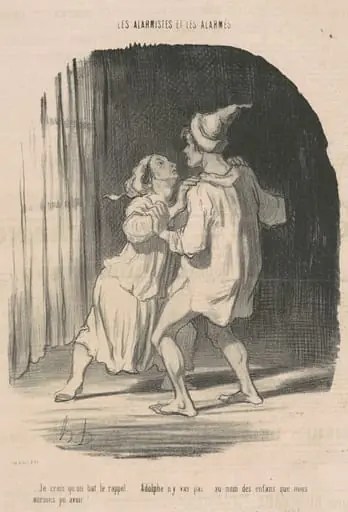 Je crois qu'on bat le rappel ...
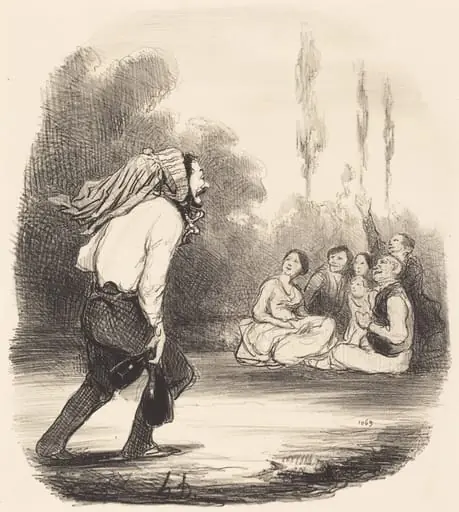 Le Plus farceur de la société
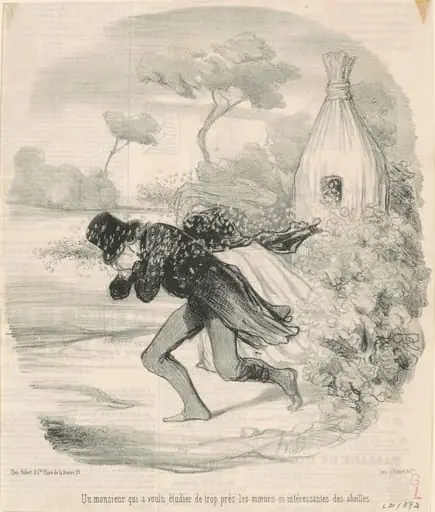 Un monsieur qui voulu étudier ... les moeurs ... des abeilles
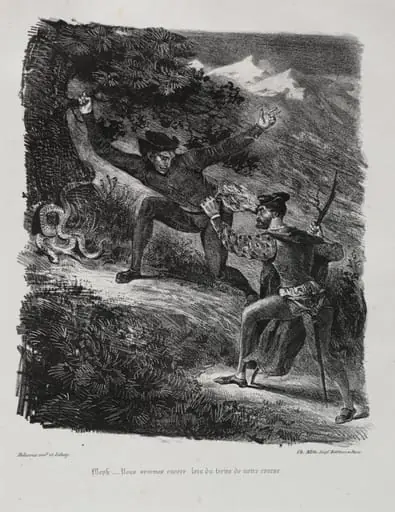 Illustrations for Faust: Faust and Méphistophélés in the mountains of the Hartz
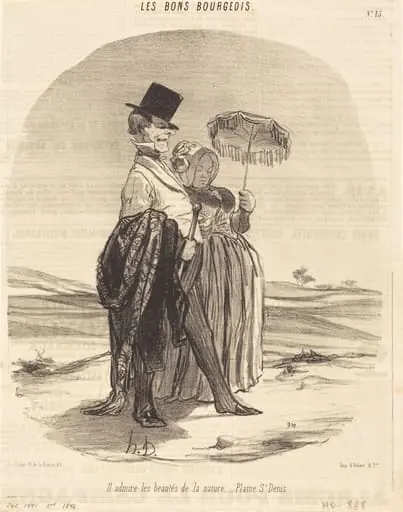 Il admire les beautés de la nature - Plaine St. Denis
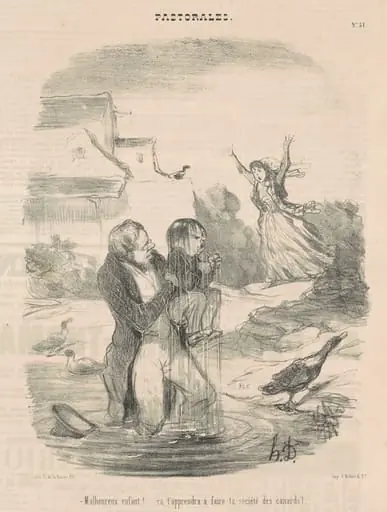 Malheureux enfant! ... Ca t'appendra a faire ...
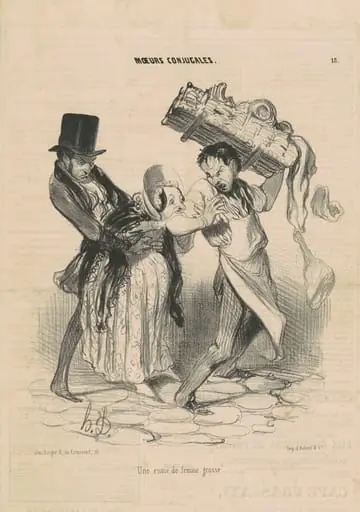 Une envie de femme grosse
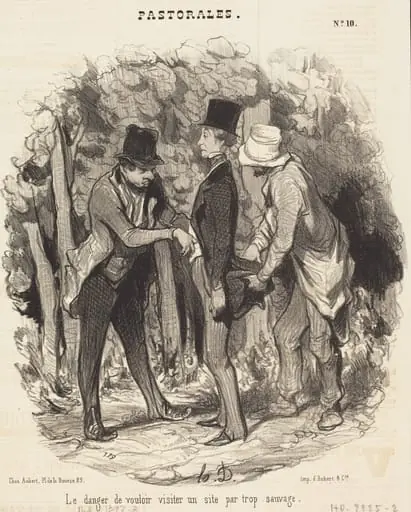 Le Danger de... visiter un site par trop sauvage
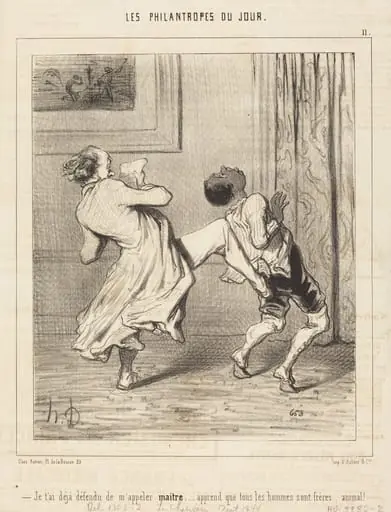 Je t'ai déjà défendu de m'appeler maitre...
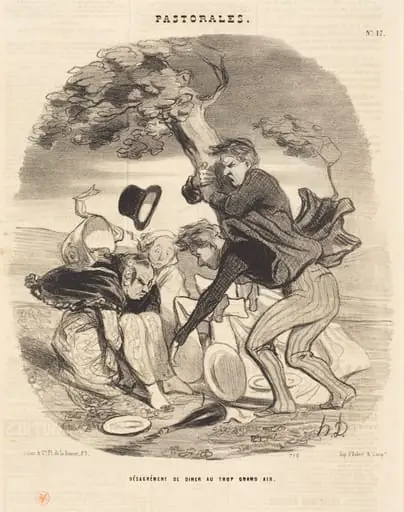 Désagrément de diner au trop grand air