Artwork
Macbeth Consulting the Witches
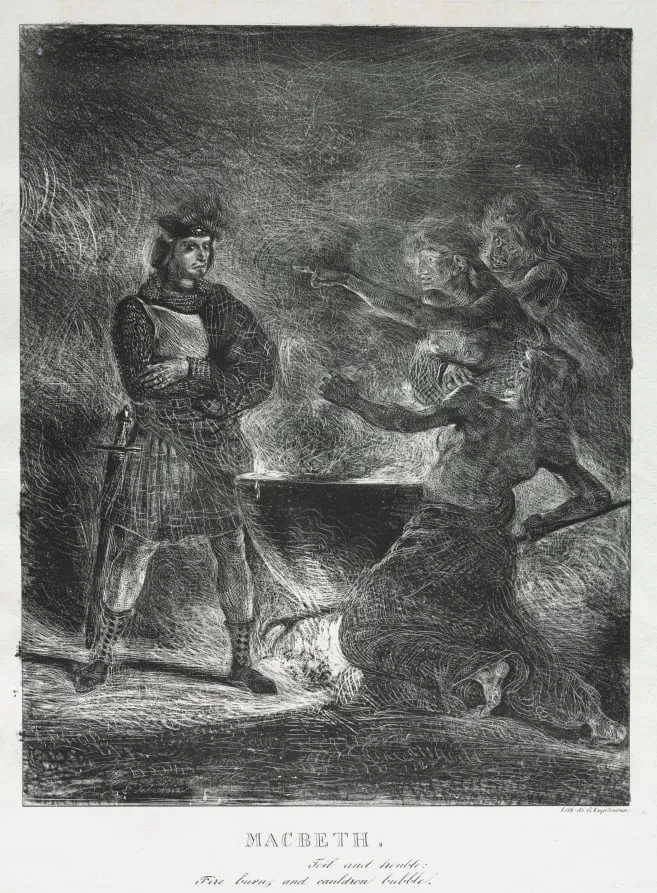
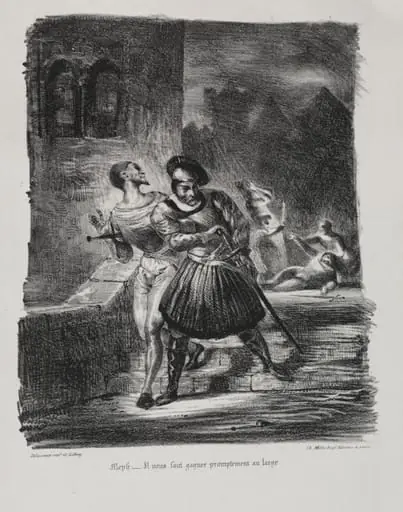
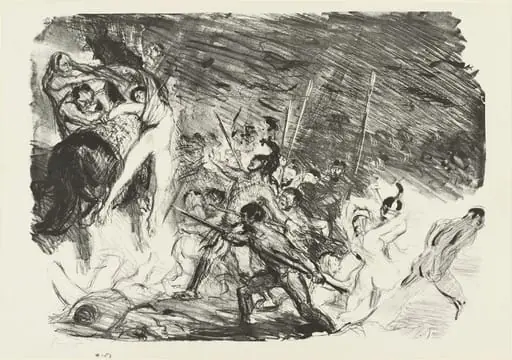
Macbeth Consulting the Witches is a print by the Romanticist artist Eugène Delacroix. It dates from 1825 and is held in the collection of the Cleveland Museum of Art.
About this work
Overview
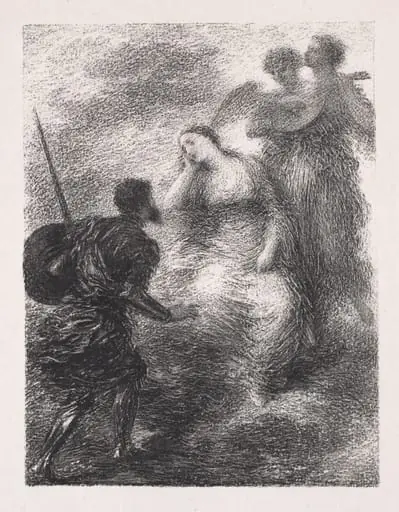
This lithograph by Eugène Delacroix depicts a scene from Shakespeare’s Macbeth, capturing the moment the Scottish lord consults supernatural figures in a shadowed, otherworldly setting. Delacroix employed lithography not as a mere reproductive method but as a medium for expressive experimentation, using its tactile qualities to evoke mood and tension.
Subject & Meaning
The scene portrays Macbeth surrounded by three witches gathered around a steaming cauldron, their forms emerging from darkness as if summoned by the very air. The composition conveys dread and moral ambiguity, reflecting Macbeth’s descent into ambition and the occult. The witches’ presence is not merely decorative but central to the psychological weight of the moment.
Technique & Style
Delacroix covered the lithographic stone with dense black crayon, then scraped away areas to reveal light, creating stark contrasts between shadow and form. This subtractive method mimics chiaroscuro, emphasizing volume and depth without traditional modeling. The rough, incised lines enhance the scene’s raw, eerie atmosphere, aligning technique with subject matter.
History & Provenance
Created in 1848, this print was part of Delacroix’s broader engagement with literary themes and printmaking during his later years. Though not widely exhibited at the time, it entered private collections and later institutional holdings, valued for its technical innovation and its rare fusion of Romantic sensibility with the emerging medium of lithography.
Context
In mid-19th-century France, lithography was gaining traction as an artistic medium beyond commercial use. Delacroix, already renowned for oil paintings, turned to it to explore darker, more intimate narratives. His interest in Shakespeare and the supernatural mirrored broader Romantic preoccupations with fate, madness, and the unseen forces shaping human action.
Legacy
Delacroix’s approach to lithography influenced later artists seeking expressive potential in printmaking. His use of direct carving into the stone, prioritizing emotional impact over precision, expanded the medium’s possibilities. This work remains a key example of how technical experimentation can deepen narrative resonance in visual art.
Artist & collection
Artist
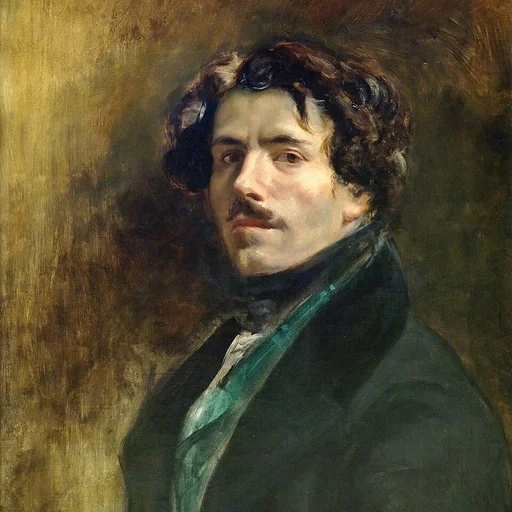
Ferdinand Victor Eugène Delacroix ( DEL-ə-krwah, -KRWAH; French: ; 26 April 1798 – 13 August 1863) was a French Romantic artist who was regarded as the leader of the French Romantic school.