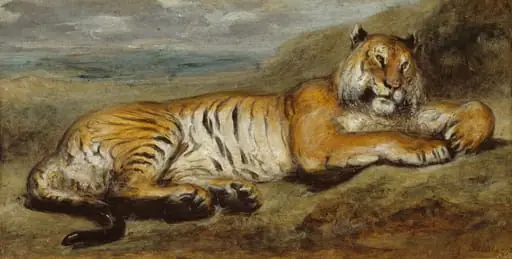
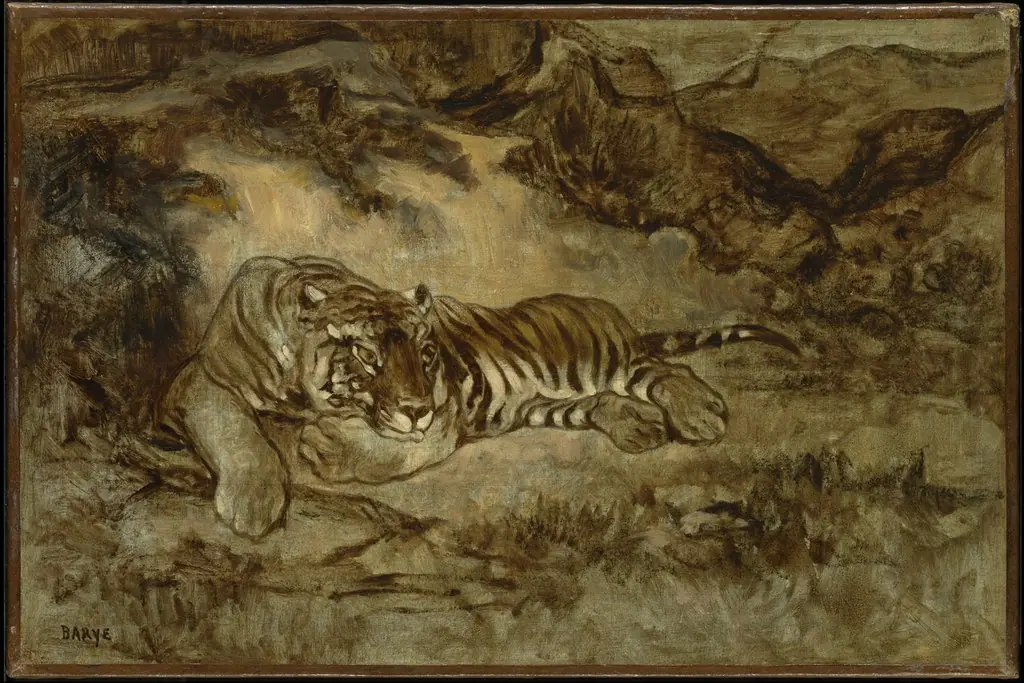
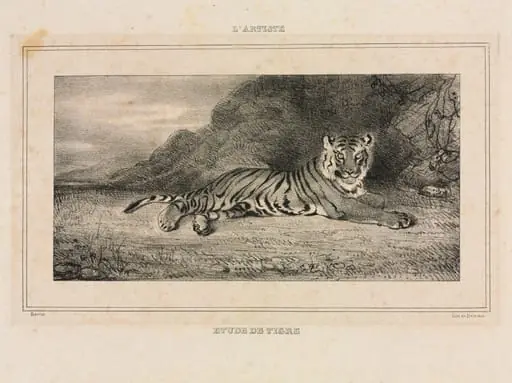
Artwork
Tiger Sleeping at the Entrance to His Lair
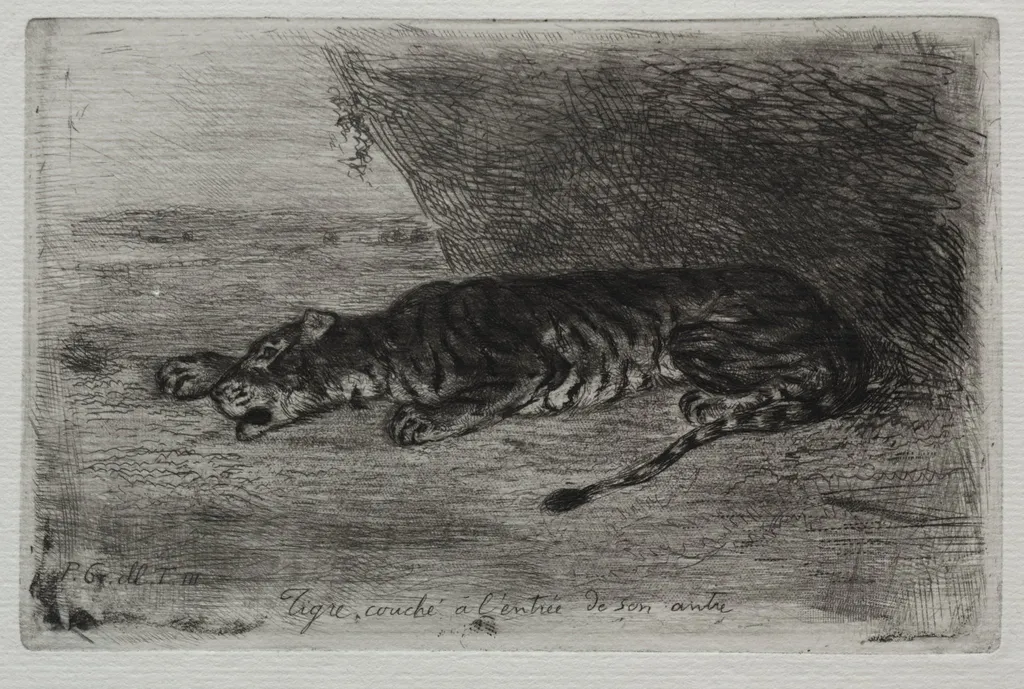
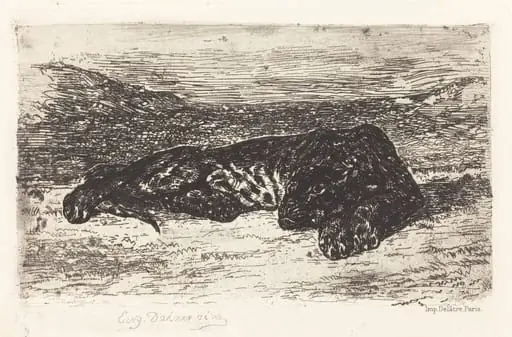
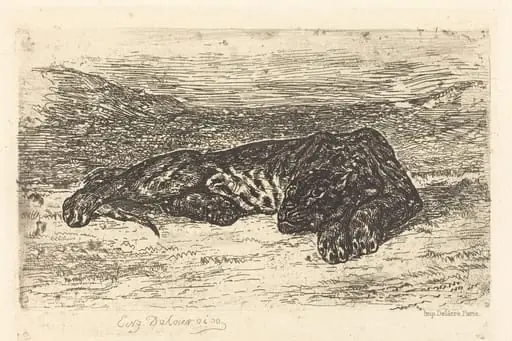
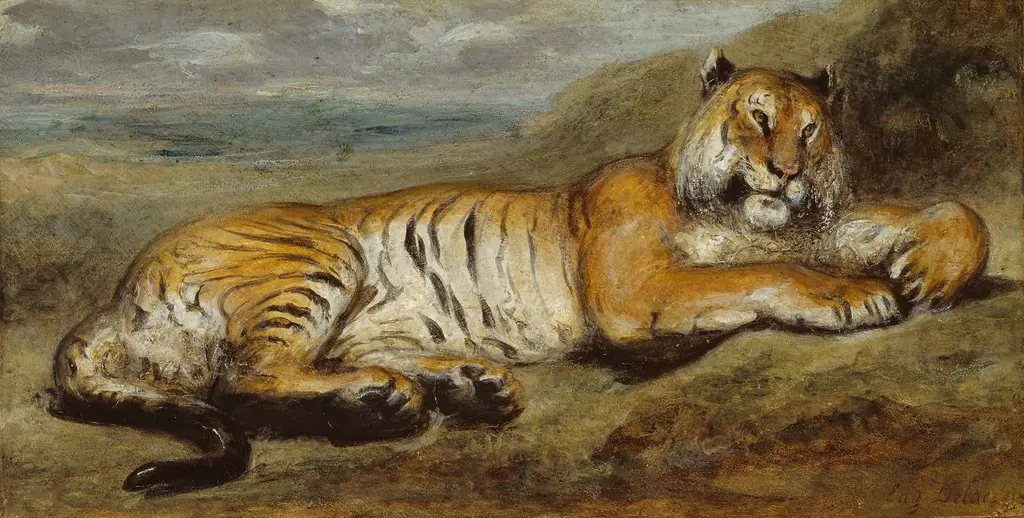
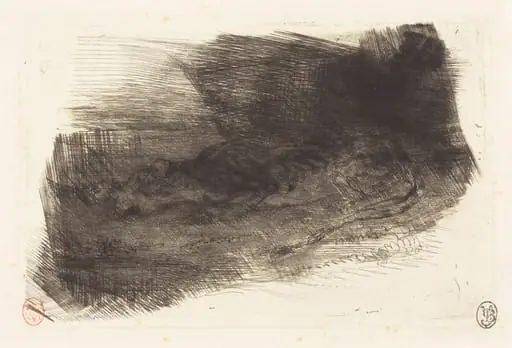
Tiger Sleeping at the Entrance to His Lair is a print by the Romanticist artist Eugène Delacroix. It dates from 1829 and is held in the collection of the Cleveland Museum of Art.
About this work
Overview
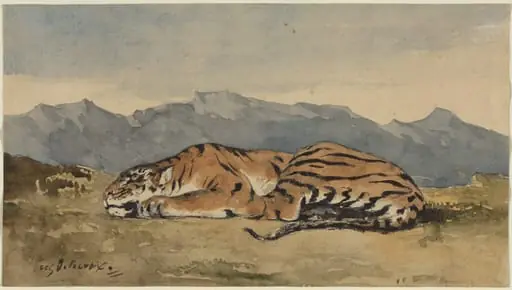
Created around 1829, this print by Eugène Delacroix captures a tiger at rest near the mouth of its rocky den. Though often associated with oil painting, Delacroix also worked in printmaking, using the medium to explore themes of wild nature and quiet tension. The image reflects his fascination with animals as symbols of untamed energy, rendered not as threats but as beings in repose.
Subject & Meaning
The tiger, neither attacking nor fleeing, embodies a moment of stillness within the wild. Its placement at the lair’s entrance suggests a threshold between safety and danger, silence and potential violence. Delacroix avoids anthropomorphism; the animal is presented with psychological depth but without human narrative, inviting contemplation of nature’s autonomy.
Technique & Style
Delacroix employed warm, earthy tones to model the tiger’s fur and the surrounding rock, emphasizing texture through subtle gradations rather than sharp outlines. The handling of light suggests an awareness of chiaroscuro, though softened to suit the quiet mood. His brushwork, even in print, retains a sense of fluidity and organic form, distancing the work from rigid academic conventions.
History & Provenance
The print emerged during a period when Delacroix was deeply engaged with animal subjects, following his 1825 trip to North Africa.
The print emerged during a period when Delacroix was deeply engaged with animal subjects, following his 1825 trip to North Africa. Though the exact provenance of this specific print is not fully documented, it aligns with his broader output from the late 1820s, when he was refining his visual language through repeated studies of lions and tigers, often based on sketches from the Jardin des Plantes.
Context
In contrast to the idealized forms of Neoclassicism, Delacroix’s work embraced emotional intensity and sensory richness. His interest in Rubens and Venetian colorists led him to prioritize atmosphere and movement. This print fits within a wave of Romantic-era art that sought to evoke the sublime through nature’s raw presence, rather than through mythological or historical allegory.
Legacy
Though less celebrated than his large-scale canvases, this print exemplifies Delacroix’s ability to convey power through restraint. It influenced later artists interested in animal subjects and atmospheric tone, contributing to a shift in 19th-century printmaking toward expressive, non-narrative imagery. Its quiet intensity remains a quiet counterpoint to the era’s more dramatic Romantic tropes.
Artist & collection
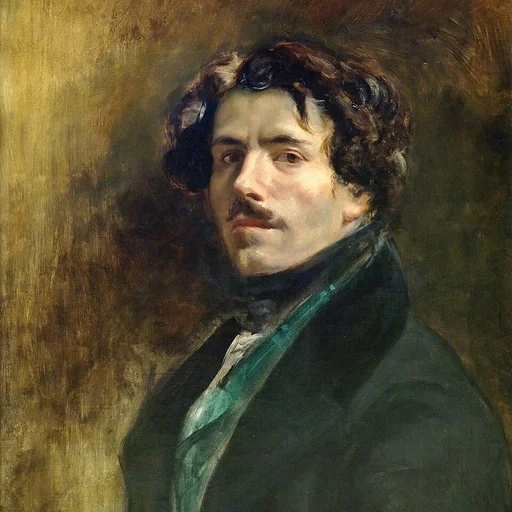
Artist
Ferdinand Victor Eugène Delacroix ( DEL-ə-krwah, -KRWAH; French: ; 26 April 1798 – 13 August 1863) was a French Romantic artist who was regarded as the leader of the French Romantic school.