Artwork
Tiger Resting
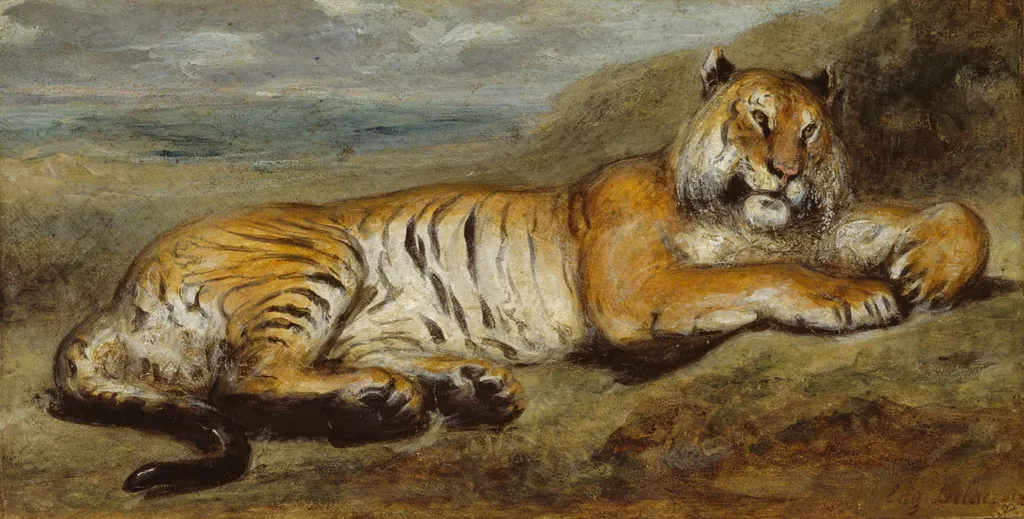
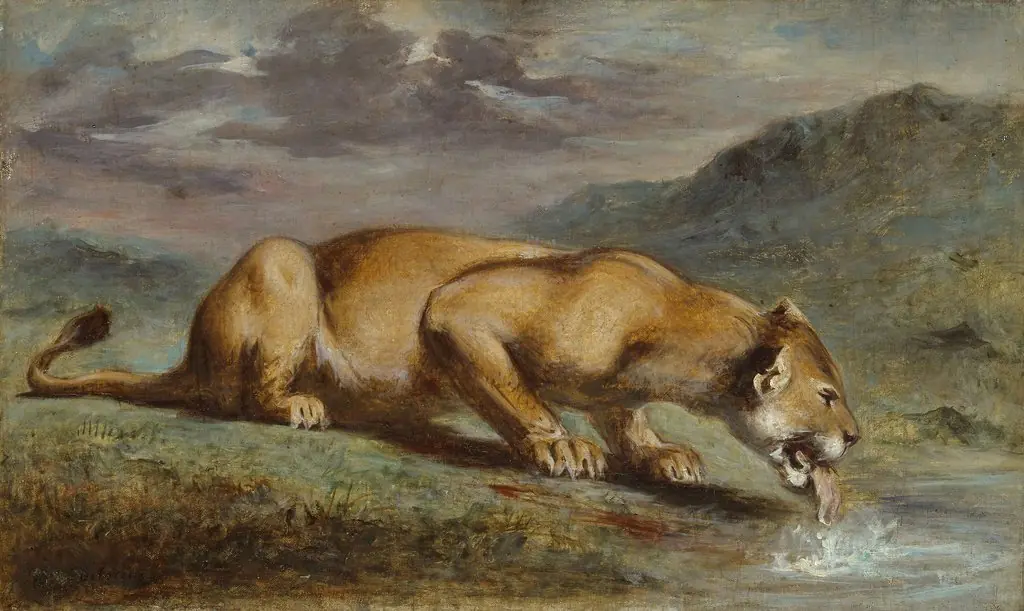
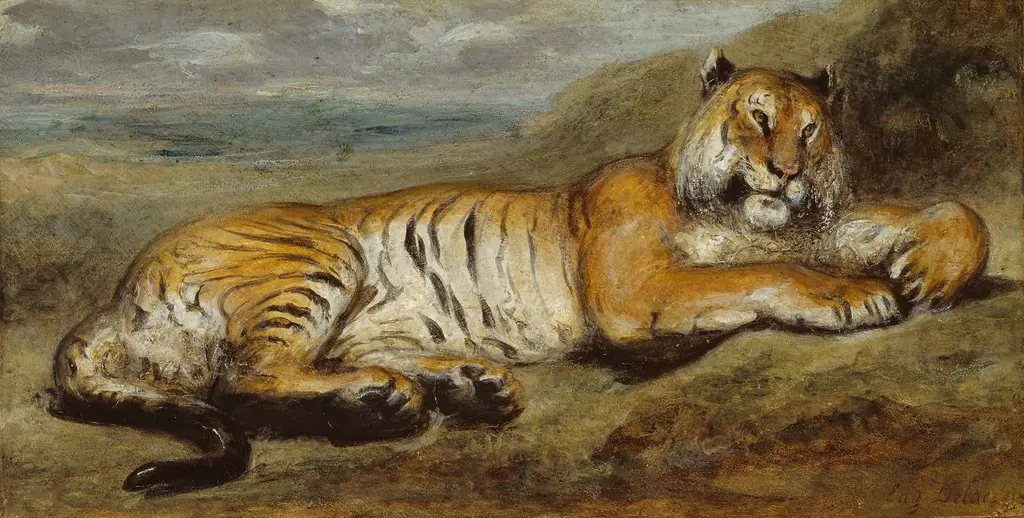
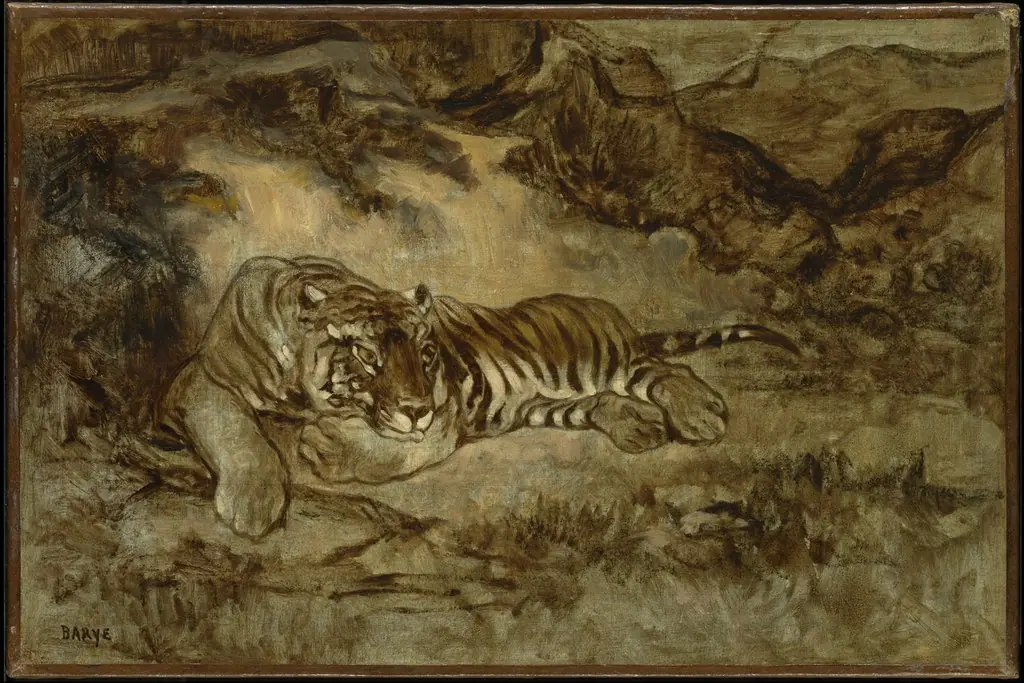
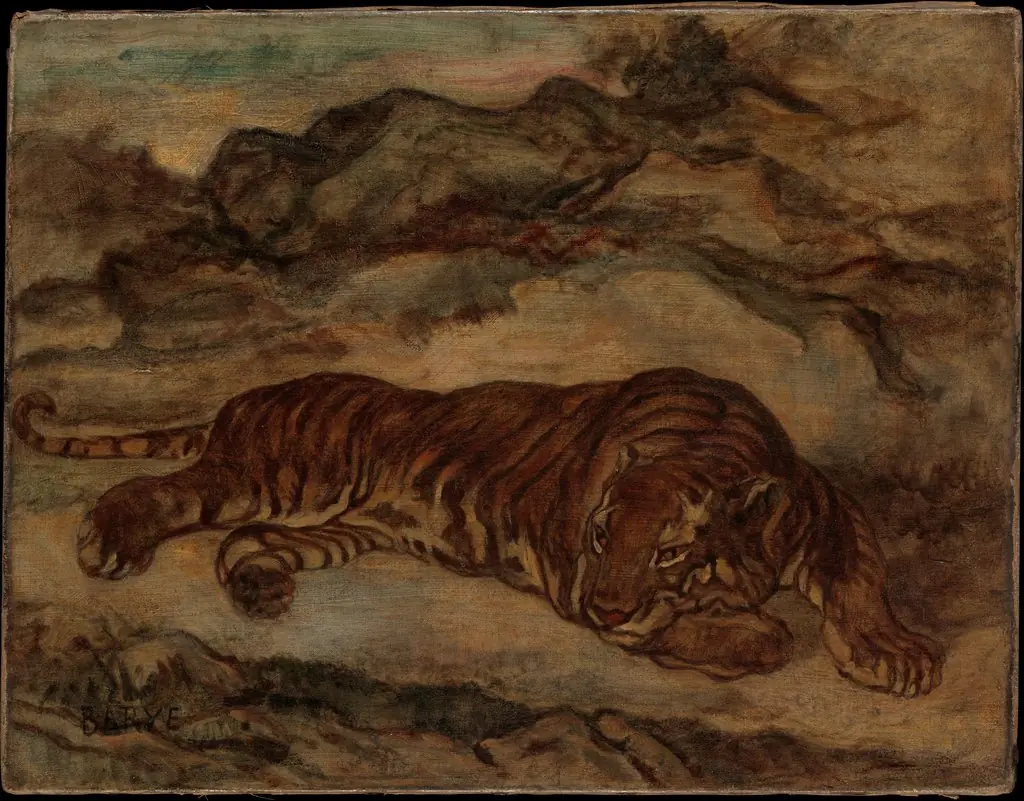
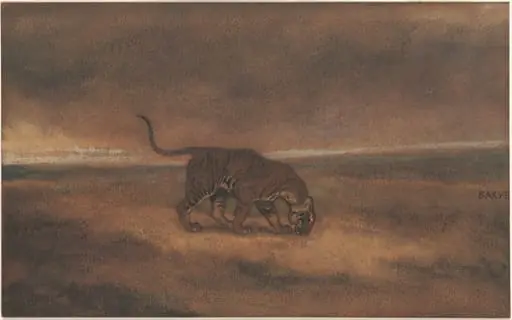
Tiger Resting is an oil painting by the Romanticist artist Pierre Andrieu. It dates from 1845 and is held in the collection of the Art Institute of Chicago. This oil on canvas painting depicts a tiger in repose, its form dominating the composition.
About this work
Overview
The tiger’s presence is immediate and unadorned, drawing attention to its physicality rather than any narrative context.
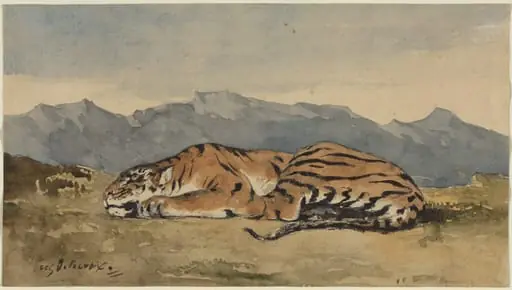
This oil on canvas painting depicts a tiger in repose, its form dominating the composition. The animal lies horizontally across the surface, its body nearly touching the edges of the frame. Behind it, a muted expanse of gray sky meets a strip of blue water, grounding the scene in a quiet, open landscape. The tiger’s presence is immediate and unadorned, drawing attention to its physicality rather than any narrative context.
Subject & Meaning
The tiger is rendered without symbolic embellishment or human association, emphasizing its natural state. Its stillness suggests a moment of pause in the wild, free from threat or action. The lack of overt drama or anthropomorphism invites contemplation of the animal’s autonomy and presence in its environment, reflecting a quiet reverence for wildlife rather than a moral or mythological allegory.
Technique & Style
Bold, directional brushwork defines the tiger’s fur and the rugged terrain beneath it, creating a tactile surface that contrasts with the smoother washes of sky and water. The artist employs chiaroscuro to model the tiger’s form, using strong contrasts between light and shadow to suggest volume and depth. Color is applied with confidence, avoiding fine detail in favor of expressive, gestural marks that convey texture and mass.
History & Provenance
The painting’s origin and early ownership are not documented in available records. It has remained in private collections since its creation, with no public exhibition history prior to the 20th century. Its survival in relatively intact condition suggests careful handling, though no significant alterations or restorations are known.
Context
Created during a period when Western artists increasingly turned to exotic animals as subjects, this work aligns with a broader interest in naturalism and the observation of wildlife. Unlike theatrical zoo paintings of the era, this piece avoids spectacle, focusing instead on the animal’s solitary presence. It reflects a shift toward intimate, unidealized depictions of nature in 19th-century art.
Legacy
The painting contributes to a quieter strand of animal portraiture that prioritizes observation over symbolism. While not widely reproduced or cited in major art historical narratives, its directness and technical clarity have influenced later artists seeking to portray wildlife with dignity and physical authenticity, without romanticization.
Artist & collection