Artwork
Voyages pittoresques et romantiques dans l'ancienne France. Bretagne: Abbaye de Relec
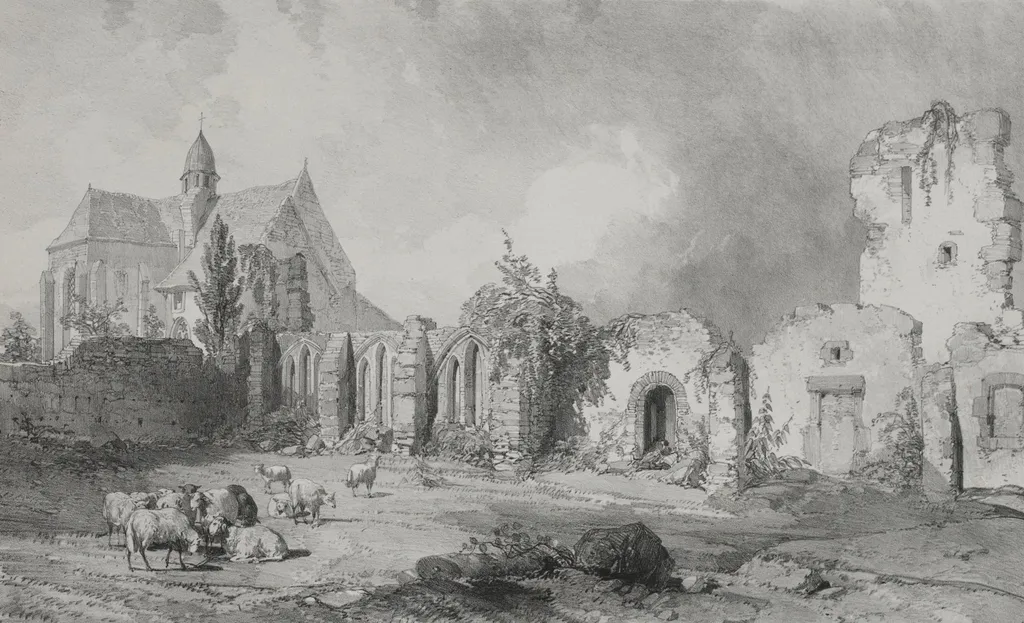
Voyages pittoresques et romantiques dans l'ancienne France. Bretagne: Abbaye de Relec is a print by the Romanticist artist Eugène Ciceri. It dates from 1845 and is held in the collection of the Cleveland Museum of Art. Created around 1845 by Eugène Cicéri, this print is part of a larger series documenting historic sites in France.
About this work
Overview
Its tone reflects a fascination with France’s medieval past, presented not as grand monument but as quietly reclaimed by time and daily life.
Created around 1845 by Eugène Cicéri, this print is part of a larger series documenting historic sites in France. It depicts the ruins of Relec Abbey in Brittany, rendered with a delicate, atmospheric quality. The work was produced as a lithograph, intended for publication in a travel-oriented illustrated volume. Its tone reflects a fascination with France’s medieval past, presented not as grand monument but as quietly reclaimed by time and daily life.
Subject & Meaning
The scene centers on the weathered stone remains of an abbey, its arches and walls softened by erosion and vegetation. In the foreground, sheep graze along a dirt path, and a dog rests nearby—elements of ordinary rural life that contrast with the abandoned sacred architecture. This juxtaposition suggests a meditation on transience: religious structures, once centers of devotion, now serve as passive backdrops to the rhythms of nature and animal existence.
Technique & Style
Cicéri employed lithography to achieve a soft, sketchlike texture, with light washes and loose lines that evoke the hazy quality of early morning light. The composition avoids sharp detail, favoring atmospheric suggestion over precision. This approach aligns with Romantic-era aesthetics, where emotional resonance and mood took precedence over topographical accuracy. The rendering of stone and sky blends seamlessly, reinforcing a sense of quiet decay.
History & Provenance
The print was produced as part of the multi-volume series Voyages pittoresques et romantiques dans l'ancienne France, published in the 1840s. It was likely distributed to a middle-class audience interested in national heritage and scenic travel. The Cleveland Museum of Art acquired the work as part of its collection of 19th-century European prints, preserving it as an example of illustrated antiquarianism from the period.
Context
In mid-19th-century France, interest in medieval ruins surged amid growing nationalism and Romantic nostalgia. Artists and writers sought to reconnect with a pre-revolutionary past, often portraying decay as poetic rather than tragic. Cicéri’s depiction of Relec Abbey fits this trend, presenting ruins not as failures of history but as serene witnesses to the passage of time, harmonized with the rhythms of rural life.
Legacy
Cicéri’s print contributes to a broader visual record of France’s architectural heritage during a period of rapid modernization. While not widely known today, such works helped shape public perception of historic sites as places of quiet contemplation rather than political symbols. The image remains a quiet example of how Romantic sensibility transformed archaeological interest into lyrical observation.
Artist & collection
Artist
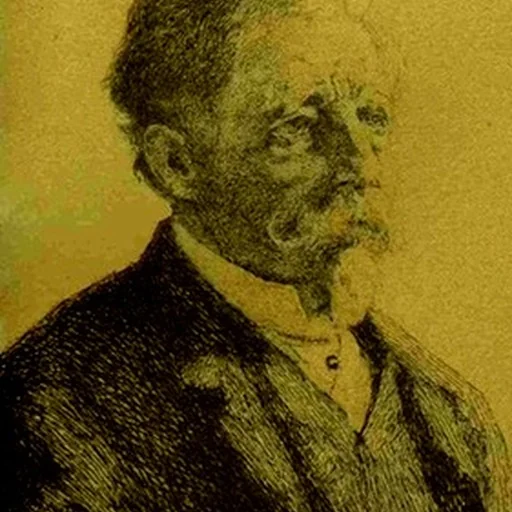
Étienne Eugène Cicéri (27 January 1813 – 20 April 1890) was a French painter, illustrator, engraver and theatrical designer.

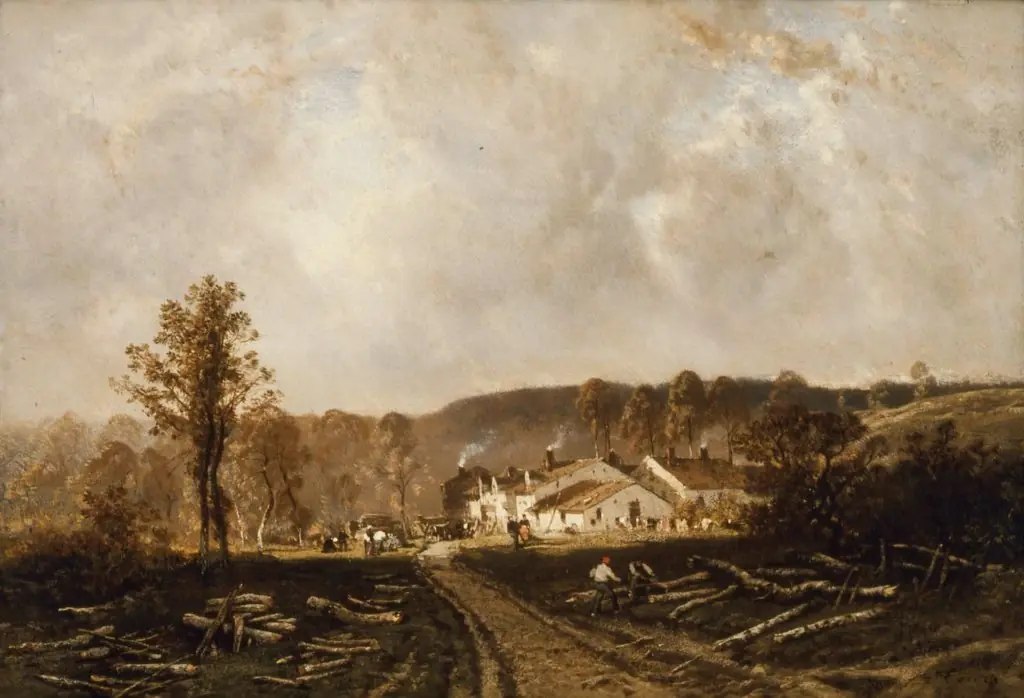 Village of Bouron
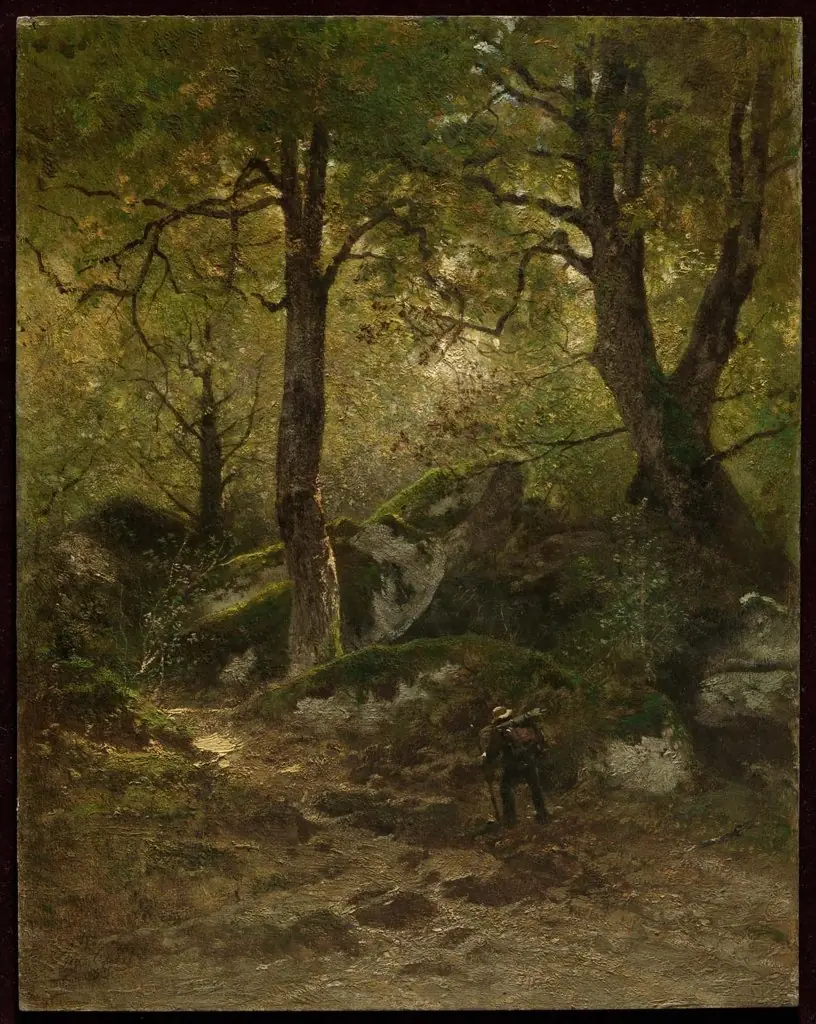 Artist in the Gorge aux Loups, Forest of Fontainebleau
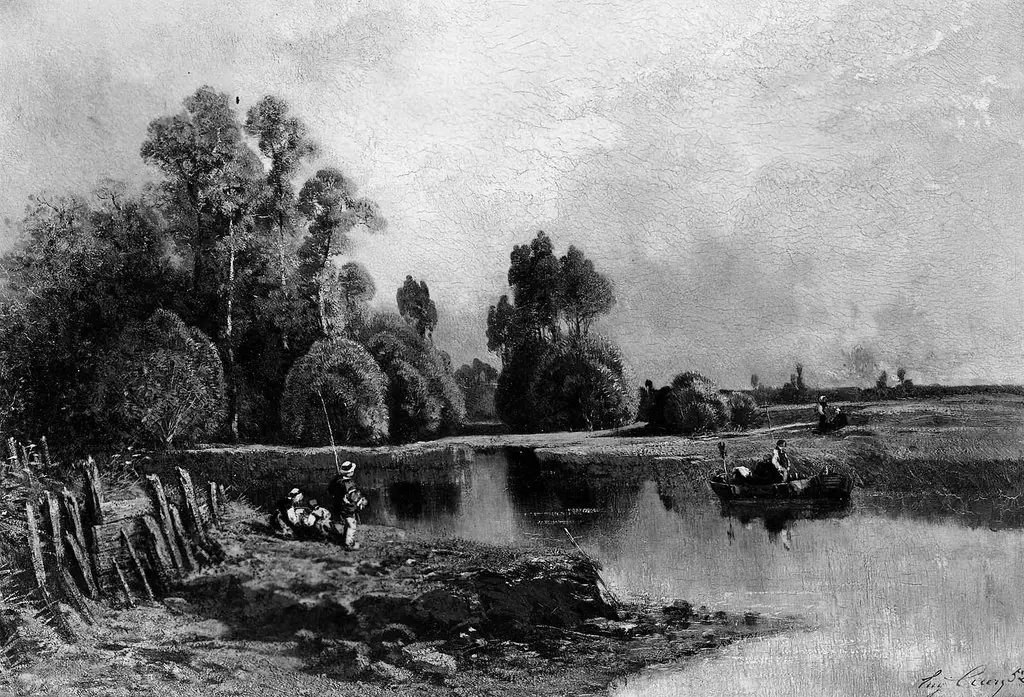 On the Loing River
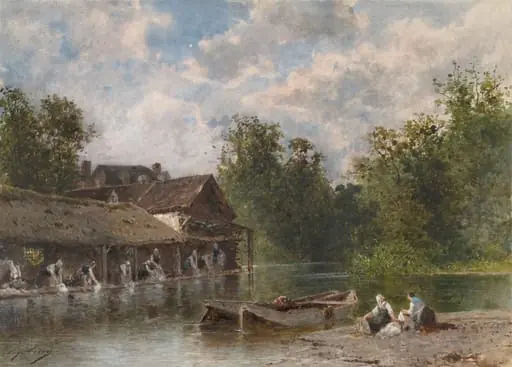 Les Lavandières (Washerwomen)
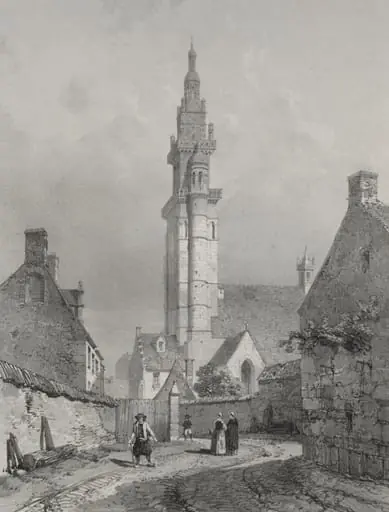 Voyages pittoresques et romantiques dans l'ancienne France. Bretagne: Eglise de Roscoff
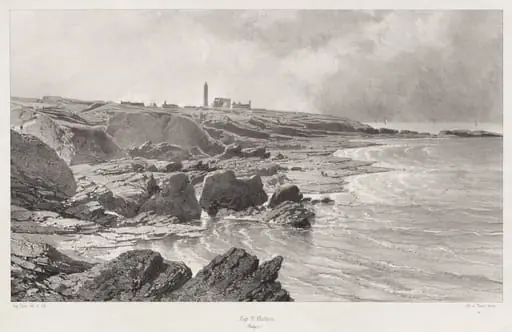 Cap St. Mathieu
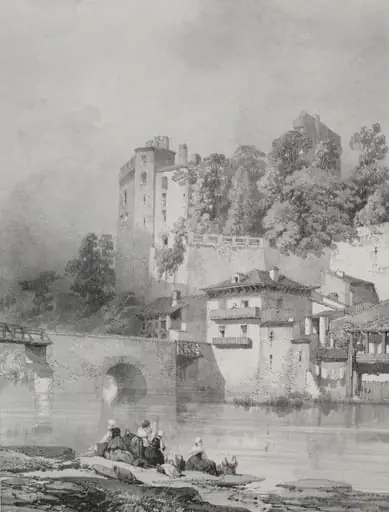 Voyages pittoresques et romantiques dans l'ancienne France. Bretagne: Chateau de Clisson
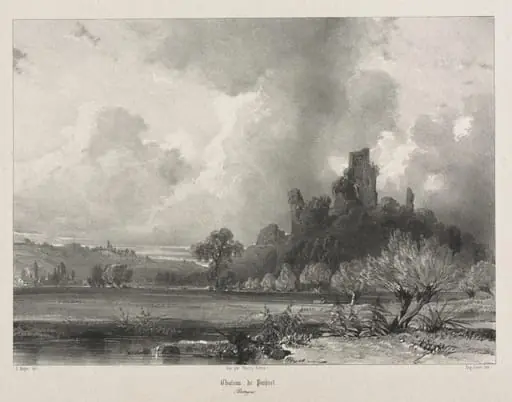 Voyages pittoresques et romantiques dans l'ancienne France. Bretagne: Chateau de Penhoet
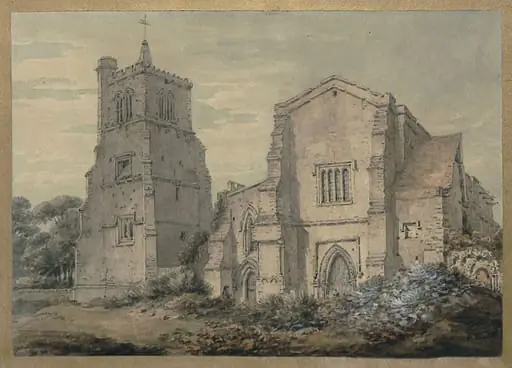 Priory church, Elstow, Bedfordshire
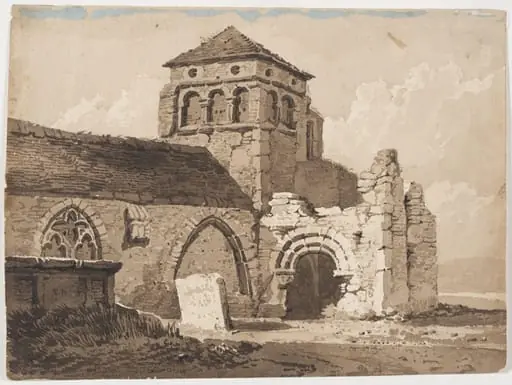 Old Shoreham Church, Sussex
 Boxgrove Priory Church, near Chichester
 Italian Landscape with Antique Ruins
 Ruins with a Seated Man, and a Covered Wagon in the Distance
 Ruined Abbey among Trees
 Newark Castle
 Ruined Abbey with Travelers on the Road
 Ruins of St. Botolph's Church, Colchester
 The Ruin of Huis 't Sant at Katwijk aan Zee