Artwork
Voyages pittoresques et romantiques dans l'ancienne France, Auvergne: Ruines du château et du village de Saint Nectaire
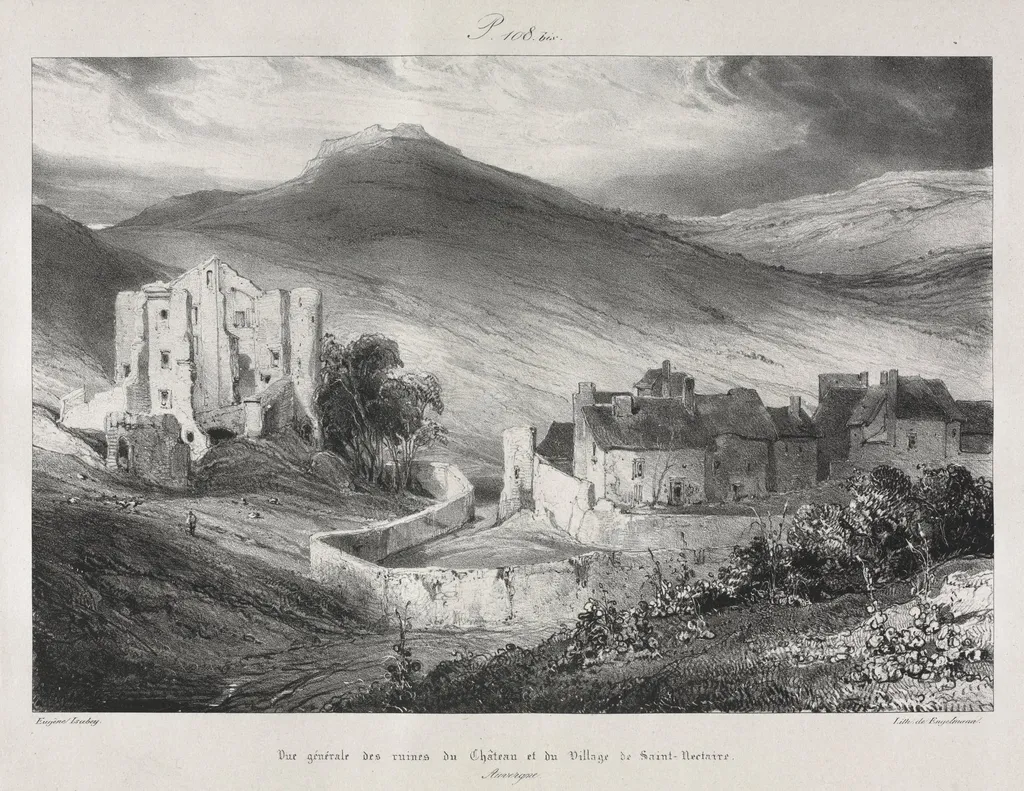
Voyages pittoresques et romantiques dans l'ancienne France, Auvergne: Ruines du château et du village de Saint Nectaire is a print by the Romanticist artist Eugène Isabey. It dates from 1831 and is held in the collection of the Cleveland Museum of Art.
About this work
Overview
The image belongs to a broader project documenting France’s historical architecture, aiming to preserve visual records of sites diminished by time and neglect.
Created in 1831 by Eugène Isabey, this lithograph is one of many plates in the series Voyages pittoresques et romantiques dans l'ancienne France. It captures the abandoned castle and hamlet of Saint-Nectaire in the Auvergne region, emphasizing decay and solitude. The image belongs to a broader project documenting France’s historical architecture, aiming to preserve visual records of sites diminished by time and neglect.
Subject & Meaning
The scene portrays the ruins of a medieval castle perched above a cluster of modest dwellings, both overtaken by nature. The crumbling stonework and sparse vegetation suggest abandonment, while the looming stormy sky and distant peaks amplify a sense of isolation. Rather than celebrating grandeur, the image reflects on the quiet erosion of human endeavor by time and the enduring presence of the natural landscape.
Technique & Style
Isabey employed fine-line lithography to render subtle gradations of tone and texture, capturing the weathered surfaces of stone and the softness of overgrown terrain. The composition balances vertical ruin with horizontal village, framed by a moody, atmospheric sky. His approach aligns with Romantic sensibilities—emphasizing mood, solitude, and the sublime in decay rather than idealized beauty.
History & Provenance
The print was produced as part of a multi-volume publication commissioned to record France’s architectural heritage. Saint-Nectaire, a real village with medieval roots, was chosen for its visible traces of past habitation. Isabey likely visited the site during fieldwork for the series, translating sketches into lithographs for wide distribution among educated audiences interested in national history.
Context
In early 19th-century France, interest in medieval ruins surged as part of a cultural reckoning with national identity after revolution and war. Artists and writers turned to abandoned sites as symbols of continuity and loss. Isabey’s work fits within this movement, offering not nostalgia but a contemplative record of how history lingers in stone and soil.
Legacy
The image contributed to a growing visual archive of France’s forgotten places, influencing later topographical and archaeological documentation. Though not widely exhibited as a standalone work, its inclusion in the Voyages series helped standardize the aesthetic of ruin as a subject worthy of systematic study, bridging art and historiography in the service of cultural memory.
Artist & collection
Artist
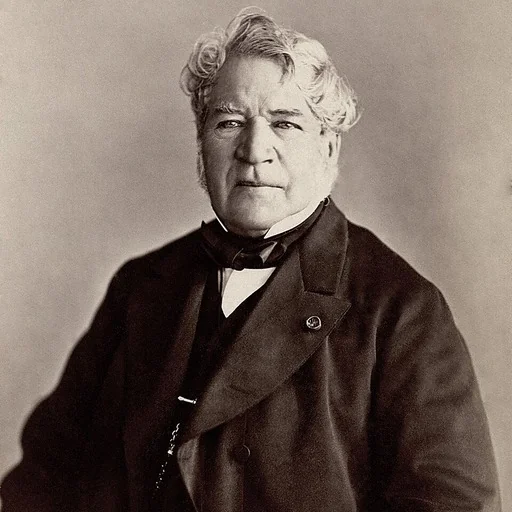
Eugène Louis Gabriel Isabey (French pronunciation: ; 22 July 1803 – 25 April 1886) was a French painter, lithographer and watercolorist in the Romantic style.

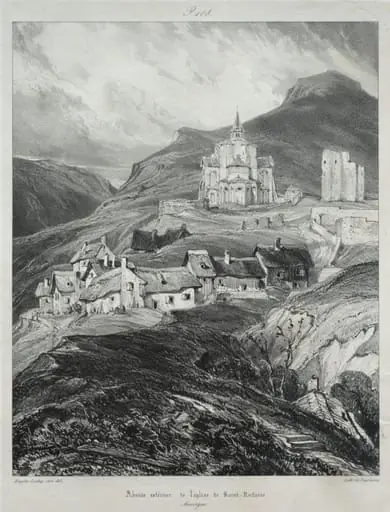 Voyages pittoresques et romantiques dans l'ancienne France, Auvergne: Abside de l'église de Saint Nectaire
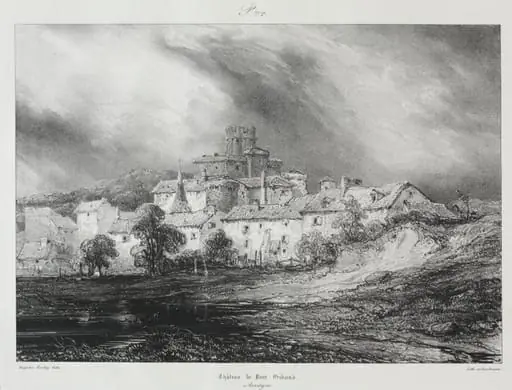 Voyages pittoresques et romantiques dans l'ancienne France, Auvergne: Château de Pont-Gibaud
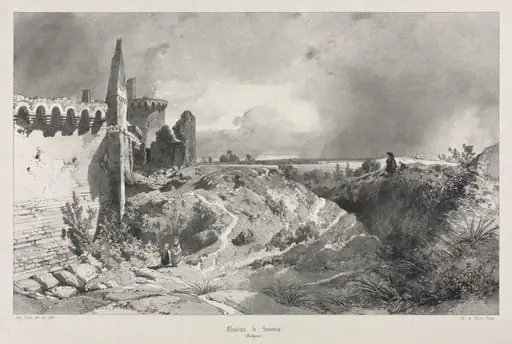 Voyages pittoresques et romantiques dans l'ancienne France. Bretagne: Chateau de Susinio
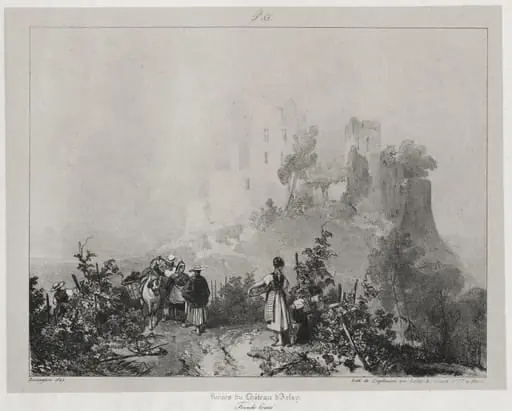 Voyages pittoresques et romantiques dans l'ancienne France, Franche-Comté: Ruines du château d'Arlay
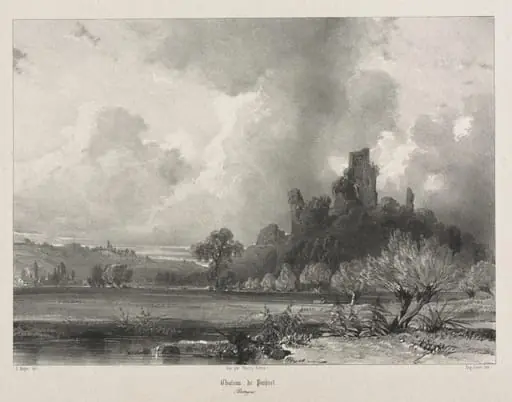 Voyages pittoresques et romantiques dans l'ancienne France. Bretagne: Chateau de Penhoet
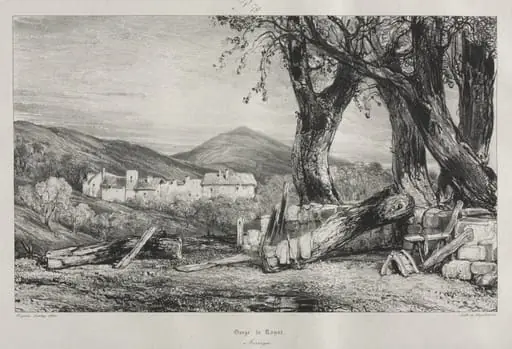 Picturesque and Romantic Journeys in Old France: Auvergne (vol. II), Gorge of Royat, Plate 79
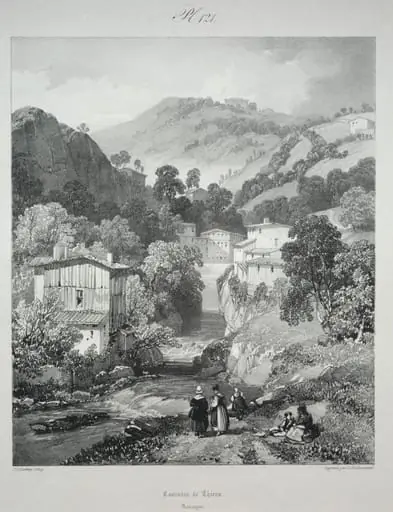 Voyages pittoresques et romantiques dans l'ancienne France. Auvergne: Cascades de Thiers
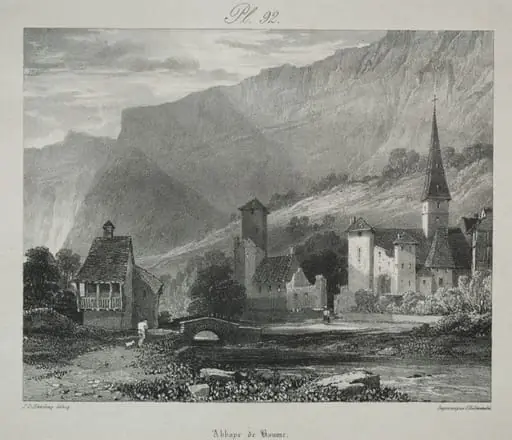 Voyages pittoresques et romantiques dans l'ancienne France. Franche Comté: Abbaye de Baume, Baume-les-Messieurs
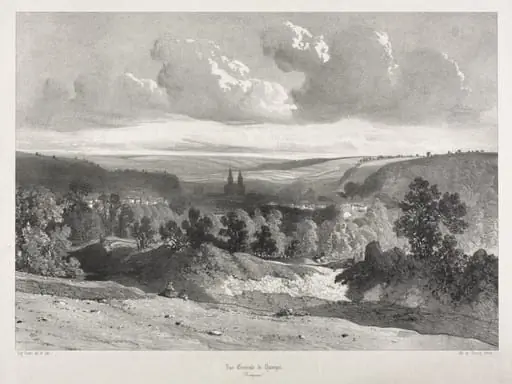 Voyages pittoresques et romantiques dans l'ancienne France. Bretagne: Vue général de Quimper
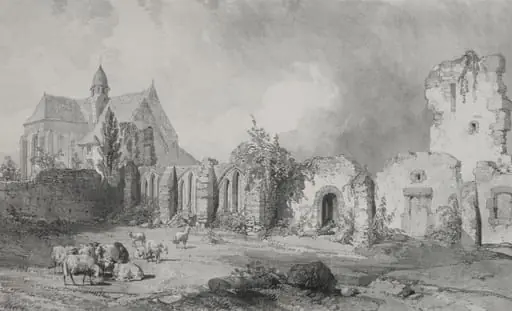 Voyages pittoresques et romantiques dans l'ancienne France. Bretagne: Abbaye de Relec
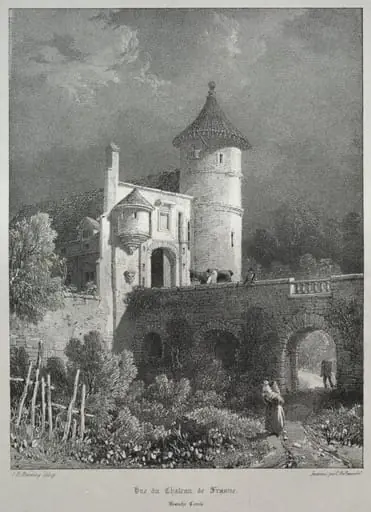 Voyages pittoresques et romantiques dans l'ancienne France. Franche-Comté: Vue du Château de Frasne