Artwork
Picturesque and Romantic Journeys in Old France: Auvergne (vol. II): St. John Church, Thiers, Plate 129
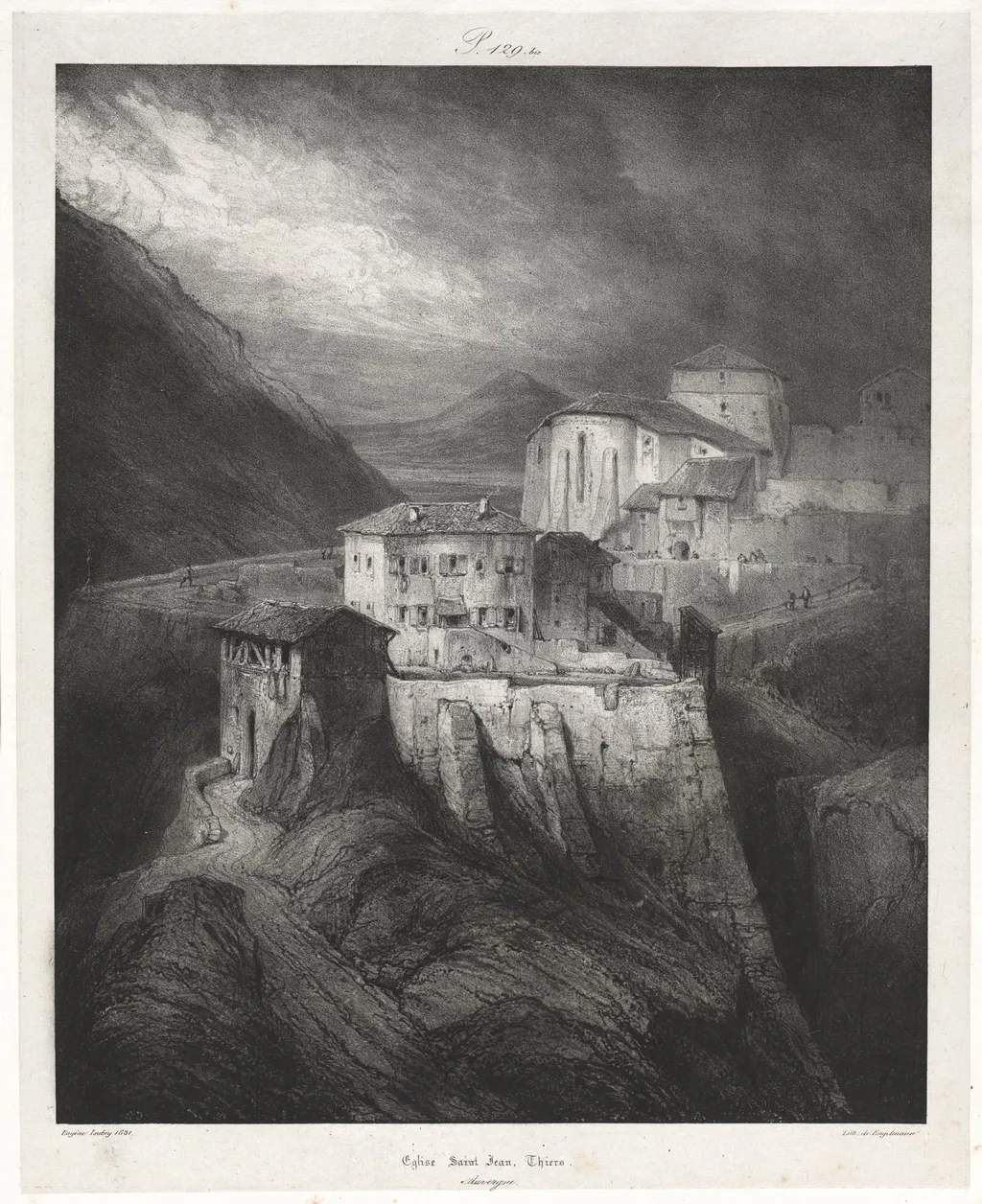
Picturesque and Romantic Journeys in Old France: Auvergne (vol. II): St. John Church, Thiers, Plate 129 is a print by the Romanticist artist Eugène Isabey. It dates from 1831 and is held in the collection of the Cleveland Museum of Art.
About this work
Isabey loved old buildings and painted them with soft colors.
This painting shows a quiet street scene in 1830s France. A small stone church sits crooked in the middle. Two women walk past with long skirts and bonnets. The sky is gray and heavy.
Isabey loved old buildings and painted them with soft colors. He used watercolor to make the scene feel real but dreamy. The light makes the church walls look warm.
This street looks like it’s stuck in time. Look up Eugène Isabey (French, 1803–1886) next.
Overview
Created in 1831, this print by Eugène Isabey records the Saint‑John Church of Thiers in the Auvergne region. It forms part of a larger illustrated survey of historic French sites, presenting a modest urban scene where the modest stone church occupies the centre of a narrow, tranquil street.
Subject & Meaning
The composition captures a moment of everyday life: two women in long skirts and bonnets pass the church, their silhouettes softened by a muted, overcast sky. The work emphasizes the endurance of regional architecture, suggesting a timeless continuity between the built environment and the ordinary activities of its inhabitants.
Technique & Style
Isabey employed the Romantic aesthetic, using delicate tonal variations to convey atmosphere. Executed as a lithographic print, the image retains the softness associated with his watercolor practice, allowing subtle gradations of light that warm the church’s stone walls despite the overall somber sky.
History & Provenance
Issued as plate 129 in the second volume of "Picturesque and Romantic Journeys in Old France: Auvergne," the print was circulated among early‑19th‑century audiences interested in France’s architectural heritage. It remains attributed to Isabey (1803–1886) and is held in several public collections documenting his contributions to travel illustration.
Context
The work reflects a broader 19th‑century French fascination with regional identity and the preservation of historic monuments. Produced during a period of burgeoning interest in documenting rural landscapes, Isabey’s image aligns with contemporary efforts to catalogue and celebrate the nation’s cultural patrimony.
Artist & collection
Artist
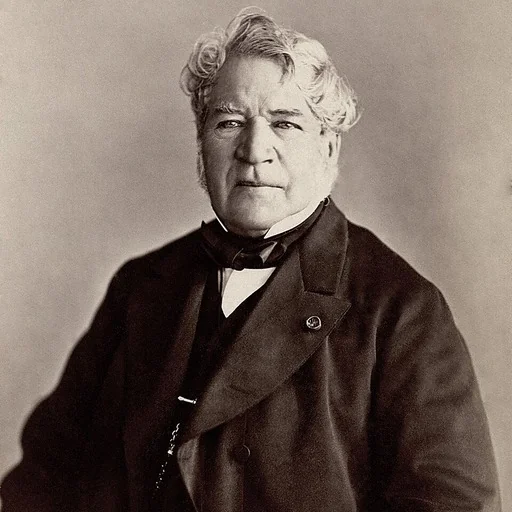
Eugène Louis Gabriel Isabey (French pronunciation: ; 22 July 1803 – 25 April 1886) was a French painter, lithographer and watercolorist in the Romantic style.

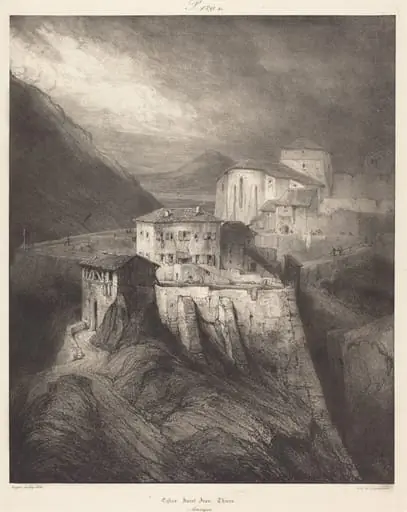 Eglise Saint-Jean, Thiers
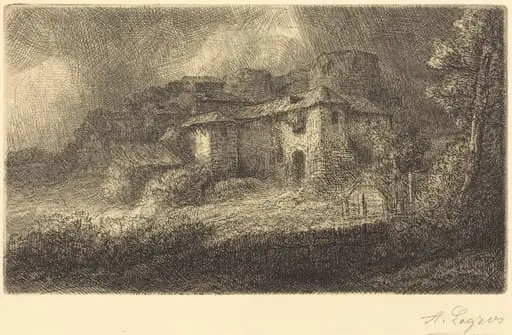 Ruins of a Chateau (Les ruines du chateau)
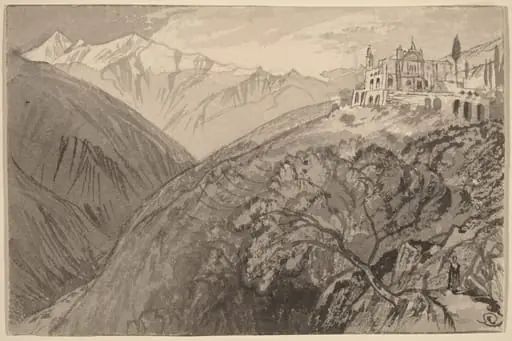 A Town on a Hilltop (Sanctuary of Lampedusa)
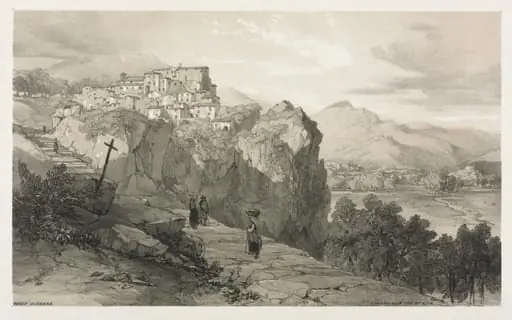 Rocca Giovane
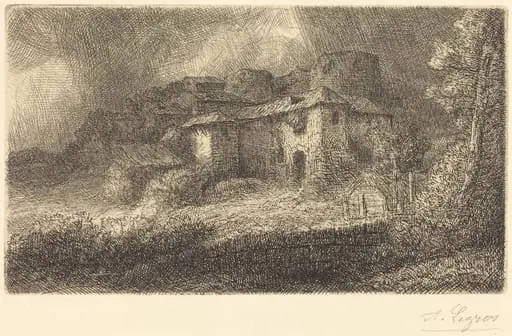 Ruins of a Chateau (Les ruins du chateau)
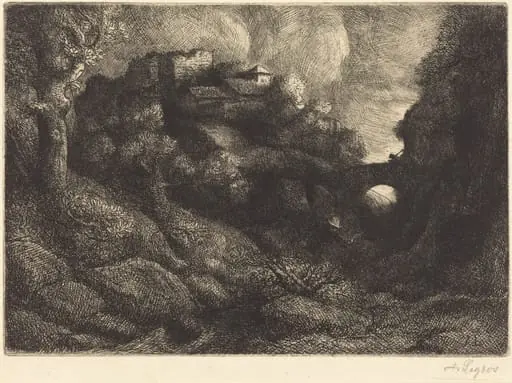 Remembrance of Italy (Souvenir d'Italie)
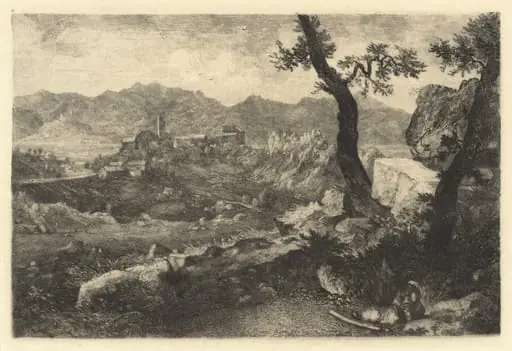 A View Near Rome
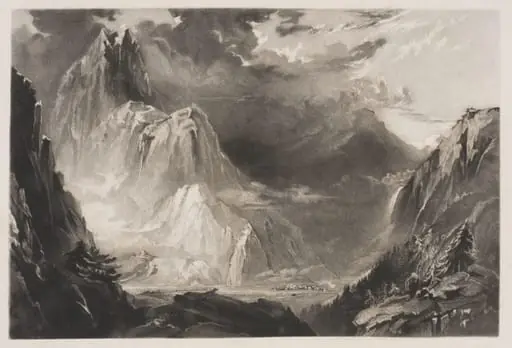 The Pass Between Dale and Dalsjed
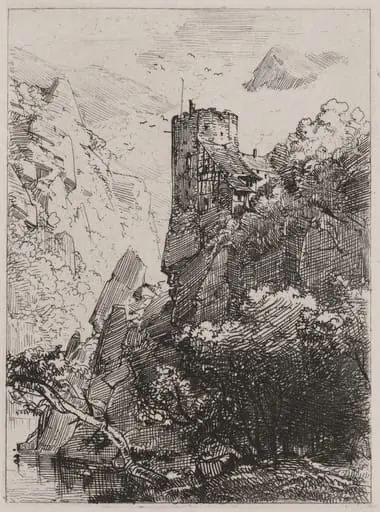 Watchtower on a Cliff with a Stream
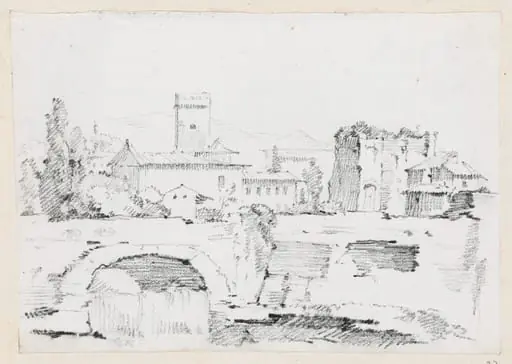 An Italian Town with a Stone Bridge and a Waterfall