Artwork
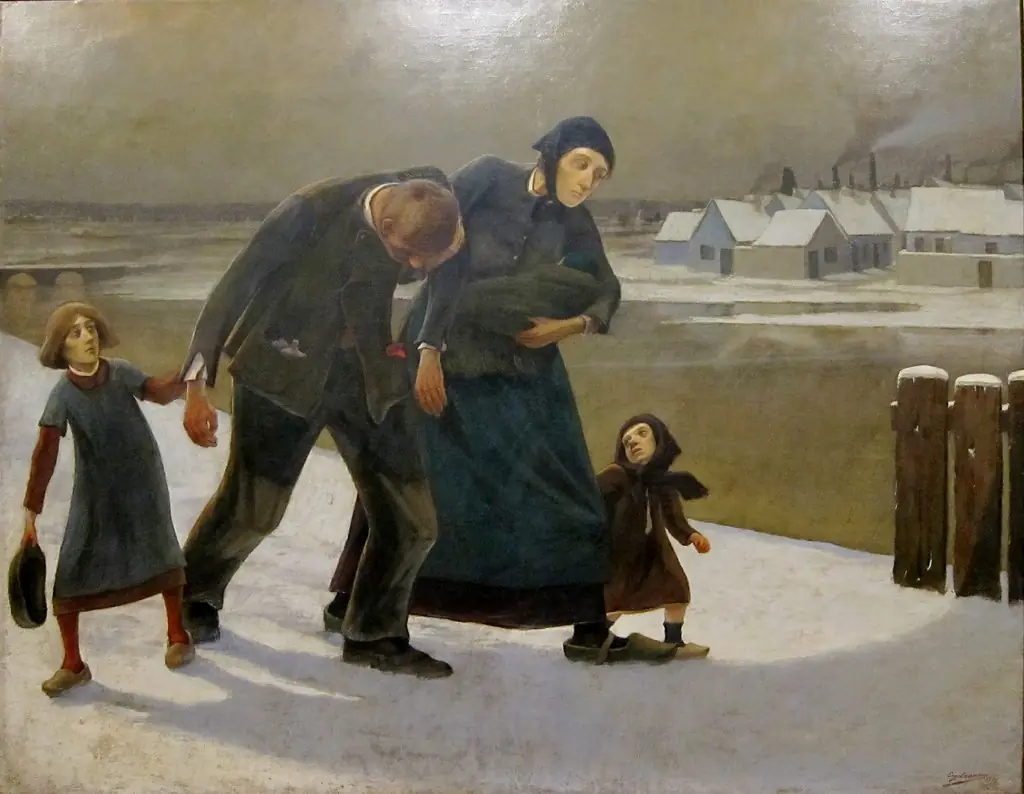
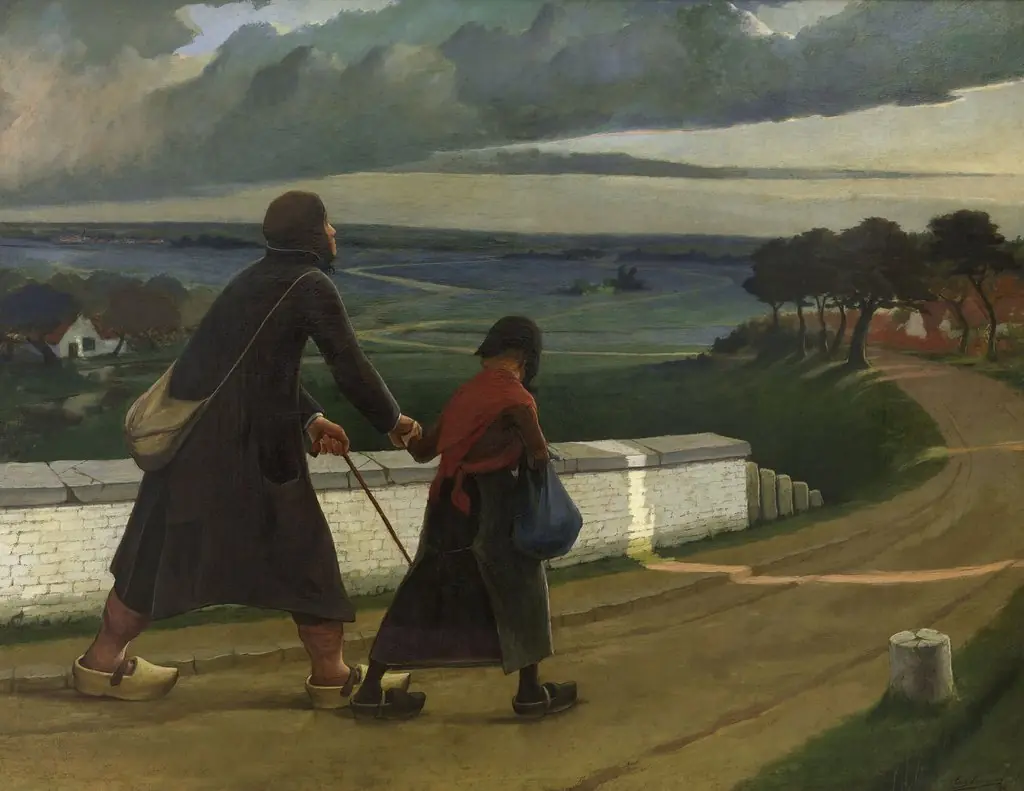
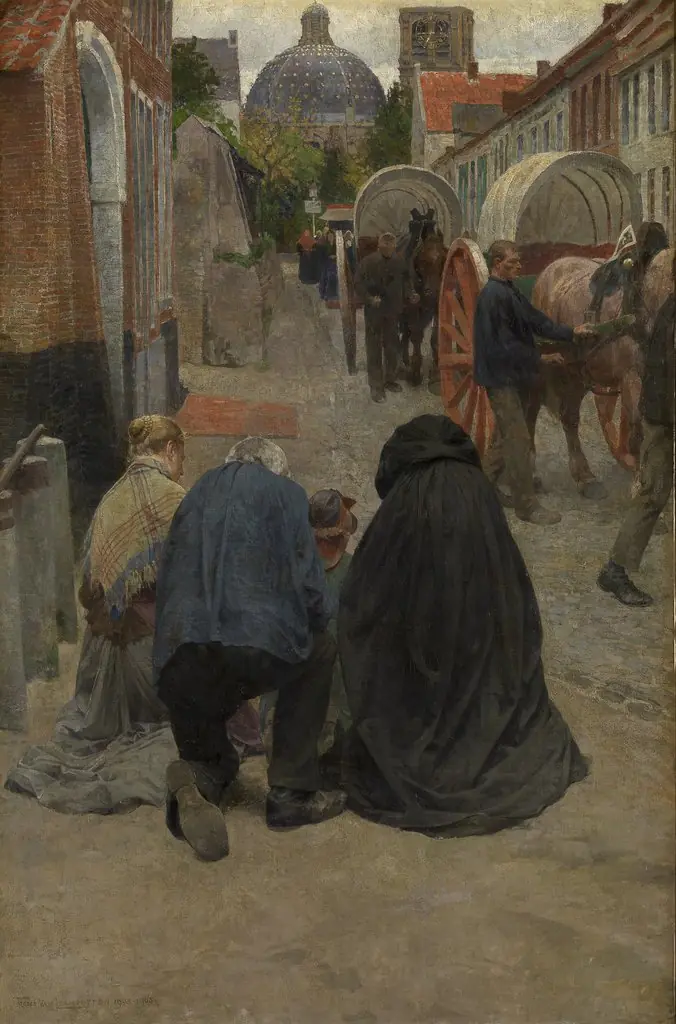
Emigrants - To the port.
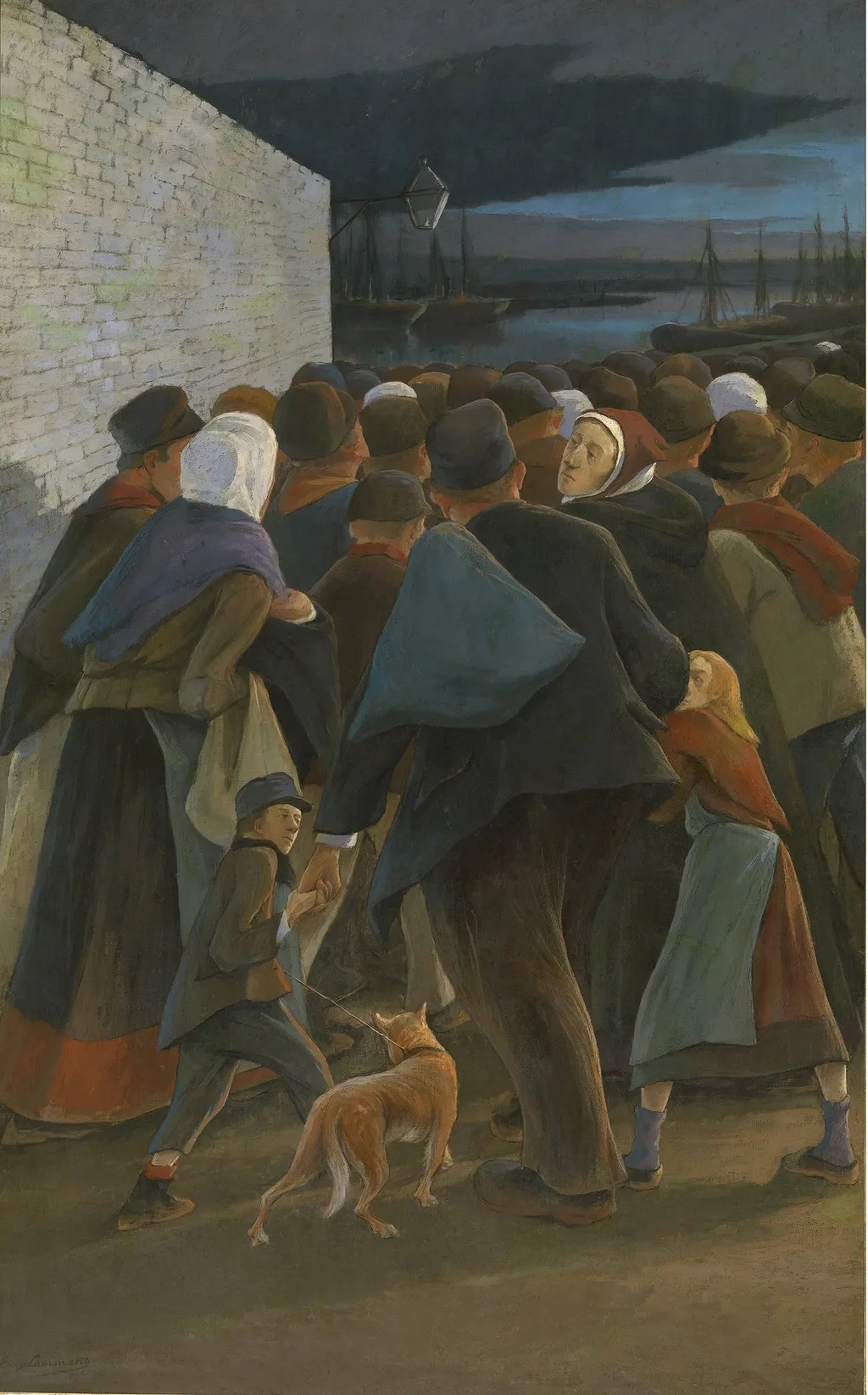
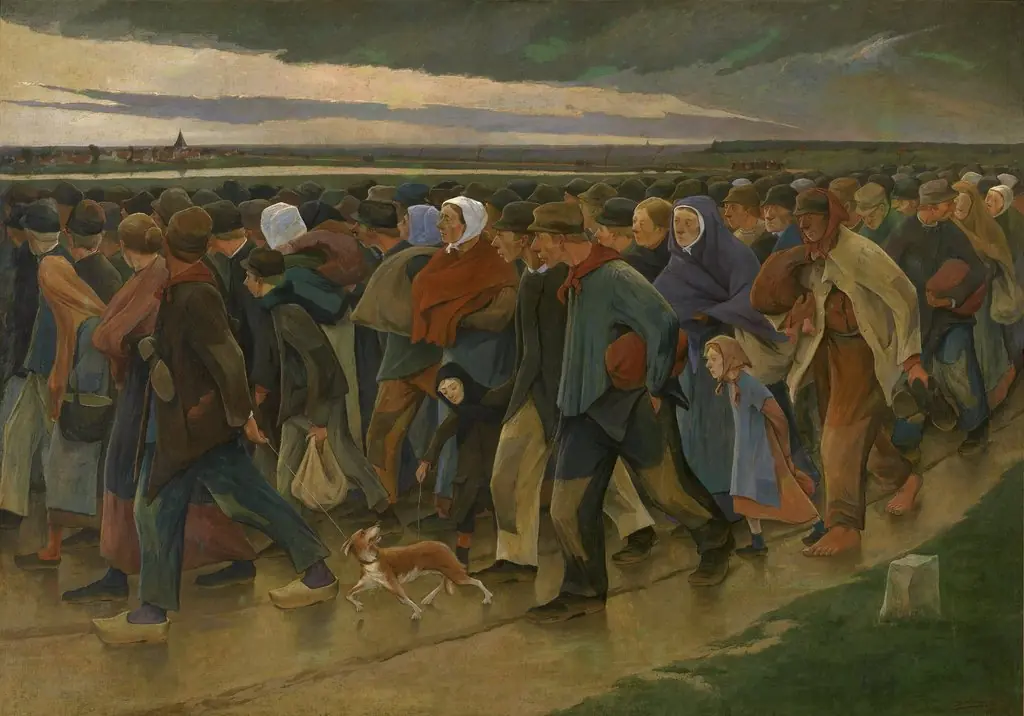
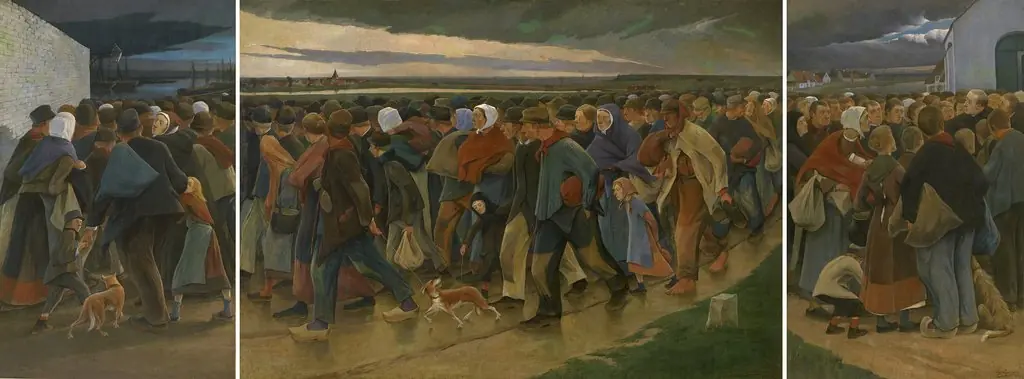
Emigrants - To the port. is an oil painting by the Post-Impressionist artist Eugène Laermans. It dates from 1898 and is held in the collection of the Royal Museum of Fine Arts Antwerp.
About this work
Overview
Figures in somber attire stand in stillness, their postures conveying anticipation rather than movement.
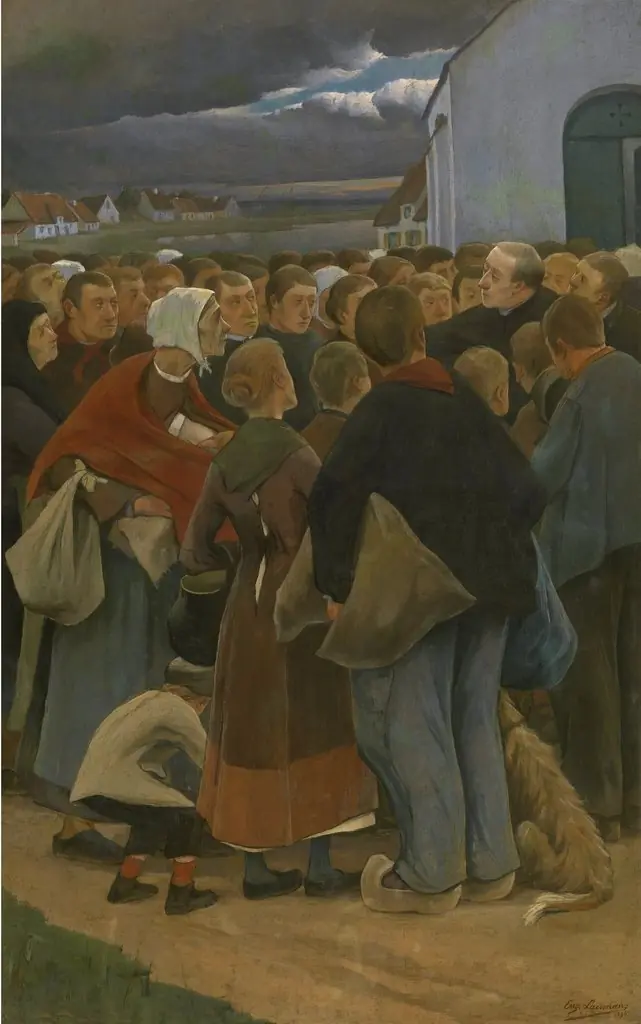
Painted in 1898 by Eugène Laermans, this oil work captures a quiet moment of departure. The scene unfolds near a brick wall with water beyond, suggesting a port. Figures in somber attire stand in stillness, their postures conveying anticipation rather than movement. A child holds a dog’s leash, and a woman faces away, her posture isolating her within the group. The composition avoids dramatic action, focusing instead on the weight of an impending journey.
Subject & Meaning
The painting portrays emigrants in a moment of pause before departure, likely bound for overseas destinations. Their muted clothing and subdued expressions reflect the gravity of leaving home. The child and dog suggest familial ties carried into uncertainty, while the turned-back woman may symbolize reluctance or grief. The scene resists sentimentality, presenting migration as a quiet, personal ordeal rather than a heroic endeavor.
Technique & Style
Laermans employs a restrained palette of grays, browns, and deep greens, reinforcing the mood of solemnity. Brushwork is deliberate but not overly detailed, favoring atmospheric cohesion over individualized features. Light falls evenly across the group, flattening spatial depth and emphasizing collective stillness. The brick wall and distant water form a simple, stable backdrop that grounds the figures in a tangible, unadorned reality.
History & Provenance
Created in 1898, the painting entered the collection of the Royal Museum of Fine Arts Antwerp, where it remains today. It was produced during a period of heightened emigration from Belgium, particularly to North America. Laermans, known for his focus on working-class life, documented this social phenomenon with empathy rather than spectacle, aligning the work with broader Belgian realist traditions of the late 19th century.
Context
In the late 1800s, economic hardship and limited opportunity drove many Belgians to seek new lives abroad. Ports like Antwerp became hubs of departure, where families gathered in silence before boarding ships. Laermans, influenced by social realism, chose to depict these moments not as grand events but as intimate, everyday transitions — a quiet counterpoint to the era’s more celebratory national narratives.
Legacy
The painting endures as a quiet testament to the human experience of displacement. It avoids overt political messaging, instead offering a restrained observation that resonates with later 20th-century depictions of migration. Its presence in a major Belgian institution affirms its role in documenting the social fabric of its time, preserving the dignity of ordinary people facing uncertain futures.
Own this work as a print
Artist & collection