Artwork
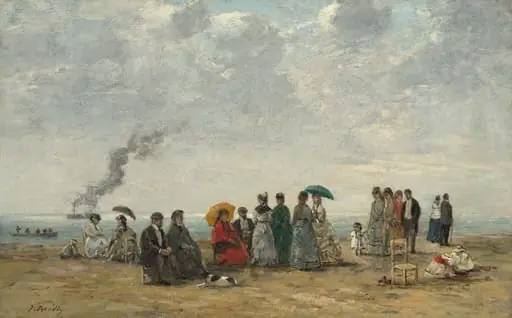
Beach Scene, possibly Harfleur
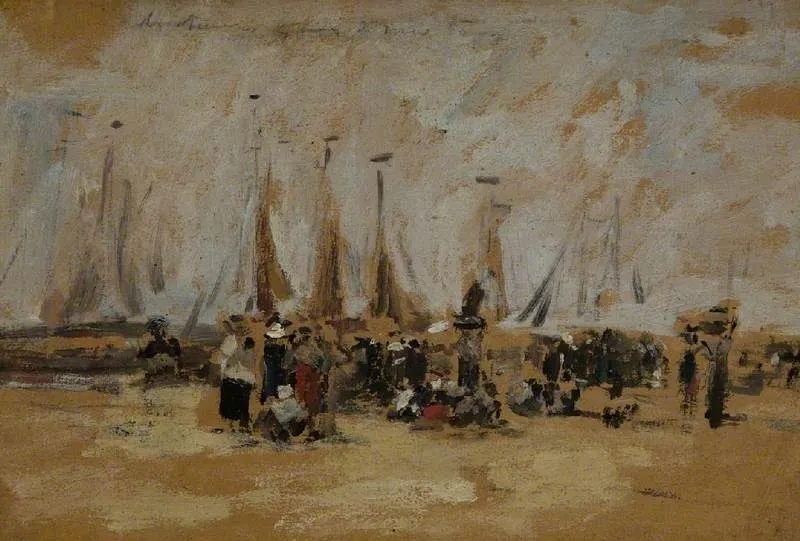
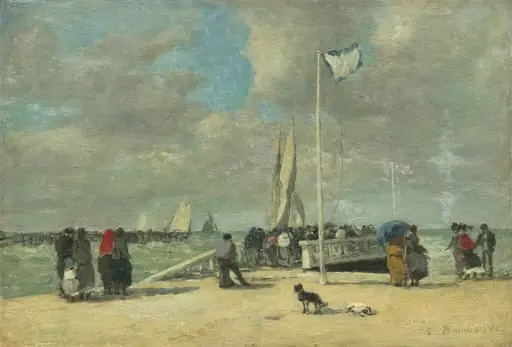
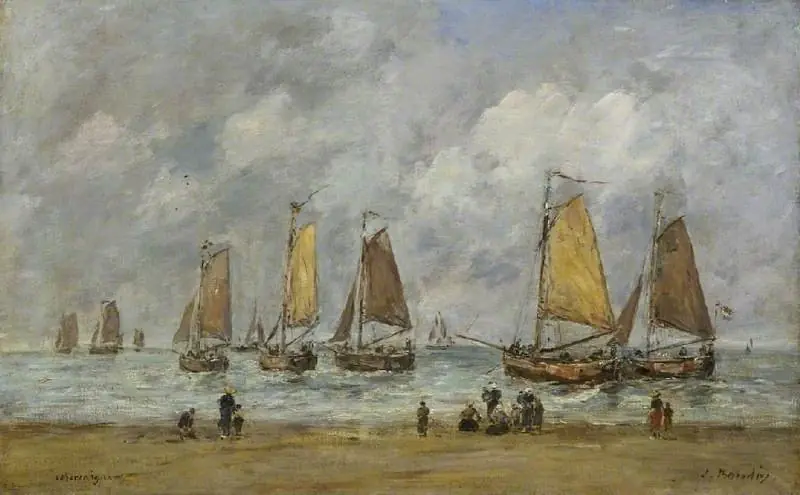
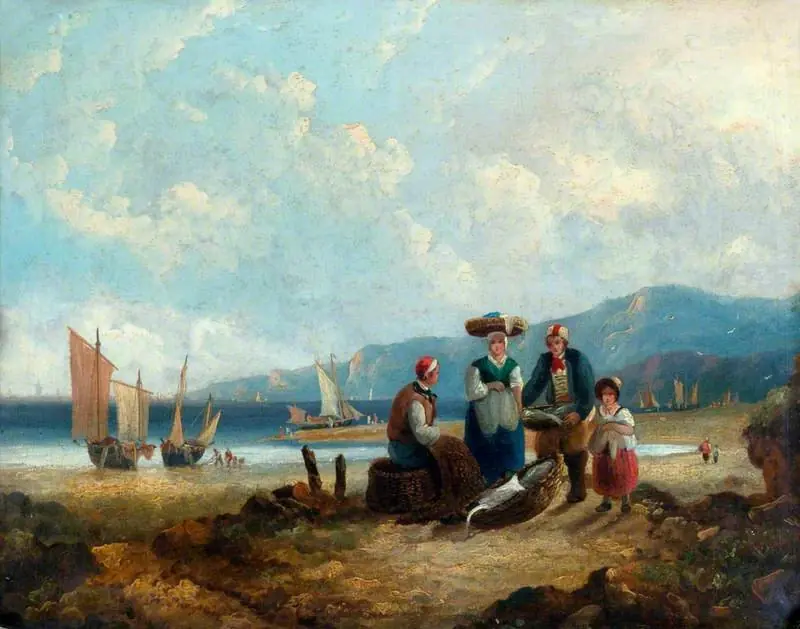
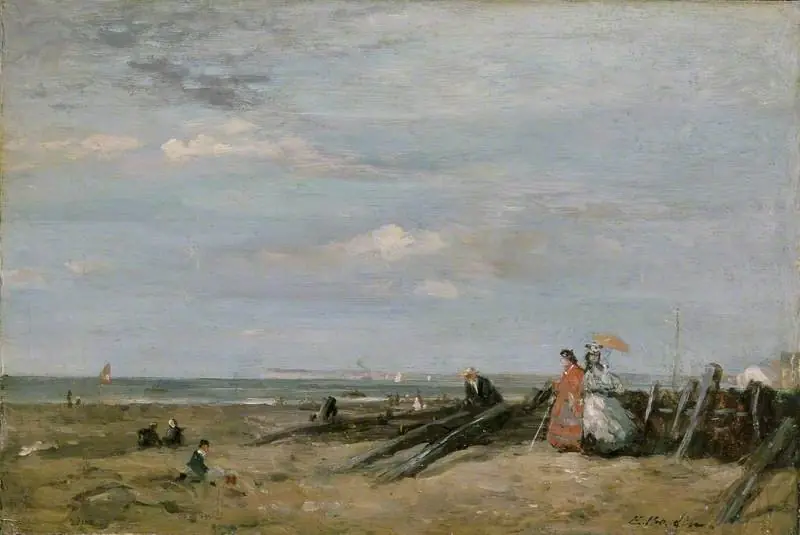
Beach Scene, possibly Harfleur is an unspecified painting by the Impressionist artist Eugène Boudin. It dates from 1896 and is held in the collection of the Fitzwilliam Museum.
About this work
Overview
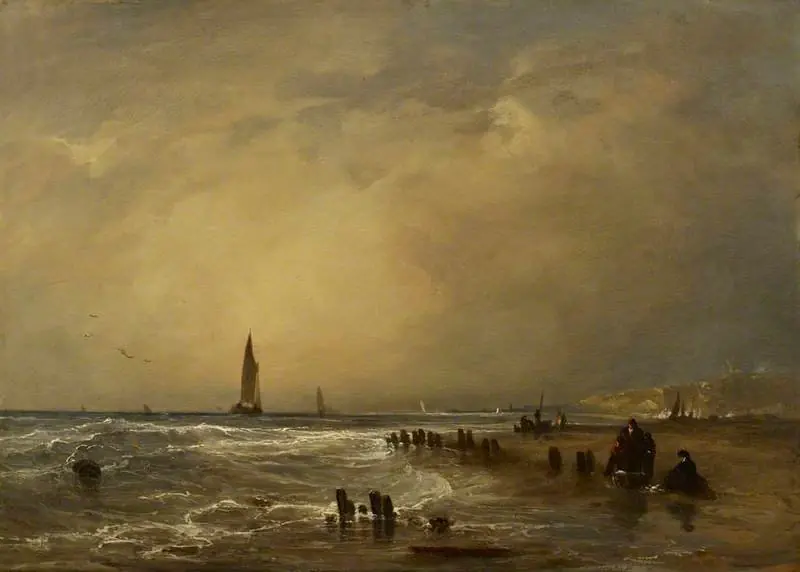
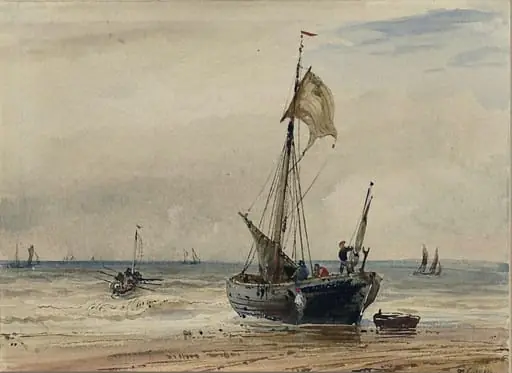
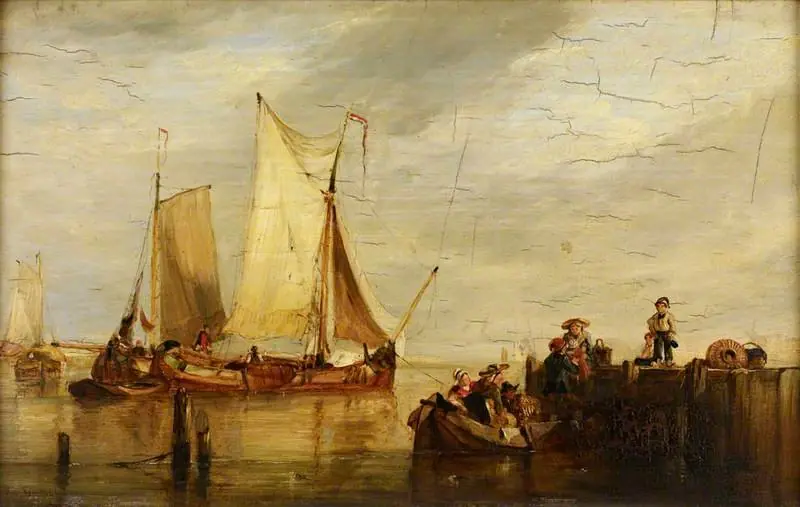
Eugène Louis Boudin’s 1896 oil painting, titled *Beach Scene, possibly Harfleur*, presents a coastal tableau rendered in the Impressionist idiom. The work portrays a bustling shoreline with figures, vessels, and an expansive sky, emphasizing the fleeting effects of light and atmosphere that characterize Boudin’s marine subjects.
Subject & Meaning
The composition depicts a beach likely situated at Harfleur, where fishermen and leisure‑seekers mingle along the sand. Small boats bob near the water’s edge while a group of people—some seated, others standing—populate the foreground, suggesting everyday activity and the social rhythms of a 19th‑century port town.
Technique & Style
Boudin employs a palette of varied hues to model sky, sea, and flesh, allowing color to convey depth and the subtle shifts of daylight. His brushwork is loose and energetic, creating a sense of movement that animates the scene. The handling of light on water and sand demonstrates his skill in capturing atmospheric conditions with economical, expressive strokes.
History & Provenance
Created during the height of the Impressionist movement, the painting was praised by contemporaries such as Charles Baudelaire and Jean‑Baptiste‑Camille Corot for its deft yet restrained approach. It entered the collection of the Fitzwilliam Museum, where it remains part of the institution’s holdings of 19th‑century French art.
Artist & collection
Artist
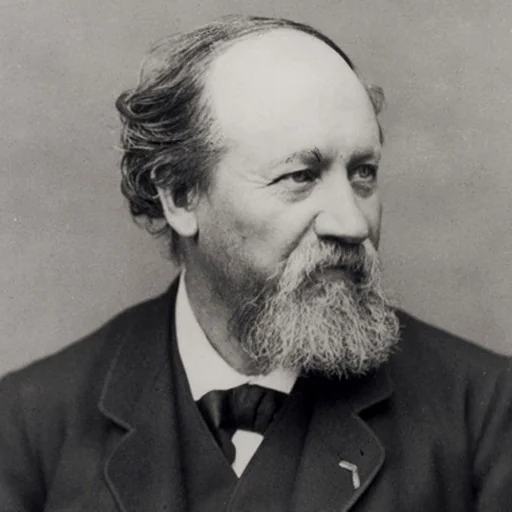
Eugène Louis Boudin (French: ; 12 July 1824 – 8 August 1898) was one of the first French landscape painters to paint outdoors.