Artwork
Scheveningen
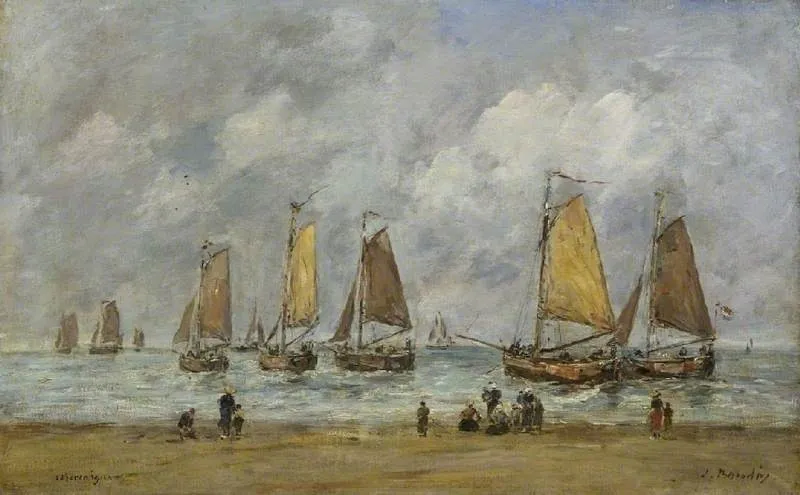
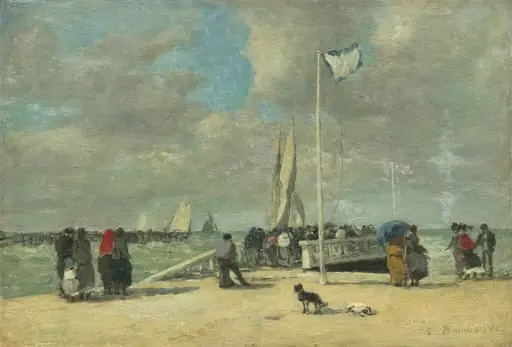
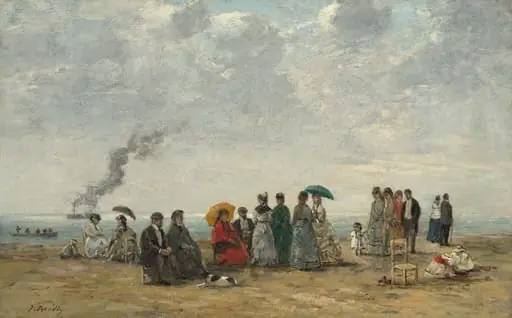
Scheveningen is an oil painting by Eugène Boudin. It dates from 1871 and is held in the collection of the Fitzwilliam Museum.
About this work
Overview
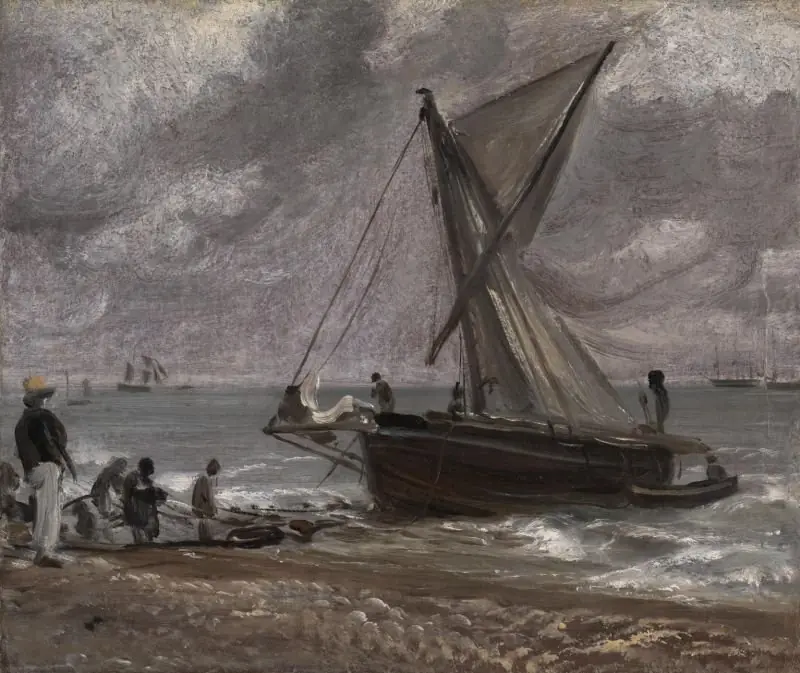
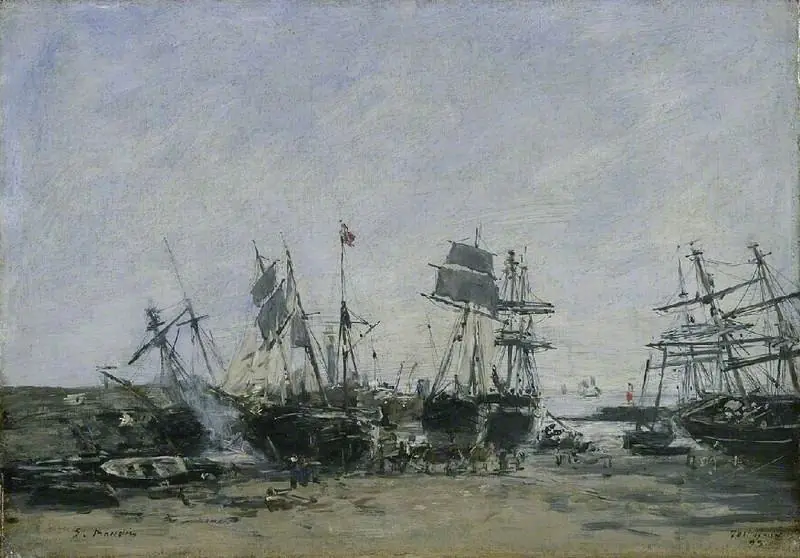
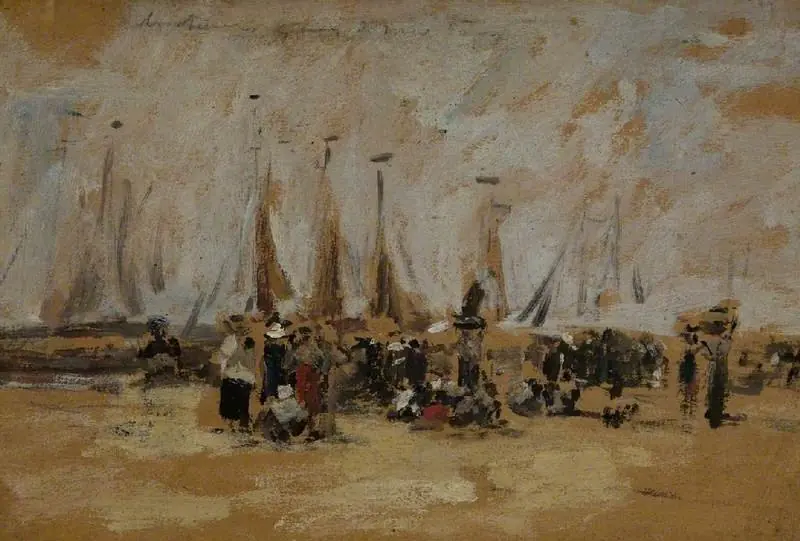
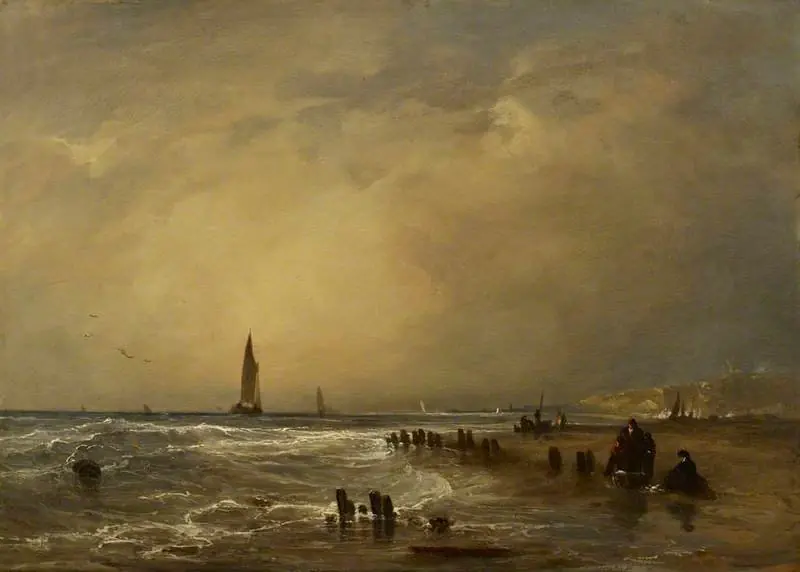
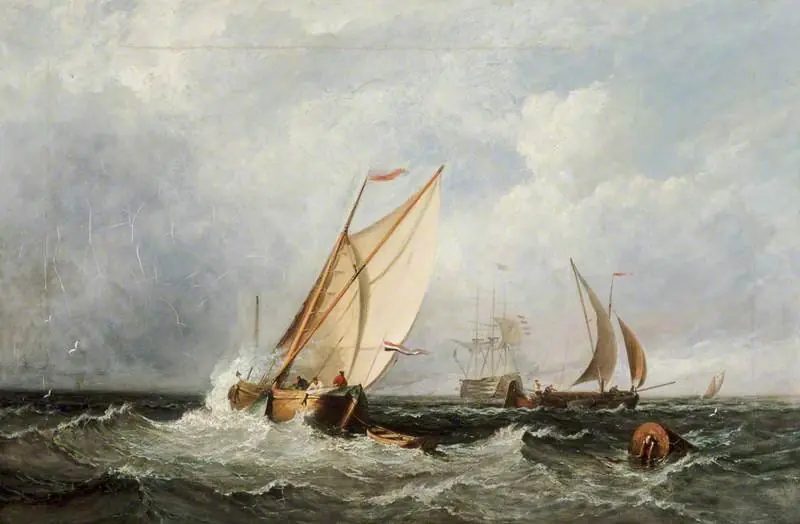
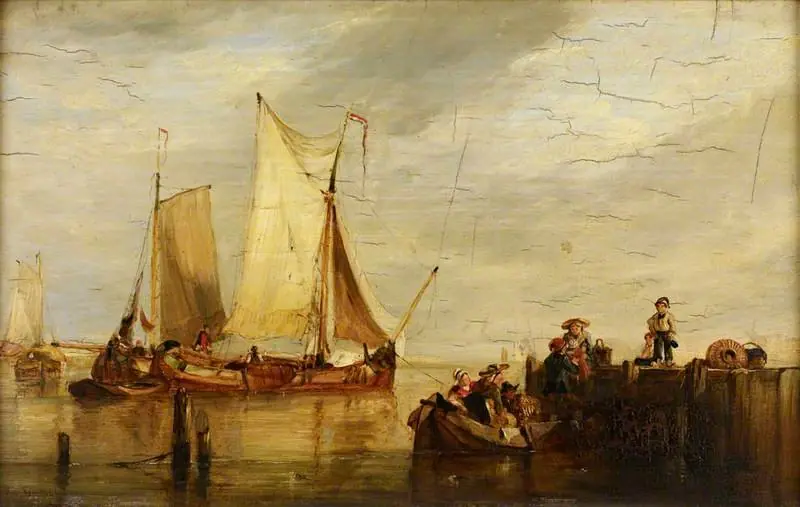
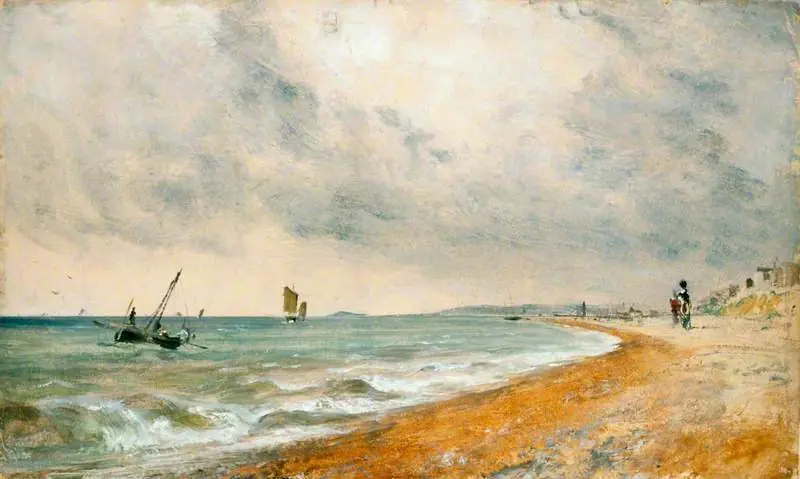
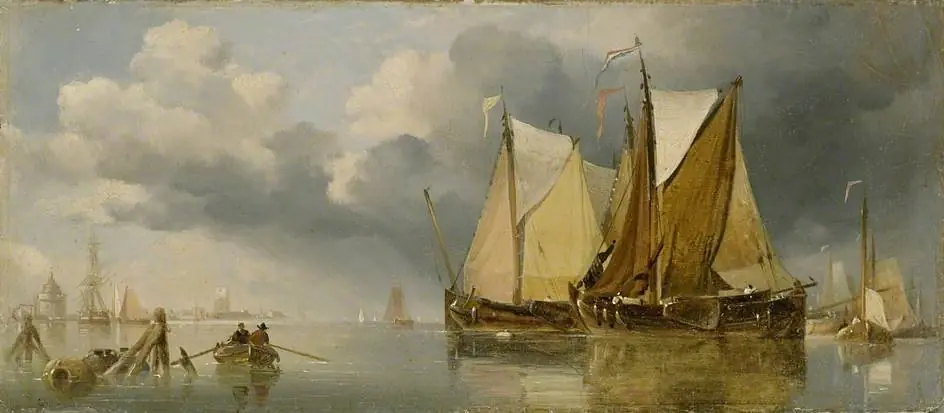
Eugène Louis Boudin’s oil painting *Scheveningen*, executed circa 1871, portrays a coastal tableau at the Dutch seaside resort of Scheveningen. The canvas captures a breezy day where several tall‑sailed vessels drift across a muted sea, while figures on the shore observe the activity. A cloud‑laden sky, pierced by occasional blue, frames the scene, lending a subdued atmospheric tone.
Subject & Meaning
The work focuses on everyday maritime life, juxtaposing the static presence of beachgoers with the dynamic movement of sailboats. Boudin emphasizes the relationship between humans and the sea, suggesting a contemplative pause as observers watch the vessels navigate the water. The interplay of light and cloud hints at the transient nature of weather and leisure along the coast.
Technique & Style
Rendered en plein air, the painting exhibits Boudin’s characteristic naturalistic approach. He employs a restrained palette, balancing cool grays of the overcast sky with warm ochres of the sand, while the boats are detailed in crisp whites and muted blues. Loose yet precise brushwork conveys both the texture of the shoreline and the atmospheric depth of the horizon.
History & Provenance
After its creation in the early 1870s, *Scheveningen* entered the collection of the Fitzwilliam Museum in Cambridge, where it remains on display. The acquisition reflects the museum’s interest in 19th‑century French landscape painting and Boudin’s role in the development of outdoor, observational techniques.
Artist & collection
Artist
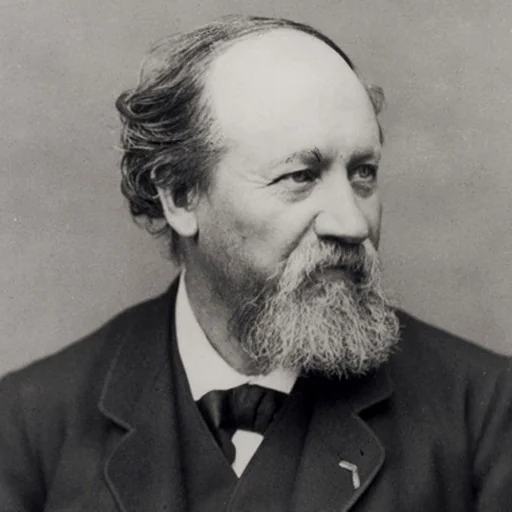
Eugène Louis Boudin (French: ; 12 July 1824 – 8 August 1898) was one of the first French landscape painters to paint outdoors.