Artwork
Tablou, ulei pe pânză, „Epoca marilor împliniri”, semnat E.R. și datat 1987 în partea stângă jos, atribuit lui Eugen Rascenco. Nicolae Ceaușescu este prezentat în timpul unei vizite de lucru, dând indicații muncitorilor. Comandat și oferit de Comitetul Județean de Partid Vaslui, 1987.
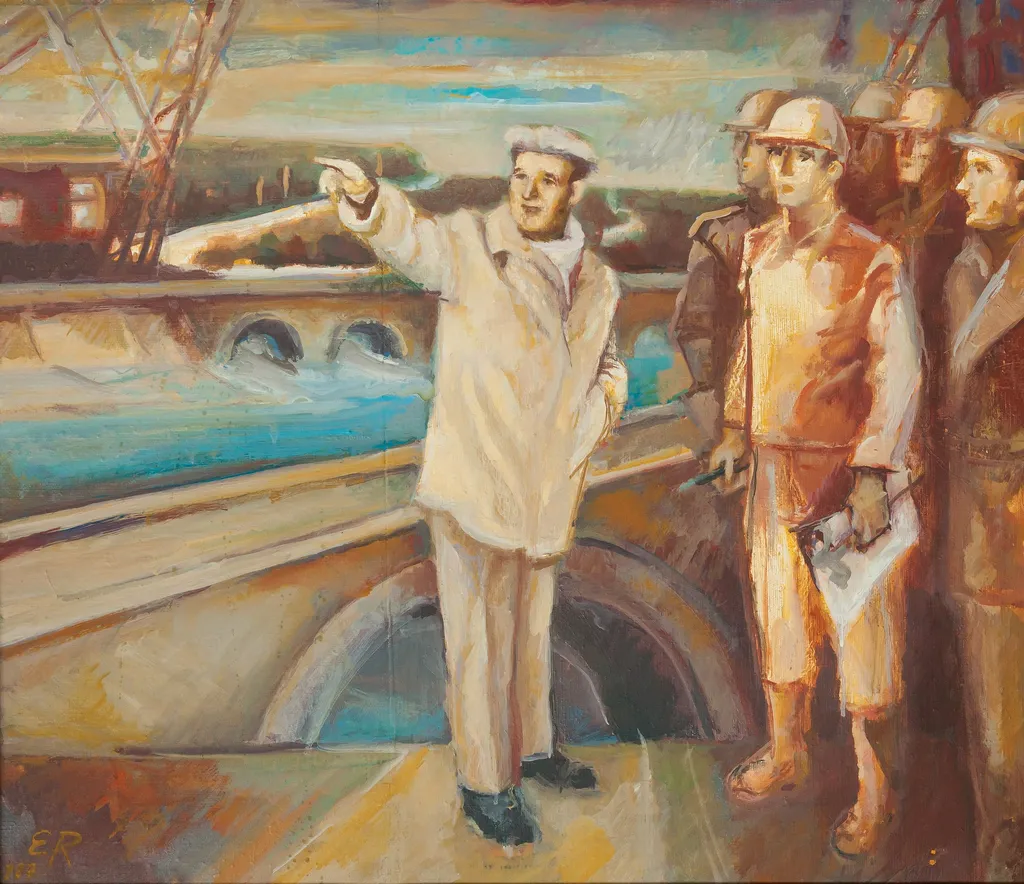
Tablou, ulei pe pânză, „Epoca marilor împliniri”, semnat E.R. și datat 1987 în partea stângă jos, atribuit lui Eugen Rascenco. Nicolae Ceaușescu este prezentat în timpul unei vizite de lucru, dând indicații muncitorilor. Comandat și oferit de Comitetul Județean de Partid Vaslui, 1987. is a print by Eugen Rascenco. It is held in the collection of the National Museum of Romanian History. This oil on canvas painting, signed and dated 1987 by E.
About this work
Overview
The artist, identified as Eugen Rascenco, rendered the figures with thick, textured brushwork, emphasizing rawness over polish.
This oil on canvas painting, signed and dated 1987 by E.R., depicts a workplace scene during a visit by a party official. Commissioned by the Vaslui County Party Committee, it portrays a moment of industrial guidance. The artist, identified as Eugen Rascenco, rendered the figures with thick, textured brushwork, emphasizing rawness over polish. The composition centers on interaction between authority and labor, framed within a muted, industrial environment.
Subject & Meaning
The painting captures a party official, likely Nicolae Ceaușescu, offering instructions to workers beside a large metal structure. The gesture of the central figure suggests authority and direction, while the workers, dressed in practical attire and holding tools, embody the labor force. The scene reflects the state’s idealized portrayal of leadership and collective effort, typical of official art under communist Romania, where such imagery reinforced ideological narratives of unity and progress.
Technique & Style
Rascenco employed impasto techniques, applying paint thickly to create a tactile, uneven surface. Brushstrokes are deliberate and coarse, avoiding smooth finishes to evoke a sense of immediacy and grit. The palette is dominated by earth tones—browns, grays, and dull blues—with occasional highlights on the metalwork adding contrast. The blurred background and lack of fine detail focus attention on the figures and their physical presence, reinforcing the work’s documentary tone.
History & Provenance
Commissioned in 1987 by the Vaslui County Party Committee, the painting was produced as part of a state-sponsored effort to document and celebrate official visits to industrial sites. It was intended for display within party or institutional spaces, not public galleries. After the fall of the communist regime, such works were often removed from public view, and this piece’s subsequent history remains largely undocumented, preserved in private or archival collections.
Context
Created during the final years of Nicolae Ceaușescu’s regime, the painting aligns with state-mandated artistic conventions that glorified leadership and industrial labor. Official commissions like this one were common, serving as visual propaganda to reinforce loyalty and productivity. Despite the grim economic realities of late 1980s Romania, such artworks presented an idealized, orderly vision of society, masking widespread shortages and repression through carefully constructed imagery.
Legacy
The painting stands as a relic of state-controlled artistic production under communism, reflecting how visual culture was instrumentalized for political messaging. Its rough technique and unpolished aesthetic distinguish it from more idealized socialist realist works, hinting at either artistic compromise or a deliberate rejection of perfectionism. Today, it serves as a historical artifact, offering insight into the mechanisms of power and representation in a closed society.
Artist & collection
Artist
These two prints show Eugen Rascenco’s work from 1987, painted in the late-Social-Realist style.

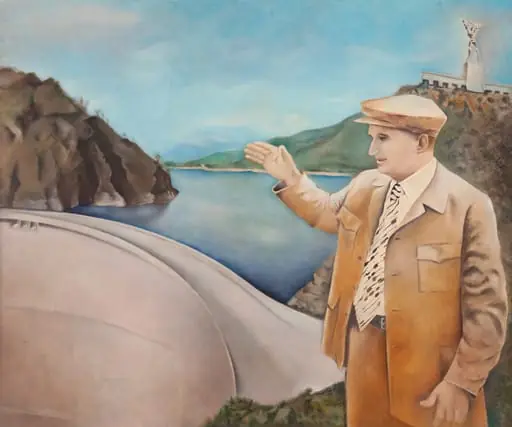 Tablou, ”Nicolae Ceaușescu la barajul Vidraru”, ulei pe pânză, nesemnat, atribuit lui Gheorghe Dobrică, nedatat. Tabloul îl înfățișază pe Nicolae Ceaușescu în timpul unei vizite de lucru la barajul Vidraru. În spatele lui Nicolae Ceaușescu statuia lui Prometeu. Construcția barajului s-a finalizat în anul 1965.Comandat și oferit de Comitetul Județean de Partid Argeș (1988).
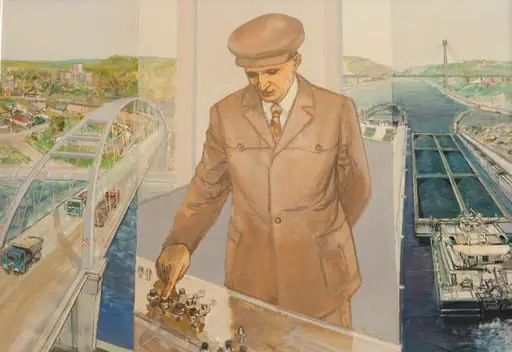 Tablou „Inaugurarea Canalului Dunăre Marea Neagră”, nesemnat și nedatat, atribuit lui Panait Stefanov. Tabloul îl prezintă pe Nicolae Ceaușescu în mijloc inaugurând Canalul prin deschiderea ecluzei. În stânga și în dreapta Canalul Dunăre - Marea Neagră. Comandat de Comitetul Județean de Partid Constanța (1984).
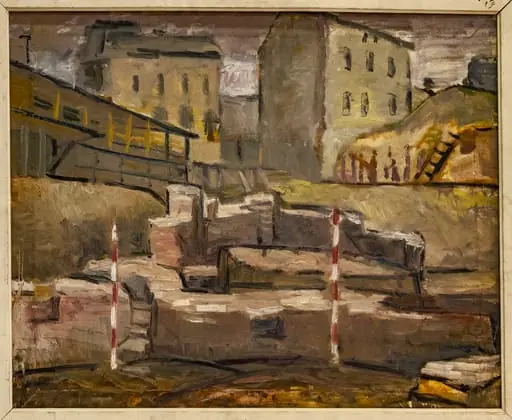 Șantier cu mozaic
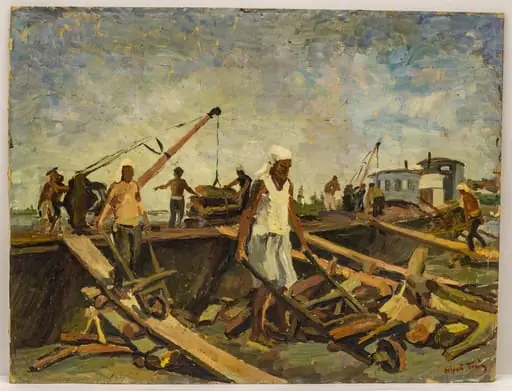 Muncitori în port
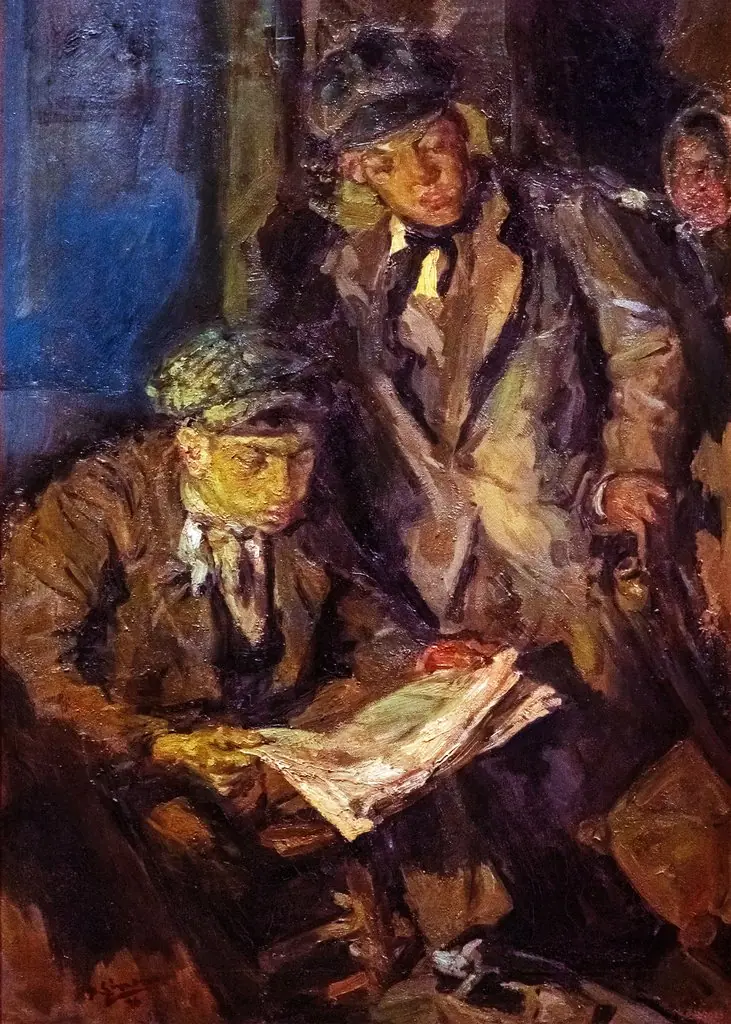 Reading the newspaper
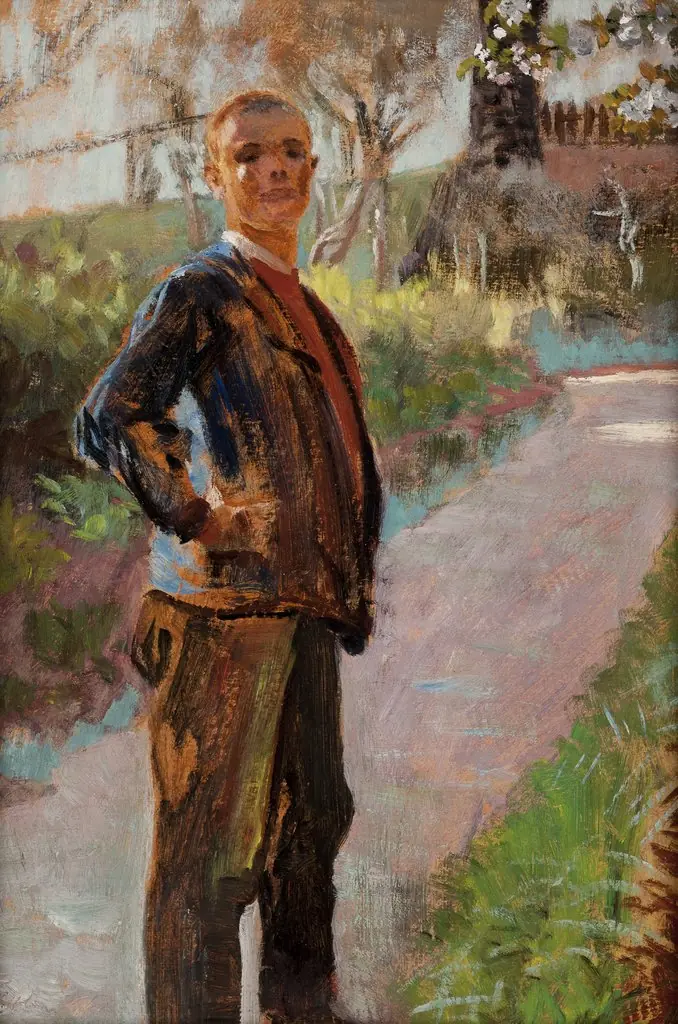 Landscape with the Artist's Son on a Path
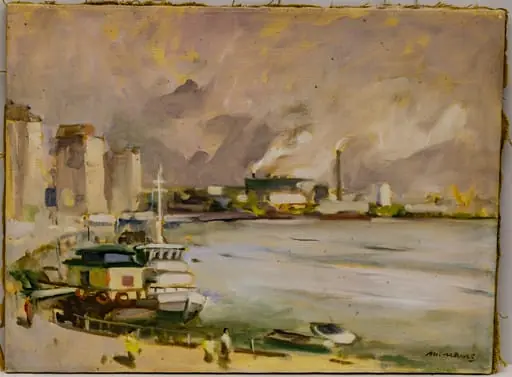 Peisaj la Tulcea
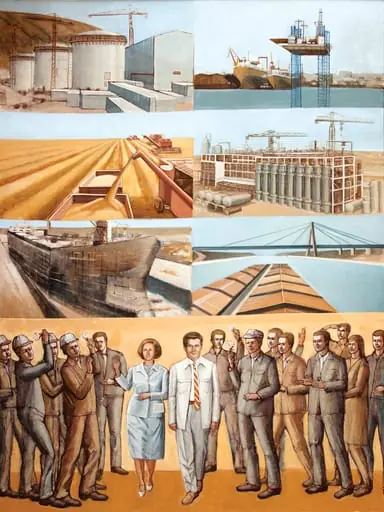 Tablou „Recunoștință”, ulei/pânză, atribuit lui Gheorghe Caruțiu. Tabloul îi prezintă în planul de jos pe soții Ceaușescu în mijlocul muncitorilor extaziați. În planul de sus, reprezentate în șase tablouri, sunt realizările industriale și agricole ale ”Epocii de Aur”. Comandat de Comitetul Județean Constanța (1988).
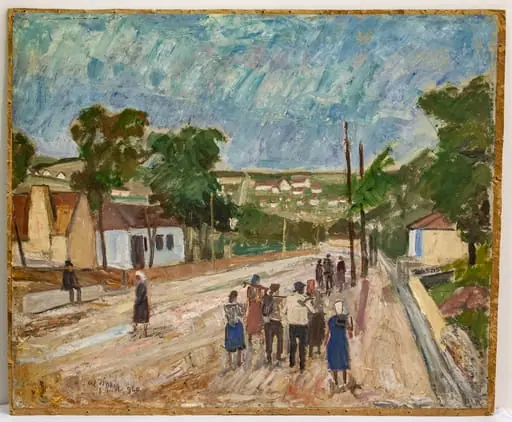 Întoarcerea brigăzii de câmp de la muncă
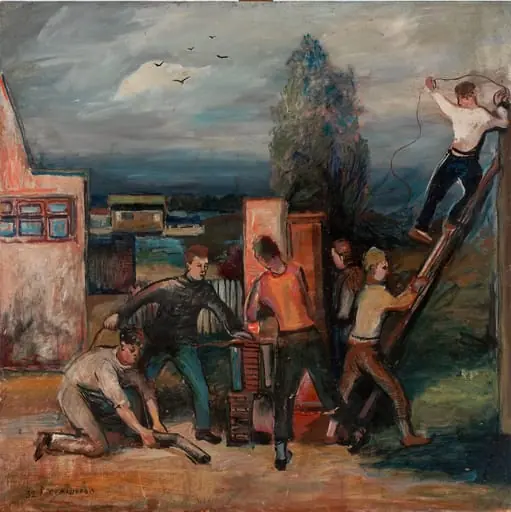 Χωρίς τίτλο