Artwork
Tablou, ”Nicolae Ceaușescu la barajul Vidraru”, ulei pe pânză, nesemnat, atribuit lui Gheorghe Dobrică, nedatat. Tabloul îl înfățișază pe Nicolae Ceaușescu în timpul unei vizite de lucru la barajul Vidraru. În spatele lui Nicolae Ceaușescu statuia lui Prometeu. Construcția barajului s-a finalizat în anul 1965.Comandat și oferit de Comitetul Județean de Partid Argeș (1988).
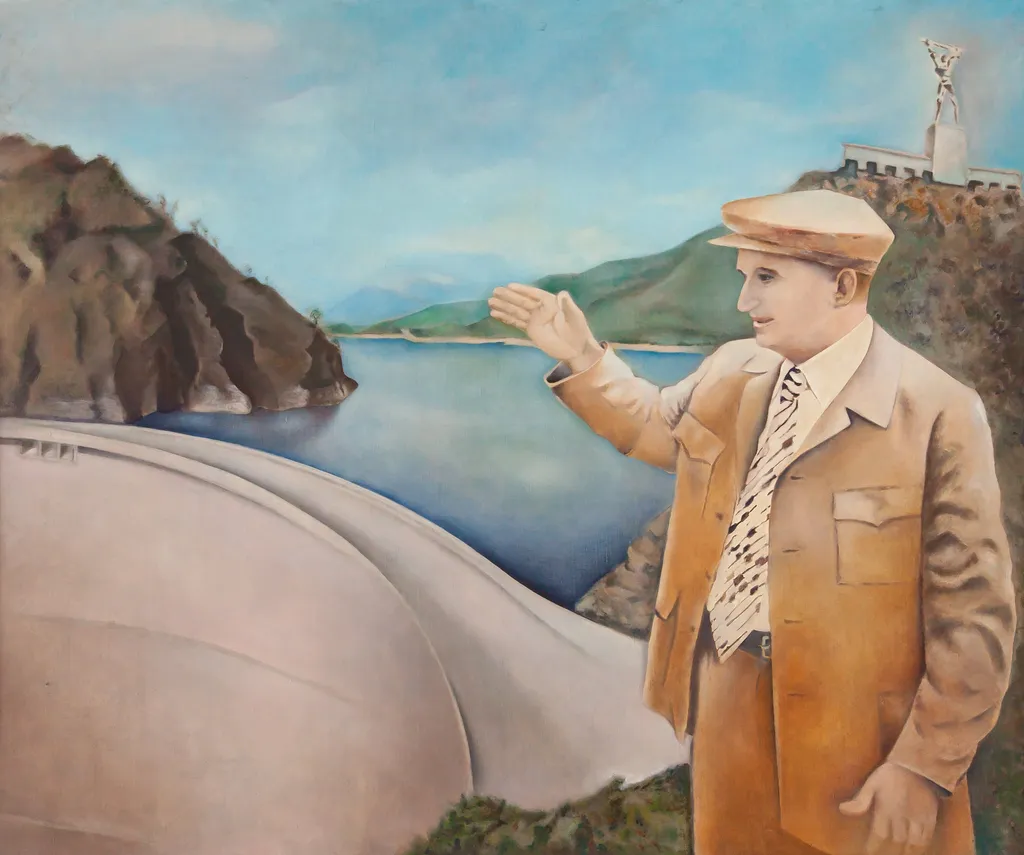
Tablou, ”Nicolae Ceaușescu la barajul Vidraru”, ulei pe pânză, nesemnat, atribuit lui Gheorghe Dobrică, nedatat. Tabloul îl înfățișază pe Nicolae Ceaușescu în timpul unei vizite de lucru la barajul Vidraru. În spatele lui Nicolae Ceaușescu statuia lui Prometeu. Construcția barajului s-a finalizat în anul 1965.Comandat și oferit de Comitetul Județean de Partid Argeș (1988). is a print by Gheorghe Dobrică. It is held in the collection of the National Museum of Romanian History.
About this work
Overview
A painted portrait of Nicolae Ceaușescu, attributed to Gheorghe Dobrică, depicts the Romanian leader during an official visit to the Vidraru Dam.
A painted portrait of Nicolae Ceaușescu, attributed to Gheorghe Dobrică, depicts the Romanian leader during an official visit to the Vidraru Dam. Executed in oil on canvas and unsigned, the work lacks a date but was commissioned in 1988 by the Argeș County Party Committee. It is held in the collection of the Museum of Ethnography, where it functions as a historical artifact rather than a celebrated artistic piece.
Subject & Meaning
The painting portrays Ceaușescu gesturing toward the dam, visually aligning him with the infrastructure project as a symbol of national progress. Behind him stands the statue of Prometheus, a classical reference to human ingenuity and defiance, deliberately placed to reinforce the regime’s narrative of leadership and technological mastery. The composition avoids personal expression, instead presenting a staged, propagandistic moment of authority.
Technique & Style
The painting employs a conventional, realistic style typical of state-commissioned art of the period. Colors are muted yet deliberate, with a clear focus on the dam’s monumental form and the leader’s formal attire. The background sky is calm and idealized, enhancing the sense of order and control. The figure of Prometheus is rendered with simplified detail, functioning more as a symbolic element than a naturalistic one.
History & Provenance
Commissioned in 1988 by the Argeș County Party Committee, the work was likely intended for display in a public or institutional setting to commemorate Ceaușescu’s association with the Vidraru Dam, completed in 1965. After the 1989 revolution, it was transferred to the Museum of Ethnography, where its function shifted from political propaganda to historical documentation.
Context
The Vidraru Dam was one of the largest infrastructure projects of communist Romania, promoted as evidence of socialist achievement. The inclusion of Prometheus, a figure from Greek myth, reflects the regime’s selective use of classical imagery to legitimize its authority. Such paintings were common in the 1980s, serving to visually reinforce the cult of personality surrounding Ceaușescu during a period of increasing economic hardship.
Legacy
The painting survives as a quiet testament to the visual language of communist propaganda in Romania. Its presence in a museum of ethnography signals its role as a cultural artifact rather than an artistic achievement. It offers insight into how state power was rendered through imagery, blending architecture, myth, and leadership to construct a narrative of enduring progress.
Artist & collection
Artist
Gheorghe Dobrică painted official scenes tied to communist-era Romania. One work here shows Nicolae Ceaușescu at the Vidraru dam during a 1965 site visit, with the Prometheus statue behind him. The 1988 oil on canvas…

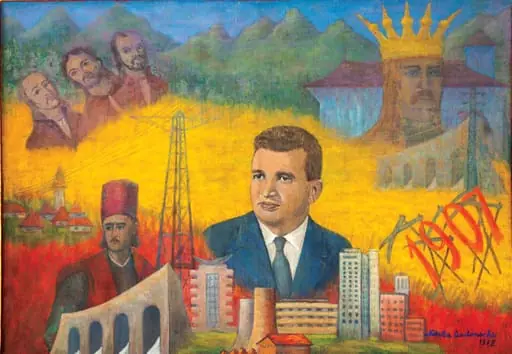 Tablou, ulei pe pânză, „Nicolae Ceaușescu și scene din istoria poporului”, semnat Natalia Gadonschi și datat 1972 în partea dreaptă jos. Nicolae Ceaușescu este reprezentat înconjurat de personalități și evenimenta cu trecut revoluționar: Horia, Cloșca și Crișan, Tudor Vladimirescu, Răscoala de la 1907, Ștefan cel Mare (în fața uneia din ctitoriile sale). Nicolae Ceaușescu este reprezentat ca un ctitor al socialismului. Tablou oferit de Natalia și Nicolae Gadonschi – Țepeș, cu ocazia aniversării zilei de naștere al lui Nicolae Ceaușescu, ianuarie 1978.
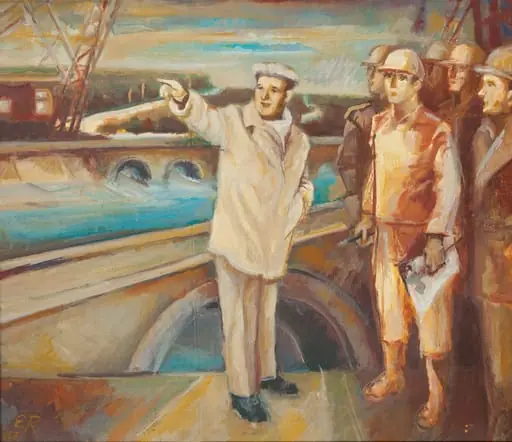 Tablou, ulei pe pânză, „Epoca marilor împliniri”, semnat E.R. și datat 1987 în partea stângă jos, atribuit lui Eugen Rascenco. Nicolae Ceaușescu este prezentat în timpul unei vizite de lucru, dând indicații muncitorilor. Comandat și oferit de Comitetul Județean de Partid Vaslui, 1987.
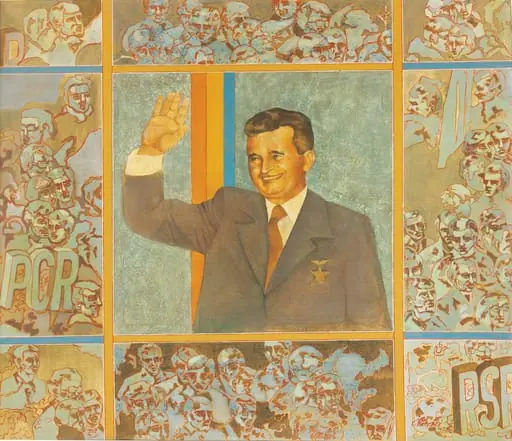 Tablou, ulei pe pânză, „Portret Nicolae Ceaușescu”, semnat în partea dreaptă jos C.Macavei și datat 1978. Tablou împărțit în mai multe registre, în plan central Nicolae Ceaușescu salutând oamenii muncii din celelalte registre. Comandat și oferit de Comitetul Județean de Partid Ilfov, 23 ianuarie 1978.
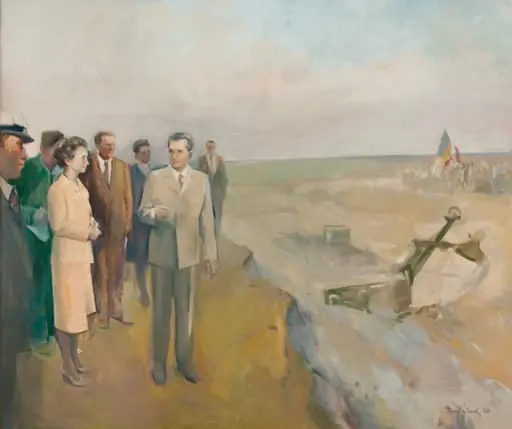 Tablou, ”Omagiu”, semnat Eugen Palade și datat dreapta jos.Tabloul îi reprezintă pe Nicolae și Elena Ceaușescu alături de membrii de partid în vizită de lucru la șantierul Canalul Dunăre București. Comandat de Comitetul Municipal de Partid București, 1988.
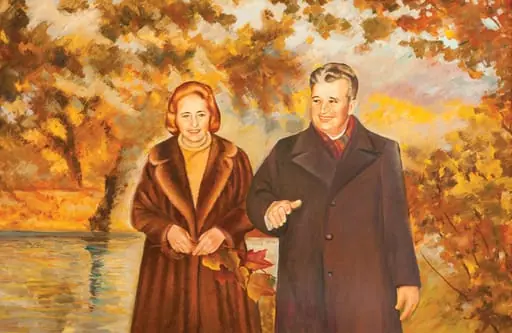 Tablou, ulei pe pânză, „Portret Nicolae și Elena Ceaușescu”, nesemnat, atribuit Cornelia Ionescu - Drăgușin. Tabloul îi prezintă pe soții Ceaușescu întru-un peisaj de toamnă pe malul unui lac. Tablou comandat și oferit de Comitetul Județean de Partid Giurgiu (1985).
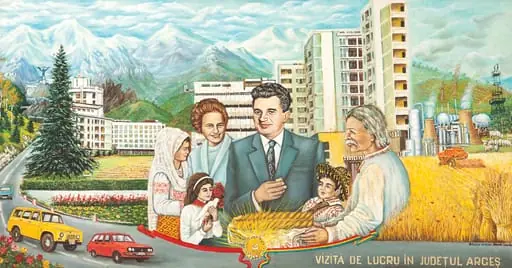 Tablou ”Vizită de lucru în Județul Argeș”, semnat artist amator Manda Vasile. În centru Nicolae și Elena Ceaușescu primind omagiul locuitorilor județului. Tabloul redă imaginea economiei argeșene în care se află fabrica de automobile ”Dacia” de la Colibașu și cea de autoturisme ”ARO” de la Câmpulung. Oferit de Comitetul Județean de Partid Argeș (1982).
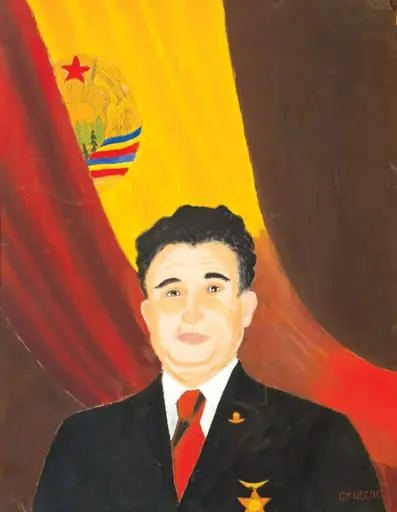 Tablou, ulei pe carton, ”Nicolae Ceaușescu”, semnat Gh. Nechita în partea dreaptă jos. Nicolae Ceaușescu este prezentată cu o figură veselă, în piept are însemnul de ”Erou al Republicii Socialiste România. În spatele său s-a vrut a fii reprezentat steagul cu stema RSR, numai ca, nu există culoarea albastru ea fiind înlocuită de culoarea maro. Oferit lui Nicolae Ceaușescu de către autor Gheorghe Nechita din Baia Mare, 26 ianuarie 1976.
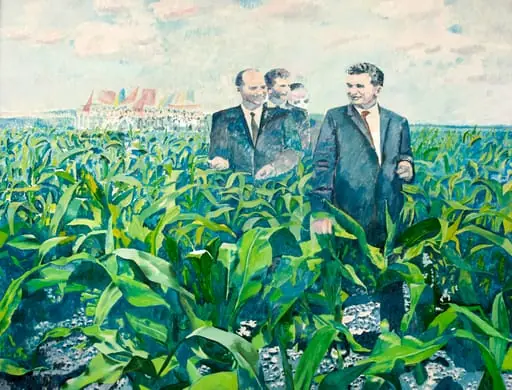 Tablou „Primul sfat cu țara - 26 iunie 1965, C.A.P. Gh. Doja”, atribuit lui Ion Bitzan. Tabloul îl prezintă pe Nicolae Ceaușescu în prima sa vizită de lucru. Este reprezentat în inspectând un lan de porumb alături de trei personaje, în spate se observă un grup de oameni fluturând steaguri. Comandat și oferit lui Nicolae Caușescu de Comitetul Județean de Partid Ialomița (1988).
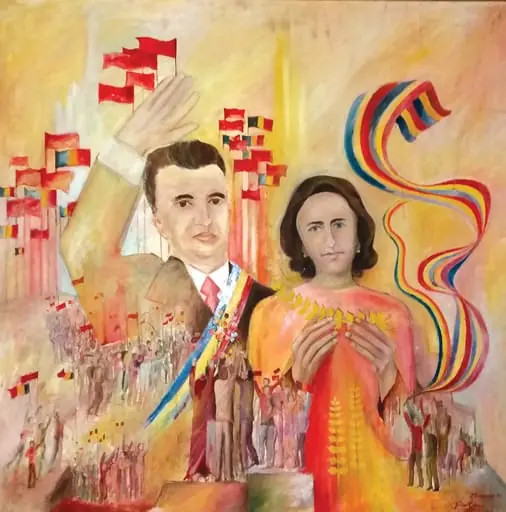 Tablou, ulei pe pânză, ”23 August”, nesemnat, atribuit Teodor Cioată. Nicolae și Elena Ceaușescu sunt prezentați în mijlocul mulțimii. Proporțiile reprezentării personajelor principale, soții Ceaușescu, nu sunt respectate de către artist - capetele sunt prea mari, la fel și mâinile care sunt ținute în poziții nefirești. În partea de jos a tabloului oameni ai muncii cu steaguri ovaționând. Tablou oferit de autor, Iași, august 1974.
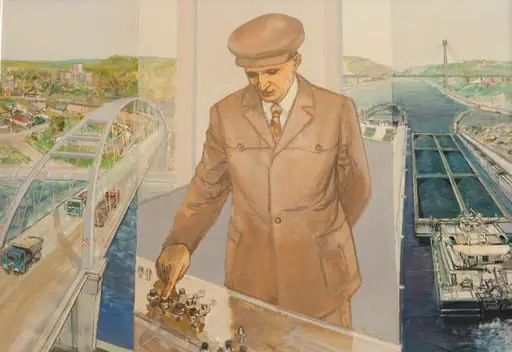 Tablou „Inaugurarea Canalului Dunăre Marea Neagră”, nesemnat și nedatat, atribuit lui Panait Stefanov. Tabloul îl prezintă pe Nicolae Ceaușescu în mijloc inaugurând Canalul prin deschiderea ecluzei. În stânga și în dreapta Canalul Dunăre - Marea Neagră. Comandat de Comitetul Județean de Partid Constanța (1984).
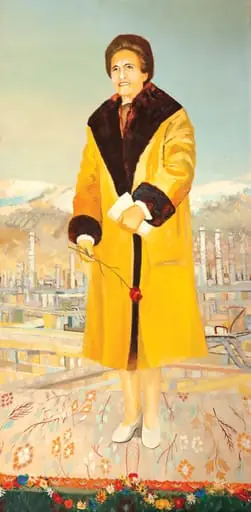 Tablou ulei pe pânză, „Elena Ceaușescu”, atribuit lui Ioan Florea, nedatat. Elena Ceaușescu îmbrăcată într-o haină de blană, este reprezentată pe un covor cu motive tradiționale din zona Mehedinți, pe fundal un combinat petrochimic, ținând în mâna dreaptă o garoafă roșie, iar în mâna stângă o carte (probabil lucrarea sa de doctorat). Tablou comandat de Comitetul Județean de Partid Mehedinți și oferit Elenei Ceaușescu cu ocazia aniversării vârstei de 70 de ani (ianuarie 1989).
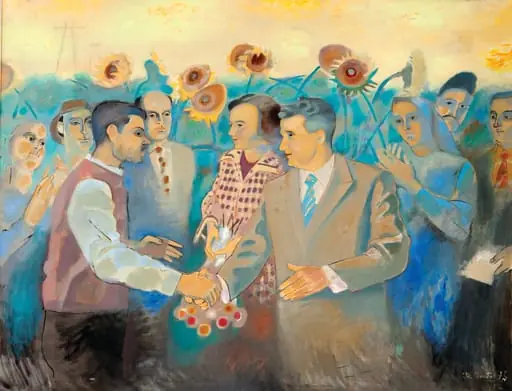 Tablou ”Amiază în câmpia ilfoveană” semnat și datat de autor în dreapta jos ”Ilie Ciortea 78”. Tabloul îi reprezintă pe soții Ceaușescu întâlnindu-se cu oamenii muncii în mijlocul uni lan de floarea soarelui. Comandat de Comitetul Județean de Partid Ilfov și facut cadou cu ocazia zilei de naștere (ianuarie 1978).