Artwork
Tablou „Recunoștință”, ulei/pânză, atribuit lui Gheorghe Caruțiu. Tabloul îi prezintă în planul de jos pe soții Ceaușescu în mijlocul muncitorilor extaziați. În planul de sus, reprezentate în șase tablouri, sunt realizările industriale și agricole ale ”Epocii de Aur”. Comandat de Comitetul Județean Constanța (1988).
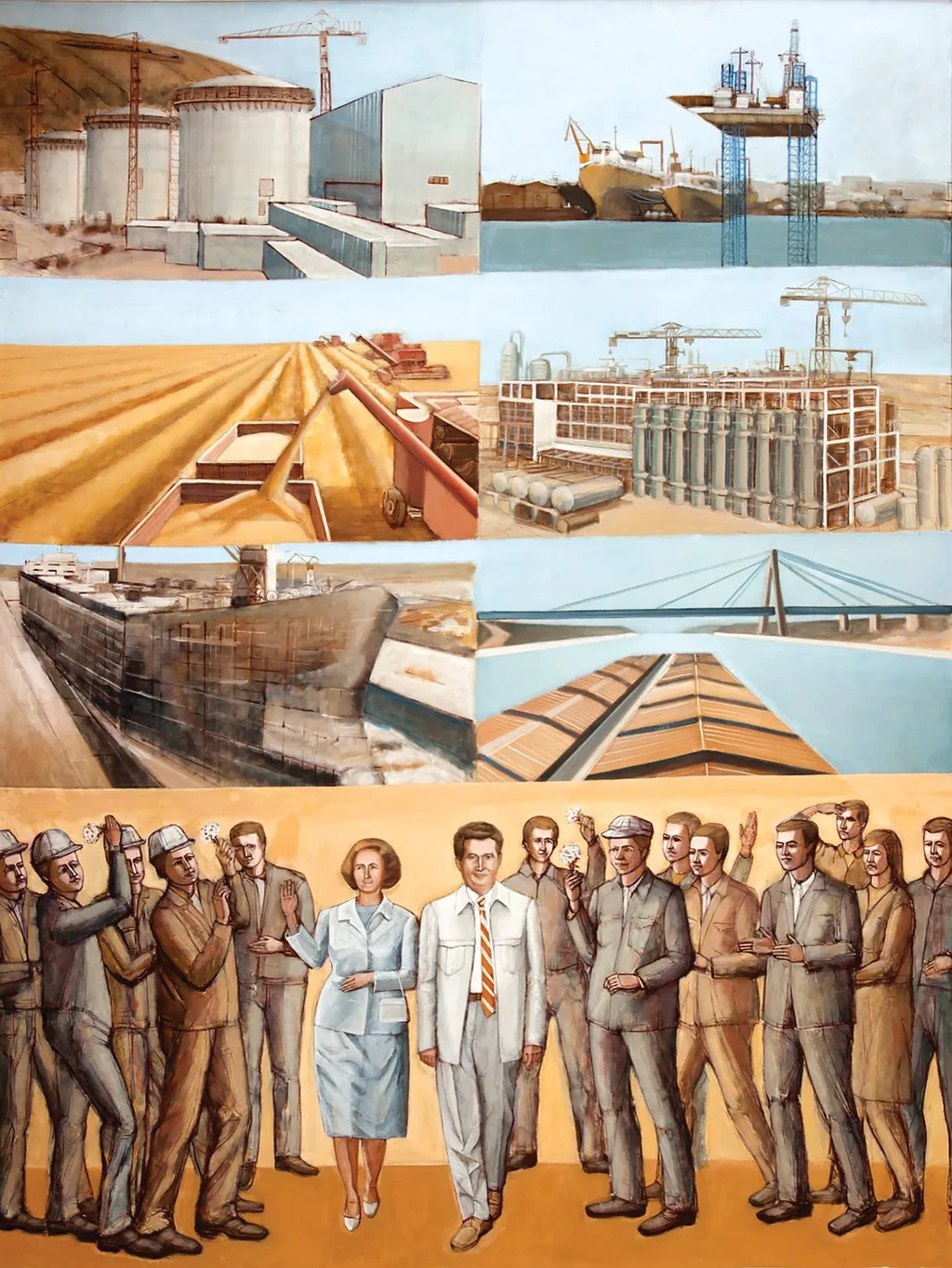
Tablou „Recunoștință”, ulei/pânză, atribuit lui Gheorghe Caruțiu. Tabloul îi prezintă în planul de jos pe soții Ceaușescu în mijlocul muncitorilor extaziați. În planul de sus, reprezentate în șase tablouri, sunt realizările industriale și agricole ale ”Epocii de Aur”. Comandat de Comitetul Județean Constanța (1988). is a print by Gheorghe Caruțiu. It is held in the collection of the National Museum of Romanian History.
About this work
Overview
Below, a crowd of workers gathers around two central figures, while above, six smaller panels depict industrial and agricultural achievements.
This oil-on-canvas painting, attributed to Gheorghe Caruțiu and commissioned in 1988 by the Constanța County Committee, presents a hierarchical composition divided into two zones. Below, a crowd of workers gathers around two central figures, while above, six smaller panels depict industrial and agricultural achievements. The palette favors muted earth tones with selective use of yellow to highlight production scenes, reinforcing a narrative of collective labor and state accomplishment.
Subject & Meaning
The painting portrays Nicolae and Elena Ceaușescu as figures of reverence amid a throng of adoring workers, positioning them as the moral and political center of national progress. The six upper panels illustrate state-promoted achievements—ships, factories, harvesters—framed as evidence of the so-called 'Golden Age.' The work functions as visual propaganda, linking leadership directly to material success and social harmony under the regime.
Technique & Style
The composition employs a clear vertical division, separating the earthly crowd from the idealized upper scenes. Figures are rendered with simplified forms and limited modeling, avoiding deep chiaroscuro despite the dramatic lighting implied in the scene. Colors are restrained, with warm yellows used selectively to draw attention to agricultural output, while the lower group is rendered in cooler, more somber tones to emphasize their subservient role.
History & Provenance
Commissioned in 1988 by the Constanța County Committee, the painting was part of a final wave of state-sponsored art intended to glorify the Ceaușescu regime during its last years. Its creation coincided with increasing economic hardship, making its celebratory tone incongruent with daily reality. After 1989, such works were removed from public display, and this piece entered private or institutional storage without public exhibition.
Context
Created during the final phase of communist rule in Romania, the painting reflects the regime’s intensified use of visual culture to sustain legitimacy amid declining living standards. Similar monumental works were produced nationwide, blending socialist realism with cult-of-personality imagery. The emphasis on industrial and agricultural output mirrored state propaganda that prioritized visible achievements over social welfare.
Legacy
The painting survives as a historical artifact of state-sponsored visual rhetoric, not as a celebrated artistic work. It is rarely exhibited, and when referenced, it serves primarily as an example of how art was instrumentalized under authoritarian rule. Its stylistic conventions align with late socialist realism, offering insight into the regime’s final attempts to manufacture consent through imagery.
Artist & collection
Artist
Gheorghe Caruțiu’s paintings feel like time capsules from the late 1980s, packed with Ceaușescu’s face and tractor parades.

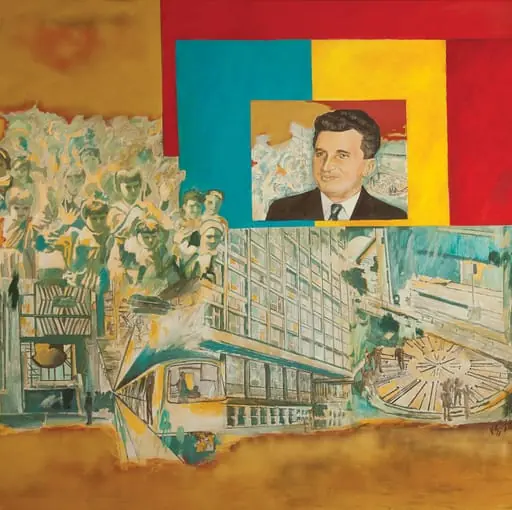 Tablou „Omagiu”, semnat Ion Bitzan și Vladimir Setran.Tabloul prezintă portretul lui Nicolae Ceaușescu încadrat de tricolor în partea dreaptă sus. Restul tabloului este completat de realizările epocii socialiste. Comandat de Comitetul Municipal de Partid 1981.
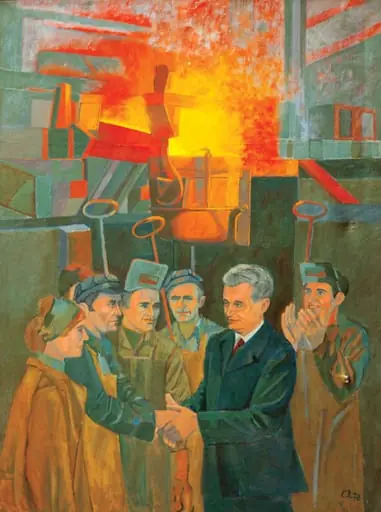 Tablou, ulei pe pânză, ”Întâlnire cu siderurgiștii”, semnat ”A„ și datat 1978 în partea dreaptă jos, atribuit lui Gh. Andrei. Nicolae Ceaușescu într-o uzină dând mâna călduros cu oamenii muncii din siderurgie, pe fundal un furnal aprins. Oferit de Consiliul Central al Sindicatelor, 23 ianuarie 1978.
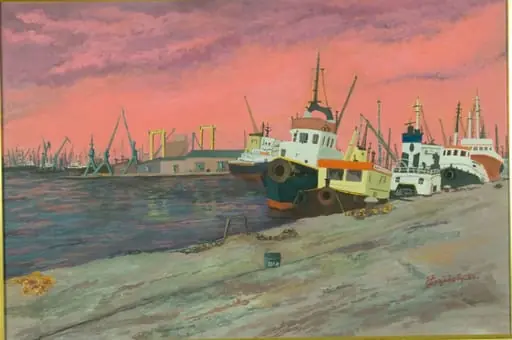 Λιμάνι
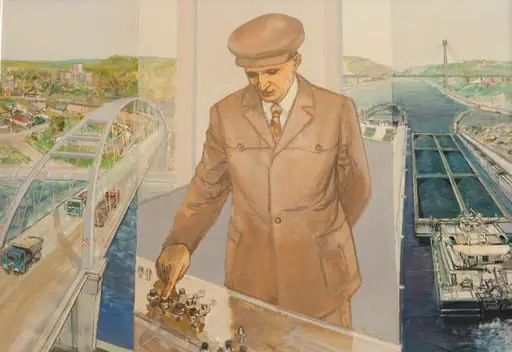 Tablou „Inaugurarea Canalului Dunăre Marea Neagră”, nesemnat și nedatat, atribuit lui Panait Stefanov. Tabloul îl prezintă pe Nicolae Ceaușescu în mijloc inaugurând Canalul prin deschiderea ecluzei. În stânga și în dreapta Canalul Dunăre - Marea Neagră. Comandat de Comitetul Județean de Partid Constanța (1984).
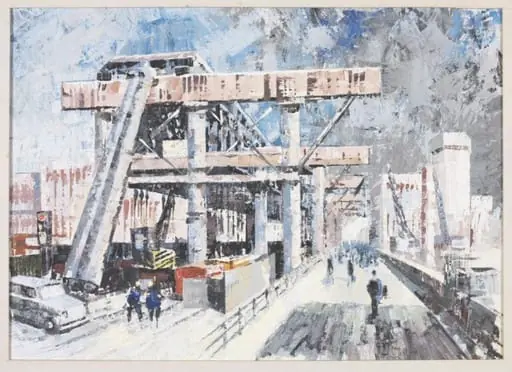 View across a bridge to a modern city
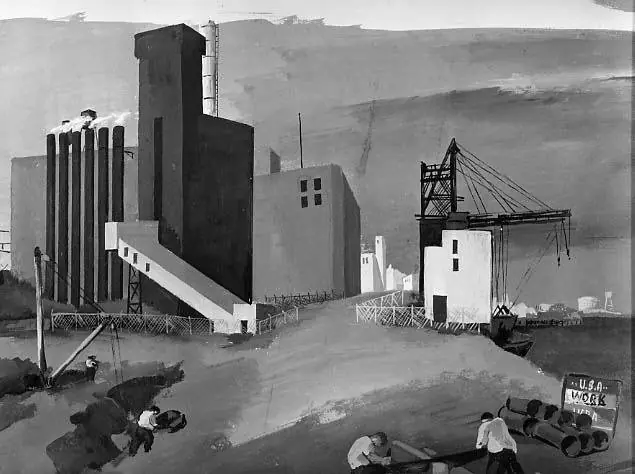 Waterfront
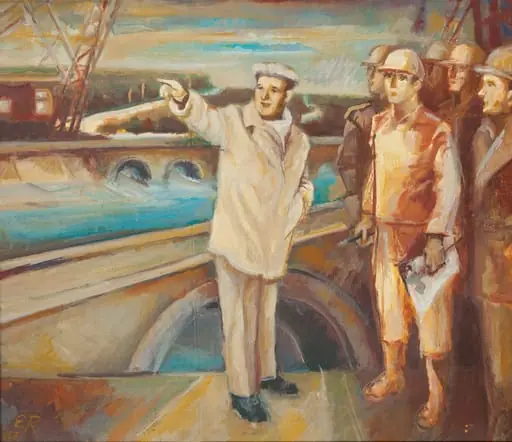 Tablou, ulei pe pânză, „Epoca marilor împliniri”, semnat E.R. și datat 1987 în partea stângă jos, atribuit lui Eugen Rascenco. Nicolae Ceaușescu este prezentat în timpul unei vizite de lucru, dând indicații muncitorilor. Comandat și oferit de Comitetul Județean de Partid Vaslui, 1987.
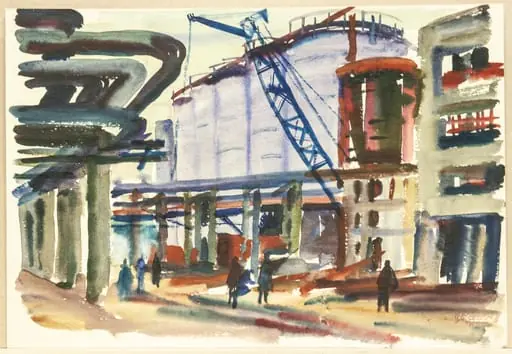 Peisaj industrial la uzina de alumină
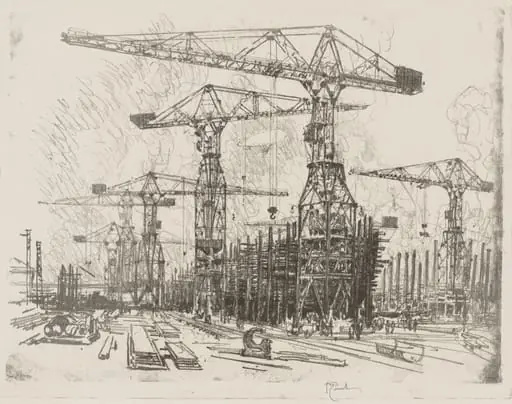 English War Work: The Old Shipyard
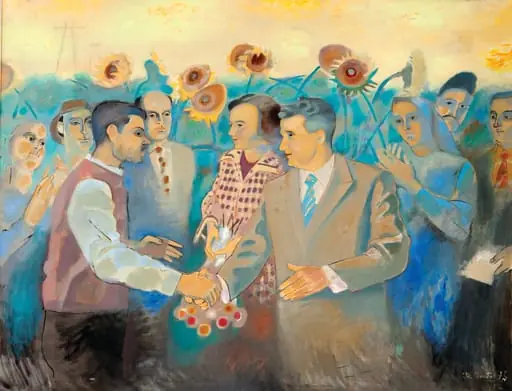 Tablou ”Amiază în câmpia ilfoveană” semnat și datat de autor în dreapta jos ”Ilie Ciortea 78”. Tabloul îi reprezintă pe soții Ceaușescu întâlnindu-se cu oamenii muncii în mijlocul uni lan de floarea soarelui. Comandat de Comitetul Județean de Partid Ilfov și facut cadou cu ocazia zilei de naștere (ianuarie 1978).
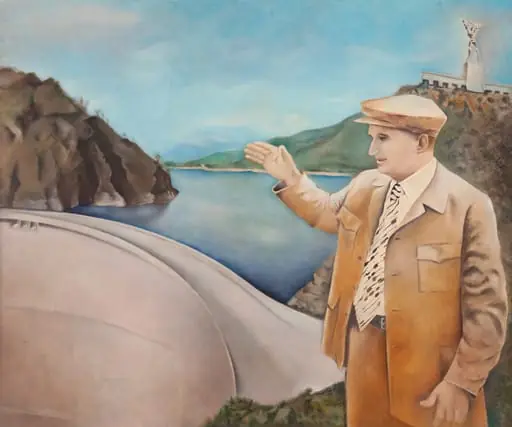 Tablou, ”Nicolae Ceaușescu la barajul Vidraru”, ulei pe pânză, nesemnat, atribuit lui Gheorghe Dobrică, nedatat. Tabloul îl înfățișază pe Nicolae Ceaușescu în timpul unei vizite de lucru la barajul Vidraru. În spatele lui Nicolae Ceaușescu statuia lui Prometeu. Construcția barajului s-a finalizat în anul 1965.Comandat și oferit de Comitetul Județean de Partid Argeș (1988).
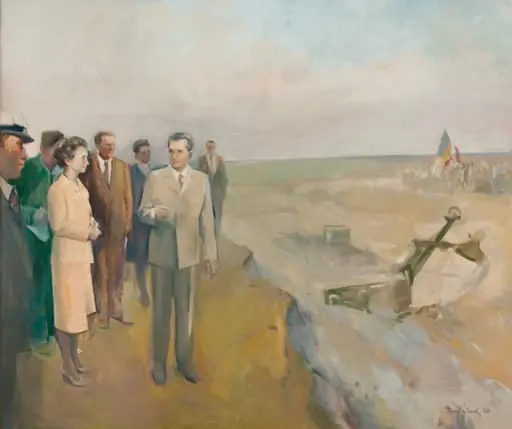 Tablou, ”Omagiu”, semnat Eugen Palade și datat dreapta jos.Tabloul îi reprezintă pe Nicolae și Elena Ceaușescu alături de membrii de partid în vizită de lucru la șantierul Canalul Dunăre București. Comandat de Comitetul Municipal de Partid București, 1988.