Artwork
The Chronology of Fashion
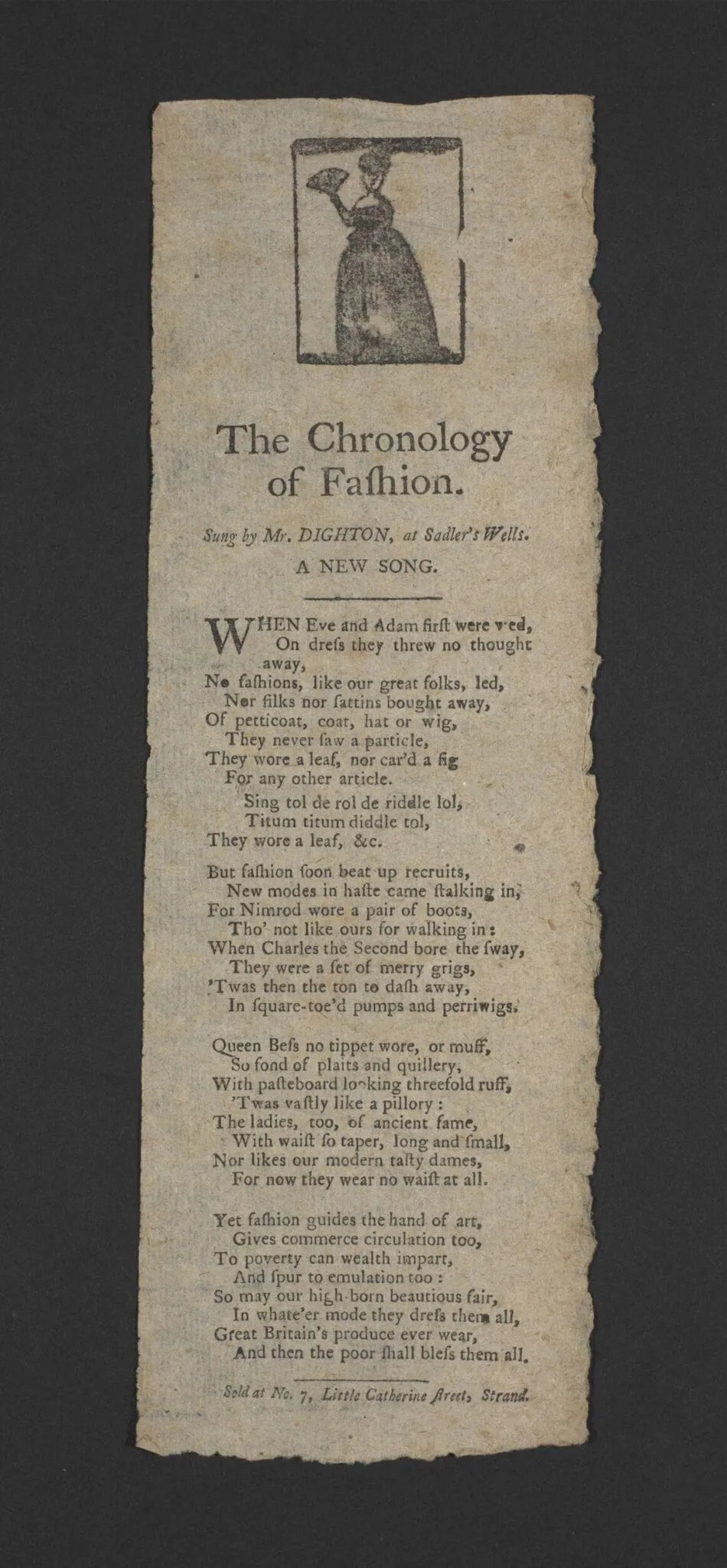
The Chronology of Fashion is a print by J. Evans. It dates from 1750 and is held in the collection of the Victoria and Albert Museum.
About this work
The title of this work is The Chronology of Fashion.
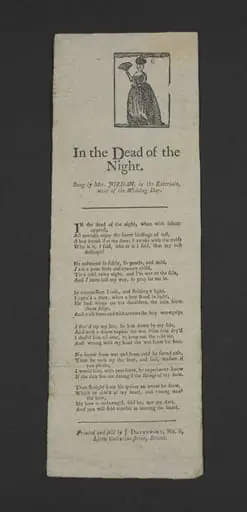
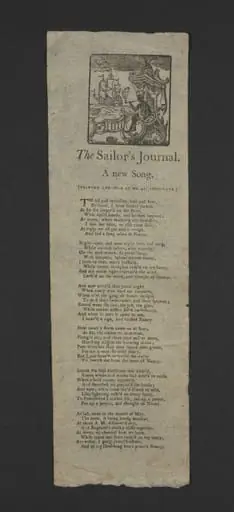
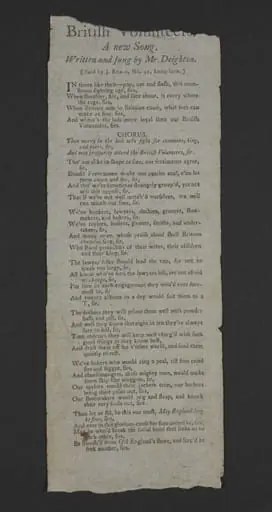
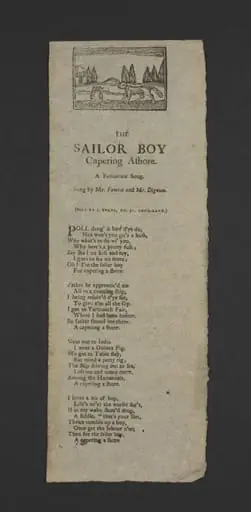
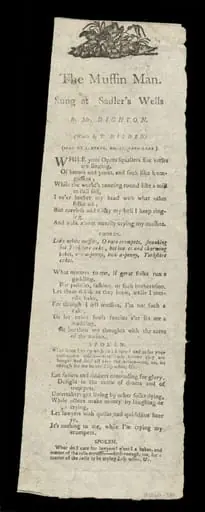
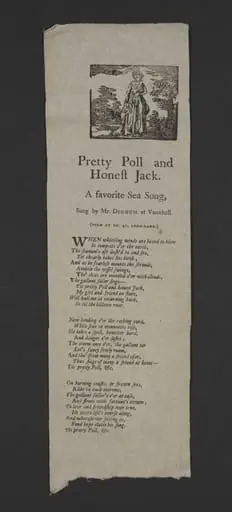
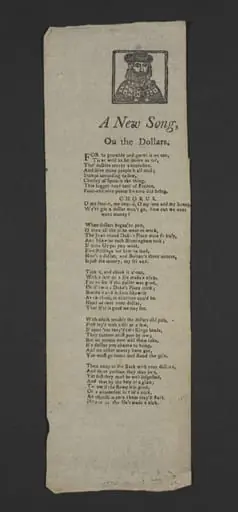
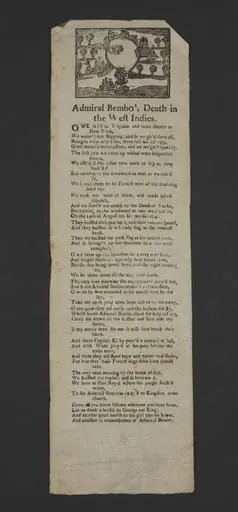
It's a print from the late 18th century, and what's interesting is that it contains printed lyrics for a song.
The song was sung by Mr Dighton, and this print is held at the Victoria and Albert Museum, which might lead you to look up the museum: Victoria and Albert Museum.
Overview
The object reflects the era’s intersection of music, satire, and visual culture, preserved today in the Victoria and Albert Museum’s collection of graphic arts.
This late 18th-century print features the lyrics to a song titled 'The Chronology of Fashion,' performed by Mr. Dighton. Produced by printer J. Evans, it belongs to a category of popular printed ephemera meant for domestic or theatrical use. The object reflects the era’s intersection of music, satire, and visual culture, preserved today in the Victoria and Albert Museum’s collection of graphic arts.
Subject & Meaning
The song traces the shifting trends in clothing over time, likely offering a witty or critical commentary on the absurdities of fashion cycles. As a performed piece, it would have appealed to audiences familiar with contemporary styles and their rapid changes. The lyrics function as both entertainment and social observation, capturing public attitudes toward appearance and conformity in Georgian society.
Technique & Style
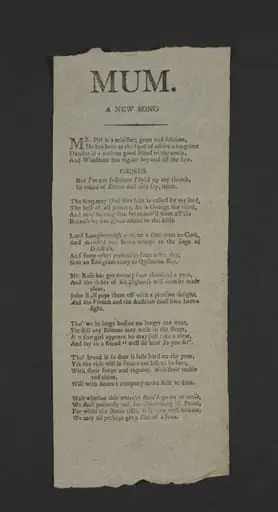
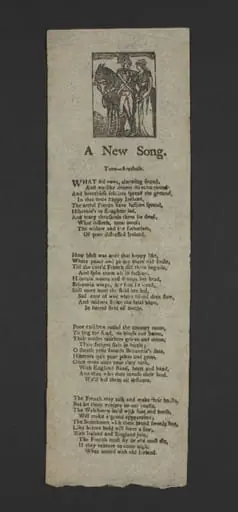
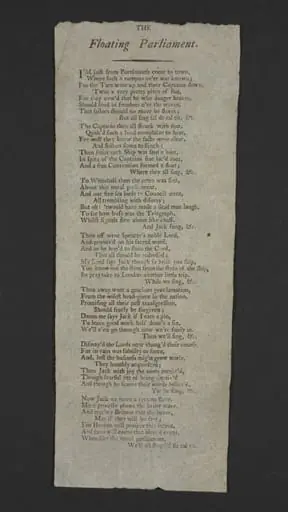
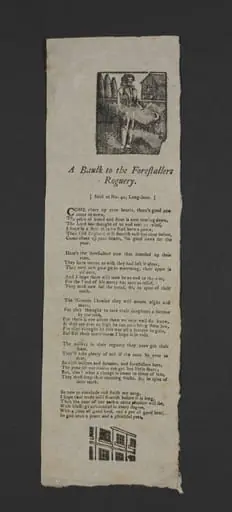
The print is a simple typographic composition, typical of late 18th-century song sheets. Text is arranged in clear, legible lines without elaborate ornamentation, prioritizing readability over visual flourish. The absence of illustrations suggests it was intended for practical use—perhaps as a cue for performers or a keepsake for listeners—rather than as a decorative item.
History & Provenance
Printed by J. Evans, a known publisher of popular music and theatrical material, the sheet circulated in London’s vibrant print culture. Its survival in the Victoria and Albert Museum indicates early recognition of its cultural value. While little is documented about its original distribution, its preservation reflects 19th-century efforts to collect everyday printed artifacts as historical records.
Context
In the late 1700s, printed song sheets were common in urban centers, often tied to theater, public concerts, or private gatherings. Fashion was a frequent subject of satire, reflecting anxieties about class, gender, and social mobility. This print fits within a broader tradition of visual and textual satire that used clothing to comment on societal norms and excesses.
Legacy
As a fragment of popular culture, the print offers insight into how fashion was discussed in everyday life before the rise of fashion magazines. Its preservation underscores the museum’s role in safeguarding transient media that once shaped public discourse. Today, it serves as a primary source for scholars studying the social history of dress and performance in the Georgian era.
Artist & collection
Artist
These late-18th-century prints capture everyday British life with crisp lines and sharp satire.