Artwork
The Sailor Boy
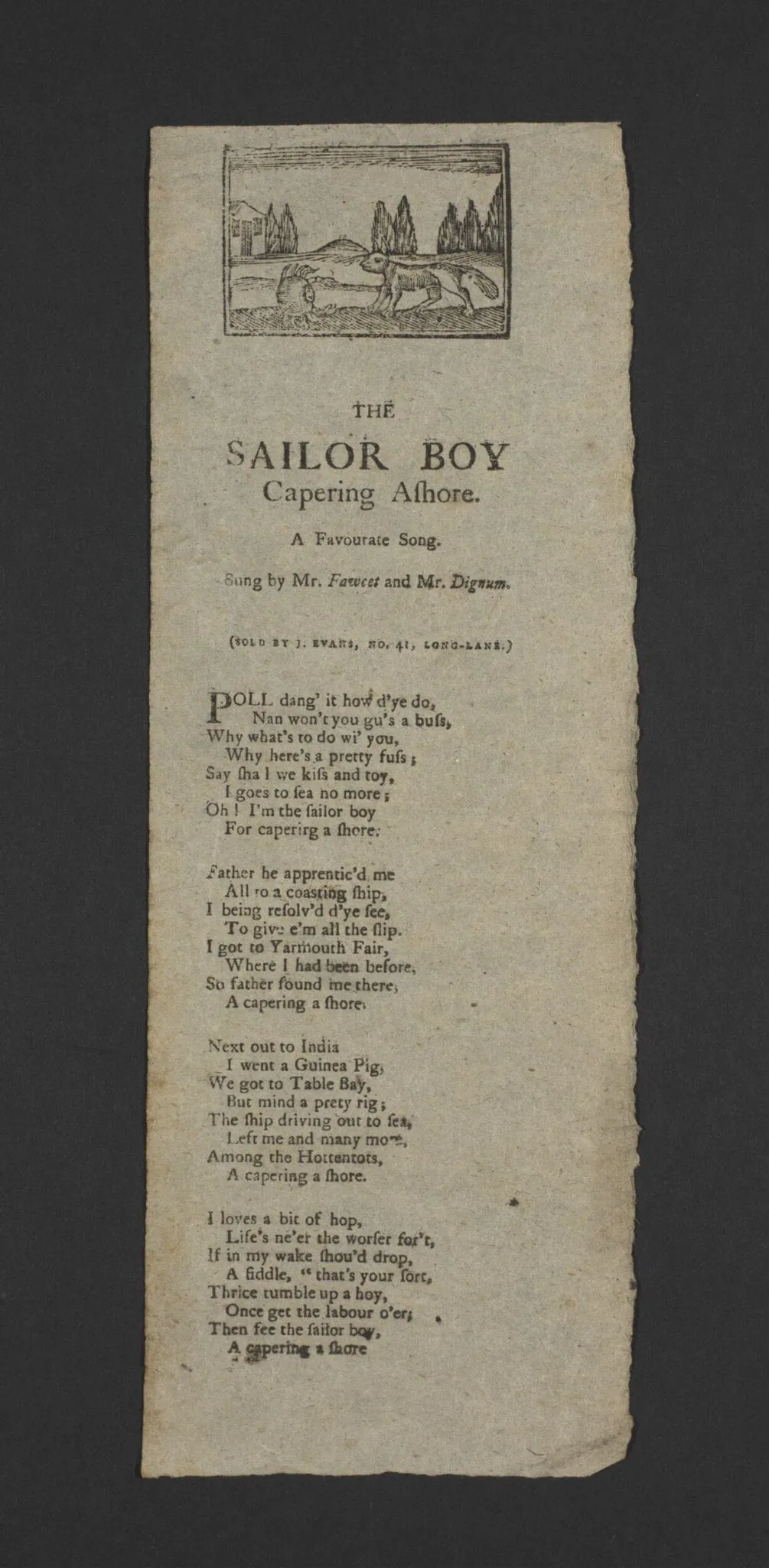
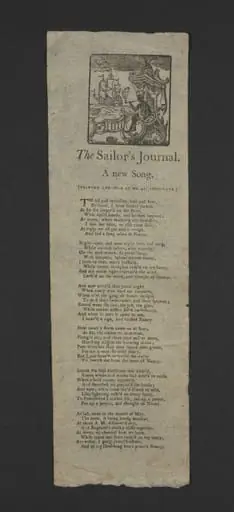
The Sailor Boy is a print by J. Evans. It dates from 1750 and is held in the collection of the Victoria and Albert Museum. A late 18th-century broadside print from London, produced by J.
About this work
Overview
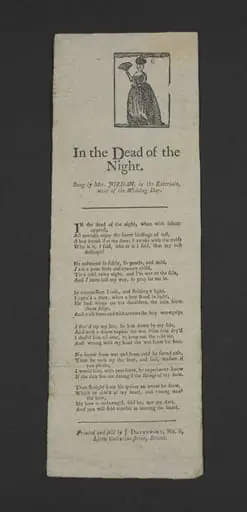
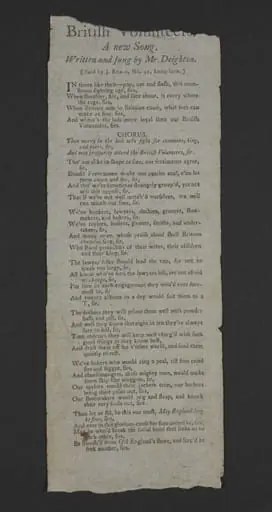
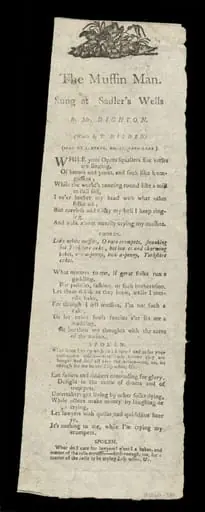
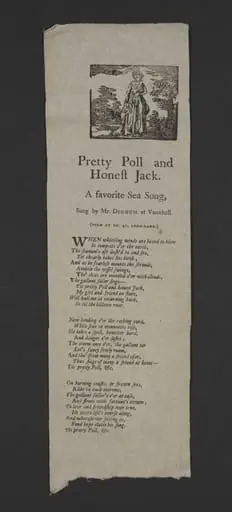
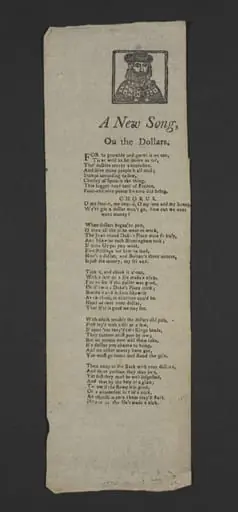
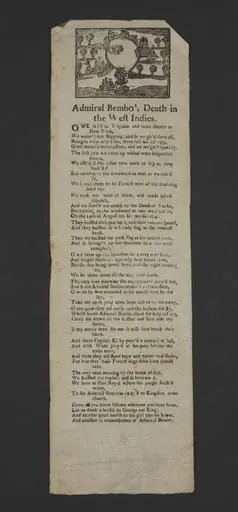
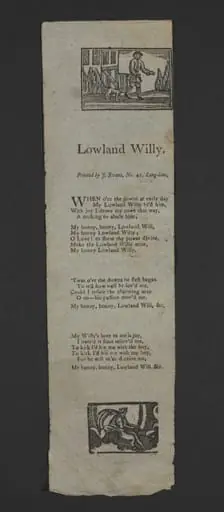
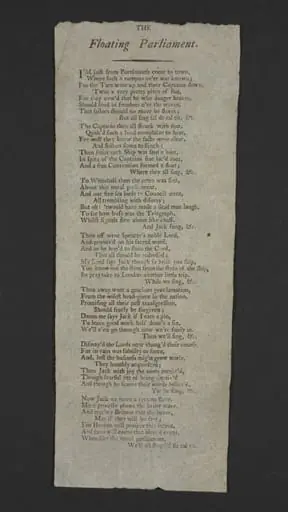
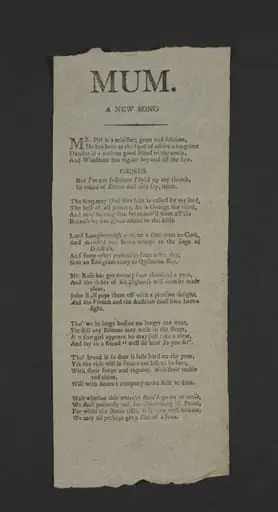
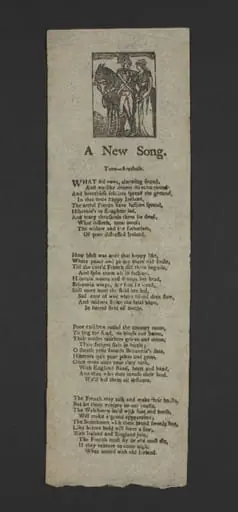
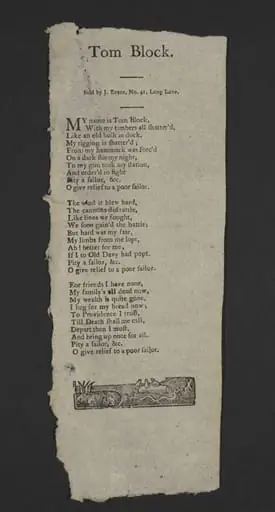
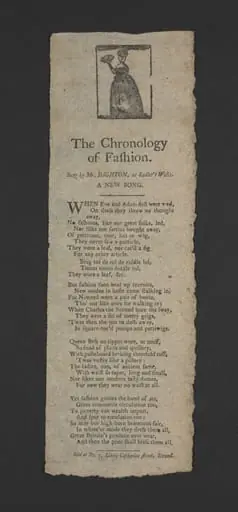
A late 18th-century broadside print from London, produced by J. Evans, contains the lyrics and sheet music for the popular song 'The Sailor Boy.' Designed for mass distribution, it was sold openly in street markets and taverns, reflecting the era’s thriving trade in printed music among the urban public.
Subject & Meaning
The song celebrates the life of a sailor, likely appealing to working-class audiences through themes of adventure, separation, and homecoming. Its simple, repetitive structure made it easy to remember and sing aloud, reinforcing its role as a communal folk tune rather than a refined composition.
Technique & Style
The print uses basic typography and minimal engraving, typical of cheap, high-volume production. Musical notation is printed alongside lyrics in a clear, functional layout, prioritizing accessibility over ornamentation. The absence of illustrations underscores its purpose as a practical aid for singing rather than a decorative object.
History & Provenance
Produced by J. Evans, a known publisher of street music in London, the print circulated widely in the 1790s. Surviving examples are rare, but similar broadsides are held in collections such as the Victoria and Albert Museum, suggesting its place in the broader ecosystem of popular print culture of the period.
Context
In late 18th-century Britain, printed song sheets were a primary medium for disseminating music outside formal concert halls. Urban populations, including sailors and laborers, engaged with tunes like 'The Sailor Boy' through informal gatherings, making such prints vital to the transmission of popular culture.
Legacy
Though no longer performed widely, the print represents an early form of mass media in music. It illustrates how commercial printing enabled ordinary people to participate in cultural expression, laying groundwork for later developments in popular music distribution and public engagement with song.
Artist & collection
Artist
These late-18th-century prints capture everyday British life with crisp lines and sharp satire.