Artwork
Ganymede Feeding the Eagle
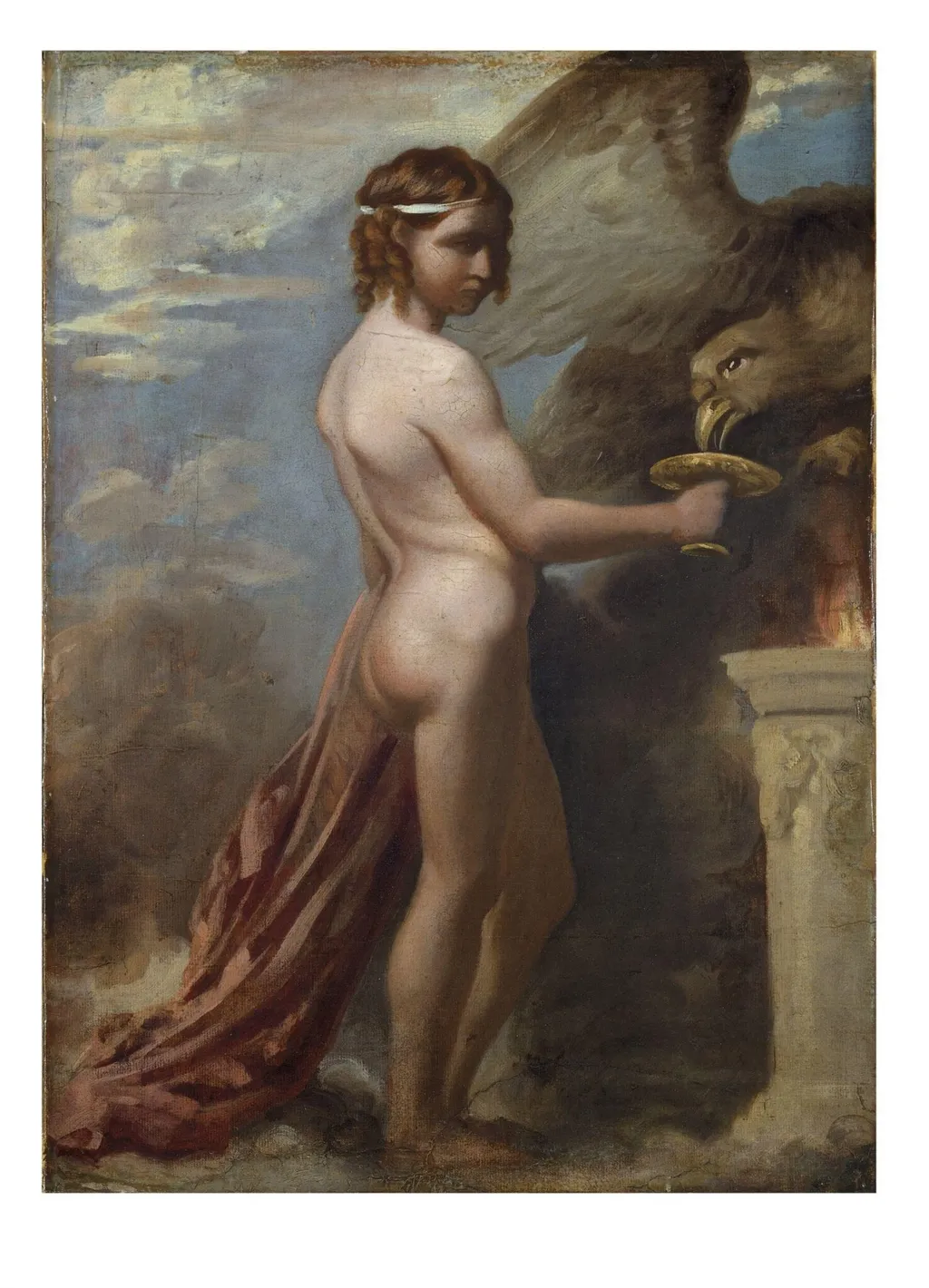
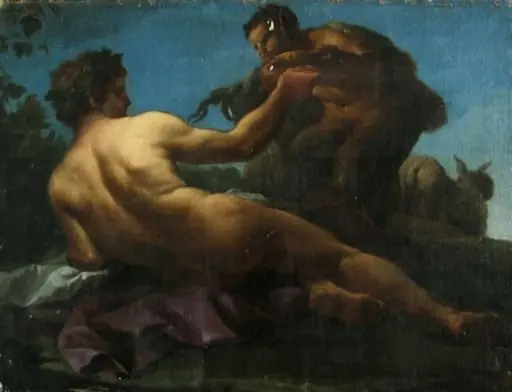
Ganymede Feeding the Eagle is an oil painting by the British Romanticist artist Richard Evans. It dates from 1822 and is held in the collection of the Victoria and Albert Museum. This oil painting depicts Ganymede, a mortal youth from Greek myth, offering berries to an eagle.
About this work
Overview
This oil painting depicts Ganymede, a mortal youth from Greek myth, offering berries to an eagle. Created as a preparatory study, it was intended for a larger fresco project. The artist, influenced by his time in Rome, sought to emulate the subdued tones and compositional clarity of ancient wall paintings. The scene avoids theatricality, favoring quiet intimacy over dramatic tension.
Subject & Meaning
The image references the myth in which Zeus, in the form of an eagle, abducts Ganymede to serve as cup-bearer to the gods. Rather than portraying abduction or divine power, the artist focuses on a moment of calm exchange—Ganymede’s gentle gesture and the eagle’s stillness suggest harmony rather than force. This reinterpretation softens the myth’s violence into a serene ritual.
Technique & Style
The artist employed warm, earth-toned pigments to evoke the patina of aged marble, aligning with his study of Roman frescoes. Soft, diffused lighting enhances the texture of the eagle’s feathers and the boy’s skin without harsh contrast. Brushwork is restrained, prioritizing tonal harmony over detail, reflecting a deliberate move away from Baroque dynamism toward classical restraint.
History & Provenance
The artist spent years in Rome studying antiquities, particularly fresco techniques from Pompeii and Herculaneum. This oil sketch was made as a trial for an experimental fresco, testing color and composition on a durable surface before applying paint to wet plaster. Though the fresco was never completed, the study survives as a testament to his engagement with ancient methods.
Context
In the 18th century, Neoclassicism was rising as a reaction against ornate Baroque styles. Artists turned to antiquity for models of simplicity and moral clarity. This work reflects that shift—not through grandeur, but through quiet dignity. The choice of a mythological subject, rendered without spectacle, aligns with contemporary scholarly interests in classical restraint.
Legacy
Though not widely exhibited, the painting remains a significant example of how 18th-century artists engaged with antiquity through direct study rather than idealized reproduction. Its quiet tone and material sensitivity influenced later practitioners seeking authenticity in mythological subjects, setting a precedent for understated narrative in academic art.
Artist & collection
Artist
Richard Evans (1784 – November 1871) was an English painter and copyist who specialised in portrait painting. He was a pupil of Sir Thomas Lawrence, later serving as his assistant.