Artwork
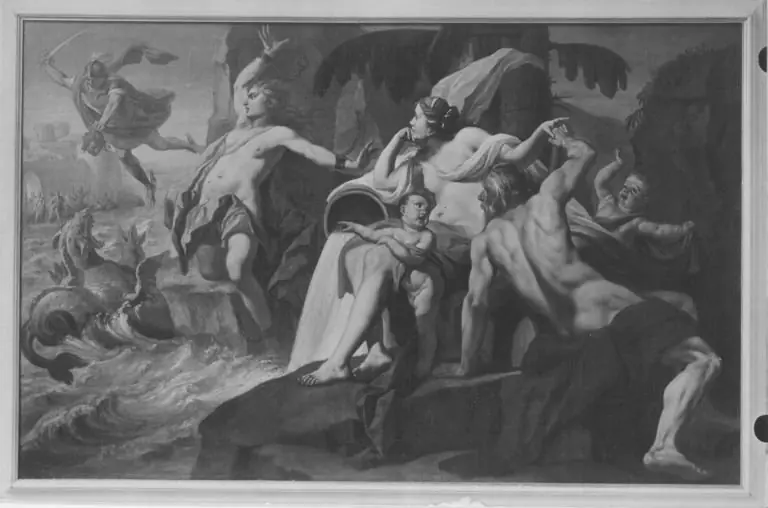
Perseus rescuing Andromeda from the sea monster
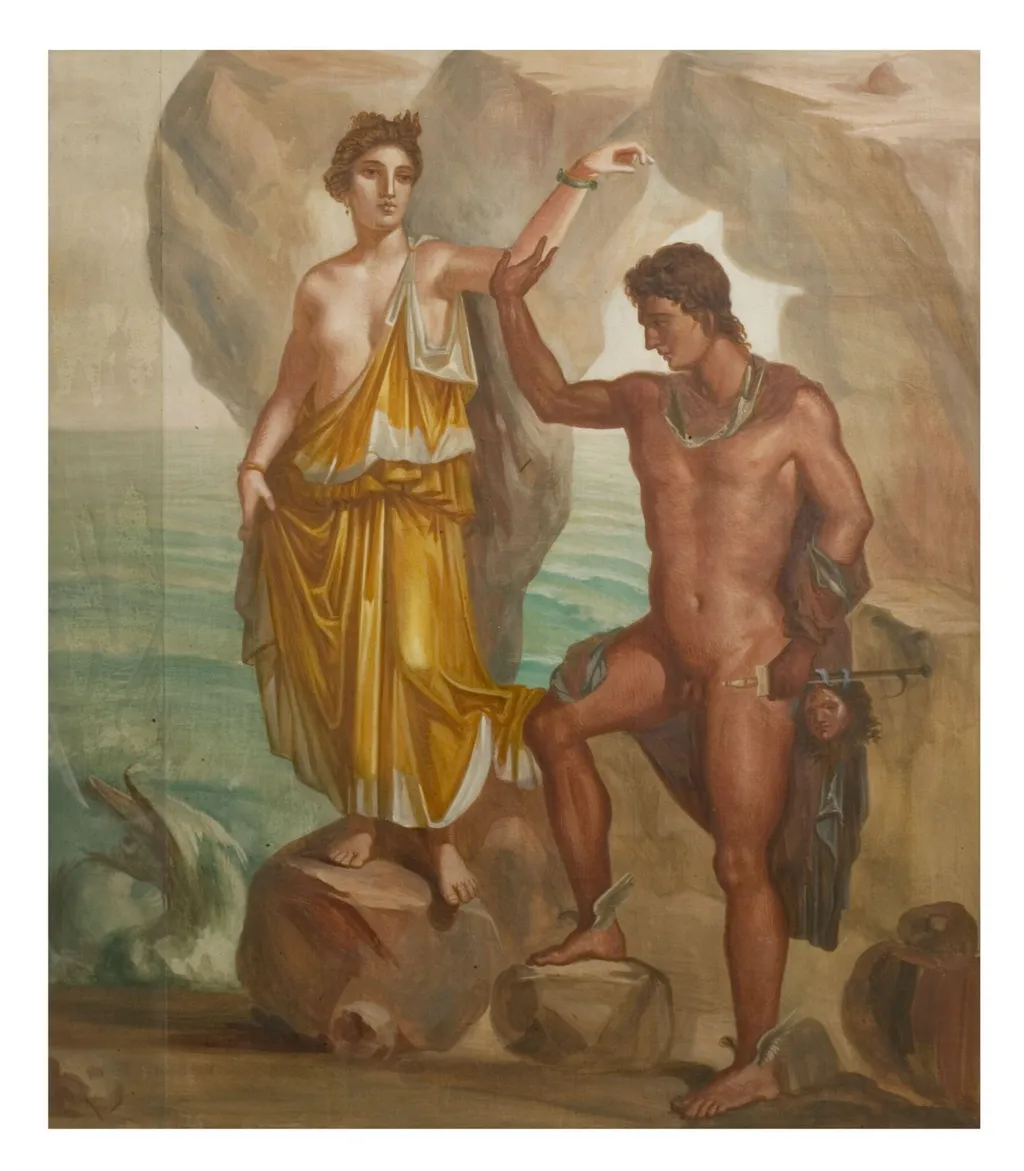
Perseus rescuing Andromeda from the sea monster is a paint painting by the British Romanticist artist John Henry Middleton. It dates from 1846 and is held in the collection of the Victoria and Albert Museum. This painting illustrates the myth of Perseus saving Andromeda from the sea monster Cetus.
About this work
Overview
The composition emphasizes stillness amid impending resolution, reflecting Roman narrative traditions in domestic decoration.
This painting illustrates the myth of Perseus saving Andromeda from the sea monster Cetus. It draws from a wall fresco originally found in a domestic space in Pompeii, preserved by volcanic ash. The scene captures the moment after the monster’s defeat, with Perseus approaching the bound woman. The composition emphasizes stillness amid impending resolution, reflecting Roman narrative traditions in domestic decoration.
Subject & Meaning
Andromeda, chained to a coastal rock as punishment for her mother’s hubris, is freed by the hero Perseus, who carries the head of Medusa in a pouch. Her calm posture contrasts with his alert stance, suggesting transition from peril to deliverance. The sea monster, only implied in the dark waters, underscores the unseen threat now vanquished. The scene symbolizes divine intervention and the triumph of courage over fate.
Technique & Style
The artist employs soft, diffused lighting to illuminate the figures against a muted rocky backdrop, creating a luminous effect that isolates them from the surrounding chaos. Colors are restrained—yellow and white robes stand out subtly against earth tones. The monster is rendered as a shadowy swirl rather than a detailed form, relying on suggestion. Brushwork is smooth, avoiding dramatic chiaroscuro, aligning with Pompeian decorative conventions.
History & Provenance
The painting is a modern reproduction of a first-century CE fresco discovered in the House of the Tragic Poet in Pompeii. It was likely part of a larger mythological cycle decorating a private villa’s interior. After the city’s destruction in 79 CE, the original was excavated in the 18th century and is now held in the Naples Archaeological Museum. This version preserves the composition but adapts it for later display contexts.
Context
In Roman domestic spaces, mythological scenes like this served both aesthetic and moral functions, reinforcing ideals of heroism and divine justice. The placement of such imagery in homes suggests viewers were meant to contemplate virtue and fate in everyday life. Unlike later Renaissance or Baroque treatments, this version avoids overt violence, favoring quiet resolution—a hallmark of Pompeian narrative restraint.
Legacy
The Pompeian fresco influenced later European interpretations of the myth, particularly during the 18th and 19th centuries, when classical themes were revived. Its subdued drama and emphasis on emotional stillness contrasted with the theatricality of Romantic depictions. While not directly part of that movement, its survival and reproduction helped sustain interest in classical narratives beyond elite art circles.
Own this work as a print
Artist & collection