Artwork
Water Mill at the Foot of a Mountain
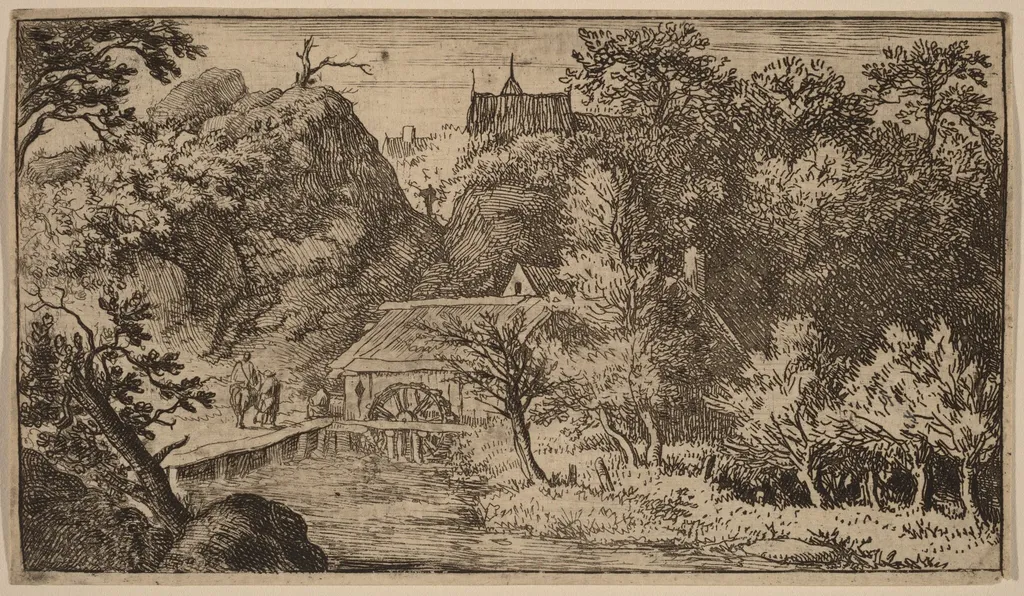
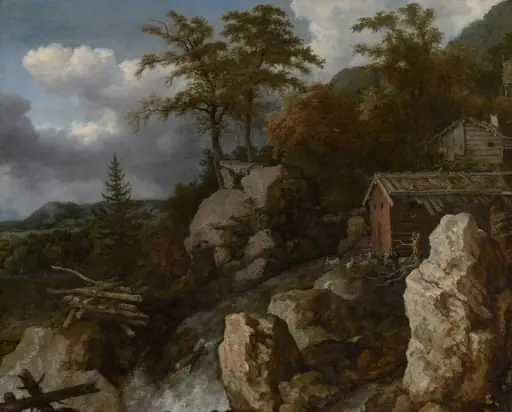
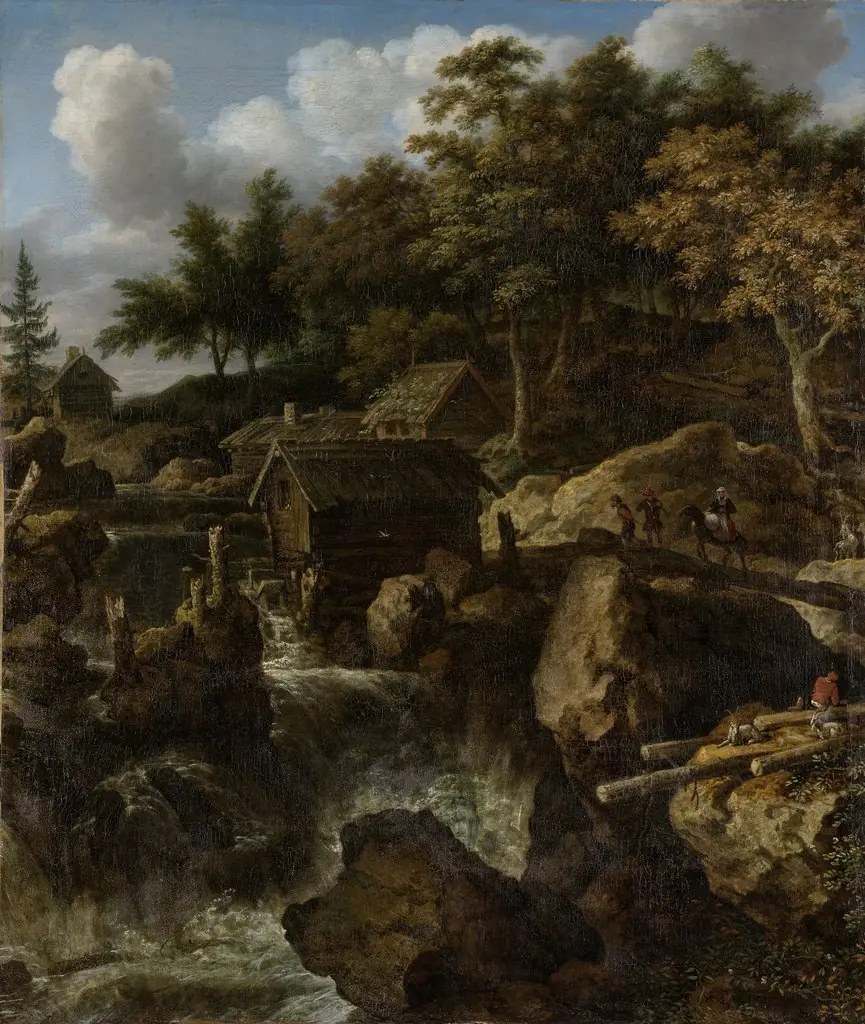
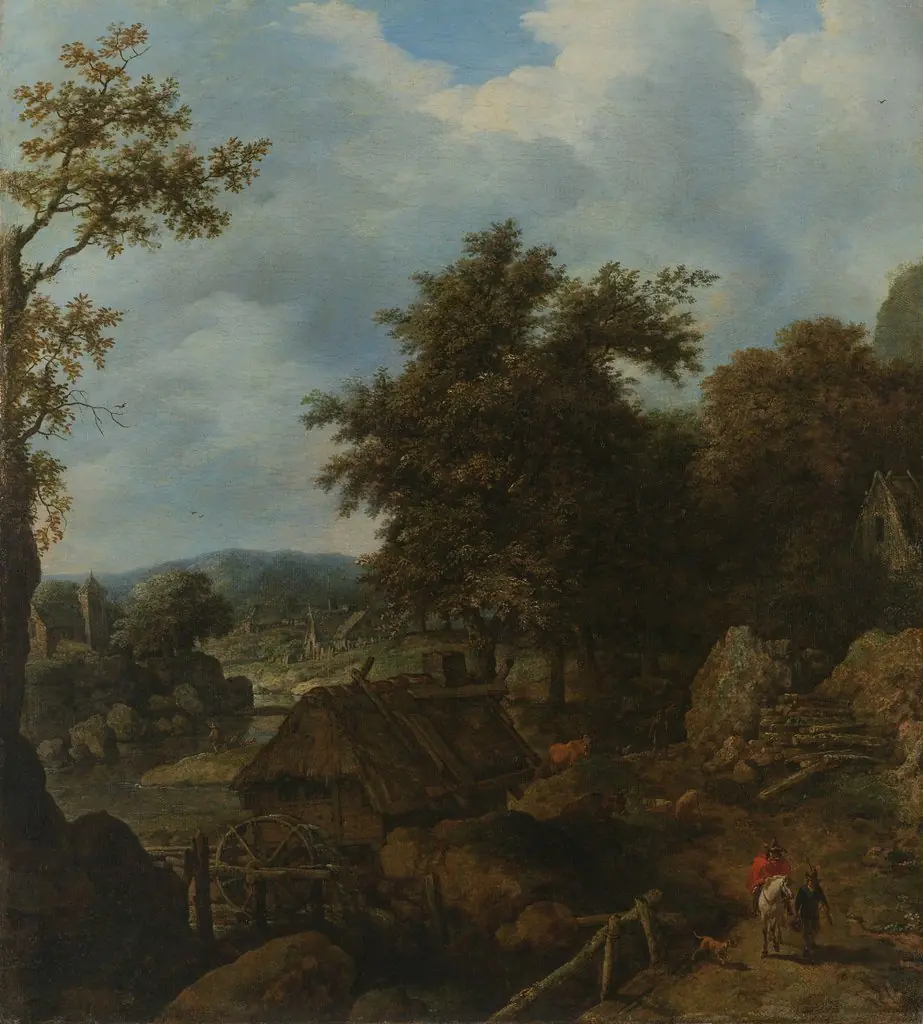
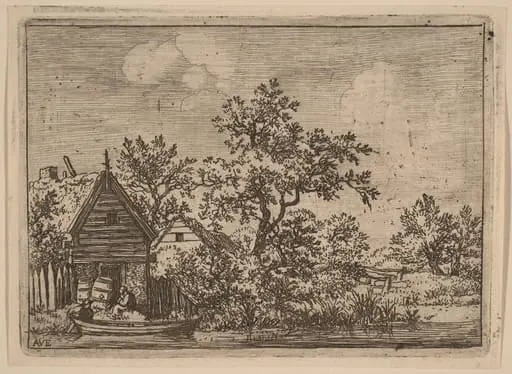
Water Mill at the Foot of a Mountain is an ink print by the Baroque artist Allart van Everdingen. It dates from 1650 and is held in the collection of the National Gallery of Art.
About this work
Overview
Van Everdingen, a Dutch artist known for his landscape prints, used these techniques to achieve nuanced tonal variation and fine linear detail.
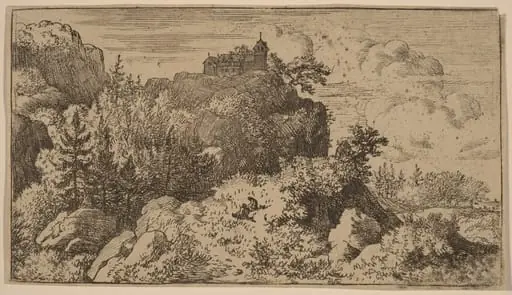
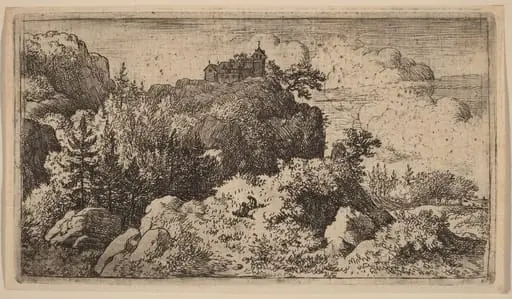
Created circa 1650 by Allart van Everdingen, this print combines etching, engraving, and drypoint to render a tranquil rural landscape. Van Everdingen, a Dutch artist known for his landscape prints, used these techniques to achieve nuanced tonal variation and fine linear detail. The work exemplifies his interest in natural topography and the quiet rhythms of country life, distinguishing his output within the broader context of Dutch Golden Age printmaking.
Subject & Meaning
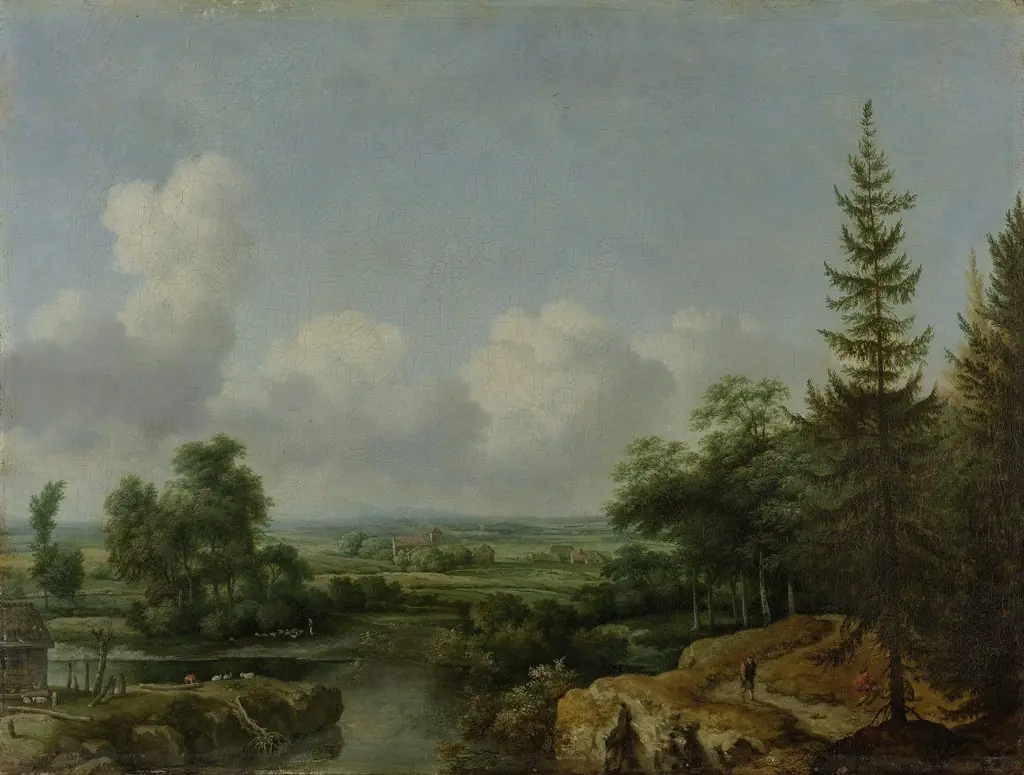
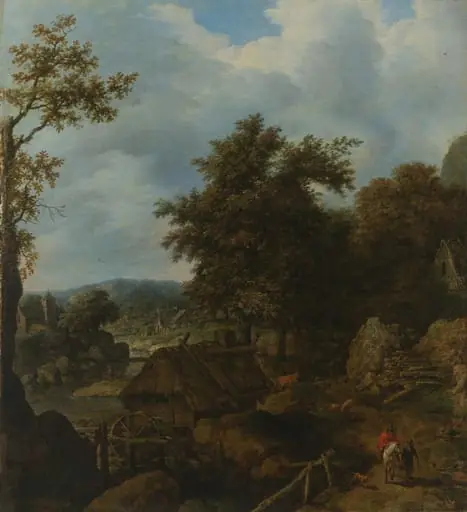
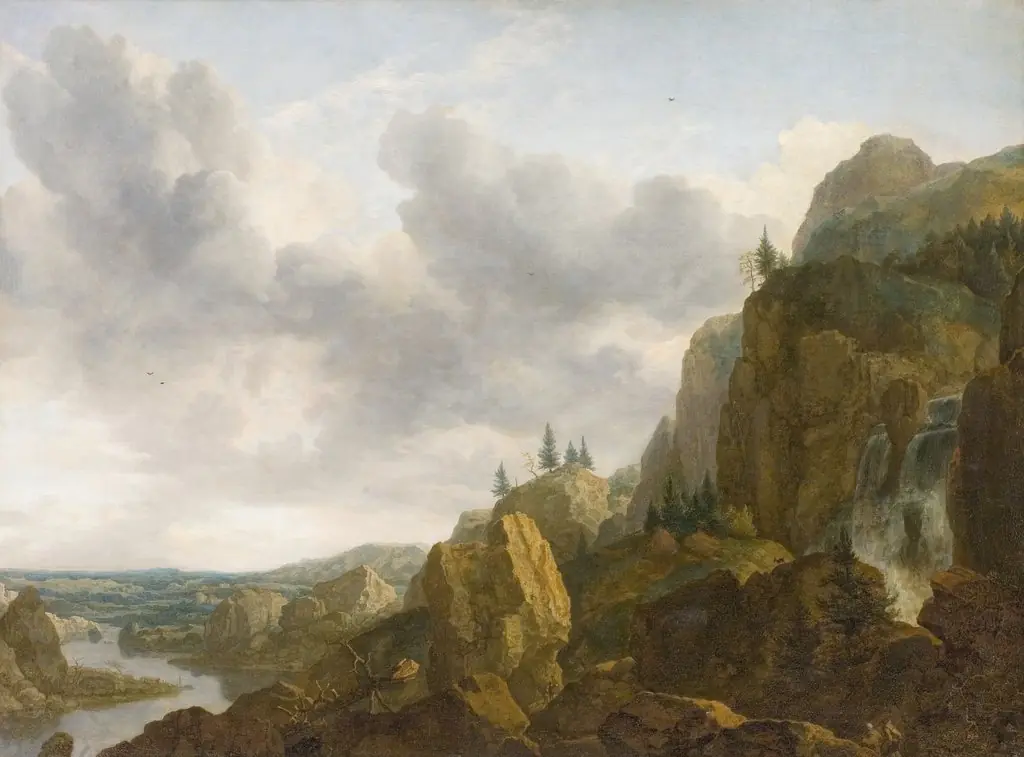
The scene centers on a modest wooden water mill nestled at the base of a rocky hill, with a gentle river flowing beside it. Behind, a distant church steeple and scattered trees suggest a modest settlement, reinforcing themes of rural industry and spiritual life coexisting. The absence of human figures invites contemplation of nature’s quiet endurance, aligning with contemporary Dutch values that honored labor and harmony with the land.
Technique & Style
Van Everdingen employed etching for broad tonal areas, engraving for precise linear contours, and drypoint to create rich, velvety shadows. The texture of tree bark, water ripples, and rock surfaces is rendered through delicate, layered lines. Soft gradations in shadow suggest atmospheric depth, while the contrast between sharp foreground elements and hazy background forms enhances spatial recession without overt perspective.
History & Provenance
The print was produced during Van Everdingen’s most active period as a printmaker, following his travels through Scandinavia and the Rhineland, which influenced his depiction of rugged terrain. Few early impressions are documented, but surviving examples appear in major European collections, indicating its circulation among collectors of landscape prints in the late 17th century.
Context
In mid-17th century Holland, landscape prints flourished as affordable art for middle-class homes. Van Everdingen’s focus on wilder, less cultivated scenery contrasted with the more orderly Dutch countryside favored by peers. His work tapped into a growing fascination with natural grandeur, influenced by Northern European travel and the philosophical appreciation of nature’s sublime qualities.
Legacy
Van Everdingen’s integration of multiple intaglio techniques set a precedent for later landscape printmakers seeking expressive depth. His emphasis on atmospheric effect over narrative detail influenced 18th-century artists who pursued mood over anecdote. Though less celebrated than his contemporaries, his prints remain valued for their technical refinement and quiet poetic sensibility.
Artist & collection
Artist
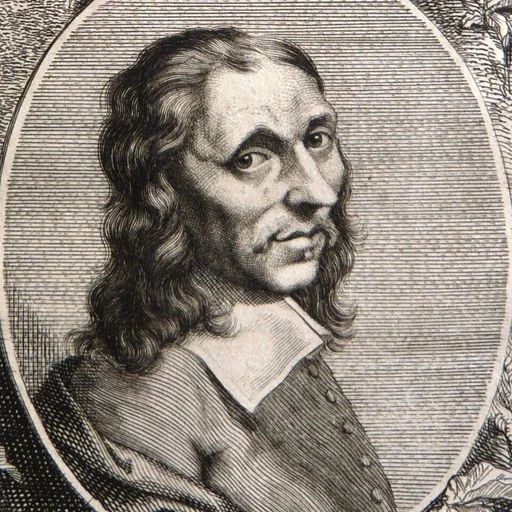
Allaert van Everdingen (Dutch pronunciation: ; bapt. 18 June 1621 – 8 November 1675 (buried)), was a Dutch Golden Age painter and printmaker in etching and mezzotint.