Artwork
Carpenter's Hut
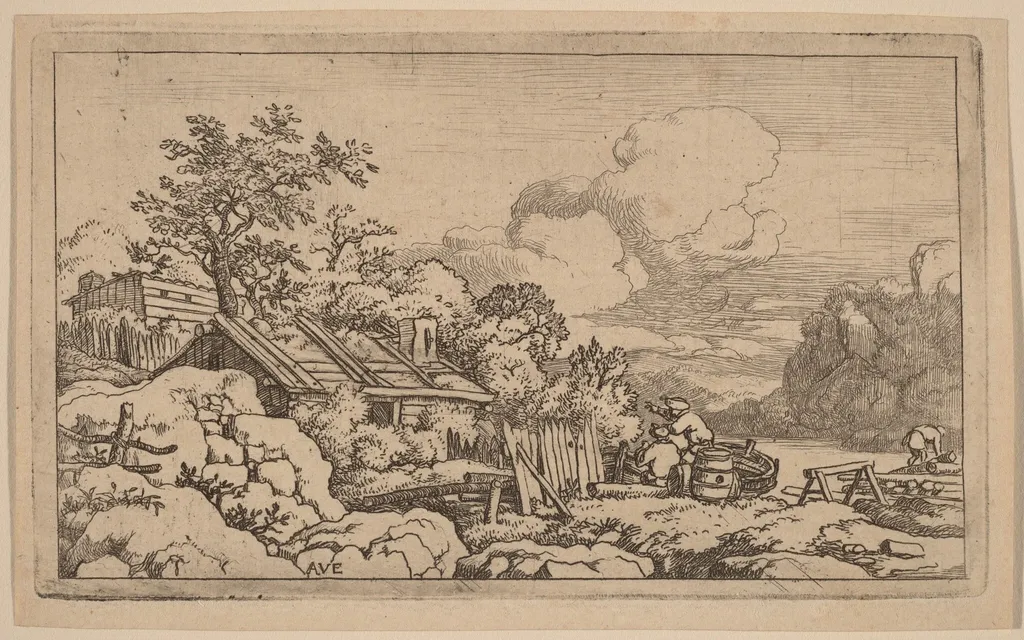
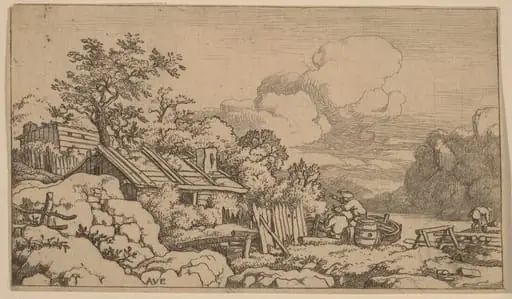
Carpenter's Hut is an ink print by the Baroque artist Allart van Everdingen. It dates from 1650 and is held in the collection of the National Gallery of Art.
About this work
Overview
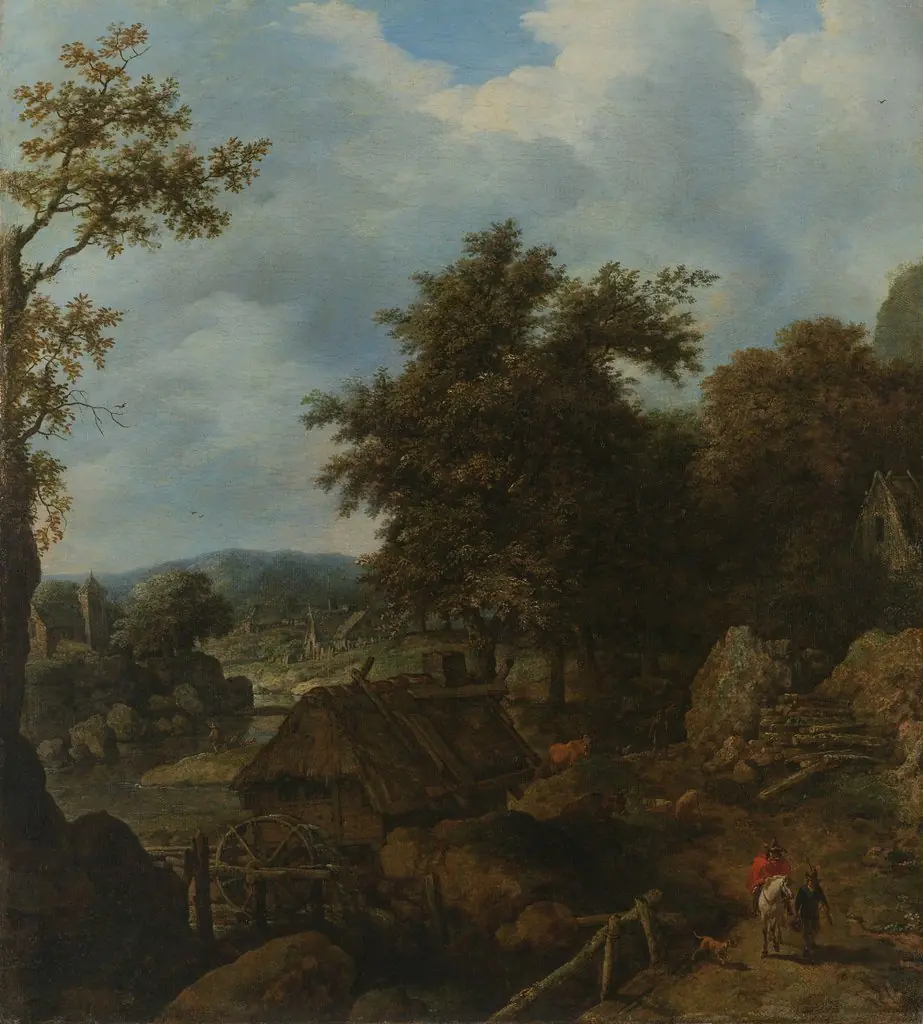
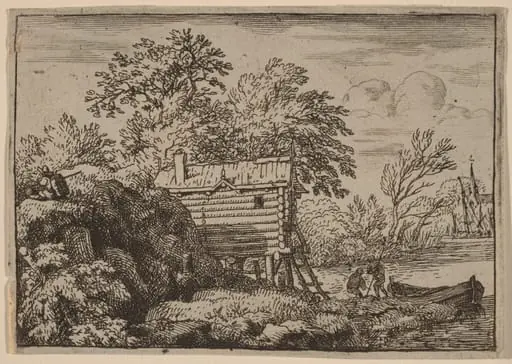
Created circa 1650 by the Dutch artist Allart van Everdingen, *Carpenter’s Hut* is an etched print that portrays a modest wooden building situated within a countryside setting. The composition balances the structure with surrounding foliage, a gentle stream, and a distant horizon, conveying a calm, bucolic atmosphere.
Subject & Meaning
The central focus is a simple timber workshop, likely a carpenter’s hut, surrounded by a few figures engaged in everyday activity—a person perched on a barrel, another standing nearby. The inclusion of the stream and rolling hills underscores themes of rural labor and the quiet rhythm of daily life.
Technique & Style
Van Everdingen employs the etching process, incising lines into a metal plate to achieve fine detail and tonal variation. The artist’s handling of line work creates texture on the wooden walls and foliage, while cross‑hatching suggests depth in the sky and water, characteristic of mid‑17th‑century Dutch printmaking.
History & Provenance
The print belongs to the period when van Everdingen was active as both painter and printmaker, known for his landscape subjects. Though specific ownership records are scarce, the work is catalogued among his early etchings and has been held in several European collections since the 18th century.
Artist & collection
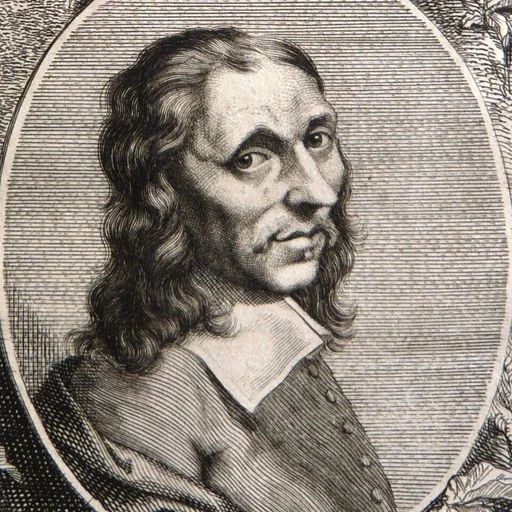
Artist
Allaert van Everdingen (Dutch pronunciation: ; bapt. 18 June 1621 – 8 November 1675 (buried)), was a Dutch Golden Age painter and printmaker in etching and mezzotint.