Artwork
Carpenter's Hut
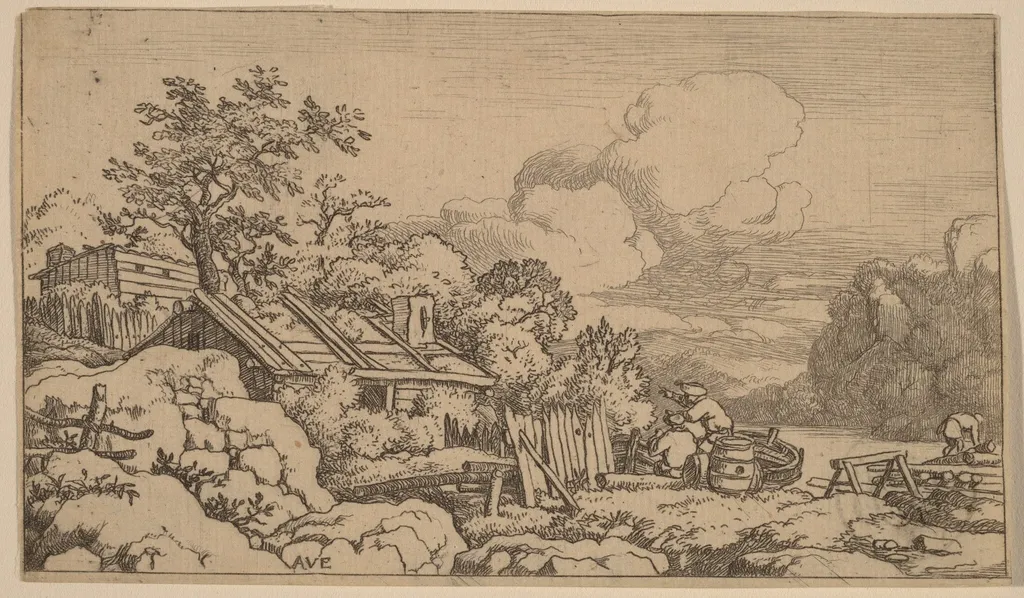
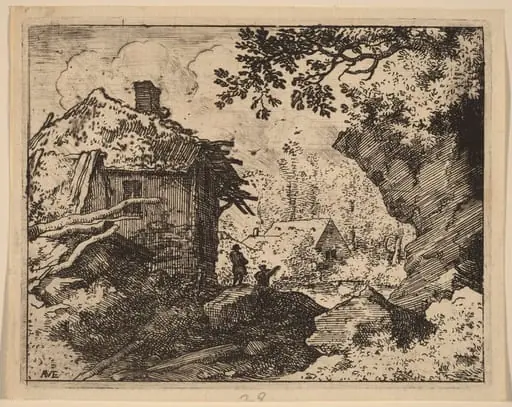
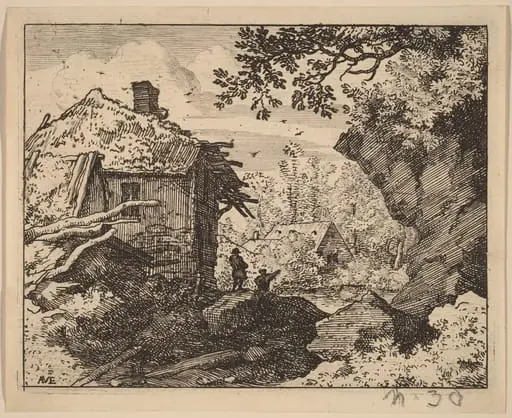
Carpenter's Hut is an ink print by the Baroque artist Allart van Everdingen. It dates from 1650 and is held in the collection of the National Gallery of Art.
About this work
Overview
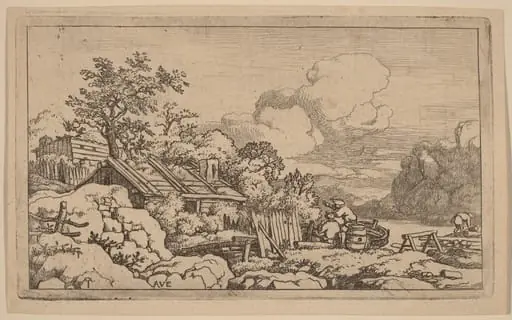
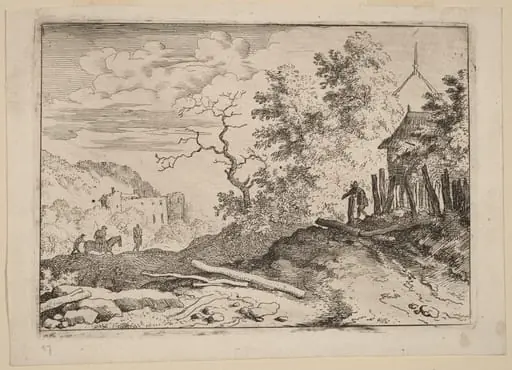
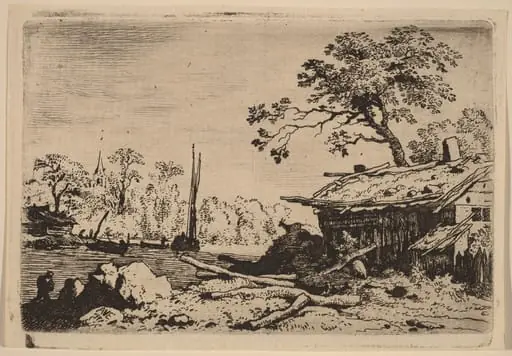
Carpenter's Hut, an etching by Dutch Golden Age artist Allart van Everdingen, dates to circa 1650. This black-and-white print captures a serene rural scene.
Subject & Meaning
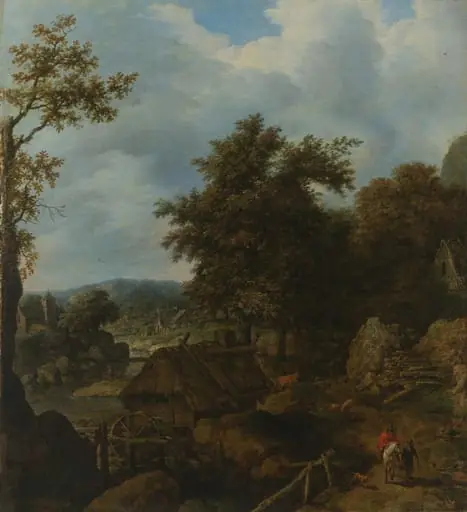
The composition centers on a small wooden hut, likely a carpenter’s workshop, situated in a peaceful riverside landscape. A solitary figure, accompanied by tools and a barrel, sits near the water, suggesting a moment of quiet industry.
Technique & Style
Van Everdingen employed fine etching lines to achieve nuanced light and texture, lending a near three-dimensional quality to elements like clouds and foliage. This detailed shading exemplifies the artist’s skill in the medium.
History & Provenance
Created around 1650, Carpenter's Hut showcases Van Everdingen’s proficiency in etching, a medium for which he was renowned alongside his work in mezzotint.
Context
The piece reflects the Dutch Golden Age’s emphasis on capturing everyday life and natural landscapes through precise and detailed artistic techniques.
Legacy
While specific legacy details of Carpenter's Hut are not highlighted, it contributes to the broader appreciation of Van Everdingen’s etching skills and the era’s artistic values.
Artist & collection
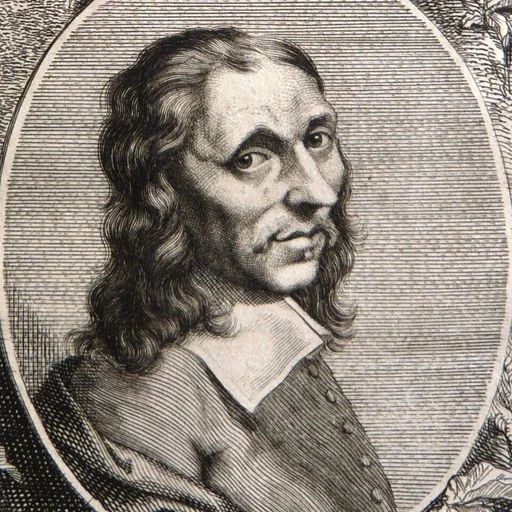
Artist
Allaert van Everdingen (Dutch pronunciation: ; bapt. 18 June 1621 – 8 November 1675 (buried)), was a Dutch Golden Age painter and printmaker in etching and mezzotint.