Artwork
Landscape
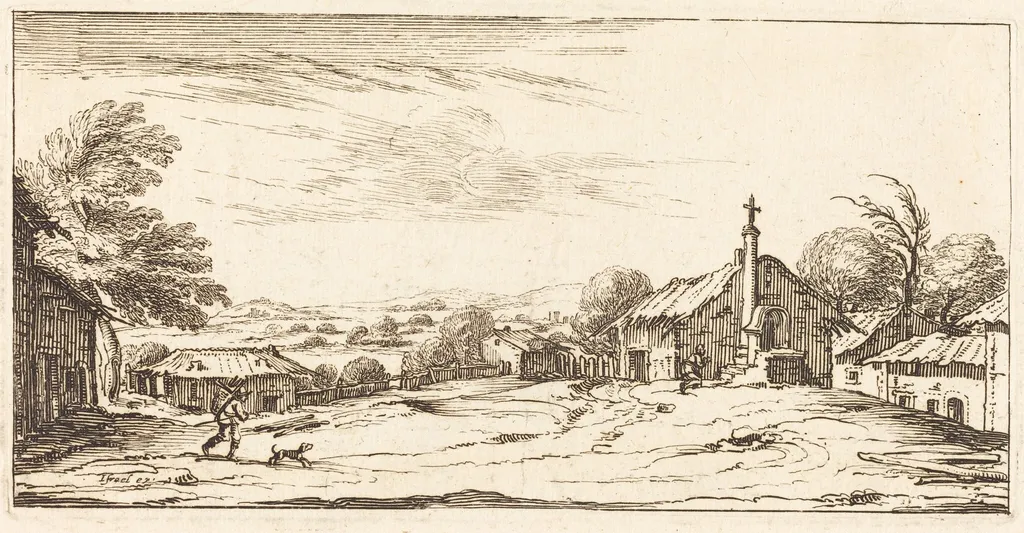
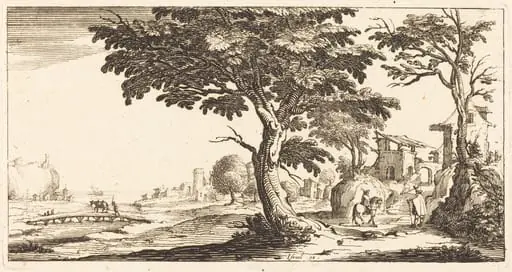
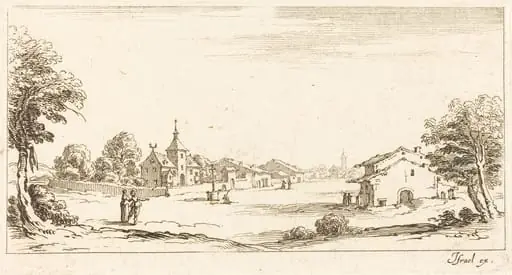
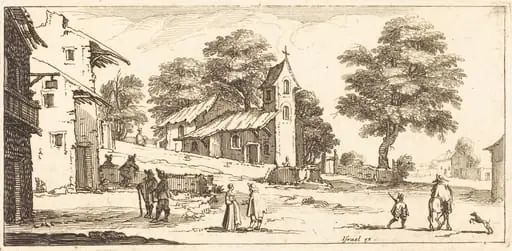
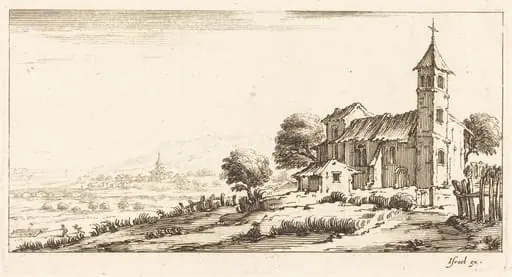
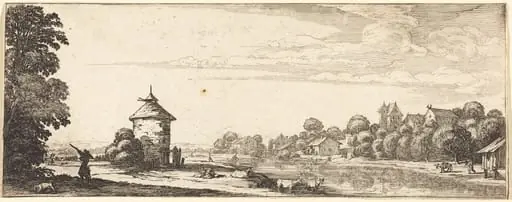
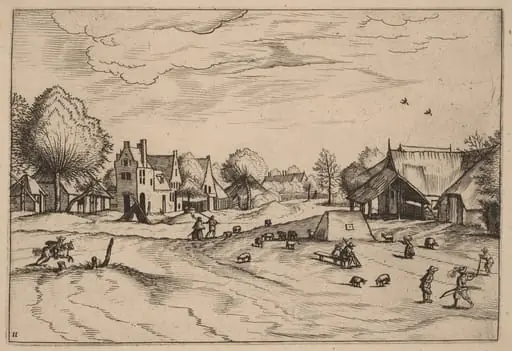
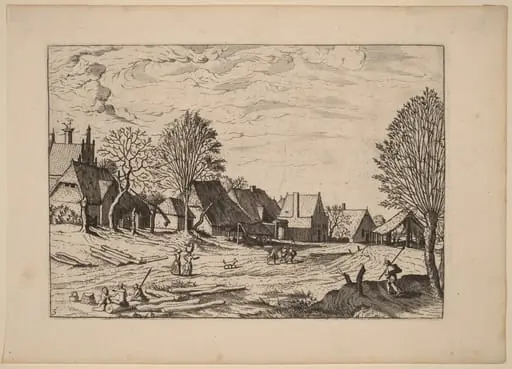
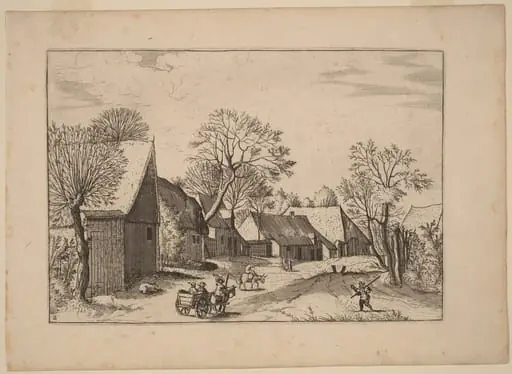
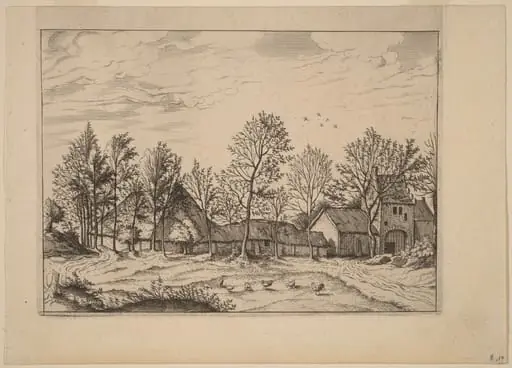
Landscape is an ink print by the Baroque artist French 17th Century. It dates from 1635 and is held in the collection of the National Gallery of Art. The work is an etching executed on laid paper, presenting a tranquil riverside village.
About this work
Overview
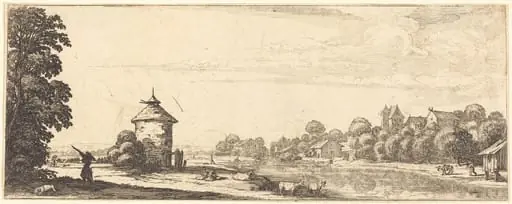
The work is an etching executed on laid paper, presenting a tranquil riverside village. A solitary figure walks a dog along the water’s edge, while modest houses and a church rise gently on a nearby hill. Trees frame the composition, and the sky is rendered with a brooding, storm‑filled atmosphere, giving the scene a subtle narrative tension.
Subject & Meaning
The image captures everyday life in a modest settlement, emphasizing the relationship between human activity and the natural landscape. The lone walker and his dog suggest routine and companionship, while the looming clouds hint at the transience of weather and perhaps the vulnerability of the village to the forces of nature.
Technique & Style
Created with fine, intersecting lines typical of 19th‑century etching, the artist manipulates line weight to model light and shadow across the terrain. The delicate incisions on the laid paper allow for nuanced tonal gradations, producing a sense of depth and atmosphere that aligns with the period’s preference for detailed, observational prints.
Context
Etching was a favored medium for reproducing landscape scenes during the era, valued for its capacity to convey intricate detail and tonal variation. This piece reflects that tradition, employing the medium’s strengths to document a specific locale while also engaging with broader Romantic interests in nature and weather.
Artist & collection

Artist
Seventeenth-century French printmakers turned ink into story. Their tools were burin and acid, paper their stage. Look at the Beggar Woman with Rosary (1622), etched on laid paper, her hands folded around faith, or The…