Artwork
Two Logs in the Water
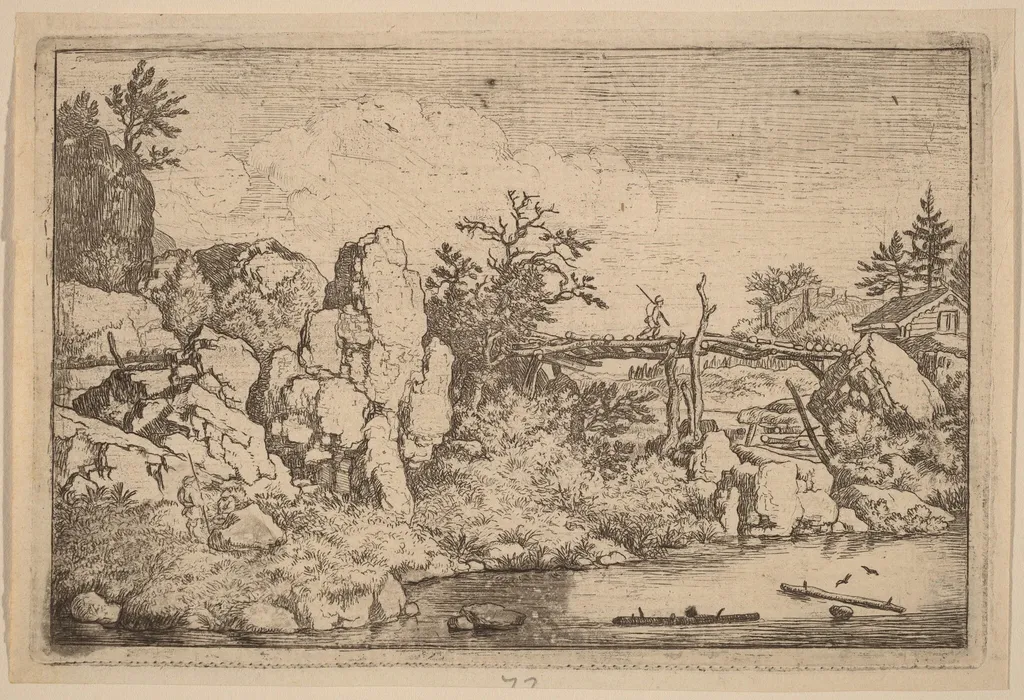
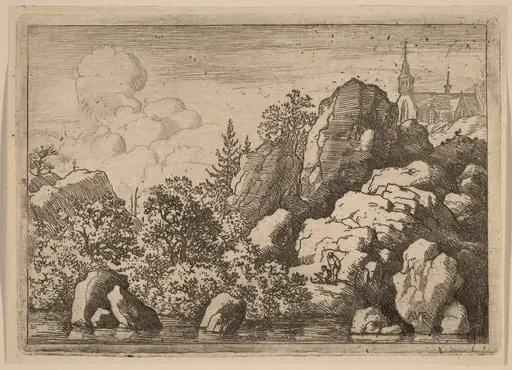
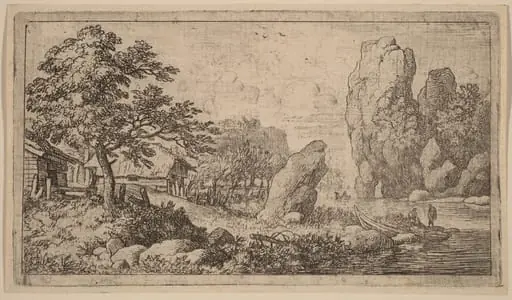
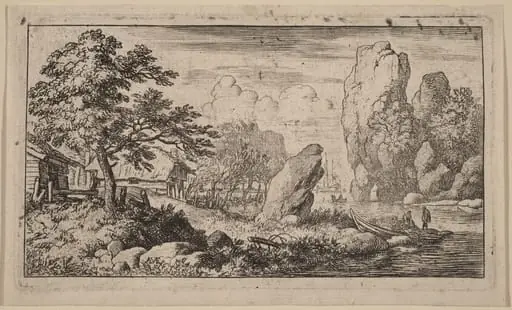
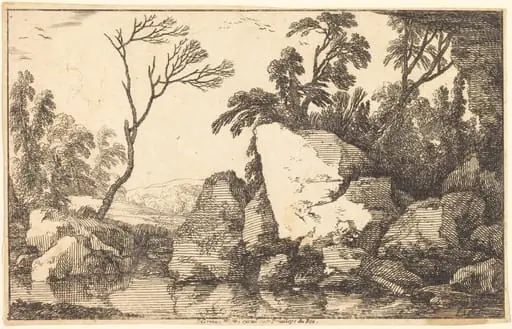
Two Logs in the Water is an ink print by the Baroque artist Allart van Everdingen. It dates from 1650 and is held in the collection of the National Gallery of Art.
About this work
Overview
Allart van Everdingen, active in the mid‑seventeenth century, produced the print *Two Logs in the Water* circa 1650. Executed as an etching, the work belongs to the Dutch Golden Age of printmaking and reflects the artist’s proficiency with the medium.
Subject & Meaning
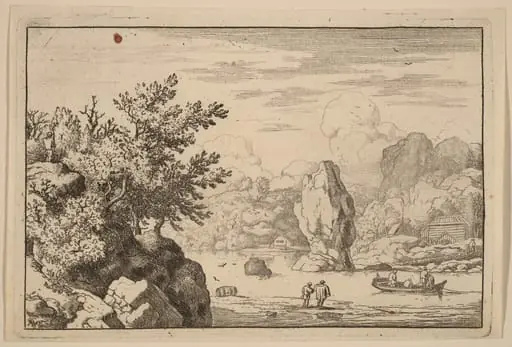
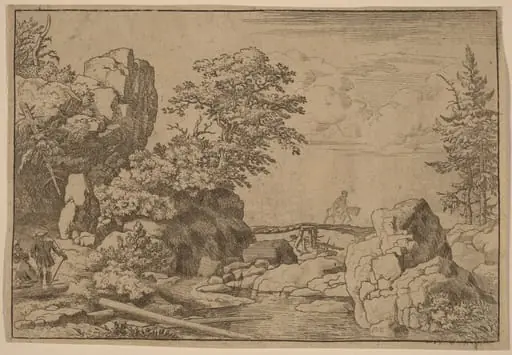
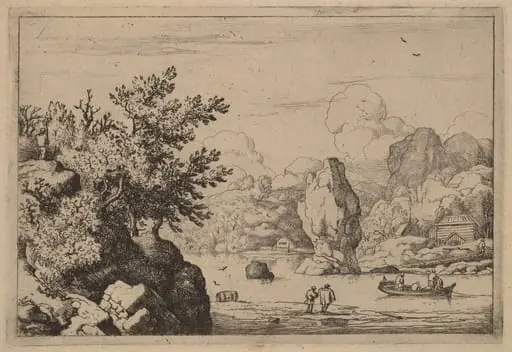
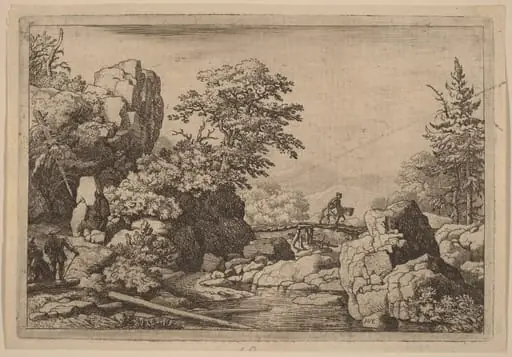
The composition presents a tranquil river scene in which two logs drift on the water’s surface. Along the banks, trees rise and a few figures are scattered, some standing, others engaged in modest labor, suggesting everyday activity within an otherwise still landscape.
Technique & Style
Van Everdingen employed the etching process, incising fine lines into a metal plate and using acid to create varied depths. The resulting print displays delicate hatching and cross‑hatching that render texture in rock, foliage, and water, giving the image a subtle three‑dimensional quality.
History & Provenance
Created around 1650, the print was part of van Everdingen’s broader output of etchings and mezzotints that circulated among collectors in the Dutch Republic. Specific ownership records for this particular impression are limited, but it is documented in several catalogues of the artist’s work.
Context
During the Dutch Golden Age, landscape prints often emphasized natural observation and modest human presence. Van Everdingen’s focus on a simple, unadorned scene aligns with contemporary interests in depicting the Dutch countryside and its everyday rhythms.
Artist & collection
Artist
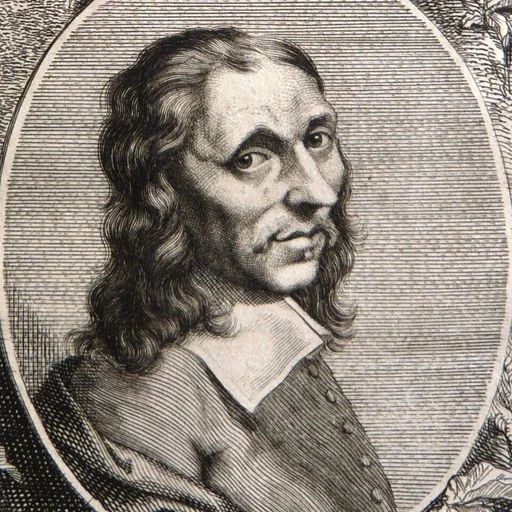
Allaert van Everdingen (Dutch pronunciation: ; bapt. 18 June 1621 – 8 November 1675 (buried)), was a Dutch Golden Age painter and printmaker in etching and mezzotint.