Artwork
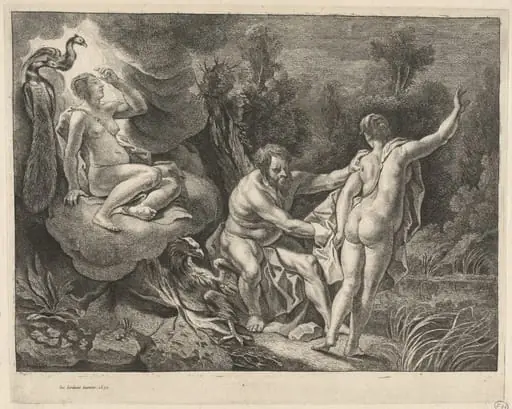
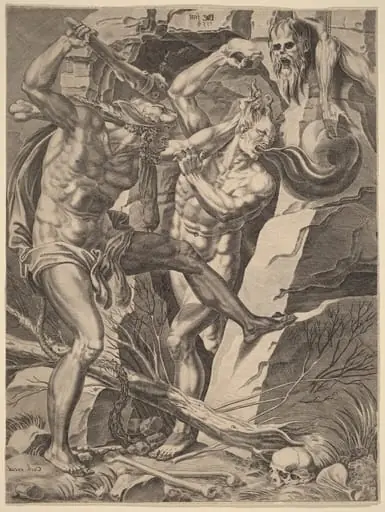
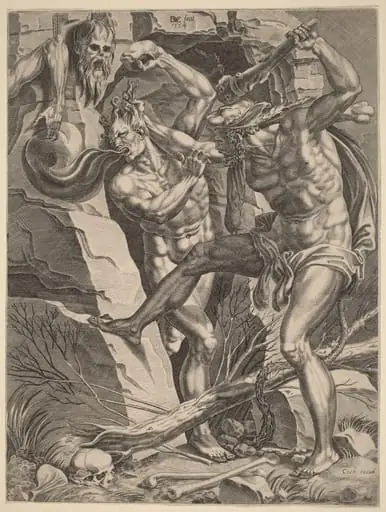
Mercury Killing Argus
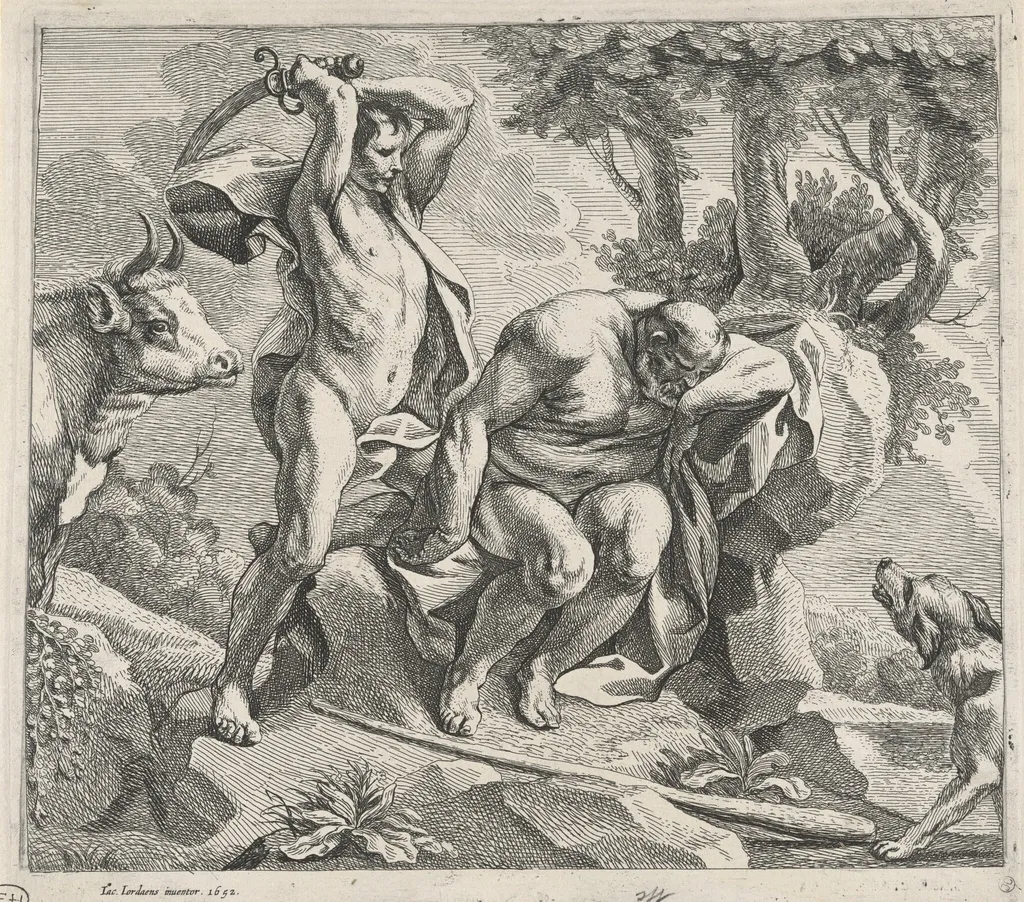
Mercury Killing Argus is an ink print by the Baroque artist Remoldus Eynhoudts. It dates from 1652 and is held in the collection of the National Gallery of Art.
About this work
Overview
Mercury Killing Argus is a 1652 etching with engraving on laid paper by Remoldus Eynhoudts, currently in the collection of the National Gallery of Art, Washington.
Subject & Meaning
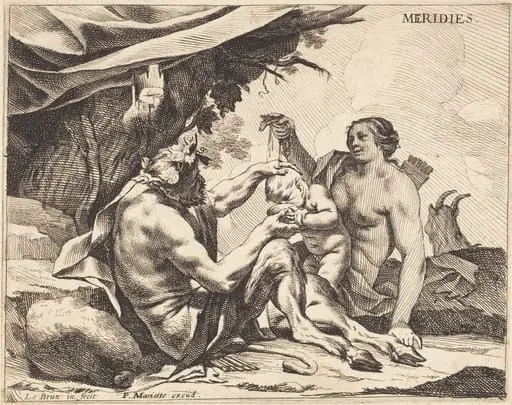
The print depicts a scene from mythology: Mercury poised to strike, standing on a rocky outcropping with sword raised. Nearby, a crouching figure (Argus) shields his head, while a cow's head (possibly a reference to Io) appears to the left. The composition captures a moment of impending violence.
Technique & Style
Executed in a detailed, realistic manner, the work showcases intricate textures, nuanced shading, and effective chiaroscuro, creating depth and volume. These elements align with the dramatic and emotionally charged characteristics of the Baroque style.
History & Provenance
Created in 1652 by Remoldus Eynhoudts, the etching's provenance prior to its acquisition by the National Gallery of Art, Washington, is not specified in available information.
Context
Part of the broader Baroque artistic movement, Mercury Killing Argus reflects the era's fascination with classical mythology and dramatic, light-driven compositions.
Legacy
As a work by Remoldus Eynhoudts, it contributes to the understanding of 17th-century printmaking within the Baroque tradition, though its specific influence or renown beyond this context is not detailed in provided sources.
Artist & collection