Artwork
Silenus and King Midas
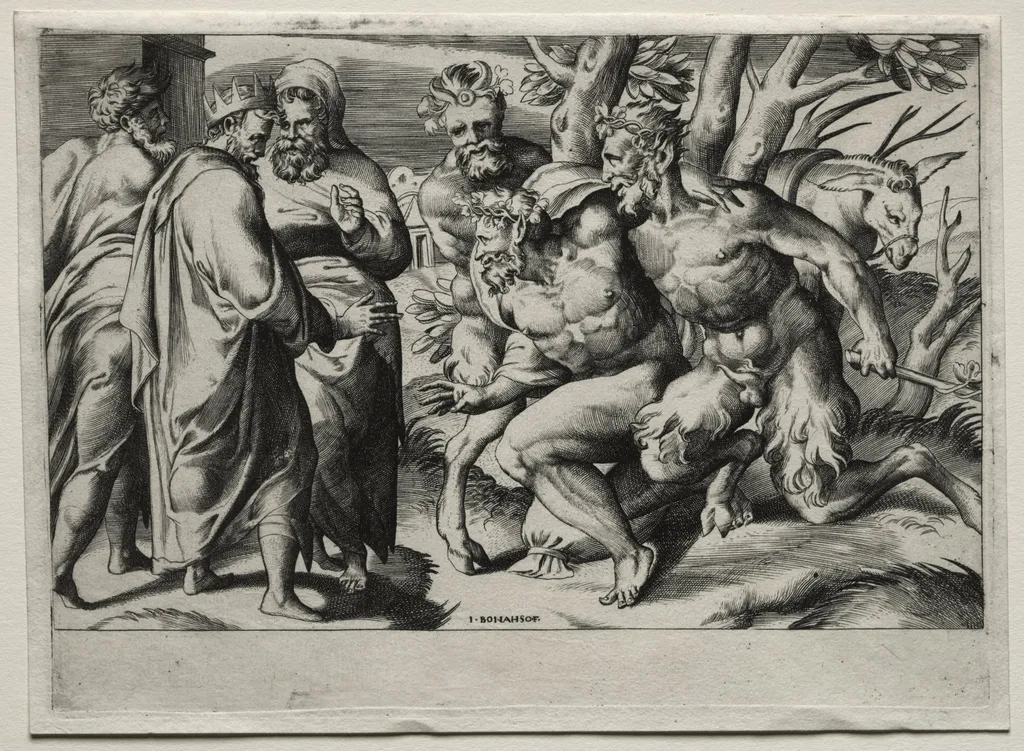
Silenus and King Midas is a print by the Renaissance artist Giulio Bonasone. It dates from 1550 and is held in the collection of the Cleveland Museum of Art.
About this work
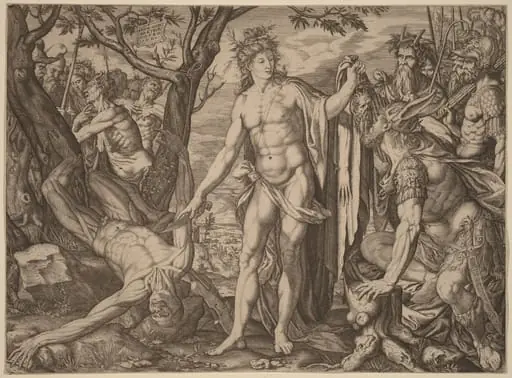
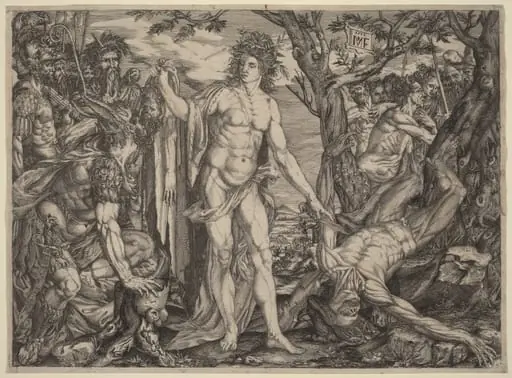
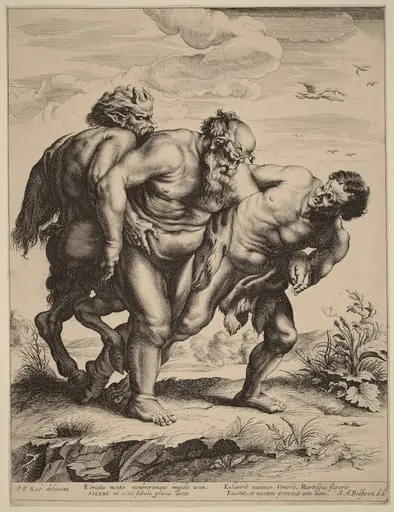
This engraving shows Silenus, the old drunken satyr with goat legs, sitting at a table with King Midas.
This engraving shows Silenus, the old drunken satyr with goat legs, sitting at a table with King Midas. Gold cups and a half-eaten meal sit between them. Midas looks worried while Silenus grins through his beard.
This scene comes from a famous Greek myth where Midas’ greed backfires. The artist used fine lines to show textures, like Silenus’ fur or the tablecloth’s folds.
Look up Giulio Bonasone (Italian, c. 1510–after 1576).
Overview
Silenus and King Midas is an engraving by Giulio Bonasone, an Italian artist active in the 16th century. The print depicts a scene from Greek mythology.
Subject & Meaning
The engraving shows Silenus, a satyr, and King Midas seated at a table with gold cups and a meal between them. Midas appears worried, while Silenus is depicted grinning. The scene references the myth where Midas, after being granted a wish, regrets turning everything he touches into gold.
Technique & Style
The artist employed fine lines to convey textures, such as Silenus' fur and the folds of the tablecloth, demonstrating a high level of detail and craftsmanship.
Context
The print is based on a Greek myth where Dionysus, grateful for Midas' hospitality to Silenus, grants Midas a wish, which ultimately leads to his downfall due to his greed.
Artist & collection

Artist
Giulio Bonasone (c. 1498 – after 1574) (or Giulio de Antonio Buonasone or Julio Bonoso) was an Italian painter and engraver born in Bologna. He possibly studied painting under Lorenzo Sabbatini, and painted a Purgatory…