Artwork
Ottavio Lancellotti, Principe di Lauro
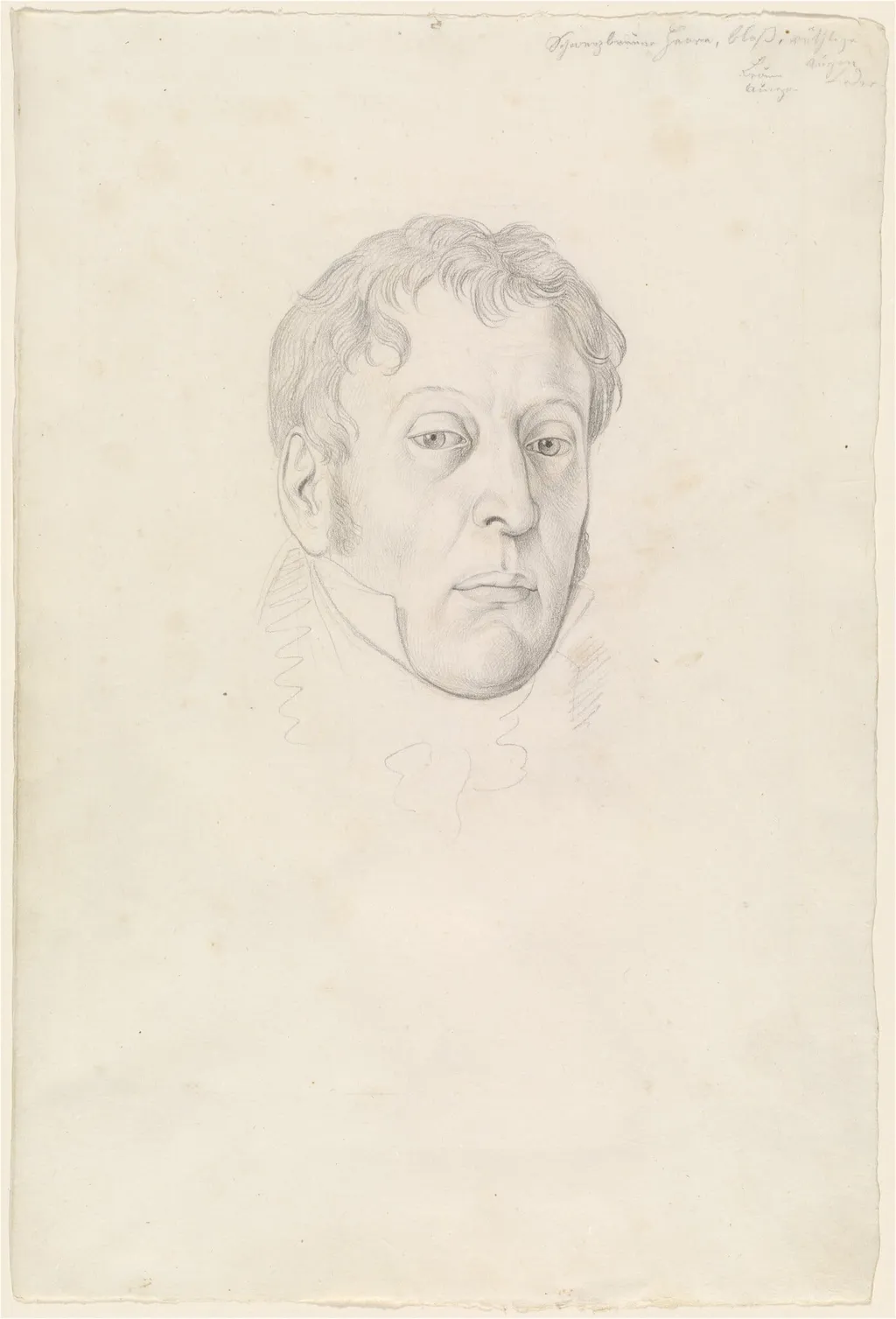
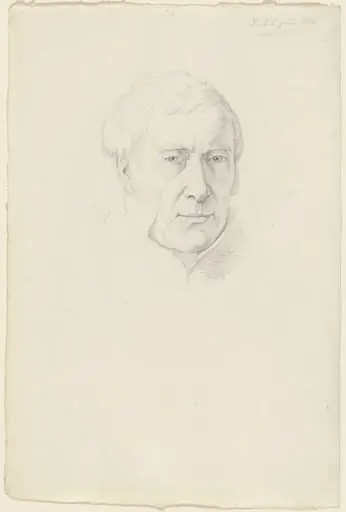
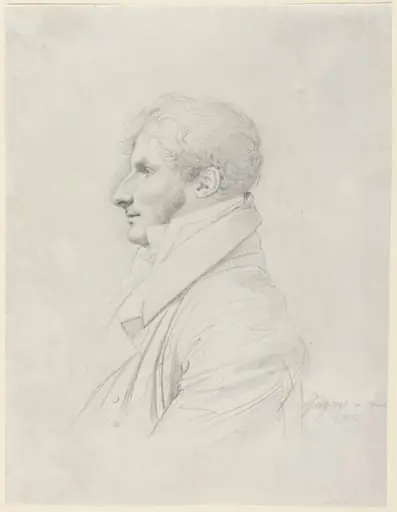
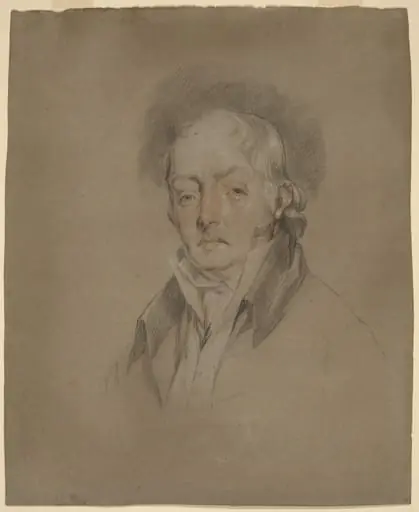
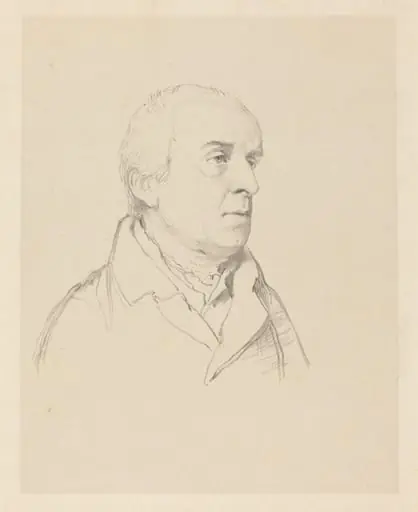
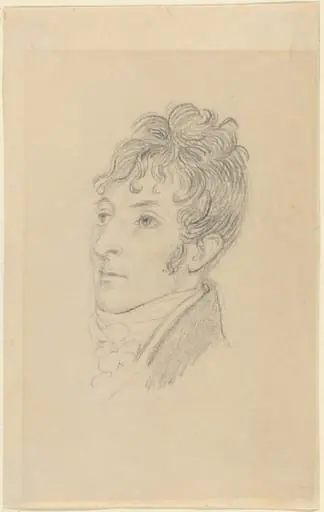
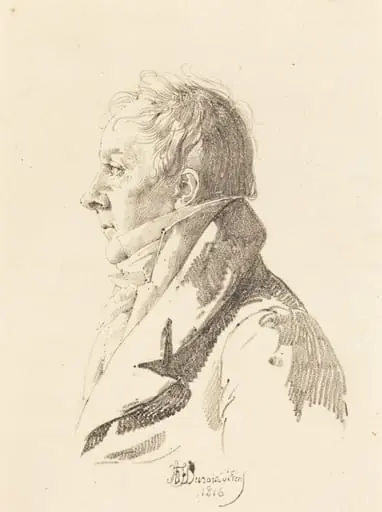
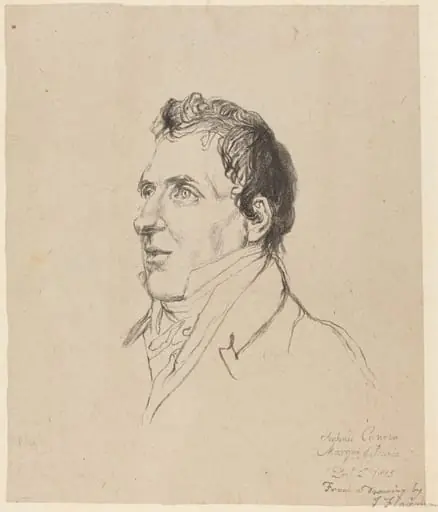
Ottavio Lancellotti, Principe di Lauro is a graphite drawing by the Romanticist artist Josef von Führich. It dates from 1828 and is held in the collection of the National Gallery of Art.
About this work
Overview
Created in 1828 by the Austrian painter Josef von Führich, this graphite drawing on wove paper bears the title Ottavio Lancellotti, Principe di Lauro. Executed as a monochrome study, the work presents a tightly focused portrait of a male sitter, rendered in delicate shades of gray without any background or surrounding detail.
Subject & Meaning
The portrait depicts a man with thick, curly hair and pronounced eyebrows, his expression composed and solemn. The emphasis on the face and neck suggests an intention to capture the sitter’s character and status, aligning with the conventions of early‑nineteenth‑century portraiture that valued psychological presence over ornamental setting.
Technique & Style
Führich employed a light, fluid graphite line to outline the facial features, allowing subtle tonal variations to suggest volume. The sketch’s economy of mark—few strokes, minimal shading—indicates a rapid, observational approach, typical of preparatory studies where the artist sought to record likeness quickly and accurately.
History & Provenance
The drawing is part of the collection of the National Gallery of Art in Washington, D.C. Its paper shows signs of age, including faint edge marks, confirming its early nineteenth‑century origin. The work has remained in the museum’s holdings, where it is displayed among other preparatory sketches by Führich and his contemporaries.
Artist & collection