Artwork
The Fishing Port of Blankenberge
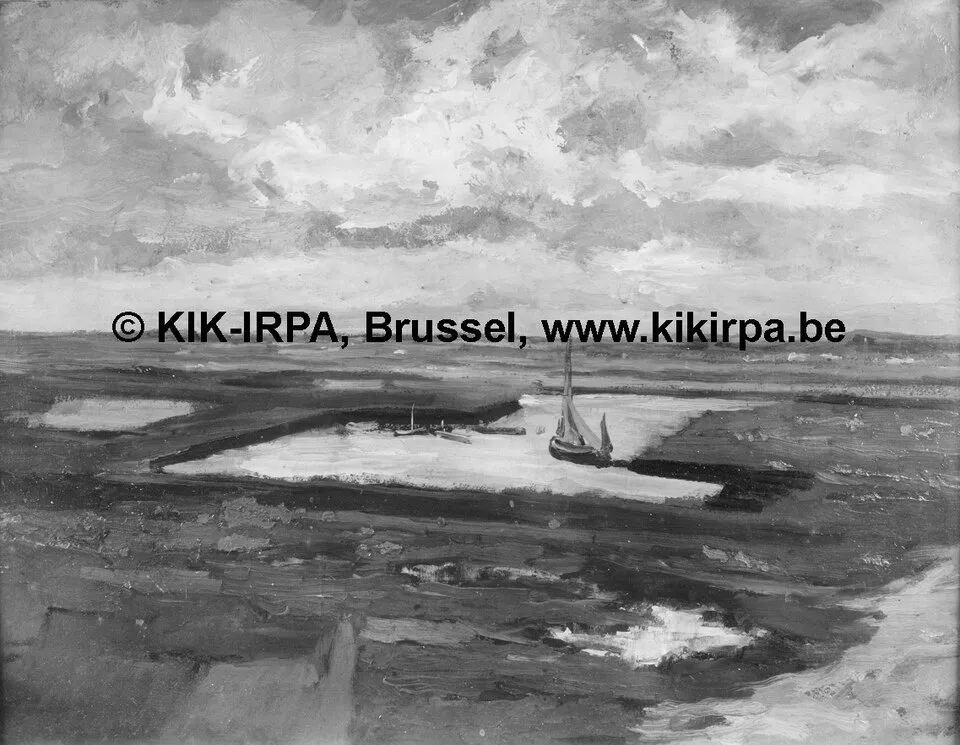
The Fishing Port of Blankenberge is an oil painting by the Realist artist Félicien Rops. It dates from 1875 and is held in the collection of the Royal Museum of Fine Arts Antwerp.
About this work
Overview
It reflects Rops’s engagement with everyday Belgian life during a period when he was also active in avant-garde circles like Les XX.
Félicien Rops painted *The Fishing Port of Blankenberge* circa 1875 in oil on canvas. Though often associated with Symbolism and the Decadent movement, this work aligns more closely with Realism in its unembellished depiction of a quiet coastal scene. It reflects Rops’s engagement with everyday Belgian life during a period when he was also active in avant-garde circles like Les XX. The painting is now part of the Royal Museum of Fine Arts Antwerp’s permanent collection.
Subject & Meaning
The scene captures a modest fishing harbor in Blankenberge, Belgium, with several small boats gently bobbing on still water. No human figures are present, and the absence of activity emphasizes solitude and stillness. The composition avoids dramatic narrative, instead conveying a sense of quiet endurance tied to coastal labor. The muted tones and restrained detail suggest an appreciation for the unadorned rhythm of maritime existence.
Technique & Style
Rops employed a restrained palette of grays, muted blues, and soft whites to evoke the overcast coastal atmosphere. Brushwork is deliberate but unobtrusive, with smooth transitions between water, sky, and hulls. The painting avoids theatrical lighting or emotional exaggeration, favoring tonal harmony and spatial clarity. This approach reflects a commitment to observational accuracy over romanticized interpretation, characteristic of Realist tendencies in his oeuvre.
History & Provenance
Created during Rops’s early career, the painting emerged from a period when he was balancing commercial illustration with fine art. It was likely exhibited in Belgium before entering the Royal Museum of Fine Arts Antwerp’s collection, where it has remained since the late 19th or early 20th century. Its preservation within a major public institution underscores its recognition as a representative work of regional Realism, despite Rops’s later fame for more provocative imagery.
Context
In the 1870s, Belgian artists increasingly turned to local landscapes and working-class subjects as alternatives to academic historicism. Blankenberge, a developing seaside resort, offered a liminal space between rural labor and emerging tourism. Rops’s depiction aligns with this shift, capturing a working port without idealization. His focus on ordinary coastal life contrasts with the exoticism and mysticism found in his more famous prints and drawings.
Legacy
While Rops is better known for his erotic and satirical prints, *The Fishing Port of Blankenberge* reveals a quieter, more contemplative side of his practice. It stands as a rare example of his landscape work and illustrates his capacity for understated observation. The painting contributes to broader narratives of 19th-century Belgian Realism, offering insight into how artists of the time engaged with the natural and social environment beyond urban centers.
Artist & collection
Artist
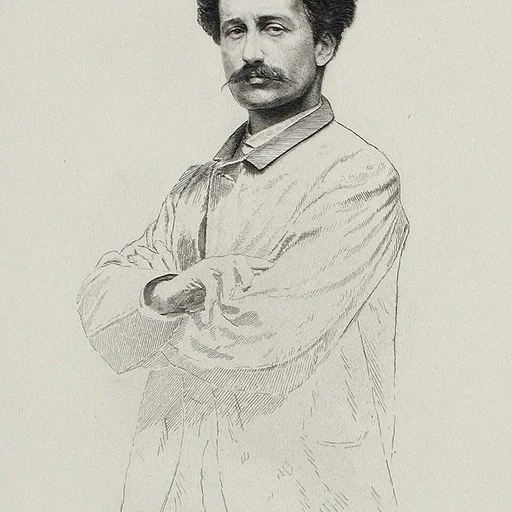
Félicien Victor Joseph Rops (French: ; 7 July 1833 – 23 August 1898) was a Belgian artist associated with Symbolism, Decadence, and the Parisian fin de siècle, and was a member of the Les XX group.

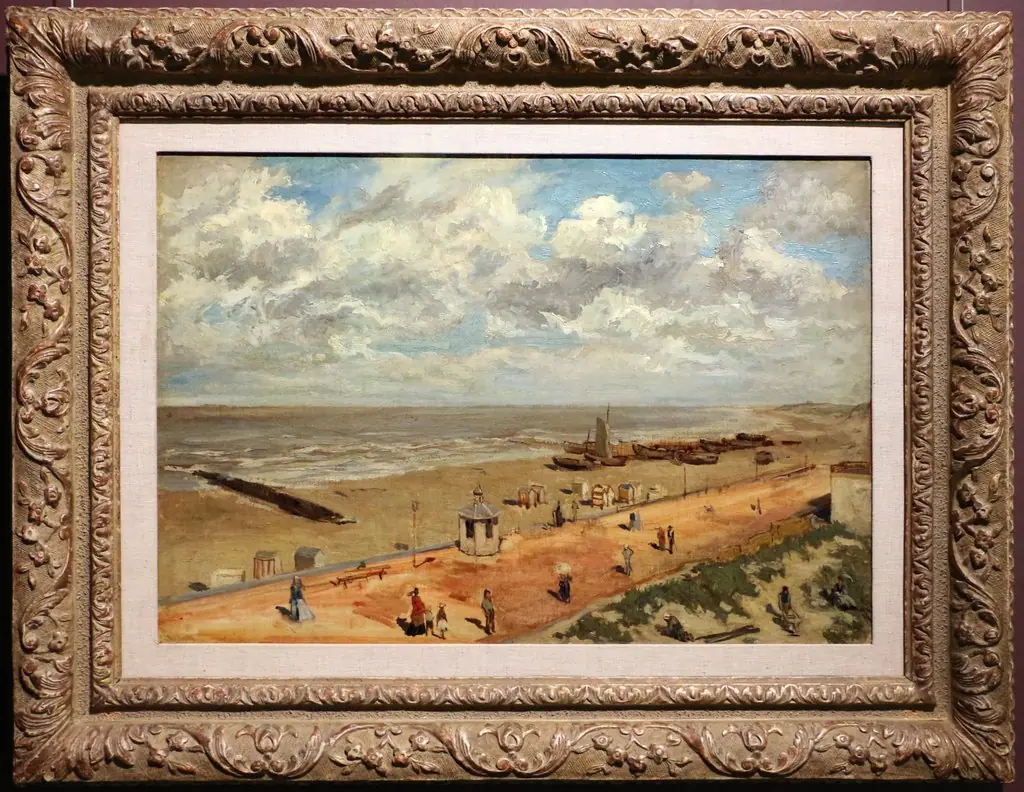
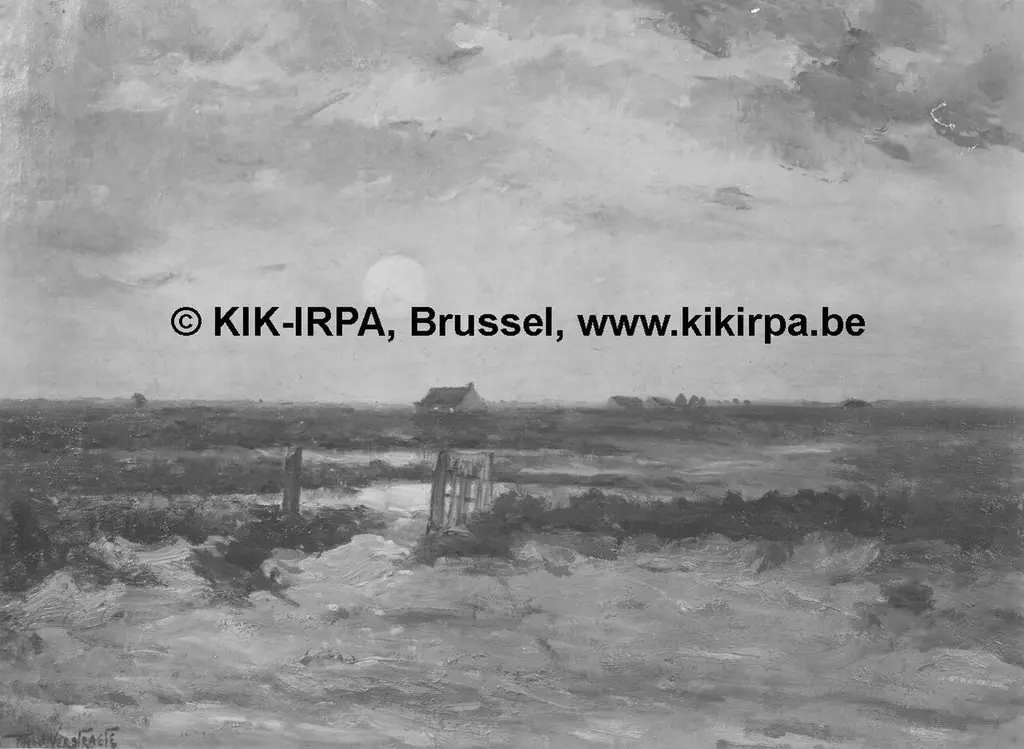 Rising of the Moon in Blankenberge
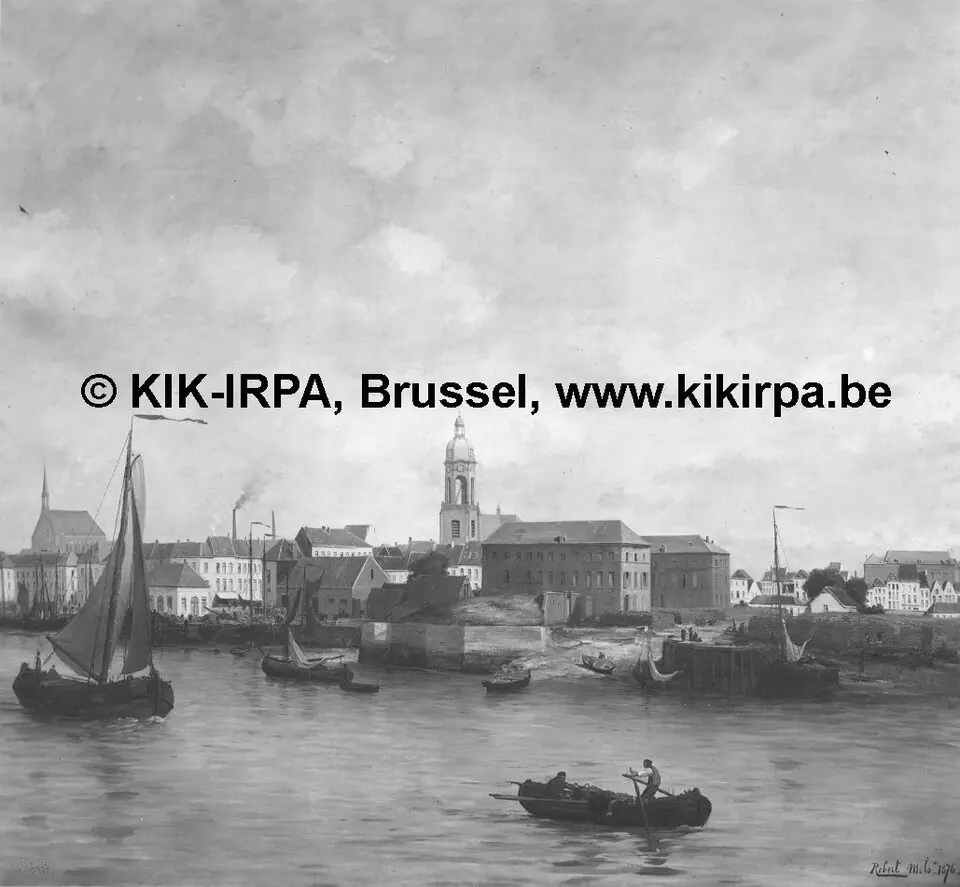 The South-Arsenaalkaai in Antwerp in 1870
 Landscape
 Lane under Snow
 Public Water Pump on the Old Fish Market in Antwerp
 The Ferry to Sint-Anna
 Cornfield
 Still Life
 Sixteenth–Century Wooden Façade on Groenplaatsstraat in Antwerp
 Deer Hunting in America
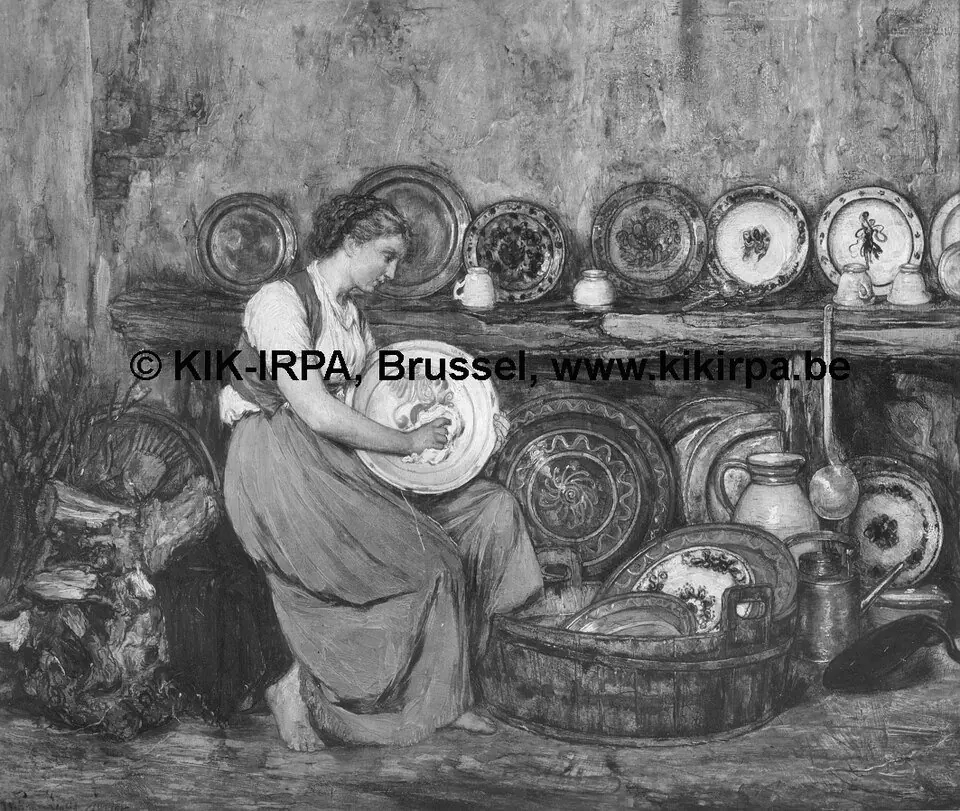 Woman Washing Dishes
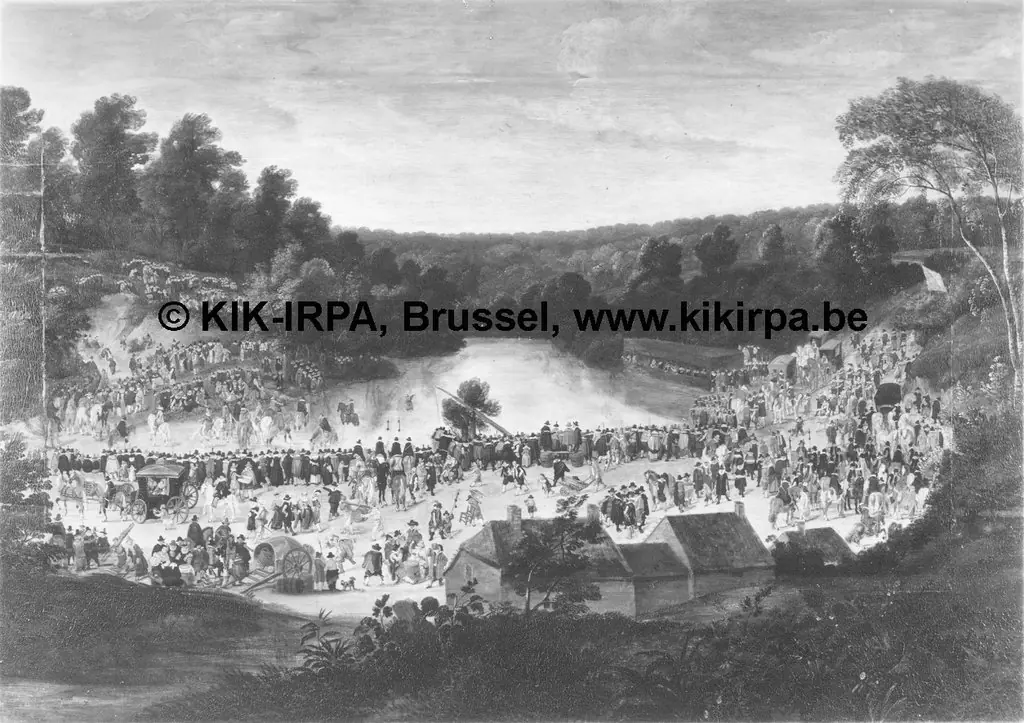 Garden Festival at Diesdelle