Artwork
Public Water Pump on the Old Fish Market in Antwerp
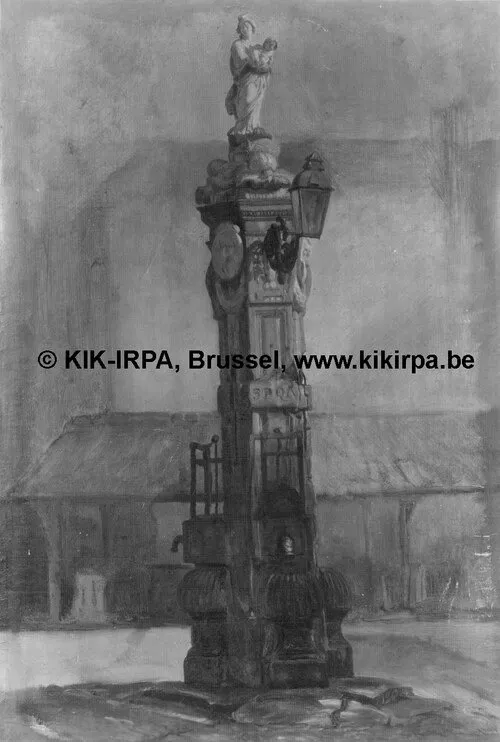
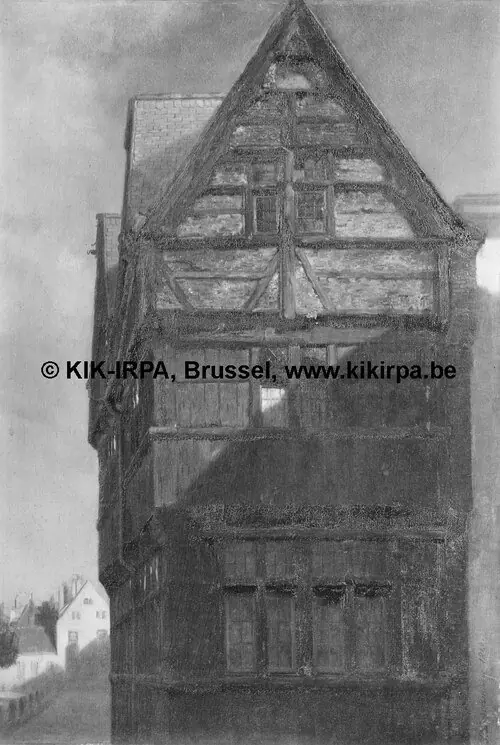
Public Water Pump on the Old Fish Market in Antwerp is an oil painting by Josephus Laurentius Dyckmans. It dates from 1859 and is held in the collection of the Royal Museum of Fine Arts Antwerp.
About this work
Overview
Painted around 1859 by Belgian artist Josephus Laurentius Dyckmans, this oil-on-canvas work captures a quiet moment in Antwerp’s Old Fish Market.
Painted around 1859 by Belgian artist Josephus Laurentius Dyckmans, this oil-on-canvas work captures a quiet moment in Antwerp’s Old Fish Market. The scene centers on a public water pump, a functional fixture in daily urban life. Dyckmans, known for his refined attention to detail, rendered the setting with precision, avoiding idealization in favor of observed reality. The painting resides in the Royal Museum of Fine Arts Antwerp, where it exemplifies 19th-century Belgian genre painting.
Subject & Meaning
The painting portrays the water pump as a communal anchor in a working market, surrounded by everyday objects: a statue, a hanging lantern, and a heavy base structure. These elements suggest the intersection of utility and civic presence. Though no figures dominate the scene, their implied activity—fetching water, trading goods—conveys the rhythm of urban labor. The pump becomes a silent witness to the market’s routine, reflecting the dignity of ordinary life in mid-19th-century Antwerp.
Technique & Style
Dyckmans employed a meticulous, almost miniature-like technique, with fine brushwork defining textures of stone, metal, and fabric. His use of chiaroscuro subtly models forms, enhancing the three-dimensionality of the pump and surrounding objects without dramatic contrast. Light falls naturally, as if from an overcast sky, illuminating surfaces with quiet clarity. The composition is tightly controlled, directing attention to the pump’s central position while preserving the ambient realism of the urban setting.
History & Provenance
Created in 1859, the painting entered the collection of the Royal Museum of Fine Arts Antwerp shortly after its completion. Dyckmans, a respected figure in Belgian art circles, was known for his genre scenes and portraits, often compared to Dutch Golden Age painters for their precision. The work remained in institutional hands throughout its history, with no record of private ownership, suggesting early recognition of its documentary and artistic value within Antwerp’s cultural institutions.
Context
In mid-19th-century Antwerp, public water pumps were vital infrastructure, especially in markets where clean water was essential for commerce and hygiene. As cities modernized, such fixtures became symbols of civic order. Dyckmans’ depiction aligns with a broader European trend of elevating mundane urban scenes to the level of serious art, reflecting both social change and a growing interest in the everyday lives of ordinary people.
Legacy
Though not widely exhibited beyond Belgium, the painting endures as a quiet testament to Dyckmans’ skill in capturing the texture of daily life. It contributes to the understanding of 19th-century Belgian genre painting, where precision and restraint replaced theatricality. Its continued presence in the Royal Museum underscores its role as a historical document, preserving the physical and social landscape of Antwerp before industrialization transformed its streets.
Artist & collection
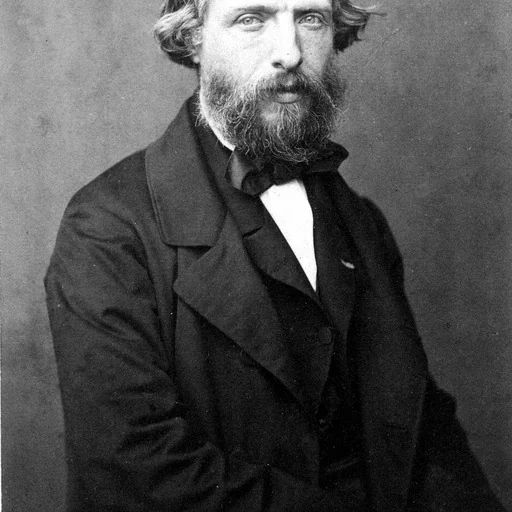
Artist
Josephus Laurentius Dyckmans or Jozef Laurent Dyckmans (Lier, 9 August 1811 – Antwerp, 8 January 1888) was a Belgian painter mainly of genre scenes and portraits whose painstakingly detailed pictures earned him the nickname 'The Belgian…