Artwork
Dinner Service (Rousseau service): Flowers (no. 23)
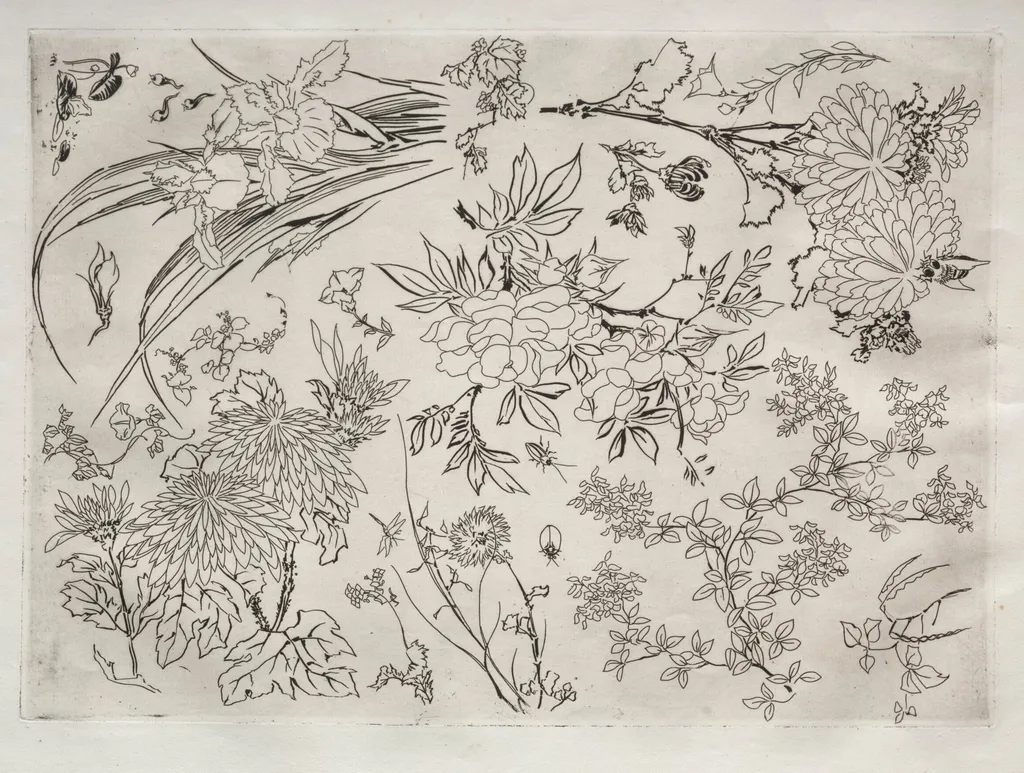
Dinner Service (Rousseau service): Flowers (no. 23) is a print by the Impressionist artist Félix Bracquemond. It dates from 1866 and is held in the collection of the Cleveland Museum of Art.
About this work
Overview
Created in 1866 by Félix Bracquemond, this ink drawing is one of twenty-four designs for a dinner service known as the Rousseau service. Executed in monochrome, it was intended as a pattern for ceramic tableware rather than a standalone artwork. The composition emphasizes natural forms arranged to fit the curved surface of a plate, blending decorative function with artistic observation.
Subject & Meaning
The drawing depicts a dense arrangement of wildflowers and foliage, with blossoms of varying sizes spilling beyond the frame.
The drawing depicts a dense arrangement of wildflowers and foliage, with blossoms of varying sizes spilling beyond the frame. Tiny birds are integrated among the branches, suggesting a fleeting moment in nature. Rather than idealized botany, the design captures the untamed quality of garden growth, reflecting a quiet reverence for everyday botanical life as something worthy of daily contemplation.
Technique & Style
Bracquemond used fine, fluid ink lines to render petals, leaves, and stems with precision yet apparent spontaneity. The absence of color and shading focuses attention on contour and rhythm. The composition is asymmetrical and tightly packed, with elements overlapping and extending past the edges—an approach that anticipates the compositional freedom later seen in Japanese prints and Impressionist works.
History & Provenance
The drawing belongs to a series commissioned for a porcelain dinner service named after its patron, the collector and critic Charles-Édouard Rousseau. Though the full service was never fully produced, individual designs were preserved. This piece entered The Cleveland Museum of Art’s collection through documented acquisition, remaining as a rare surviving example of 19th-century French decorative design.
Context
In the 1860s, French artists began reimagining decorative arts as a legitimate field for creative expression. Bracquemond, influenced by Japanese woodblock prints, sought to elevate everyday objects through close study of nature. His work contributed to a broader movement that blurred boundaries between fine art and craft, challenging the hierarchy of artistic mediums.
Legacy
Bracquemond’s floral designs influenced later generations of designers and artists interested in integrating natural forms into functional objects. Though the Rousseau service remained incomplete, its individual plates became touchstones for the Art Nouveau movement’s organic aesthetics. The drawing endures as a quiet testament to the dignity found in ordinary, repeated beauty.
Own this work as a print
Artist & collection

Artist
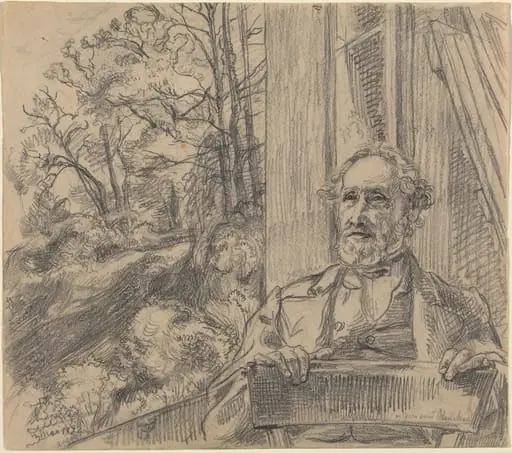
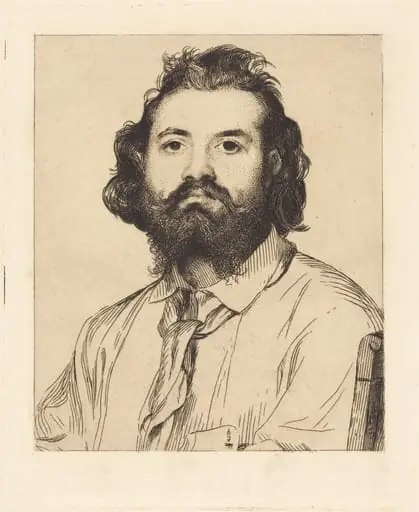
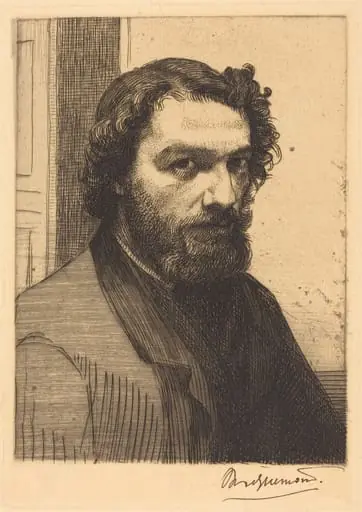
Félix Henri Bracquemond (French pronunciation: ; 22 May 1833 – 29 October 1914) was a French painter, etcher, and printmaker.

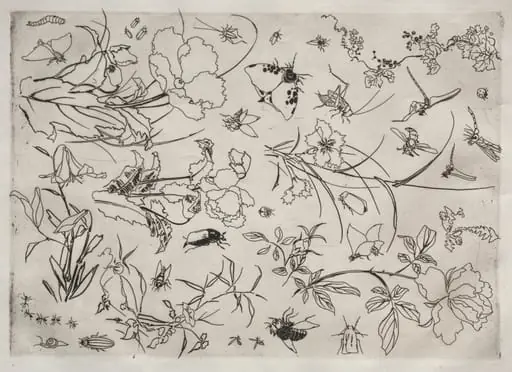 Dinner Service (Rousseau service): Flowers and Insects (no. 15)
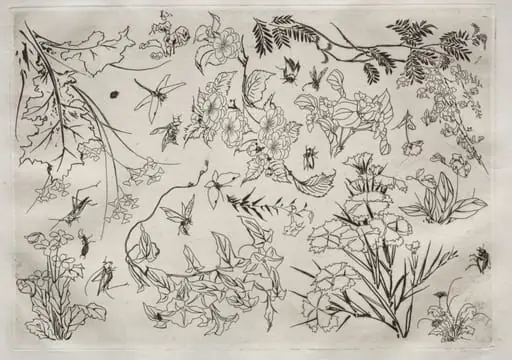 Dinner Service (Rousseau service): Flowers (no. 22)
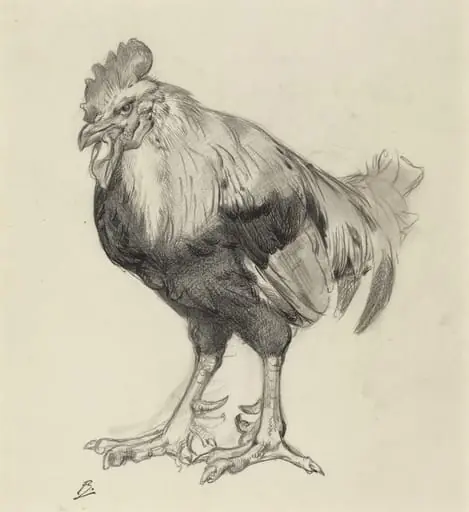
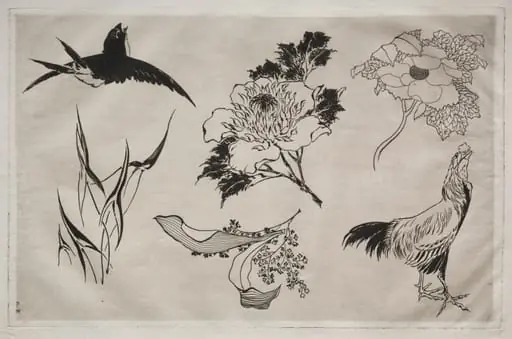 Dinner Service (Rousseau service): Swallow, Rooster and Flowers (no. 8)
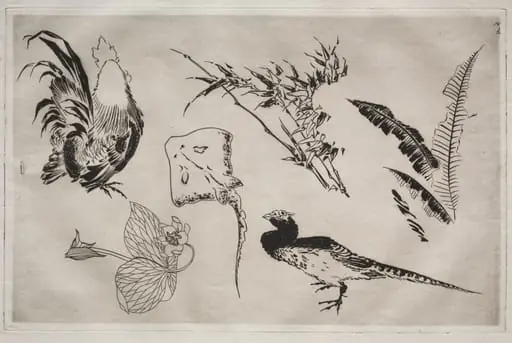 Dinner Service (Rousseau service): Roosters, skate, plants, etc. (no. 9)
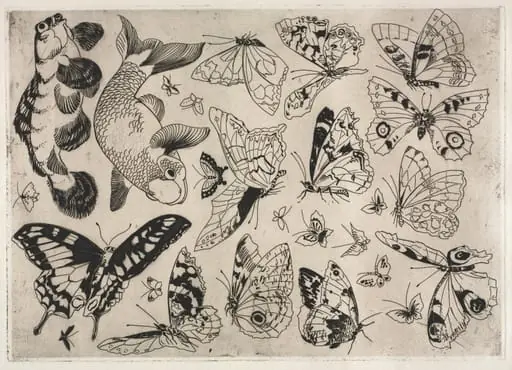 Dinner Service (Rousseau service): Butterflies and Fish (no. 16)
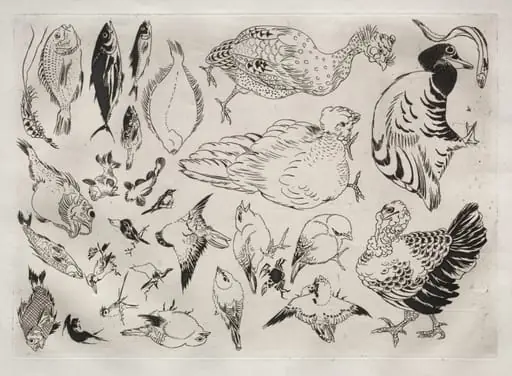 Dinner Service (Rousseau service): Ducks, fish, etc. (no. 12)
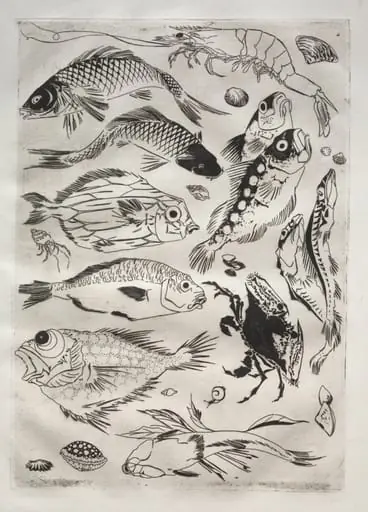 Dinner Service (Rousseau service): Fish (no. 24)