Artwork
Parisian Service (Haviland service): Sunrise (no. 12)
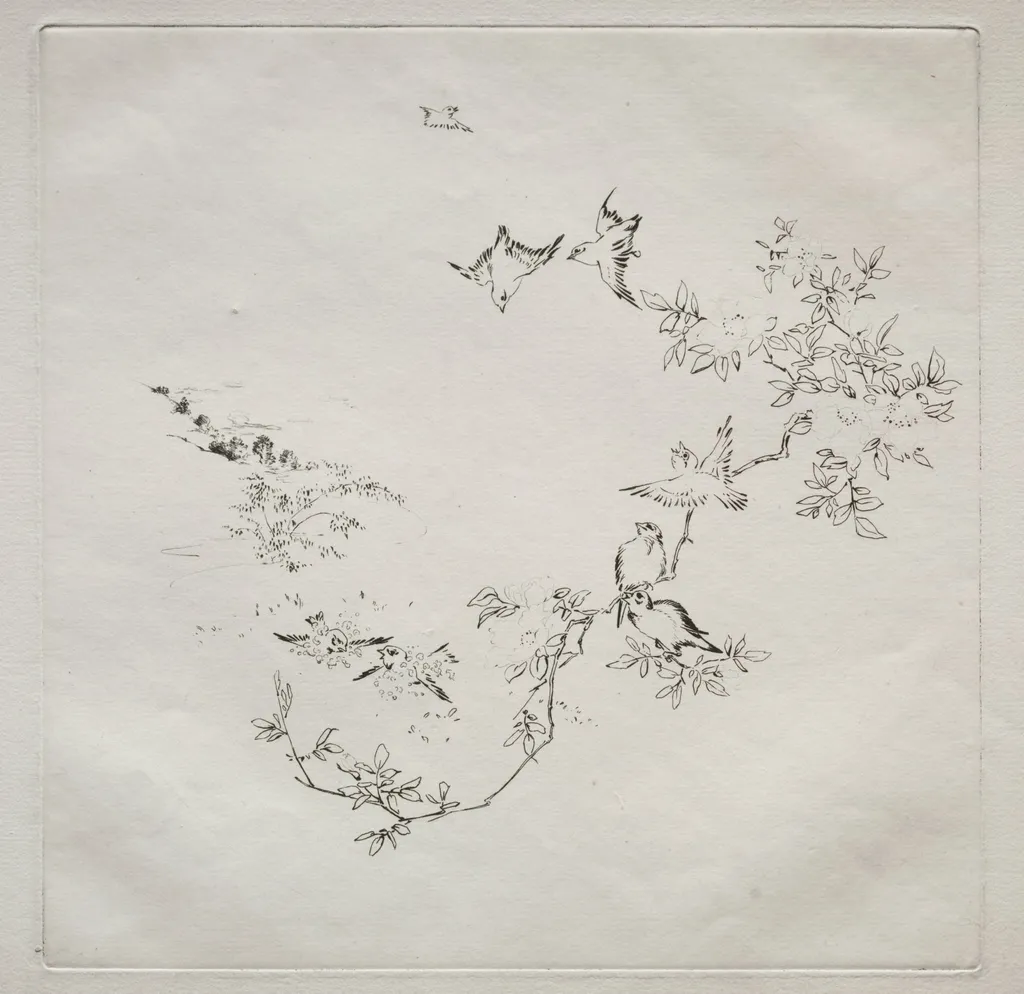
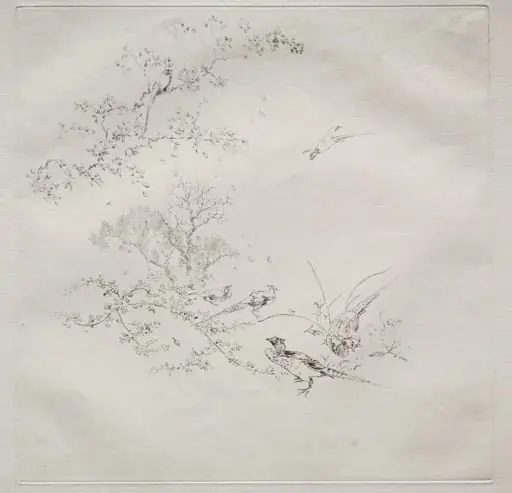
Parisian Service (Haviland service): Sunrise (no. 12) is a print by the Impressionist artist Félix Bracquemond. It dates from 1875 and is held in the collection of the Cleveland Museum of Art.
About this work
Next, check out Félix Bracquemond (French, 1833–1914) to see how he worked with other media.
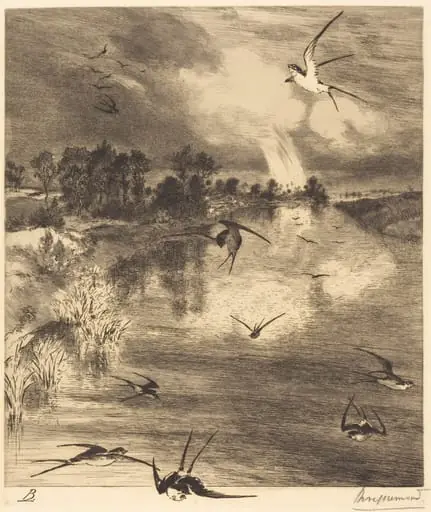
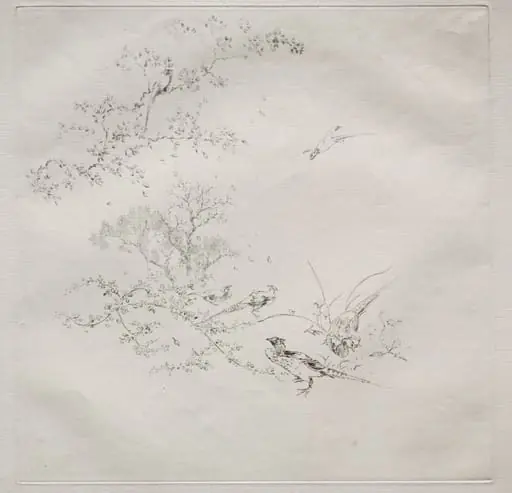
This drawing shows six birds in flight or perched on branches. The lines are loose and quick, with some light shading to suggest movement. A few flowers and leaves are scattered around, but the focus stays on the birds.
The artist used simple ink and minimal detail to keep the scene lively. Each bird looks different in pose, making the whole picture feel dynamic.
Next, check out Félix Bracquemond (French, 1833–1914) to see how he worked with other media.
Overview
Created in 1875 by Félix Bracquemond, this print is part of the Parisian Service, a series of ceramic designs produced for the Haviland porcelain manufactory. The work, designated as no. 12 and titled Sunrise, was intended as a decorative motif rather than a standalone artwork. It reflects Bracquemond’s interest in translating natural observation into functional design, blending artistic expression with industrial production.
Subject & Meaning
The composition features six birds in varied poses—some in flight, others perched—set against sparse branches and scattered floral elements. The birds are rendered with subtle differentiation in posture and direction, evoking a sense of quiet morning activity. The absence of a detailed landscape shifts focus to the rhythm of avian movement, suggesting renewal and the quiet energy of dawn without literal symbolism.
Technique & Style
Bracquemond employed loose, fluid ink lines with minimal shading to capture motion and form. The drawing’s economy of detail avoids ornamental excess, emphasizing spontaneity and naturalism. Each bird is distinct in stance, contributing to a dynamic composition that feels unposed. The technique aligns with Japanese woodblock aesthetics, which Bracquemond admired, favoring clarity and suggestive rather than descriptive rendering.
History & Provenance
This print originated as a design for a porcelain service commissioned by the Haviland company in Limoges. Though produced for tableware, the design was later recognized for its artistic merit and preserved separately. The Cleveland Museum of Art acquired the print as part of its collection of 19th-century decorative arts, where it now serves as an example of the intersection between fine art and industrial design.
Context
In the 1870s, French artists increasingly drew inspiration from Japanese prints, which emphasized asymmetry, flattened space, and natural subjects. Bracquemond was a key figure in this movement, promoting Japonisme in decorative arts. His work for Haviland reflected broader cultural shifts, where fine art principles were applied to mass-produced ceramics, challenging hierarchies between utility and aesthetics.
Legacy
Bracquemond’s designs for the Parisian Service influenced later generations of designers seeking to elevate craft through artistic integrity. Though produced for domestic use, these prints are now studied as significant contributions to the Art Nouveau precursor movement. Their restrained elegance and attention to natural form continue to inform discussions on the relationship between art, design, and production.
Artist & collection

Artist
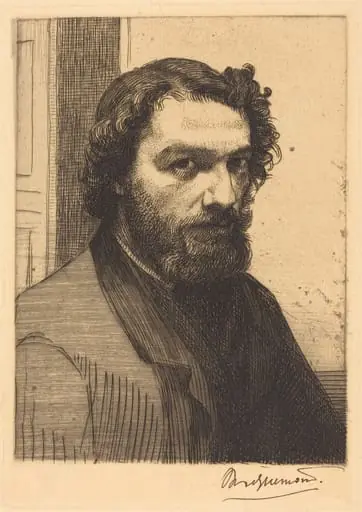
Félix Henri Bracquemond (French pronunciation: ; 22 May 1833 – 29 October 1914) was a French painter, etcher, and printmaker.

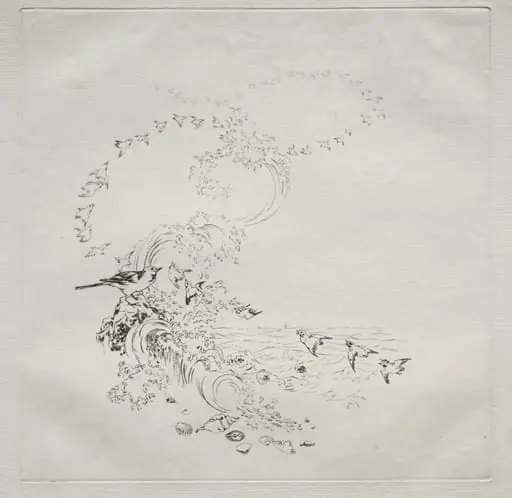 Parisian Service (Haviland service): Sunset (no. 11)
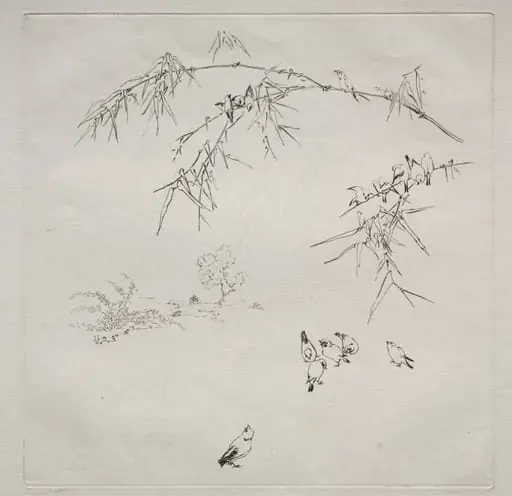 Parisian Service (Haviland service): Rain (no. 10)
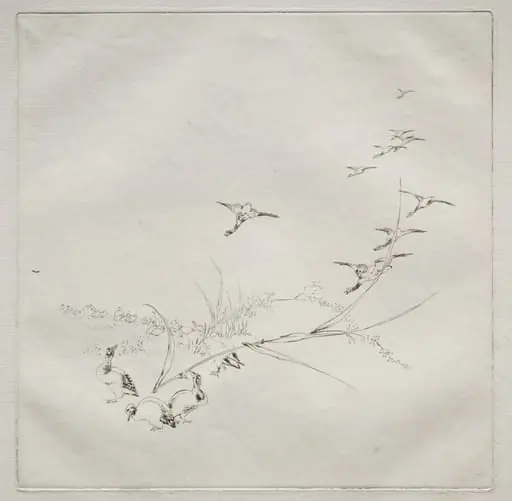 Parisian Service (Haviland service): Right in the sun (no. 9)
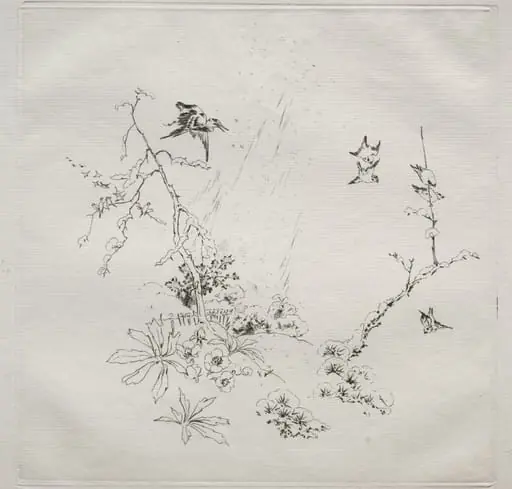 Parisian Service (Haviland service): Snow (no. 6)
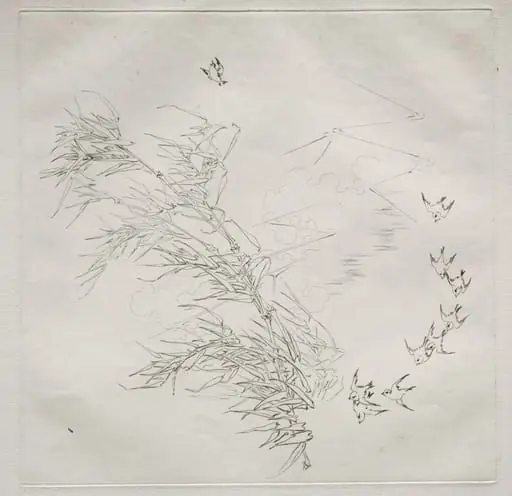 Parisian Service (Haviland service): The Storm (no. 8)
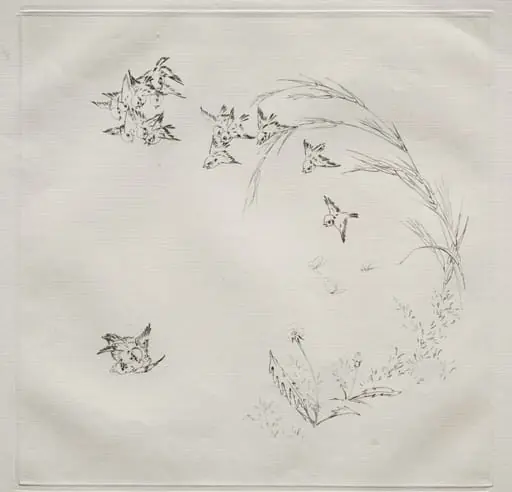 Parisian Service (Haviland service): The Fight (no. 2)
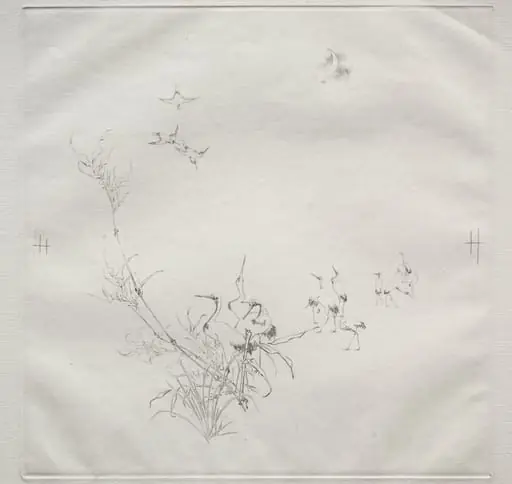 Parisian Service (Haviland service): The Moon (no. 5)
 Parisian Service (Haviland service)
 Parisian Service (Haviland service): Fog (no. 1)
 Parisian Service (Haviland service): Calm (no. 3)
 Parisian Service (Haviland service): The Terror (no. 4)