Artwork
Parisian Service (Haviland service): The Storm (no. 8)
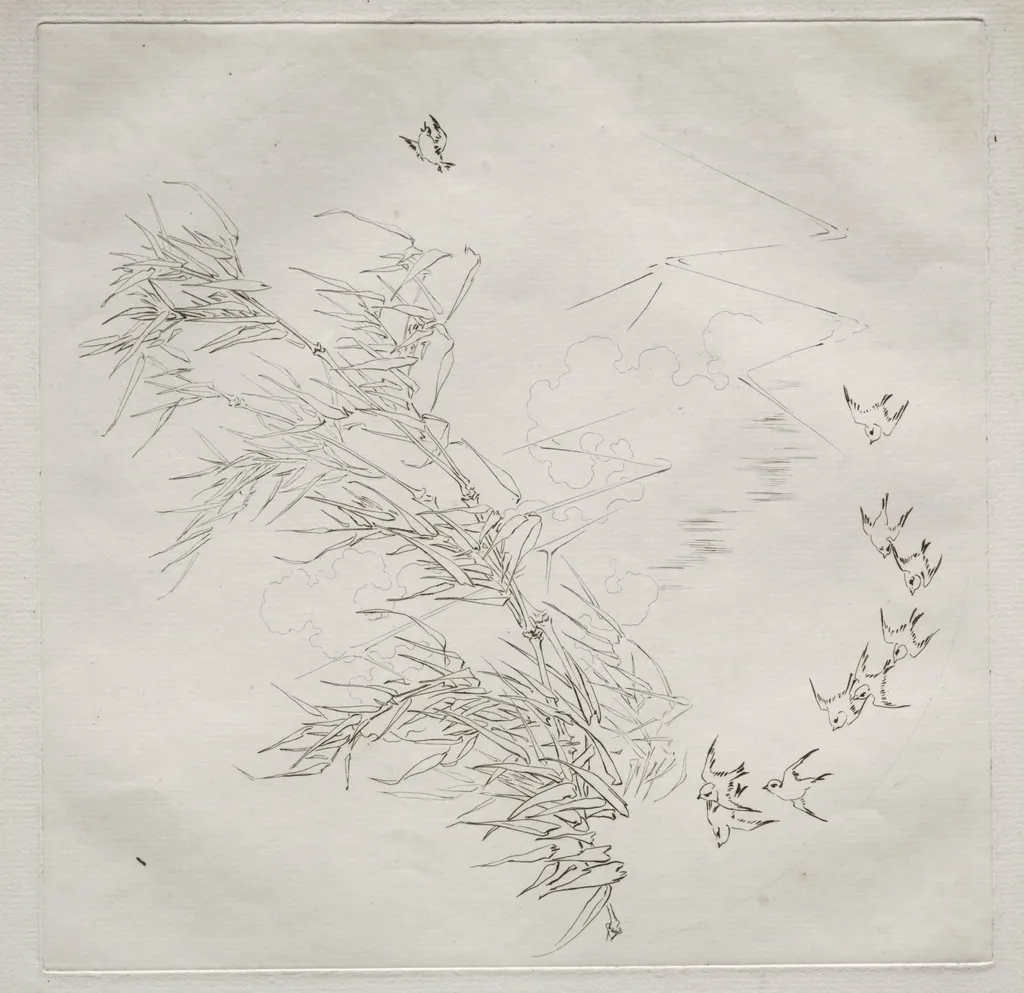
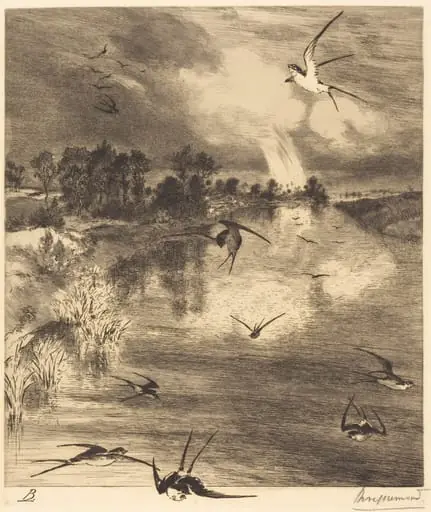
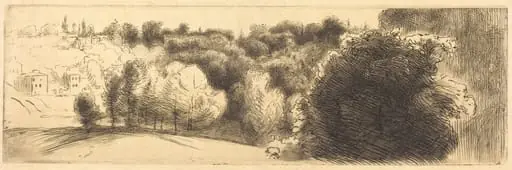
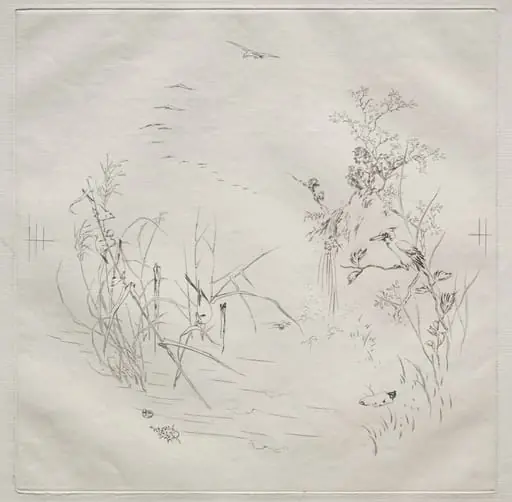
Parisian Service (Haviland service): The Storm (no. 8) is a print by the Impressionist artist Félix Bracquemond. It dates from 1875 and is held in the collection of the Cleveland Museum of Art.
About this work
Overview
Created in 1875 by Félix Bracquemond, this drawing is the eighth plate in the *Parisian Service* series, a collection of decorative designs for porcelain.
Created in 1875 by Félix Bracquemond, this drawing is the eighth plate in the *Parisian Service* series, a collection of decorative designs for porcelain. Executed as a monochrome print, it captures a single tree in motion, its branches rendered with energetic lines against a pale ground. The work was intended not as a standalone artwork but as a pattern for ceramic production, reflecting Bracquemond’s interest in translating natural forms into functional design.
Subject & Meaning
The subject is a storm-tossed tree, its limbs twisted and jagged, surrounded by small birds in flight. The scene evokes nature’s volatility rather than its serenity. The birds, sketched with rapid, minimal strokes, suggest sudden movement and urgency. There is no narrative beyond the moment of disturbance—nature as a force in flux, observed closely but not idealized, aligning with the artist’s broader interest in the poetry of everyday natural phenomena.
Technique & Style
Bracquemond employed a loose, spontaneous draftsmanship, using ink to create fluid, almost improvisational lines. The branches are defined by sharp, angular contours, while the birds are reduced to fleeting marks, implying motion without detail. The contrast between the dark, intricate branches and the untouched, light background enhances the sense of energy. The style rejects polished finish in favor of immediacy, echoing Japanese woodblock prints that influenced his later work.
History & Provenance
The drawing was produced for the Haviland porcelain manufactory in Limoges as part of a series commissioned to modernize French ceramic decoration. Bracquemond’s designs were among the first to introduce Japanese-inspired aesthetics to European tableware. The Cleveland Museum of Art acquired the print as part of its collection of 19th-century decorative arts, preserving it as an example of the intersection between fine drawing and industrial design.
Context
In the 1870s, French artists increasingly looked to Japanese prints for inspiration, valuing their asymmetry, flat planes, and emphasis on natural forms. Bracquemond was a leading figure in this movement, advocating for the integration of such aesthetics into applied arts. The *Parisian Service* series was a direct response to this trend, replacing ornate academic motifs with dynamic, sketch-like depictions of flora and fauna, reshaping the visual language of domestic ceramics.
Legacy
Bracquemond’s *Parisian Service* influenced subsequent generations of ceramic designers and Art Nouveau artists by demonstrating that hand-drawn spontaneity could enhance mass-produced objects. The series helped legitimize the sketch as a valid basis for decorative art, challenging the hierarchy between fine and applied arts. Though produced for porcelain, these drawings are now studied as significant works of graphic art in their own right.
Artist & collection

Artist
Félix Henri Bracquemond (French pronunciation: ; 22 May 1833 – 29 October 1914) was a French painter, etcher, and printmaker.

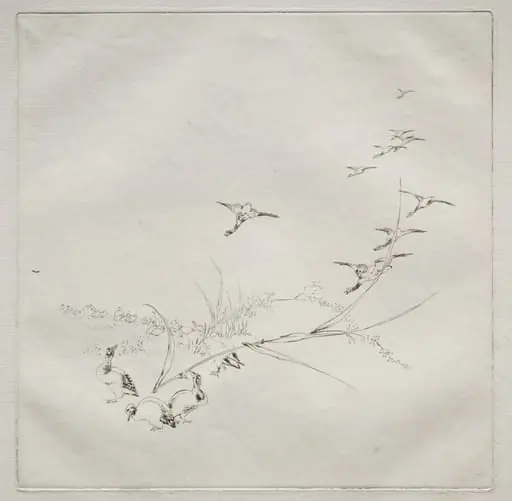 Parisian Service (Haviland service): Right in the sun (no. 9)
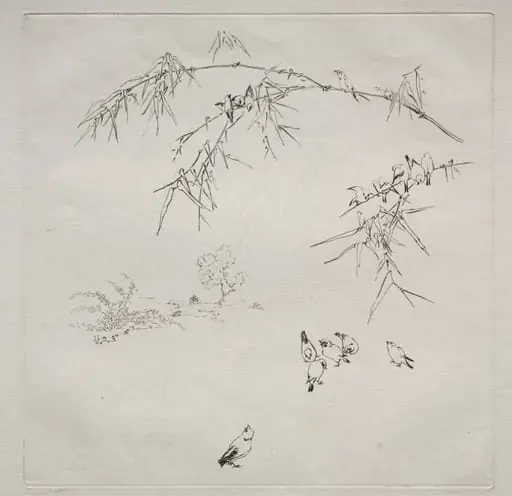 Parisian Service (Haviland service): Rain (no. 10)
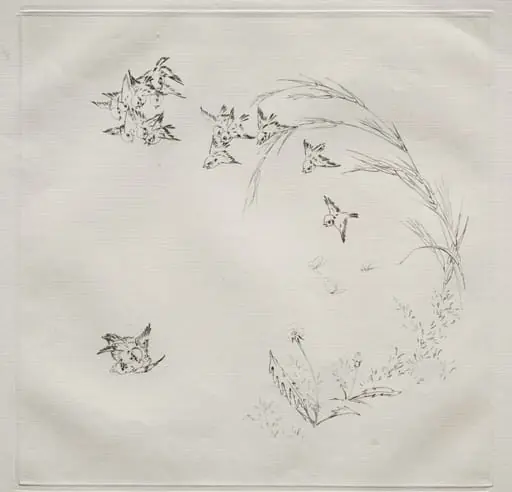 Parisian Service (Haviland service): The Fight (no. 2)
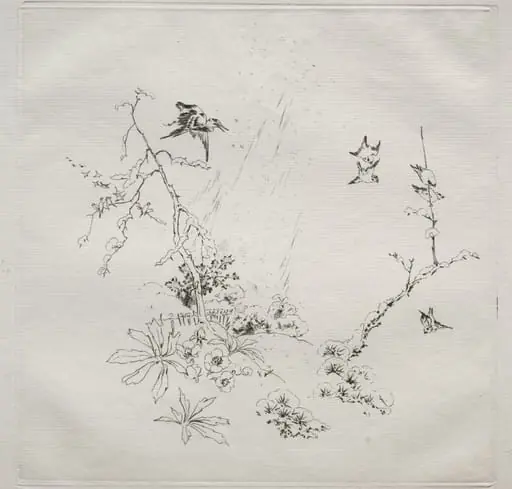 Parisian Service (Haviland service): Snow (no. 6)
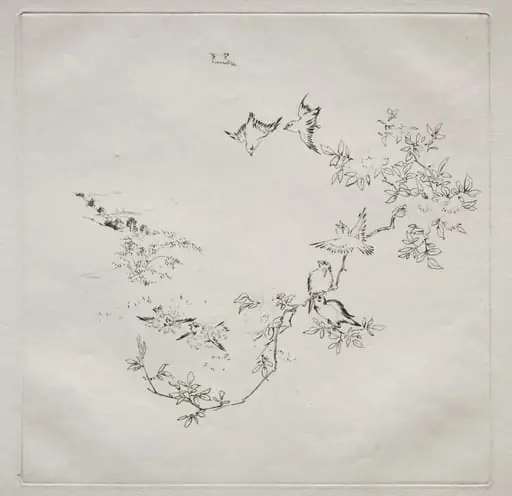 Parisian Service (Haviland service): Sunrise (no. 12)
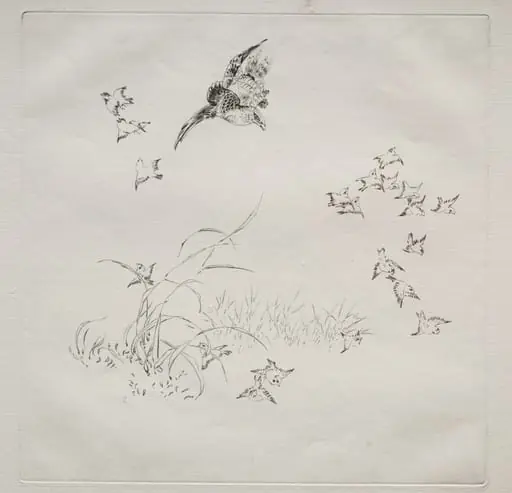 Parisian Service (Haviland service): The Terror (no. 4)
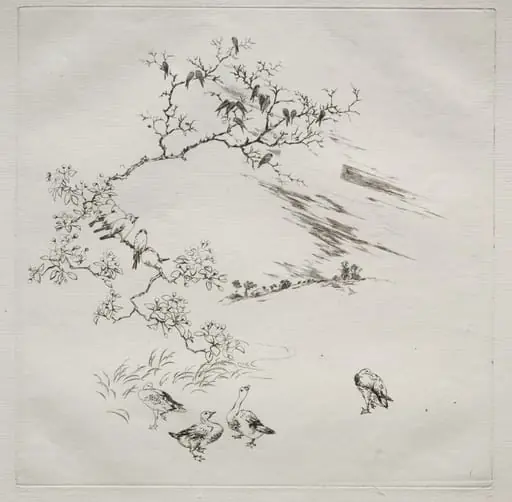 Parisian Service (Haviland service): Night (no. 7)
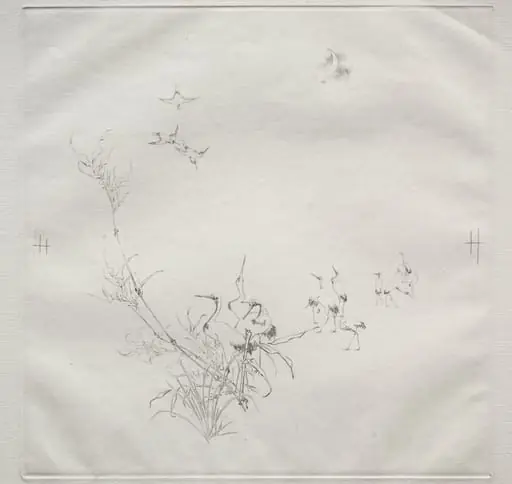 Parisian Service (Haviland service): The Moon (no. 5)
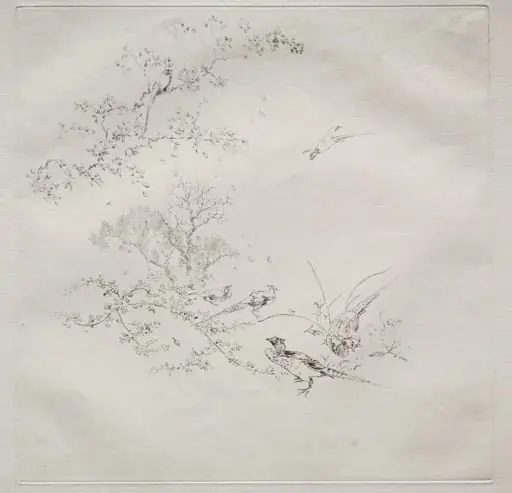 Parisian Service (Haviland service)
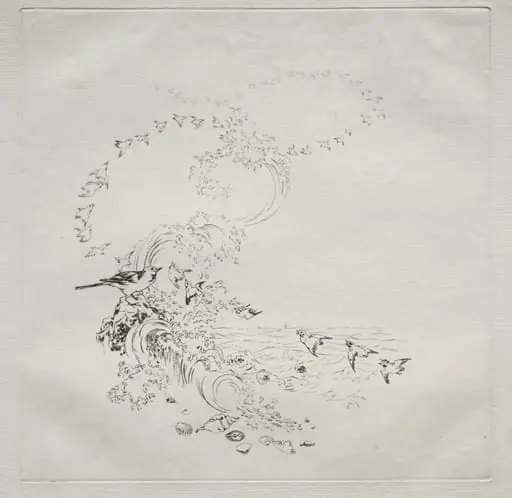 Parisian Service (Haviland service): Sunset (no. 11)
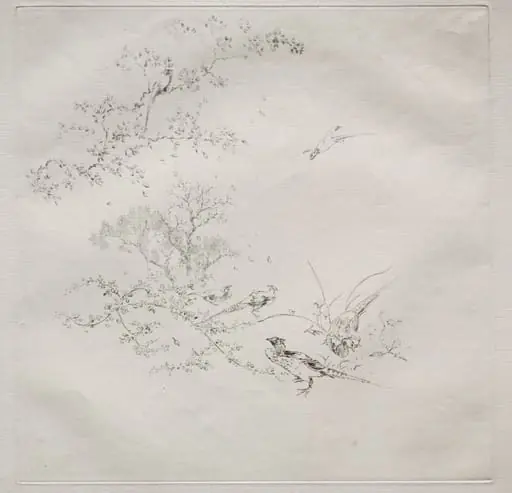 Parisian Service (Haviland service): Fog (no. 1)
 Parisian Service (Haviland service): Calm (no. 3)