Artwork
Study for the Prodigal Son (Etude pour L'enfant prodigue)
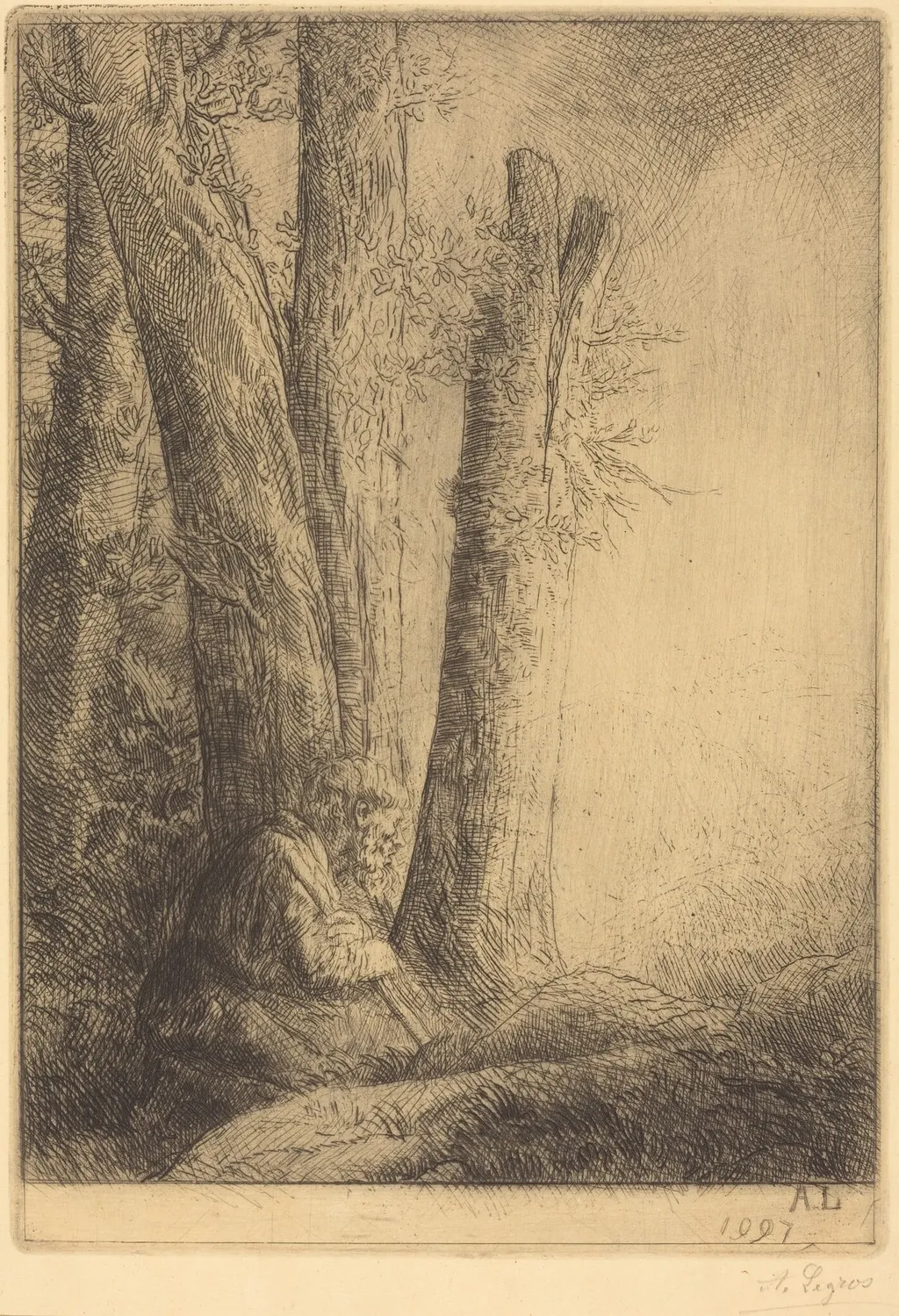
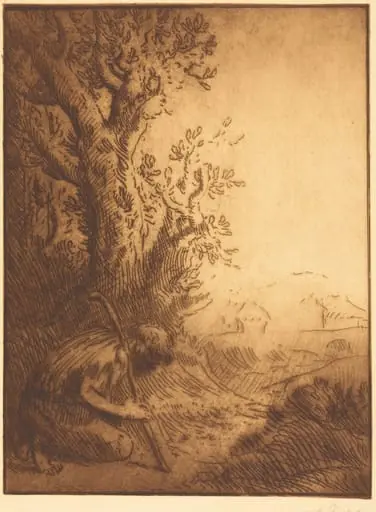
Study for the Prodigal Son (Etude pour L'enfant prodigue) is an ink print by the Romanticist artist Alphonse Legros. It dates from 1874 and is held in the collection of the National Gallery of Art.
About this work
The artist used fine, scratchy lines to build up the dark shapes—this is how they made the trees feel solid yet mysterious.
This sketch shows three tall trees in a dim forest. Their trunks twist tightly, and the branches tangle above like thick ropes. The bark looks rough, almost textured, with sharp lines marking every crack. Light barely reaches the ground, leaving shadows deep between the trees.
The artist used fine, scratchy lines to build up the dark shapes—this is how they made the trees feel solid yet mysterious. The date "1897" and the artist’s signature are scrawled in the corner, almost like an afterthought.
If you like this style, look up etching, drypoint, aquatint to see how artists create these deep, scratchy textures.
Overview
Alphonse Legros produced the print *Study for the Prodigal Son* in 1874. Executed with a combination of etching and dry‑point, the work measures roughly a typical small plate size and bears Legros’s signature and the date 1897 in the lower corner. The image presents a solitary figure set within a dense, shadowy forest of intertwined trees, evoking a moment of contemplation.
Subject & Meaning
The composition alludes to the biblical parable of the Prodigal Son, suggesting the central figure is caught in a state of remorse or introspection. The oppressive woodland, with its tangled trunks and limited light, reinforces a sense of isolation and inner turmoil, mirroring the narrative’s themes of loss, repentance, and the search for redemption.
Technique & Style
Legros employed traditional etching to lay down broad tonal areas, then intensified texture with dry‑point’s characteristic burr, producing fine, scratchy lines that define the bark and foliage. The contrast between deep, velvety shadows and sharply rendered tree trunks creates a tactile quality, while the limited palette of black and white emphasizes mood over detail.
History & Provenance
Born in France and naturalised as a British citizen after settling in London in 1863, Legros was a central figure in the 19th‑century revival of British printmaking. The plate was likely produced during his tenure as professor of drawing at the Slade School, where he encouraged students to explore etching as a medium for expressive drawing.
Context
The print belongs to a period when artists revisited religious subjects through a realist lens, focusing on psychological depth rather than overt dramatization. Legros’s interest in combining academic drawing with the immediacy of printmaking reflects broader Victorian concerns with moral narrative and the capacity of the graphic arts to convey interior states.
Artist & collection

Artist
Alphonse Legros (French pronunciation: ; 8 May 1837 – 8 December 1911) was a French, later British, painter, etcher, sculptor, and medallist.

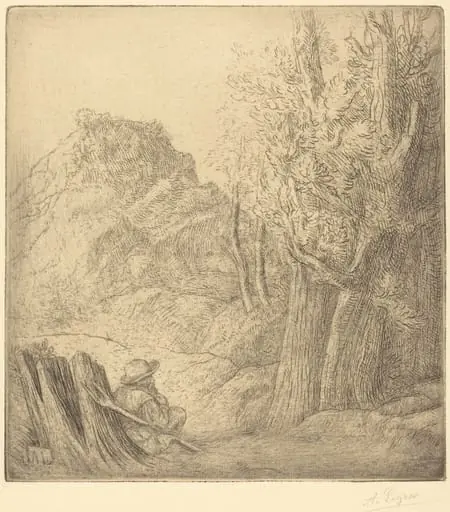 Old Village (Ville vieille)
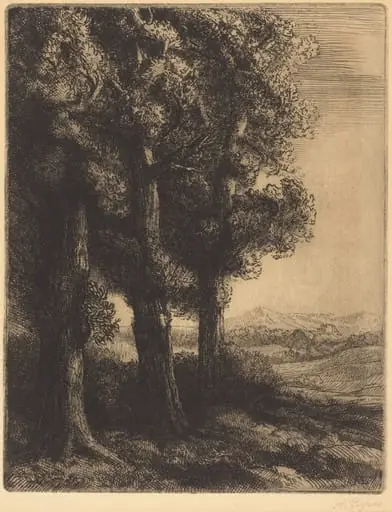 Corner of a Wood (Coin d'un bois)
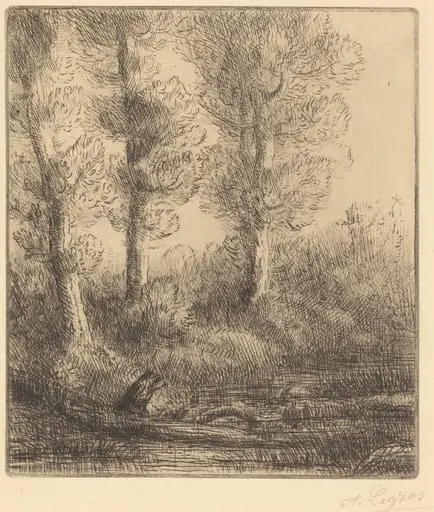 Banks of the Saint-Pre (Rive du Saint-Pre)
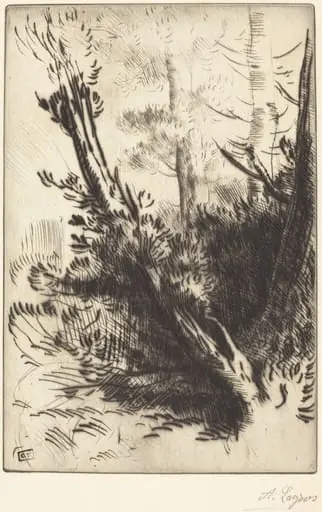 In the Woods (Dans les bois)
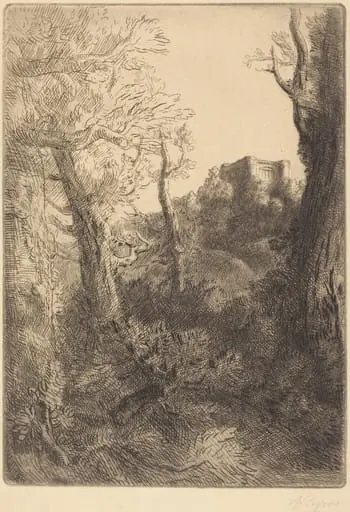 Landscape (Paysage)
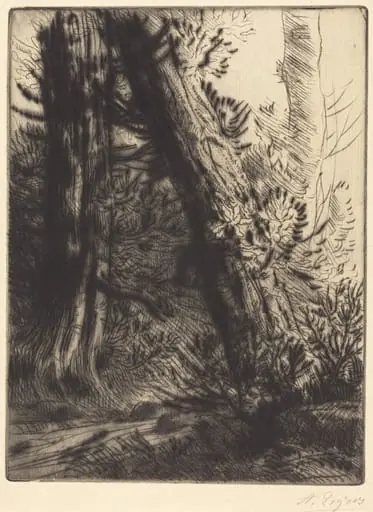 Edge of a Brook (Bord de ruisseau)
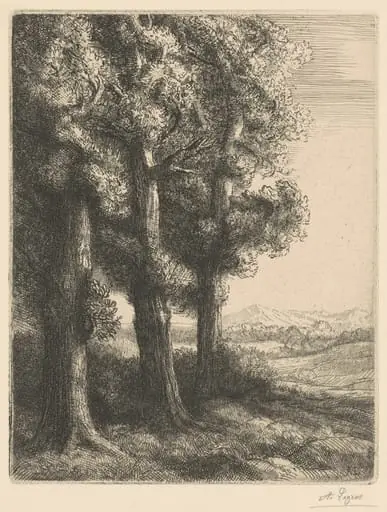 Corner of a Wood (Coin d'un Bois)
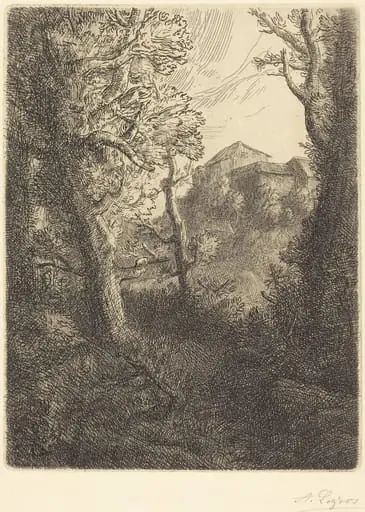 Landscape (Paysage)
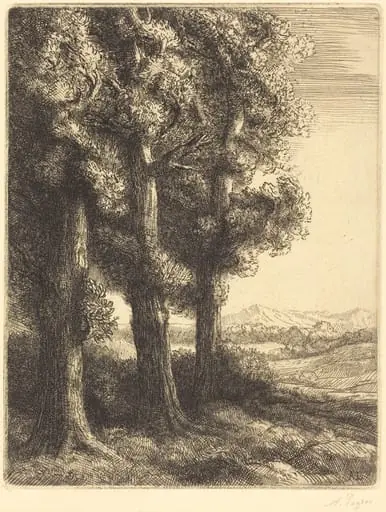 Corner of a Wood (Coin d'un bois)
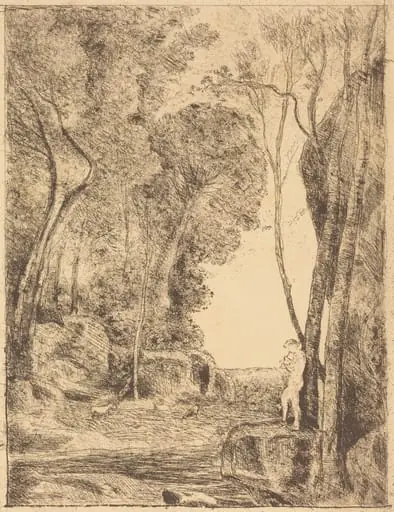 Little Shepherd, 1st Plate (Le Petit Berger)
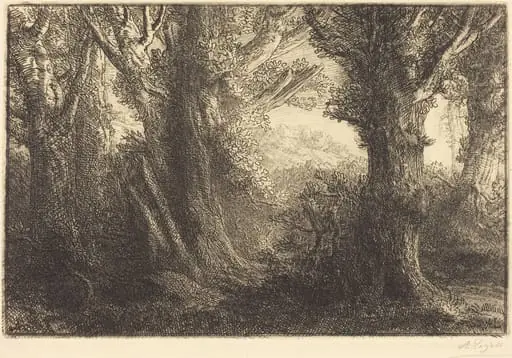 In the Forest of Conteville (Dans la foret de Conteville)
 The Prodigal Son, 4th plate (L'enfant prodigue)