Artwork
Female nude in a forest landscape
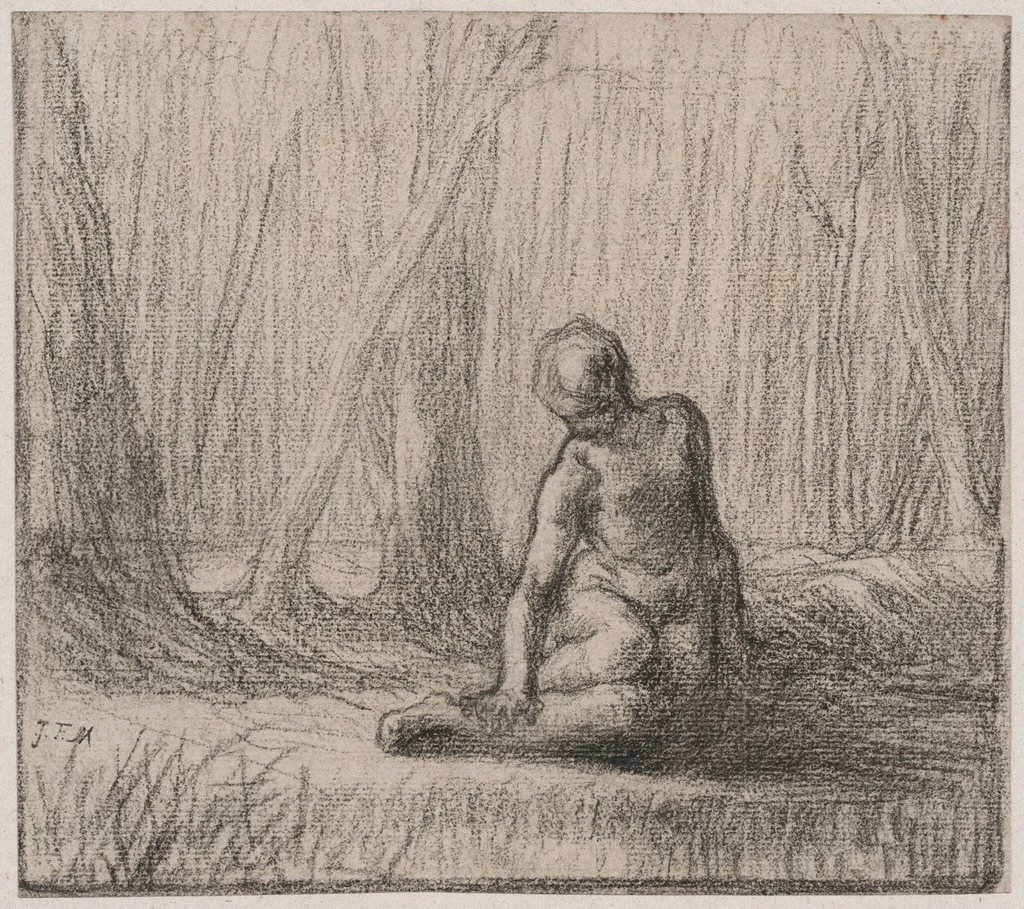
Female nude in a forest landscape is a drawing by the Romanticist artist Jean François Millet. It dates from 1848 and is held in the collection of the Victoria and Albert Museum. This pencil drawing by Jean-François Millet, created between 1846 and 1850, depicts a nude female figure integrated into a wooded setting.
About this work
This drawing shows a woman in a forest, done in pencil. It’s a study of form and light, not a quick sketch. Millet made it between 1846 and 1850.
It’s part of a shift in his work. He mixed classic training with a new way of seeing nature. By 1849 he helped start the Barbizon School.
Check out the Victoria and Albert Museum if you want to see more from Millet.
Overview
This pencil drawing by Jean-François Millet, created between 1846 and 1850, depicts a nude female figure integrated into a wooded setting.
This pencil drawing by Jean-François Millet, created between 1846 and 1850, depicts a nude female figure integrated into a wooded setting. Executed in pierre noire, the work reflects a deliberate exploration of form and atmosphere rather than a spontaneous sketch. It belongs to a transitional phase in Millet’s career, when his academic training began to yield to a more direct engagement with natural surroundings, preceding his permanent move to Barbizon.
Subject & Meaning
The figure, isolated yet harmonized with the surrounding foliage, evokes classical ideals of the nude while resisting mythological or allegorical interpretation. Rather than a goddess or nymph, she appears as a grounded, earthly presence. The absence of narrative context shifts focus to the body’s relationship with nature, suggesting an early form of naturalist inquiry—where the human form is observed not as idealized ornament but as part of the landscape’s quiet rhythm.
Technique & Style
Millet employs dense, controlled pencil strokes to model volume and suggest depth, using chiaroscuro to define the figure against the textured backdrop of trees and undergrowth. The contours are deliberate and sculptural, avoiding the looseness of preparatory sketches. Atmospheric effects are achieved through graded tonal shifts, creating a sense of encroaching shadow and damp woodland air—techniques that diverge from academic conventions in favor of observed reality.
History & Provenance
Created during Millet’s years in Paris before his relocation to Barbizon in 1849, this drawing is part of a series in which he experimented with integrating the human figure into rural environments. It predates his full commitment to peasant subjects but signals the beginning of his departure from historical painting. The work remains within the lineage of private studies, not public commissions, reflecting his personal artistic evolution during this period.
Context
In the mid-1840s, French art was shifting away from idealized historical themes toward direct observation of the natural world. Millet’s drawing aligns with this broader movement, even as he remained distinct from the Romantic tradition. His focus on the nude in a non-mythological forest setting anticipated the Barbizon School’s emphasis on landscape and everyday presence, laying groundwork for later realist and impressionist approaches to nature.
Legacy
This drawing marks an early step in Millet’s transformation from academic draftsman to a central figure in the Barbizon School. Though less known than his later peasant scenes, it reveals the continuity in his concern for human presence within nature. Its quiet intensity influenced subsequent artists who sought to depict the body not as symbol, but as a tangible, breathing element within the natural world.
Artist & collection
Artist
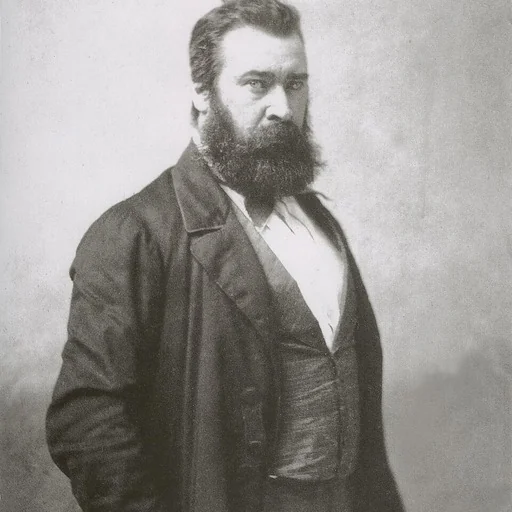
Jean-François Millet (French pronunciation: ; 4 October 1814 – 20 January 1875) was a French painter and one of the founders of the Barbizon school in rural France.

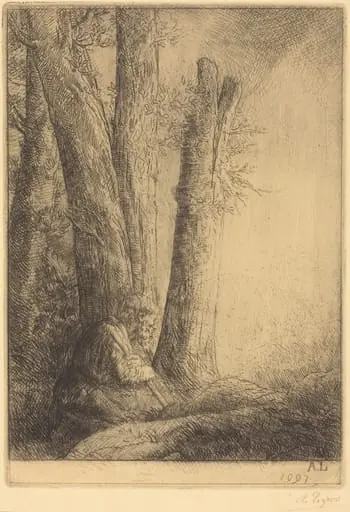 Study for the Prodigal Son (Etude pour L'enfant prodigue)
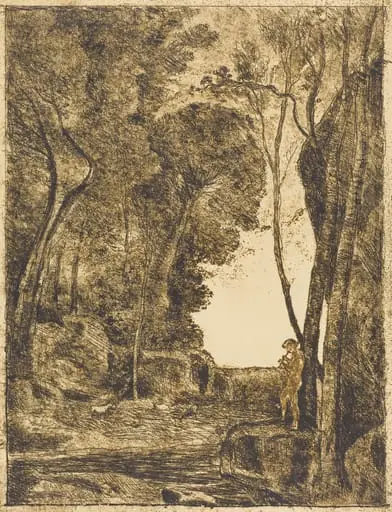 Little Shepherd, 1st Plate (Le Petit Berger)
 A Young Mother at the Entrance of a Wood
 The Bath
 The Prodigal Son, 4th plate (L'enfant prodigue)
 Little Shepherd, 1st Plate (Le Petit Berger)
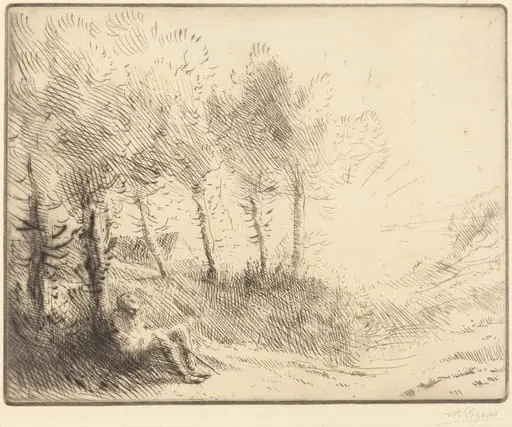 Landscape (Paysage)
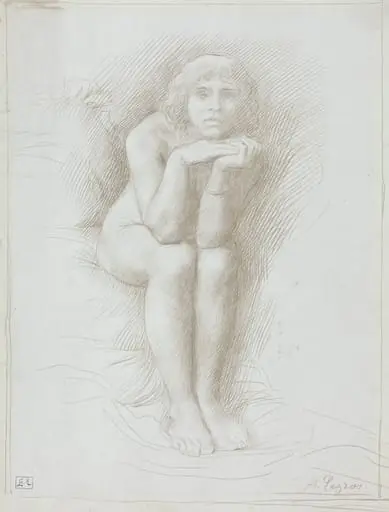 Nude Model Seated
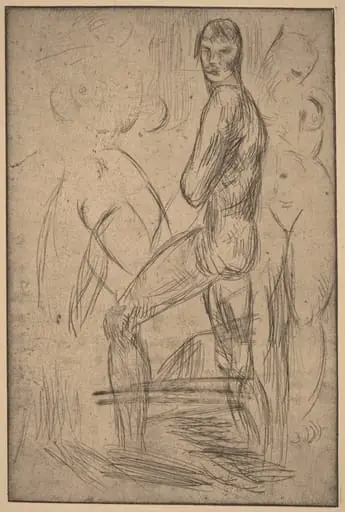 Standing Male Nude and Two Female Nudes
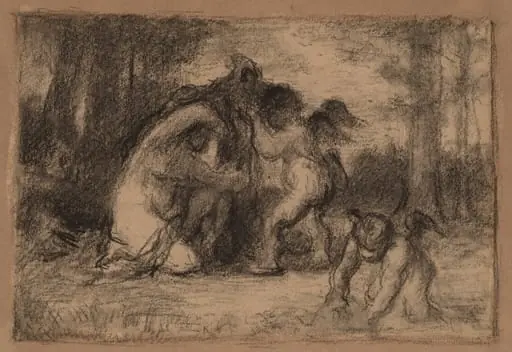 Wooded Landscape with Putti Helping a Woman Undress
 Study for The War
 Vicarage at Sonning