Artwork
The Surprised Ducks
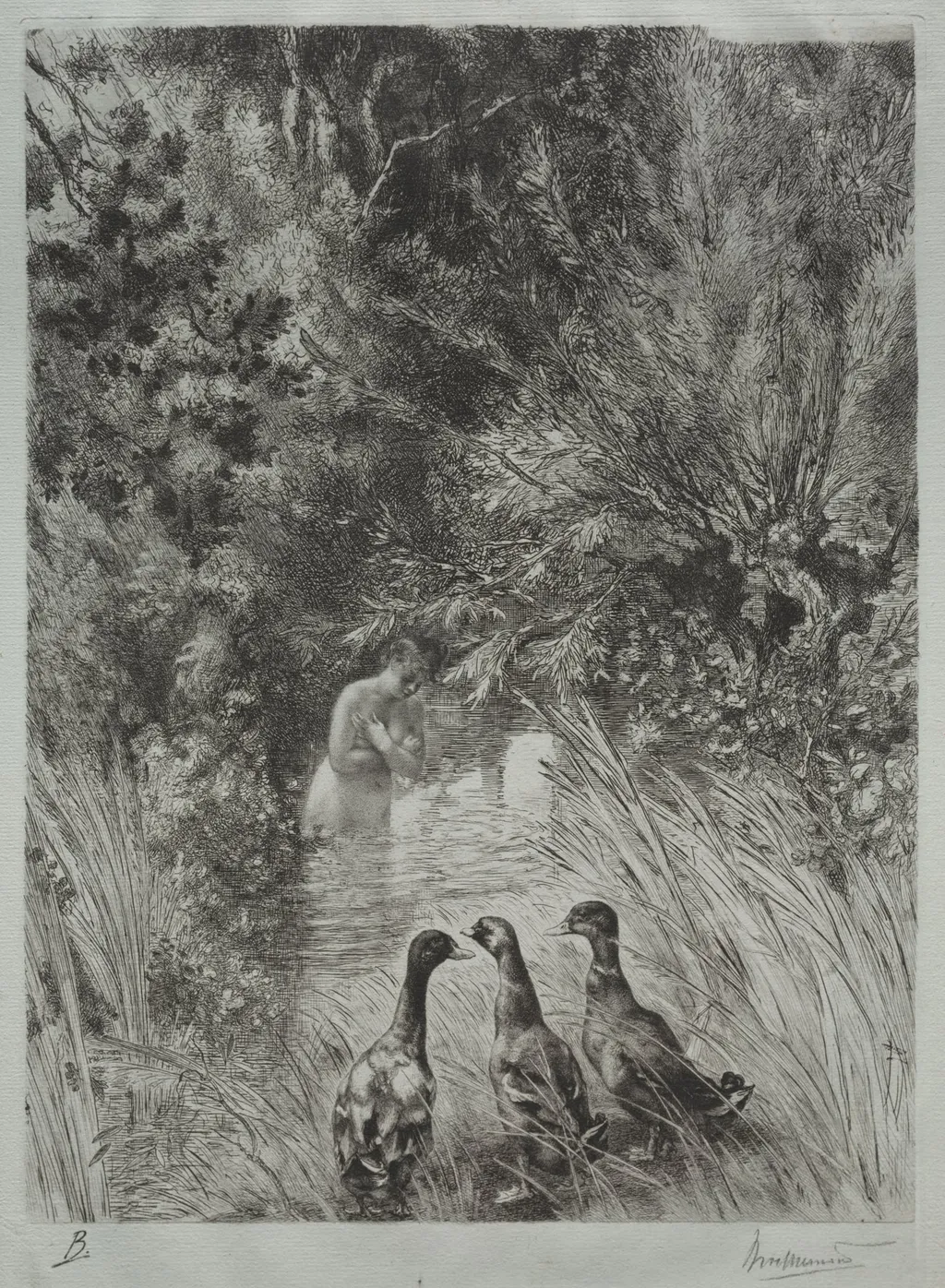
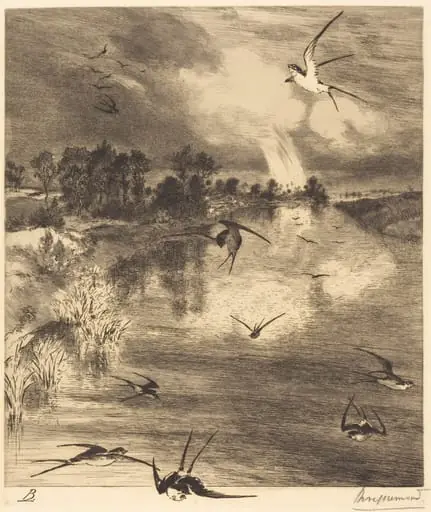
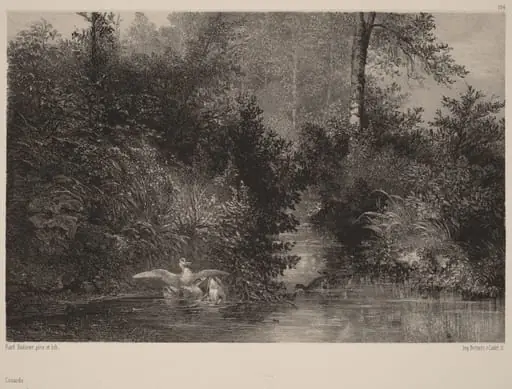
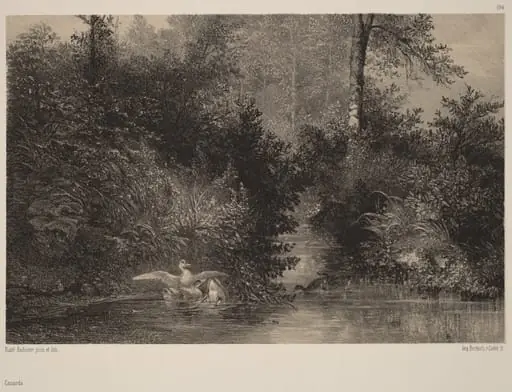
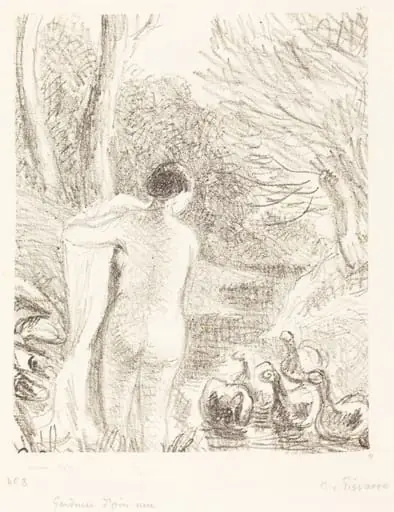
The Surprised Ducks is a print by the Impressionist artist Félix Bracquemond. It dates from 1882 and is held in the collection of the Cleveland Museum of Art.
About this work
Overview
The scene balances stillness and sudden movement, rendered with fine linework and subtle tonal contrasts typical of Bracquemond’s etching practice.
Created in 1882 by Félix Bracquemond, The Surprised Ducks is a print that captures a quiet moment in nature. It depicts a nude woman standing in a shallow pond, surrounded by dense vegetation. Three ducks in the foreground turn toward her with what appears to be alarm. The scene balances stillness and sudden movement, rendered with fine linework and subtle tonal contrasts typical of Bracquemond’s etching practice.
Subject & Meaning
The image juxtaposes human stillness against animal instinct. The woman, calm and unselfconscious, occupies the space as a natural element, while the ducks react with instinctive wariness. This contrast invites reflection on human presence in the wild—not as intruder or observer, but as an unremarkable part of the environment. The work avoids moral or narrative framing, favoring quiet ambiguity.
Technique & Style
Bracquemond employed etching to achieve delicate gradations of light and texture. Fine lines define the reeds and water’s surface, while softer washes suggest atmospheric depth. The ducks’ feathers and the woman’s form are rendered with precision, yet the overall composition retains a loose, observational quality. His technique reflects the influence of Japanese prints, particularly in the flattened perspective and emphasis on natural detail.
History & Provenance
The print was produced in 1882 and entered the collection of The Cleveland Museum of Art in the 20th century. Bracquemond, known for reviving etching in France during the late 19th century, often explored intimate natural scenes. The work remained relatively obscure during his lifetime but gained recognition among collectors of printmaking for its technical refinement and poetic restraint.
Context
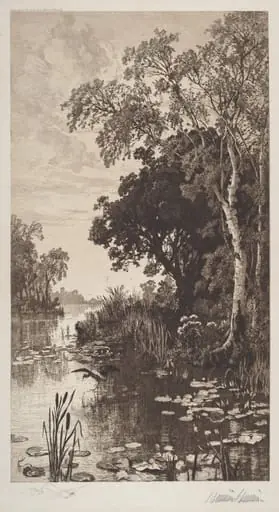
In the 1880s, French artists increasingly turned to everyday natural subjects, moving away from historical or mythological themes. Bracquemond’s focus on a solitary figure in a wetland aligns with broader Impressionist interests in light and atmosphere, though his medium—etching—distinguishes him from painters. His work bridges Realist observation and the emerging aesthetic of modern printmaking.
Legacy
The Surprised Ducks exemplifies Bracquemond’s role in elevating printmaking as a serious artistic medium. Its quiet composition and technical mastery influenced later printmakers who sought to capture fleeting natural moments. Though not widely reproduced, the work remains a key example of late 19th-century French etching, valued for its subtlety and refusal of dramatic narrative.
Artist & collection

Artist
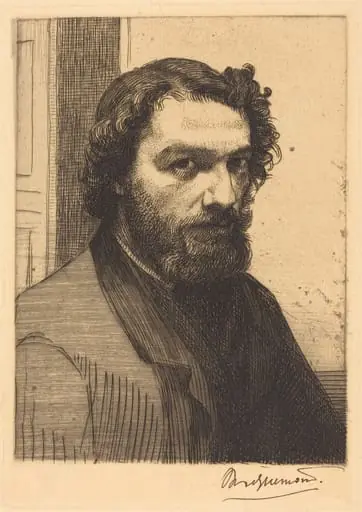
Félix Henri Bracquemond (French pronunciation: ; 22 May 1833 – 29 October 1914) was a French painter, etcher, and printmaker.