Artwork
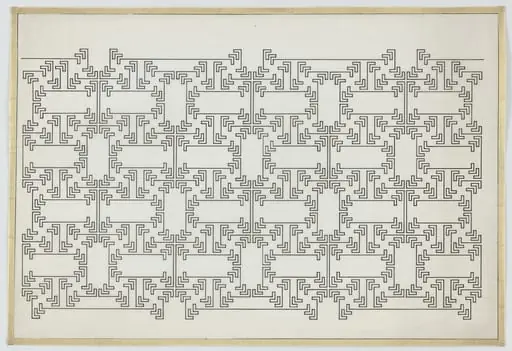
Schematic Drawing of Buyid Silk (1953.434)
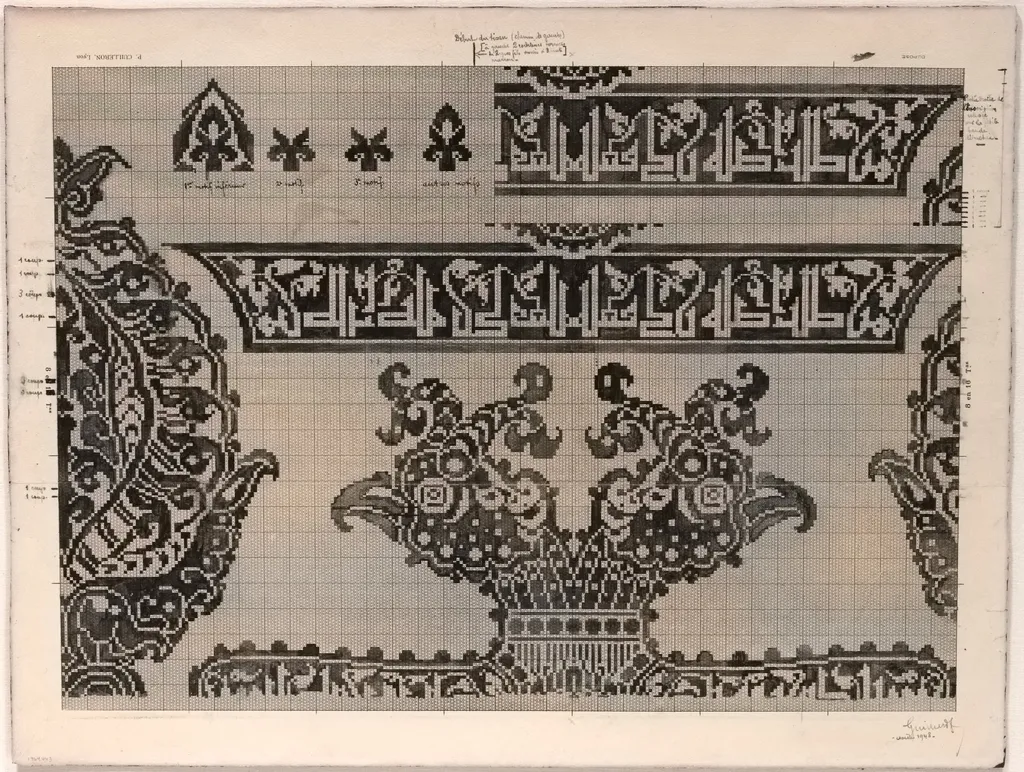
Schematic Drawing of Buyid Silk (1953.434) is a drawing by Félix Guichert. It dates from 1904 and is held in the collection of the Cleveland Museum of Art.
About this work
Overview
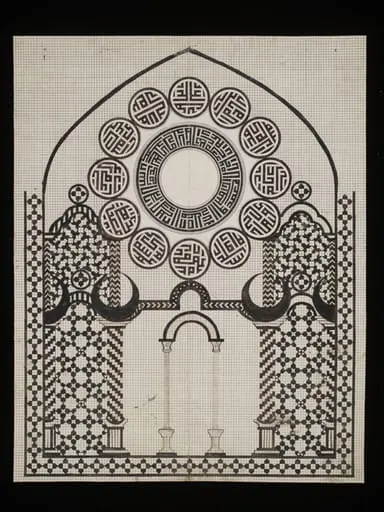
This drawing, created around 1904 by Félix Guichert, is a meticulous record of a medieval Buyid-period silk textile. Rendered in ink on paper, it translates the fabric’s ornamental pattern into a structured grid of black-and-white squares. Each cell represents a single thread intersection, transforming the textile’s visual complexity into a systematic diagram for analysis and replication.
Subject & Meaning
The drawing reproduces the repetitive motifs of a historical silk—floral forms, swirling stems, and angular geometries—arranged in horizontal bands. The central blank rectangle likely indicates a missing or damaged section of the original fabric. The surrounding border patterns suggest a framed composition, possibly reflecting the textile’s original use as a ceremonial or elite garment.
Technique & Style
Guichert employed precise penwork to map the textile’s design onto a grid, reducing organic forms into standardized units. The monochrome palette and rigid alignment emphasize structural clarity over aesthetic appeal. This method reflects early 20th-century scholarly practices in textile studies, prioritizing documentation and pattern analysis over artistic interpretation.
History & Provenance
The original silk, now lost or unidentified, was likely produced in the Buyid dynasty’s territories during the 10th or 11th century. Guichert’s drawing, made over a millennium later, served as a scholarly transcription. It entered The Cleveland Museum of Art’s collection in 1953, where it remains as a key artifact in the study of Islamic textile design and conservation.
Context
During the early 1900s, European and American institutions increasingly cataloged non-Western textiles as part of broader ethnographic and art-historical projects. Guichert’s work aligns with this trend, using diagrammatic precision to preserve patterns that were at risk of being lost or altered. His method mirrors contemporary approaches in archaeology and material science.
Legacy
This drawing endures as a technical record of a textile whose physical form may no longer exist. It exemplifies how scholarly documentation can extend the life of fragile artifacts, offering future researchers a blueprint for reconstruction or comparative analysis. Its value lies not in decoration, but in its function as a preserved trace of lost craftsmanship.
Artist & collection

 Αρχοντικό Εμμανουήλ, Καστοριά
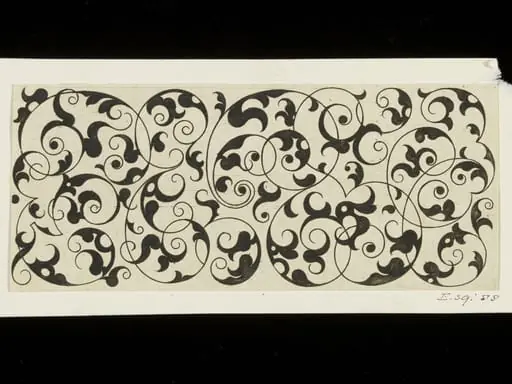 A frieze of figures
 'Passage next to Drawing Room'
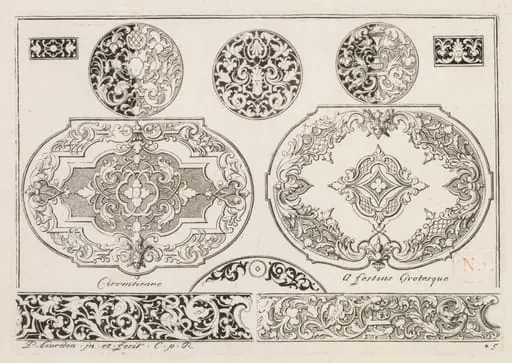 # 4 From " Livre sencond essais de gravjre " second book of Engraved designs
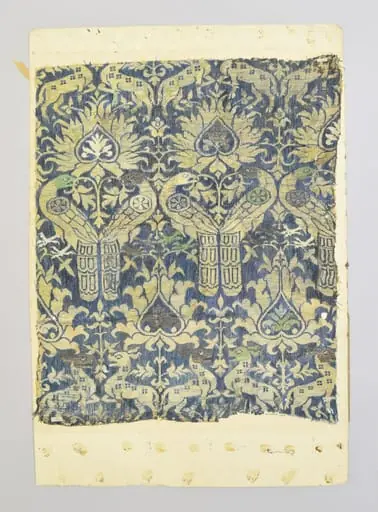 Untitled
 Untitled
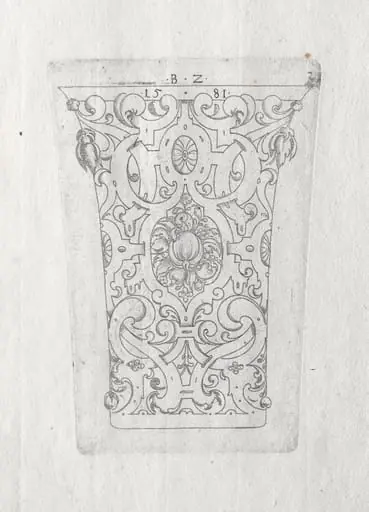 Ornamental Beaker
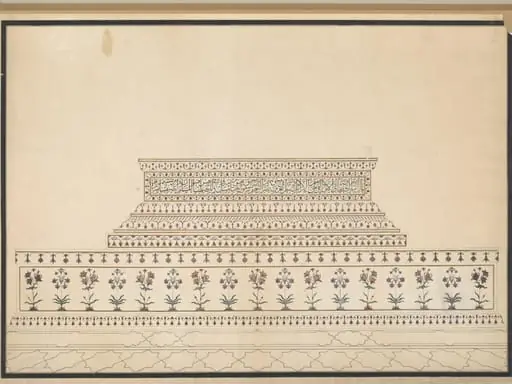 Cenotaph of Mumtaz Mahal, Taj Mahal, Agra
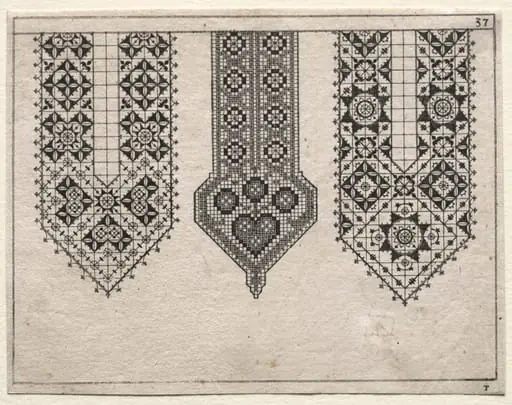 Plate 37 from Schon News Modelbuch
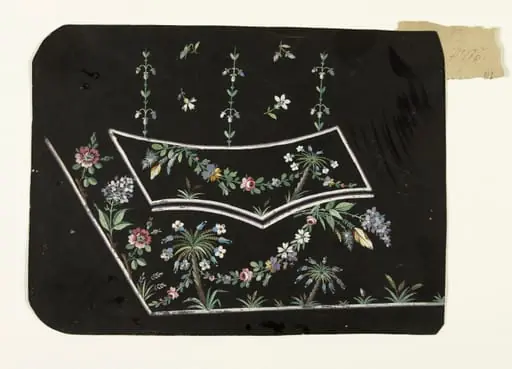 Composition sur fond noir avec palmiers fleuris, fleurs sur branches et guirlandes de fleurs, projets de broderies de gilet, XVIIIème siècle
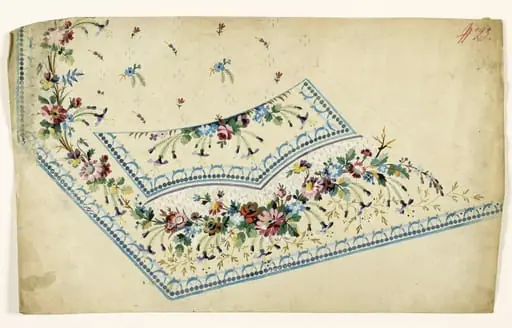 Composition de fleurs en guirlandes et en semis et frises de perles bleues, projets de broderies de gilet, XVIIIème siècle
 Untitled