Artwork
The Spirits from the Cities of the Dead
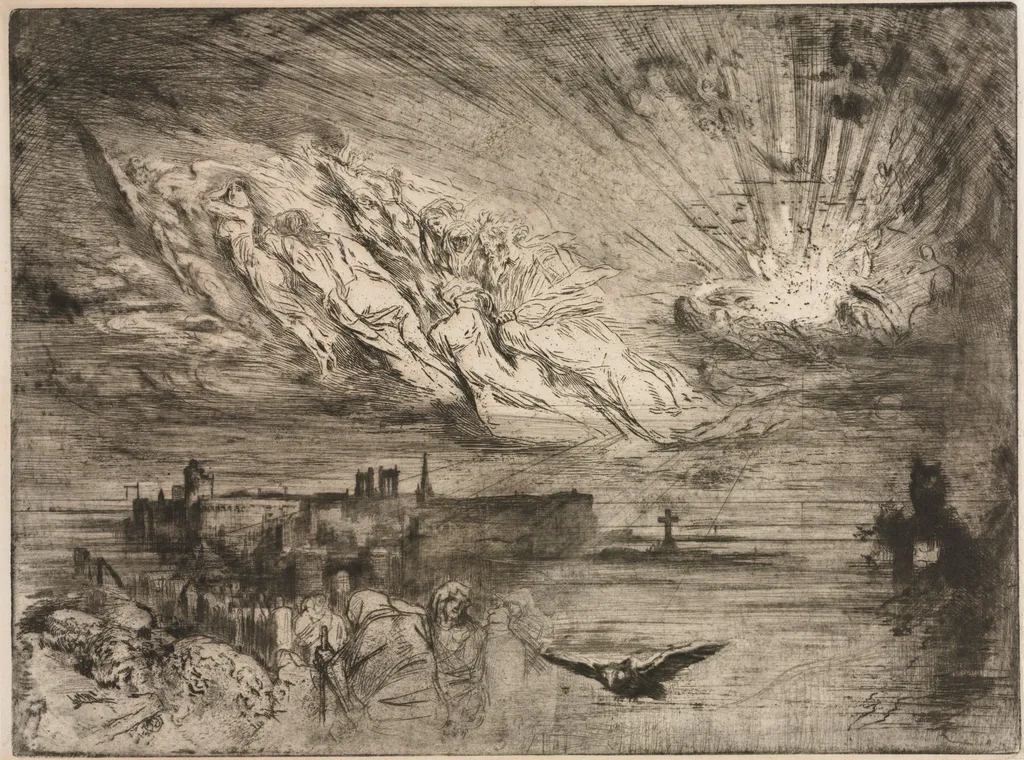
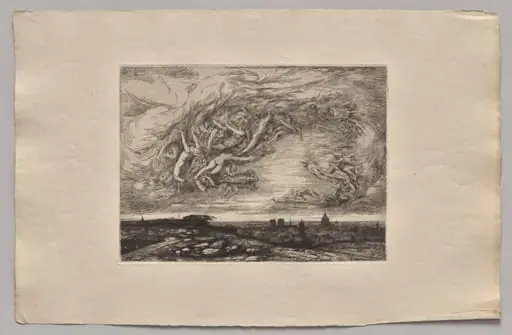
The Spirits from the Cities of the Dead is a print by the Impressionist artist Félix-Hilaire Buhot. It dates from 1885 and is held in the collection of the Cleveland Museum of Art. Created in 1885 by Félix Hilaire Buhot, this print is part of a series exploring themes of memory and the afterlife.
About this work
Overview
The composition centers on spectral figures emerging from a distant urban landscape, framed by a quiet foreground group.
Created in 1885 by Félix Hilaire Buhot, this print is part of a series exploring themes of memory and the afterlife. It is held in the collection of The Cleveland Museum of Art. Unlike traditional paintings, the work is executed in etching and aquatint, allowing for nuanced tonal gradations. The composition centers on spectral figures emerging from a distant urban landscape, framed by a quiet foreground group.
Subject & Meaning
The image portrays ethereal forms rising from the ruins of a vanished city, suggesting a haunting of collective memory rather than a literal afterlife. The figures are neither clearly benevolent nor menacing, evoking ambiguity. A small cluster of observers in the foreground appears detached, as if witnessing a silent, inevitable recurrence. The work reflects 19th-century fascination with urban decay and the persistence of the past.
Technique & Style
Buhot employed etching and aquatint to achieve subtle shifts in tone, using deep blacks and hazy grays to suggest atmosphere. Chiaroscuro is applied not for dramatic effect but to dissolve boundaries between the living and the spectral. Fine lines define architectural details, while soft washes blur the spirits’ forms, creating a sense of emergence rather than presence. The technique mirrors the fragility of remembered places.
History & Provenance
The print was produced during Buhot’s later period, when he focused on urban scenes and melancholic themes. It entered The Cleveland Museum of Art’s collection in the 20th century, likely through a donation or acquisition of French graphic works. No earlier ownership records are widely documented, but it was exhibited in Parisian print circles shortly after its creation.
Context
Made during a time of rapid industrialization, the work responds to anxieties about erasing history through urban renewal. Buhot, influenced by Romanticism and early Symbolism, avoided overt narrative in favor of mood. Similar themes appear in the prints of Charles Meryon and the writings of Baudelaire, reflecting a broader cultural preoccupation with ghosts of the modern city.
Legacy
Though not widely reproduced, the print is recognized in scholarly studies of French graphic art for its emotional restraint and technical precision. It influenced later printmakers interested in psychological landscapes over literal storytelling. Its quiet intensity continues to resonate in collections focused on 19th-century printmaking and the aesthetics of absence.
Artist & collection

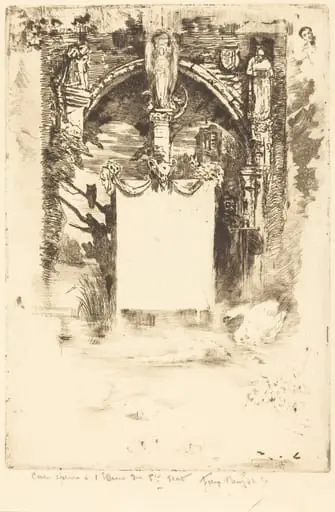 Ex-Libris pour "L'Ensorcelée" (Bookplate for "L'Ensorcelée")
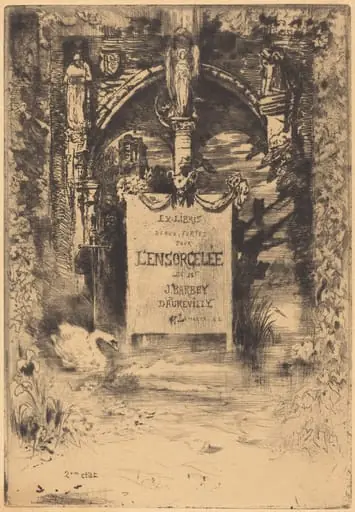 Ex-Libris pour "L'Ensorcelée" (Bookplate for "L'Ensorcelée")
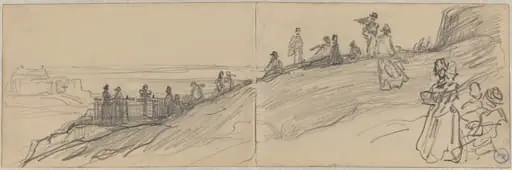 Figures on Top of a Hill, Overlooking the Sea
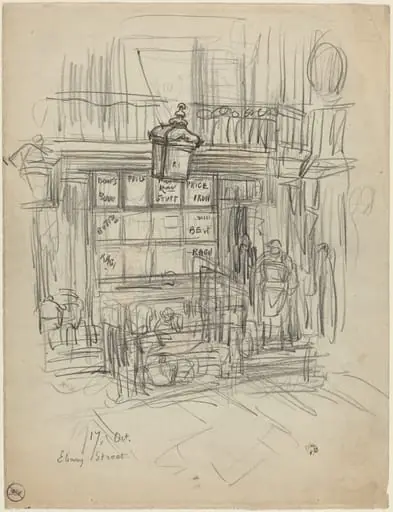 Ebury Street
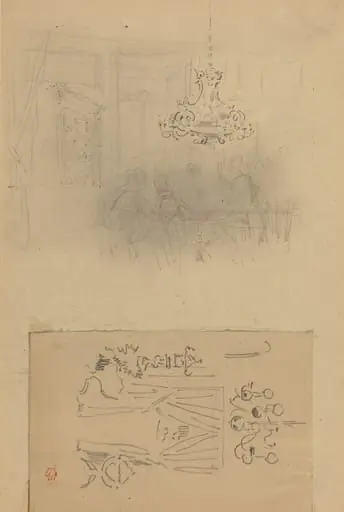 A Gathering in an Interior; A Curtained Doorway
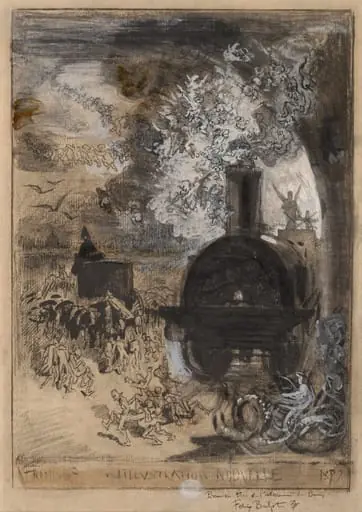 Frontispiece for L'Illustration Nouvelle: The Burial of the Burin
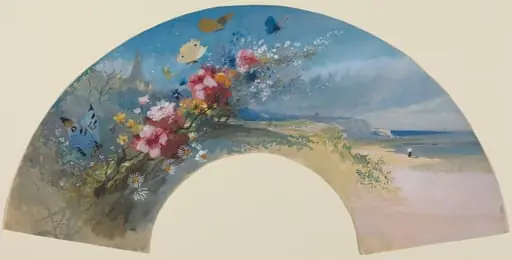 Fan with Wildflowers and Butterflies against the Norman Coast
![Gillingham Pier, London [verso], by Félix-Hilaire Buhot](https://artifactworldgallery.com/img/felix-hilaire-buhot--gillingham-pier-london-verso--641e03dd7de8217b-w320.webp) Gillingham Pier, London [verso]
Gillingham Pier, London [verso]
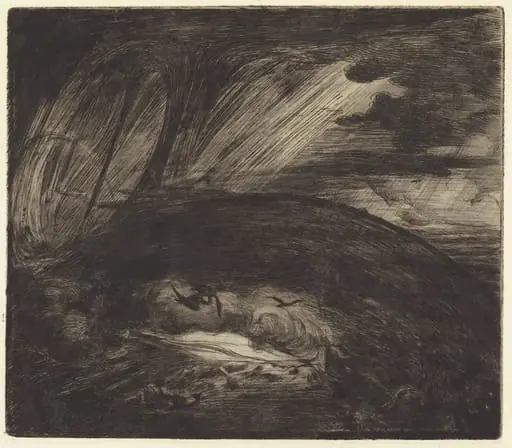
![Landscape [Paesaggio], by Carlo Paolo Agazzi](https://artifactworldgallery.com/img/carlo-paolo-agazzi--landscape-paesaggio--e606f4ada87d2052-w320.webp)