Artwork
The Squall at Trouville
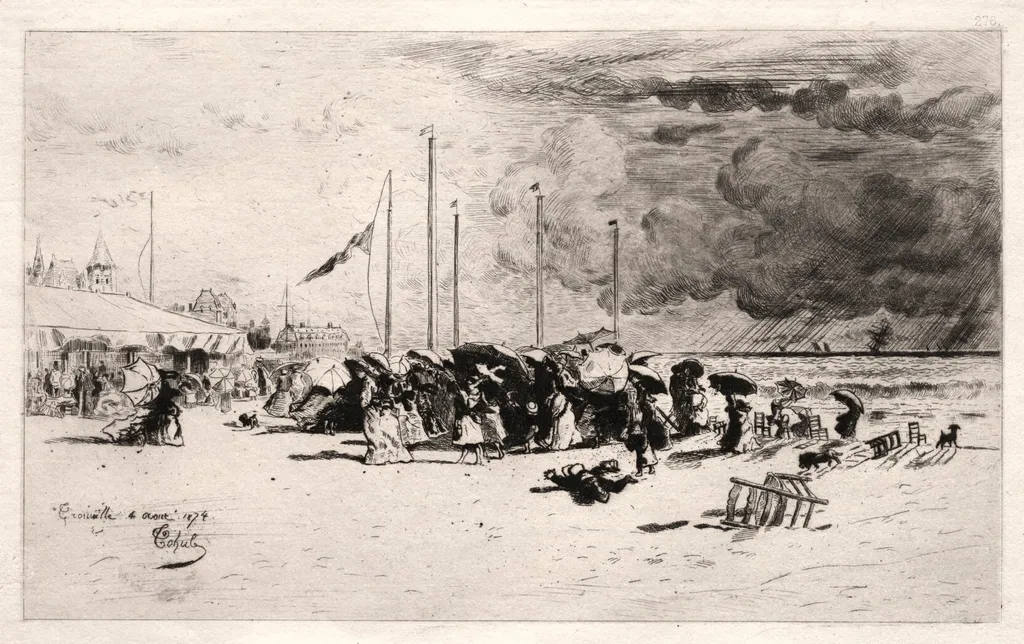
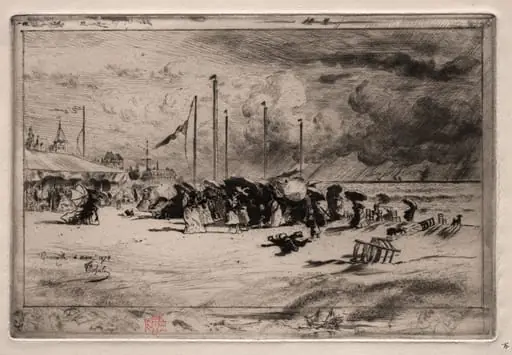
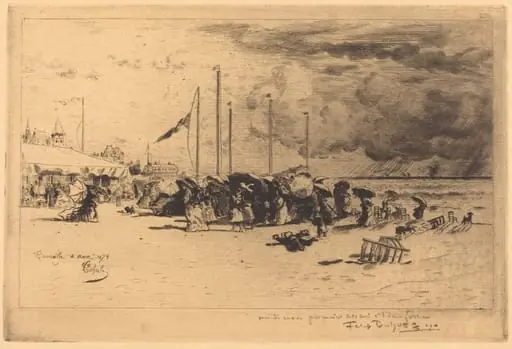
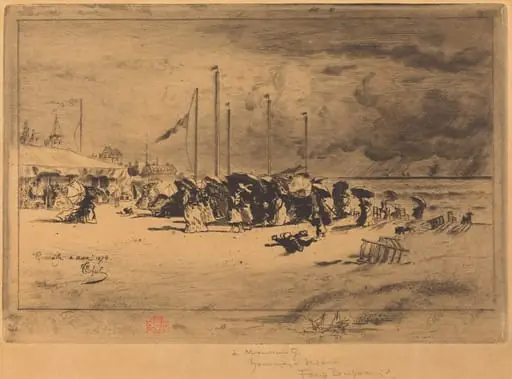
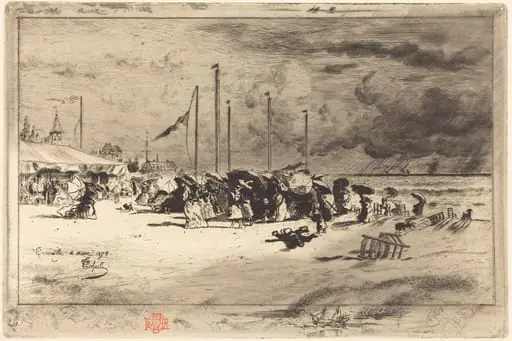
The Squall at Trouville is a print by the Impressionist artist Félix-Hilaire Buhot. It dates from 1874 and is held in the collection of the Cleveland Museum of Art.
About this work
Overview
Created in 1874 by Félix Hilaire Buhot, The Squall at Trouville is a lithograph capturing a moment of sudden weather change on a Normandy beach. The work reflects Buhot’s interest in everyday coastal life and the transient effects of light and atmosphere. It is part of the collection at The Cleveland Museum of Art, where it is recognized for its spontaneous composition and atmospheric detail.
Subject & Meaning
The looming sky and hazy horizon suggest impending weather, transforming a leisurely seaside setting into one of quiet urgency.
The scene depicts a bustling beach at the onset of a storm, with figures scattering under umbrellas, dogs darting across the sand, and boats rocking in choppy water. The looming sky and hazy horizon suggest impending weather, transforming a leisurely seaside setting into one of quiet urgency. Buhot conveys the fragility of human activity against nature’s unpredictability, without overt drama or sentiment.
Technique & Style
Buhot employed rapid, fluid lithographic lines to suggest motion and fleeting conditions. The sketchy texture of the sand, the blurred outlines of figures, and the atmospheric washes of the sky reflect an Impressionist sensibility. Rather than precise detail, he prioritized the impression of movement and mood, using contrast and loose mark-making to evoke the tension of a sudden squall.
History & Provenance
The print was produced in 1874 during Buhot’s frequent visits to Trouville, a popular seaside resort. It was likely made on-site or from rapid sketches, consistent with his practice of documenting contemporary life. The work entered The Cleveland Museum of Art’s collection in the 20th century, where it remains as part of their holdings in 19th-century French graphic art.
Context
In the 1870s, French artists increasingly turned to modern leisure scenes, influenced by urbanization and improved rail access to coastal towns. Buhot, like many of his contemporaries, embraced lithography for its immediacy and accessibility. His focus on transient moments aligned with broader artistic shifts toward capturing the ephemeral, a hallmark of emerging Impressionist aesthetics.
Legacy
Buhot’s work contributed to the elevation of printmaking as a medium for modern subject matter. The Squall at Trouville exemplifies how lithography could convey both documentary precision and emotional nuance. While less widely known than his painterly peers, his prints influenced later generations interested in capturing urban and coastal life with spontaneity and sensitivity.
Artist & collection

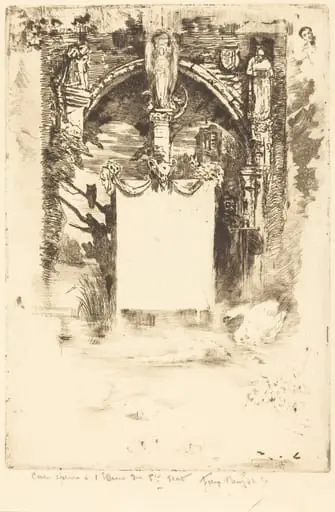 Ex-Libris pour "L'Ensorcelée" (Bookplate for "L'Ensorcelée")
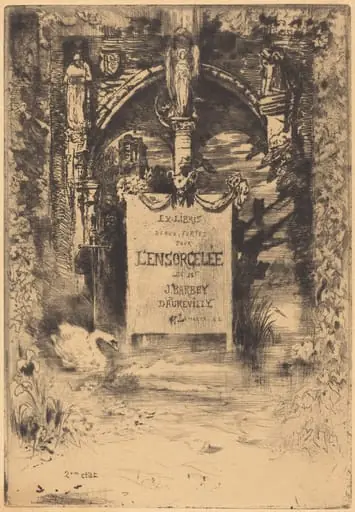 Ex-Libris pour "L'Ensorcelée" (Bookplate for "L'Ensorcelée")
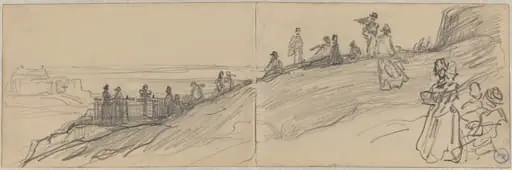 Figures on Top of a Hill, Overlooking the Sea
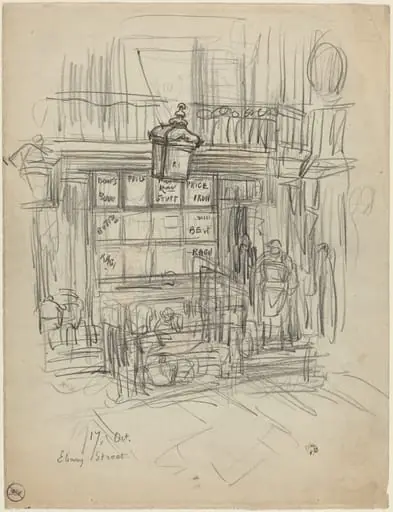 Ebury Street
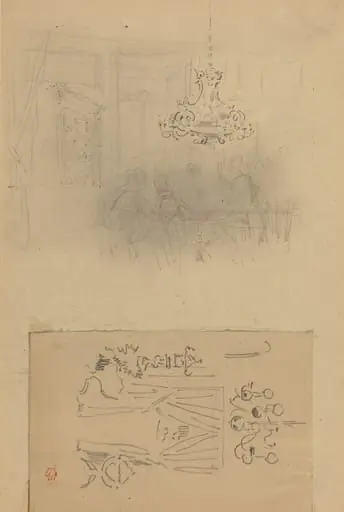 A Gathering in an Interior; A Curtained Doorway
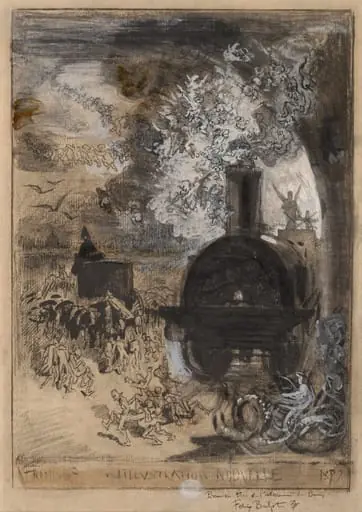 Frontispiece for L'Illustration Nouvelle: The Burial of the Burin
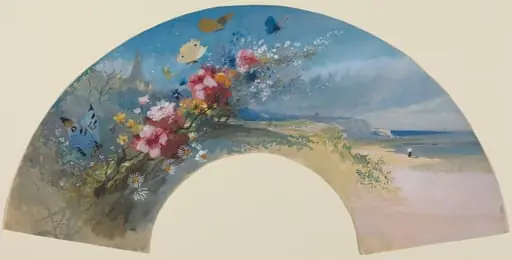 Fan with Wildflowers and Butterflies against the Norman Coast
![Gillingham Pier, London [verso], by Félix-Hilaire Buhot](https://artifactworldgallery.com/img/felix-hilaire-buhot--gillingham-pier-london-verso--641e03dd7de8217b-w320.webp) Gillingham Pier, London [verso]
Gillingham Pier, London [verso]