Artwork
The Exit
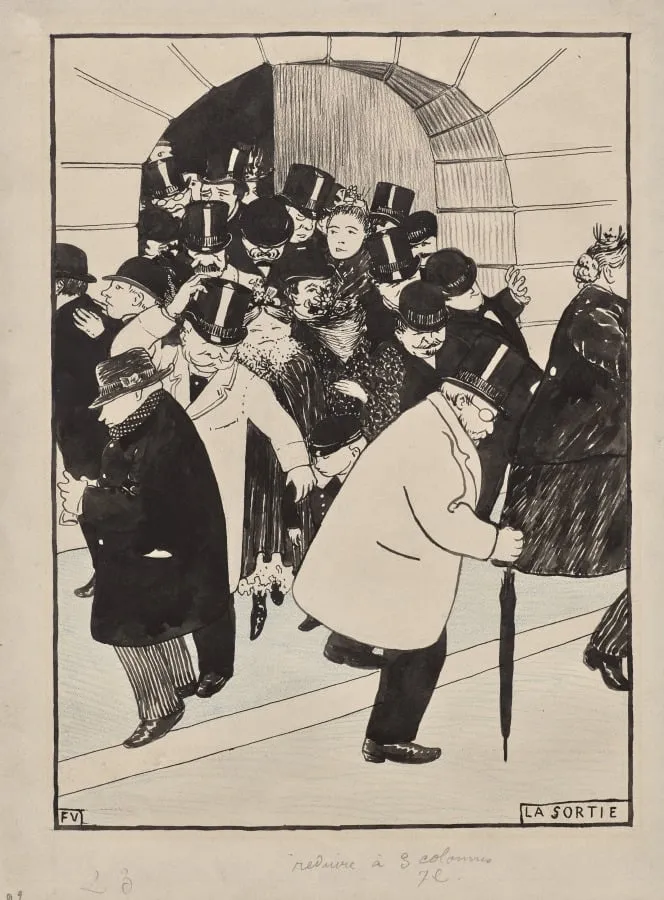
The Exit is a drawing by the Impressionist artist Félix Vallotton. It dates from 1894 and is held in the collection of the Cleveland Museum of Art.
About this work
You see a crowd of men in top hats and women in veils spilling out of a Paris theater at night.
Vallotton carved the scene like a woodcut—bold black shapes, no shading—so it looks almost like a shadow play. The same image ran in a Paris weekly magazine in 1894, letting thousands see it over their morning coffee.
Look up the subject of France next to see more Paris street scenes from the same era.
Overview
Félix Vallotton, a Swiss artist active in Paris, created this ink drawing as a sharp observation of post-theater urban life.
Félix Vallotton, a Swiss artist active in Paris, created this ink drawing as a sharp observation of post-theater urban life. Rendered in stark black-and-white contrasts, the work was reproduced in the 1894 issue of Le Courrier Français, reflecting its intended reach to a broad public audience. Its graphic simplicity aligns with Vallotton’s broader practice of using woodcut aesthetics to capture modern social scenes with minimal detail but maximum impact.
Subject & Meaning
The scene captures a throng of men in top hats and women in veils exiting a Parisian theater, likely the Odéon. Their formal attire contrasts with the disorderly flow of the crowd, suggesting a tension between societal expectations and the anonymity of urban life. Vallotton conveys a sense of collective movement without individual identity, emphasizing the psychological weight of mass behavior in the modern city.
Technique & Style
Vallotton employed a woodcut-inspired technique, using bold, unmodulated areas of black and white to define forms. There is no shading or gradation; figures and architecture are reduced to silhouetted shapes, creating a dramatic, almost theatrical effect. This stylized approach, borrowed from printmaking, enhances the scene’s emotional detachment and reinforces its commentary on conformity and alienation.
History & Provenance
The drawing was published in Le Courrier Français in 1894, a widely circulated weekly that brought fine art into domestic settings. Its reproduction in print allowed Vallotton’s critique of bourgeois ritual to reach thousands beyond the gallery. The work’s original status as a preparatory drawing underscores its role as both artistic statement and mass-media artifact, bridging fine art and popular culture.
Context
In late 19th-century Paris, artists increasingly turned to urban crowds as subjects, drawn to the psychological dynamics of modernity. Vallotton’s work aligns with contemporaries like Degas and Toulouse-Lautrec, yet his stark, flattened style sets him apart. His focus on theater exits reflects broader cultural interest in public rituals and the performative nature of social class in the city.
Legacy
Vallotton’s integration of printmaking techniques into drawing influenced later generations of artists interested in graphic economy and social observation. His ability to distill complex social moments into stark, readable images helped redefine the potential of illustration as a vehicle for critical commentary, leaving a mark on 20th-century graphic art and political satire.
Artist & collection
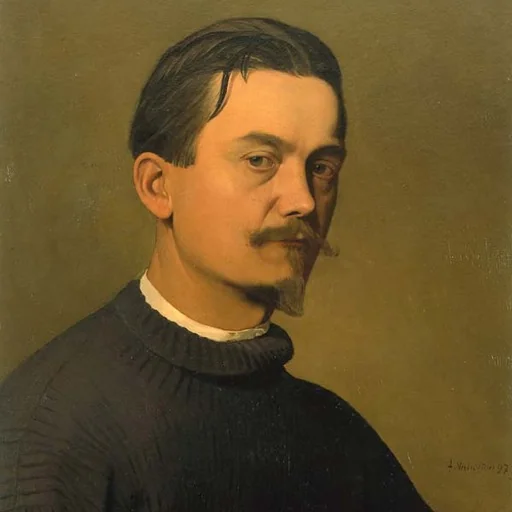
Artist
Félix Édouard Vallotton (French: ; December 28, 1865 – December 29, 1925) was a Swiss and French painter and printmaker associated with the group of artists known as Les Nabis.

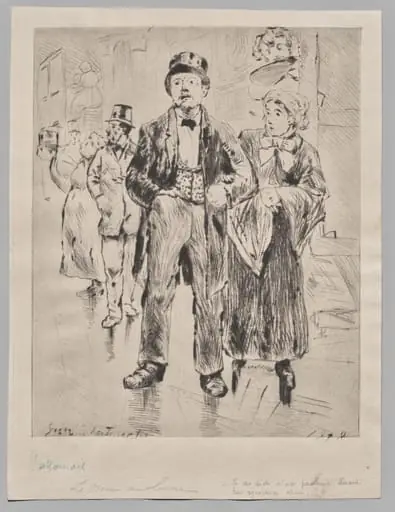 Wedding at the Louvre
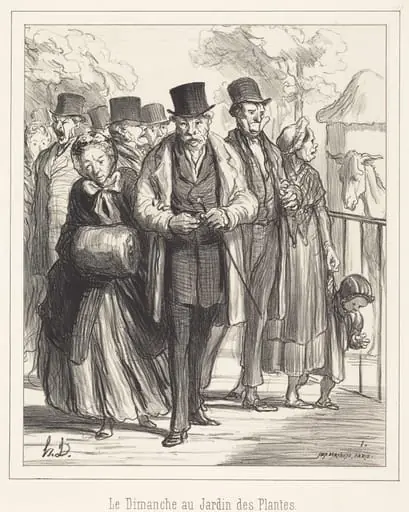 Le Dimanche au Jardin des Plantes
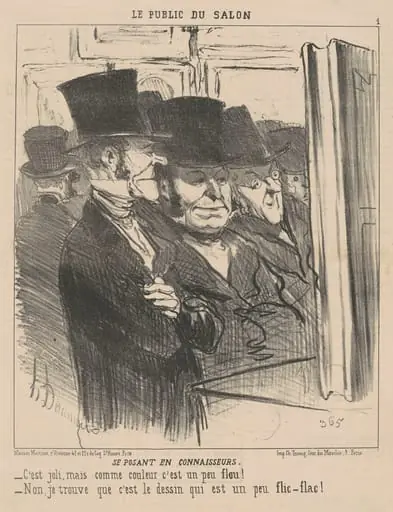 Se posant en connaisseurs
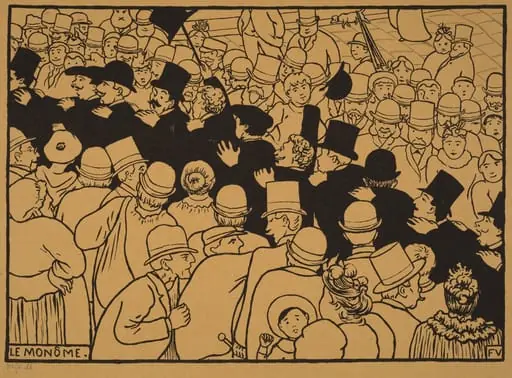 Le Monôme (Parading through the Streets in Single File)
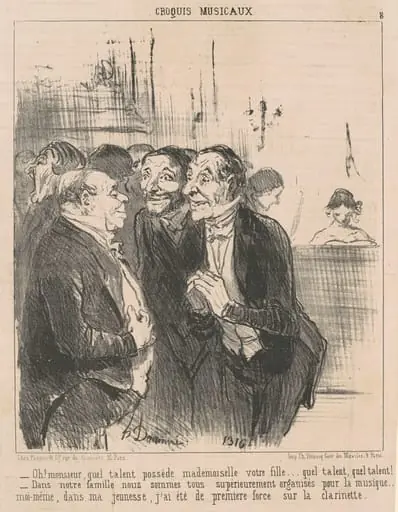 Oh! Monsieur, quel talent possède ...
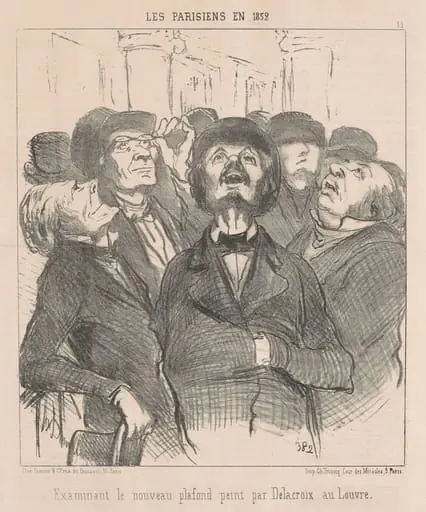 Examinant le nouveau plafond ...
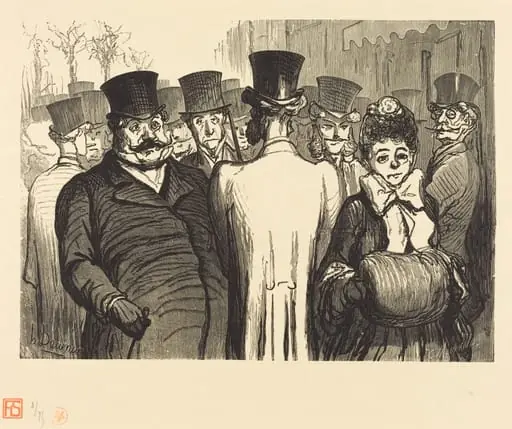 Le Boulevard des Italiens
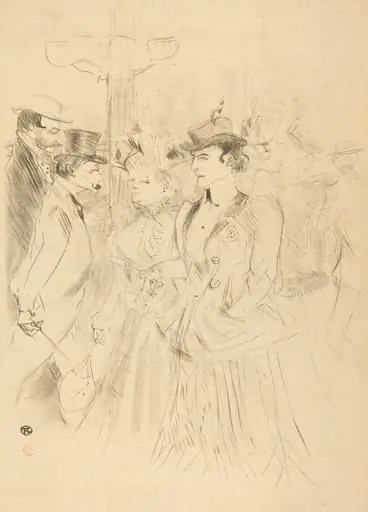 Promenade (Promenoir)
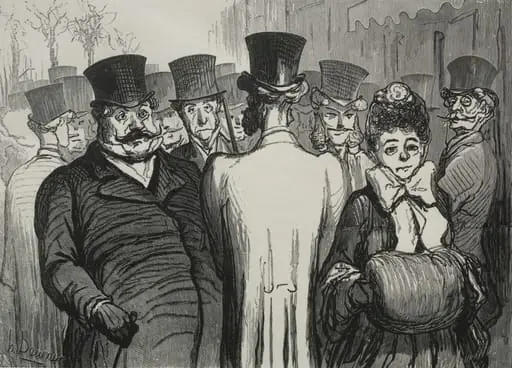 The Boulevard des Italiens
![Aux Champs-Elysées, Ratapoil. Par suite d'une délibération philantropique [sic] du Comité du dix Décembre...à deux sous à club...deux sous..., by Honoré Daumier](https://artifactworldgallery.com/img/honore-daumier--aux-champs-elysees-ratapoil-par-suite-d-une-deliberation-phi--62ca0cc774af3945-w320.webp) Aux Champs-Elysées, Ratapoil. Par suite d'une délibération philantropique [sic] du Comité du dix Décembre...à deux sous à club...deux sous...
Aux Champs-Elysées, Ratapoil. Par suite d'une délibération philantropique [sic] du Comité du dix Décembre...à deux sous à club...deux sous...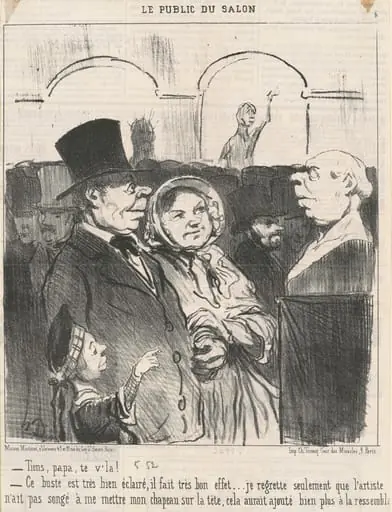 Tiens, papa, te v'la! ...
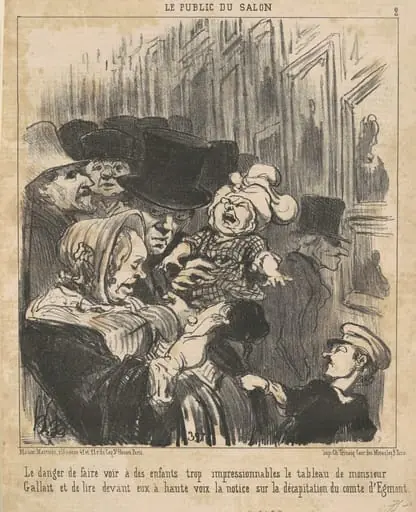 Le danger de faire voir a des enfants ...