Artwork
Near the Travellers Rest Inn, Dolgelly
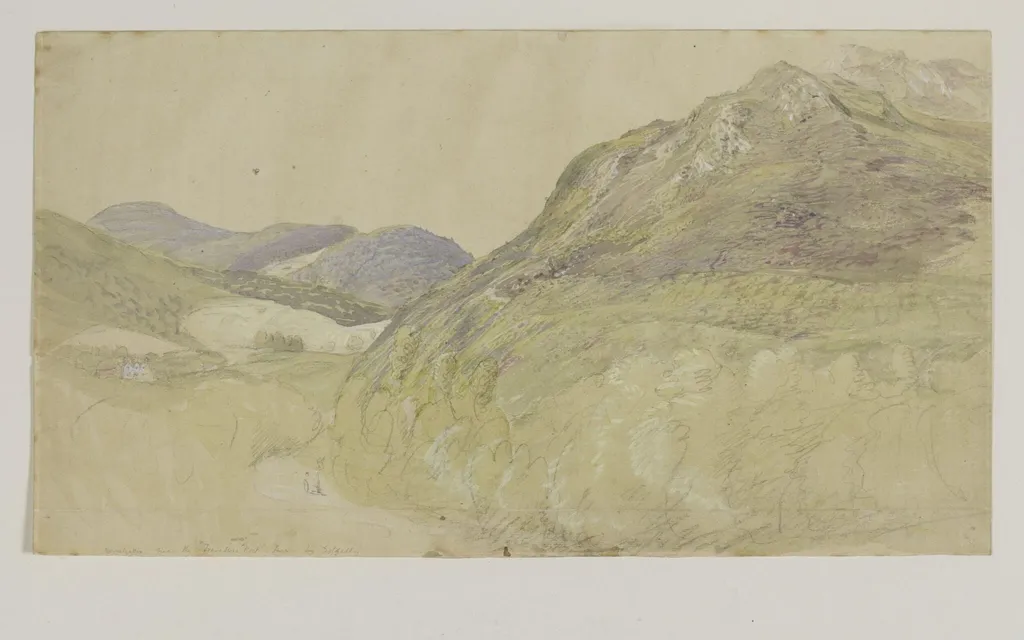
Near the Travellers Rest Inn, Dolgelly is a watercolor work on paper by Samuel Palmer. It dates from 1850 and is held in the collection of the Victoria and Albert Museum.
About this work
Overview
Painted in 1850, this watercolour by Samuel Palmer captures a quiet stretch of countryside near the Travellers Rest Inn in Dolgellau.
Painted in 1850, this watercolour by Samuel Palmer captures a quiet stretch of countryside near the Travellers Rest Inn in Dolgellau. The scene unfolds with gentle slopes and a distant peak, rendered in subdued earth tones. A narrow path winds upward, guiding the eye toward a cluster of dwellings. The atmosphere is calm, with a pale sky offering only faint hints of blue, reinforcing the stillness of the rural setting.
Subject & Meaning
The painting presents a modest, unidealized view of rural Wales, focusing on the quiet passage of a road through the landscape. Rather than emphasizing grandeur, Palmer highlights the rhythm of everyday travel and the quiet integration of human presence within nature. The absence of figures enhances the sense of solitude, suggesting contemplation rather than narrative.
Technique & Style
Palmer employed loose, fluid brushwork and diluted watercolour to suggest form without sharp definition. The palette is restrained—ochres, greys, and muted greens—creating a tone that feels weathered and timeless. The sky is barely hinted at, allowing the land to dominate, while the road’s meandering line introduces subtle movement through an otherwise still composition.
History & Provenance
Created during Palmer’s later years, this work reflects his continued engagement with the Welsh landscape after his earlier visionary period. It was likely painted during one of his visits to the region, where he sought solace in rural scenery. The piece remained in private hands for much of the 20th century before entering a public collection, where it is now preserved as part of his topographical studies.
Context
In the mid-19th century, as industrialization reshaped Britain, artists like Palmer turned to remote landscapes as sites of quiet resistance. His watercolours of Wales stood apart from the more dramatic Romantic visions of the time, favoring intimacy over spectacle. This work aligns with a growing interest in the everyday beauty of the British countryside, documented by amateur and professional artists alike.
Legacy
Though less known than his early visionary works, this watercolour exemplifies Palmer’s mature sensitivity to light and place. It influenced later British landscape painters who valued understated observation over theatricality. Its quietude and technical restraint continue to resonate with those drawn to landscape art that prioritizes mood over monumentality.
Artist & collection
Artist
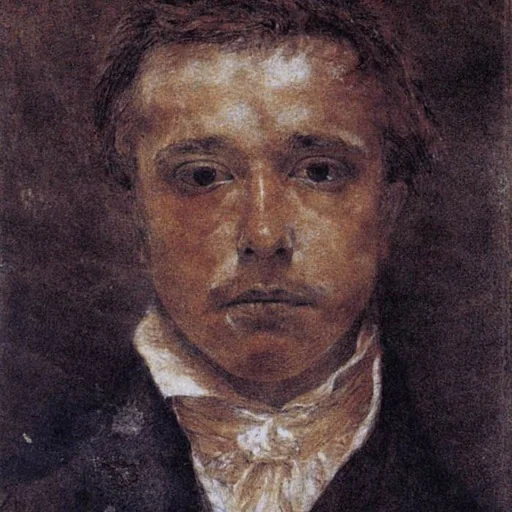
Samuel Palmer Hon.RE (Hon. Fellow of the Society of Painter-Etchers) (27 January 1805 – 24 May 1881) was a British landscape painter, etcher and printmaker. He was also a prolific writer. Palmer was a key figure in…

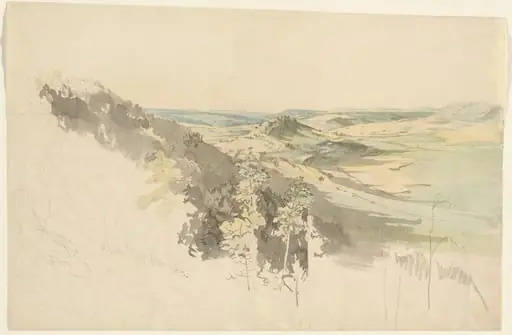 Hilly Landscape with Landsberg Castle
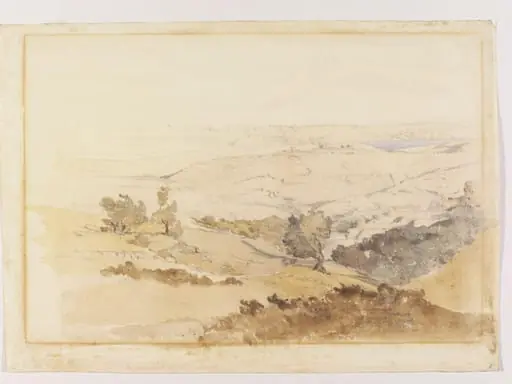 The Sea of Galilee from the heights of Safad
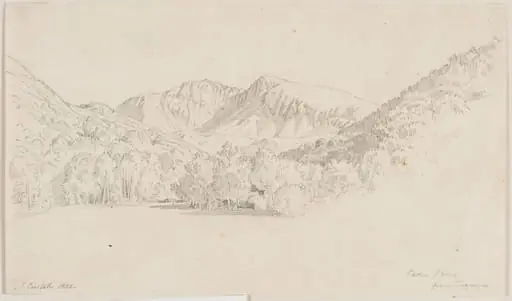 View of Cader Idris, Merioneth
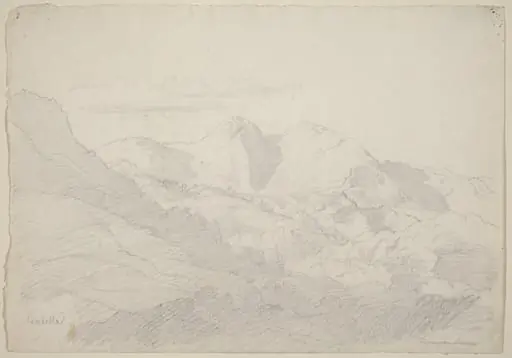 The Sabine Hills and Rocca Santo Stefano Seen from Civitella
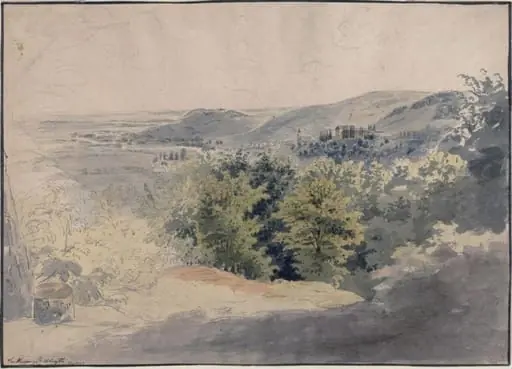 Landscape with hills in the background
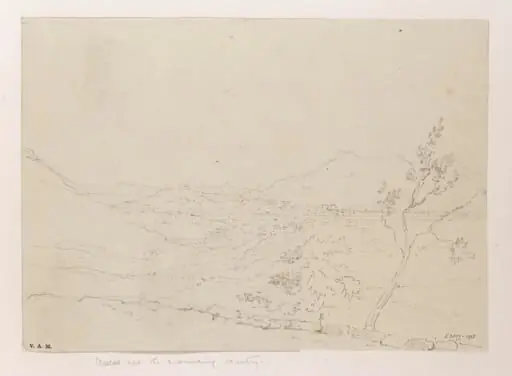 Macau, looking south-west along the peninsula
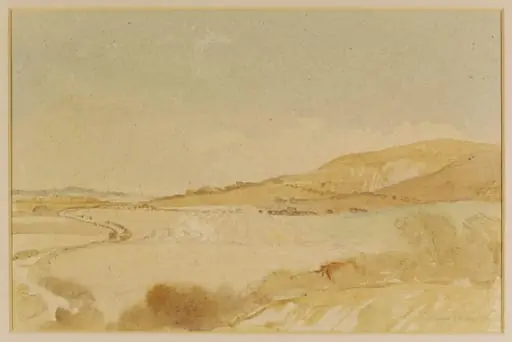 The Southdown, Underhill Road; Clayton to Westmeston
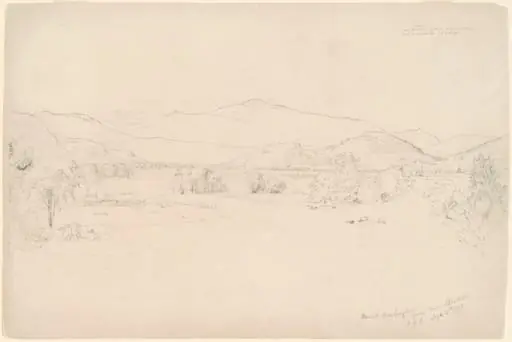 Study for "View of Mt. Washington"
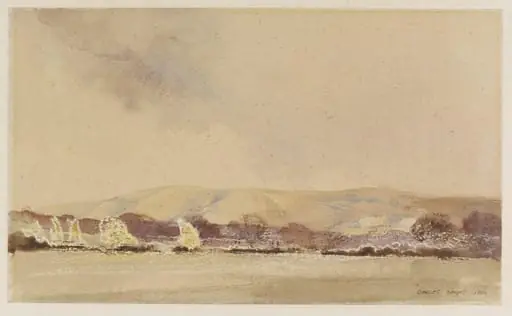 Fields and Woods South of Ditchling
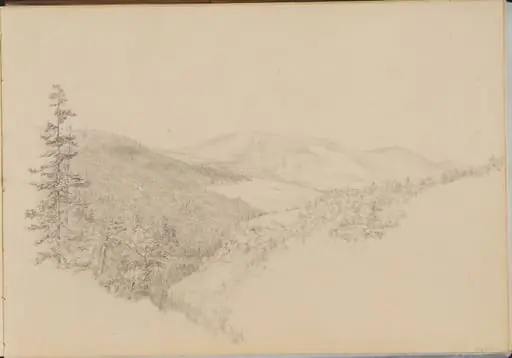 Kauterskill Clove (from Sketchbook of Landscape and Animal Subjects)
 The Xanthus Valley, Lycia
 View from Dolgelly towards Aran Benllyn