Artwork
Mount Kinchinjunga (All Things Fair)
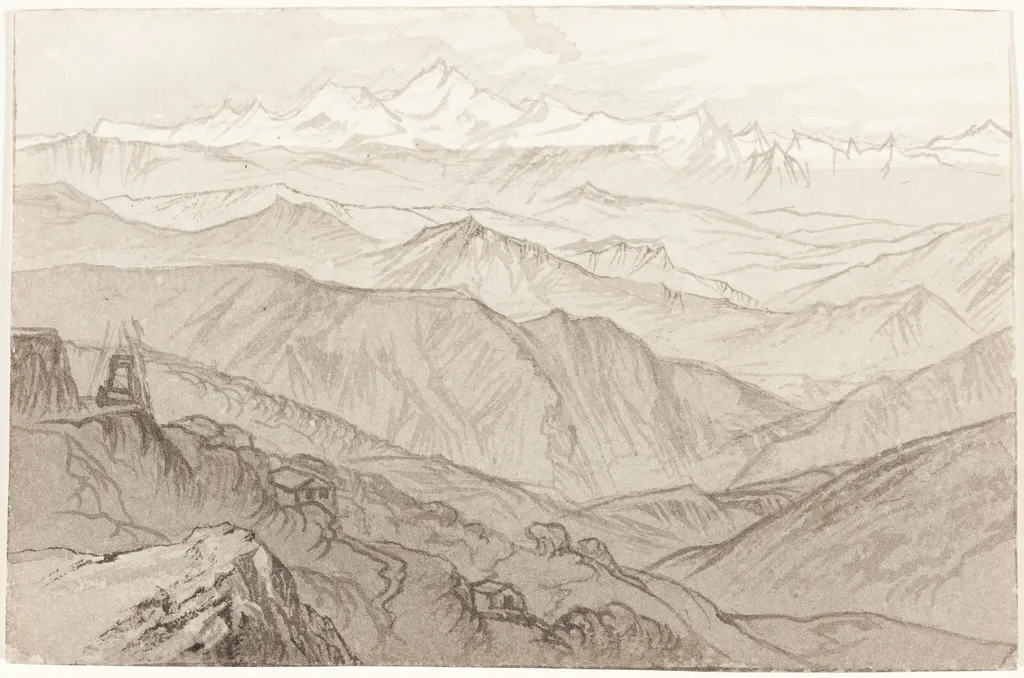
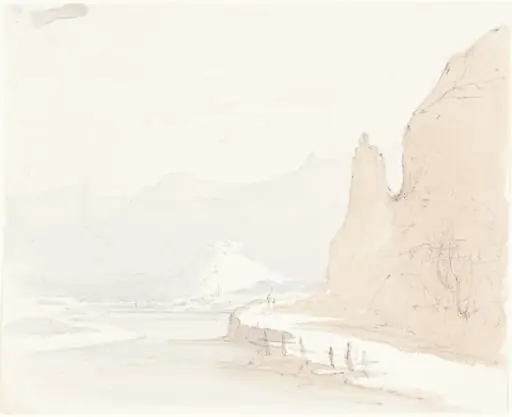
Mount Kinchinjunga (All Things Fair) is a drawing by the Impressionist artist Edward Lear. It dates from 1874 and is held in the collection of the National Gallery of Art.
About this work
Overview
Created in 1874, *Mount Kinchinjunga (All Things Fair)* is a landscape drawing by Edward Lear, executed in gray wash on wove paper.
Created in 1874, *Mount Kinchinjunga (All Things Fair)* is a landscape drawing by Edward Lear, executed in gray wash on wove paper. Though best known for his literary nonsense, Lear devoted much of his career to topographical sketching. This work exemplifies his sustained interest in natural scenery, particularly mountainous regions encountered during his travels. The medium and technique suggest a spontaneous, on-site observation rather than a polished studio piece.
Subject & Meaning
The drawing depicts the distant Himalayan peak of Kanchenjunga, rendered with minimal detail and atmospheric softness. A narrow road winds through rocky terrain below, dotted with tiny structures that suggest human habitation. The composition conveys isolation and scale, emphasizing nature’s dominance over human presence. The title, 'All Things Fair,' hints at a quiet contemplation of beauty in the unadorned and transient.
Technique & Style
Lear employed loose brushwork and diluted gray washes to create a hazy, evocative atmosphere. The absence of sharp outlines and the blending of tones give the mountains a sense of distance and mist. The road and cliffs are suggested with swift, economical strokes, prioritizing mood over precision. This approach reflects a preference for impressionistic immediacy, aligning with the tradition of travel sketches rather than finished illustrations.
History & Provenance
Lear produced this work during a period of extensive travel in South Asia, following his earlier journeys across the Mediterranean and the Middle East. While the exact circumstances of its creation remain undocumented, it likely stems from his 1873–74 expedition to the Himalayas. The drawing remained in private hands after his death and was later acquired by institutions preserving his graphic oeuvre.
Context
In the late 19th century, European artists increasingly turned to firsthand observation of foreign landscapes, moving away from idealized compositions. Lear’s work fits within this trend, aligning with the rise of topographical accuracy and the aesthetic value placed on spontaneous sketches. His focus on unembellished natural forms resonated with emerging realist sensibilities, even as his style retained a lyrical looseness.
Legacy
Though overshadowed by his literary fame, Lear’s drawings are recognized for their sensitivity to light and topography. *Mount Kinchinjunga (All Things Fair)* exemplifies his ability to convey grandeur through restraint. His approach influenced later generations of travel artists who valued immediacy and emotional resonance over technical finish, securing his place in the history of British landscape drawing.
Artist & collection
Artist
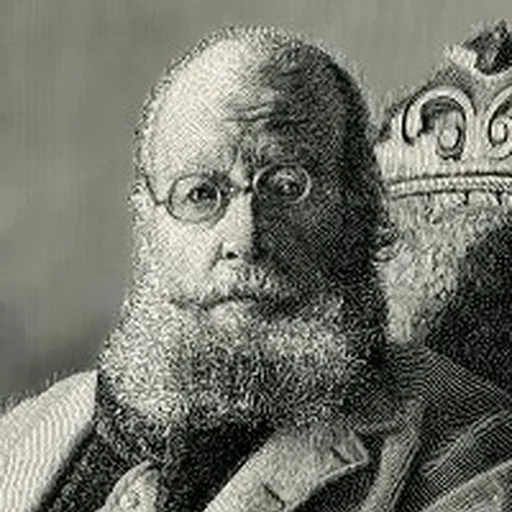
Edward Lear (12 May 1812 – 29 January 1888) was an English artist, illustrator, musician, author and poet, who is known mostly for his literary nonsense in poetry and prose and especially his limericks, a form he popularised but which term…

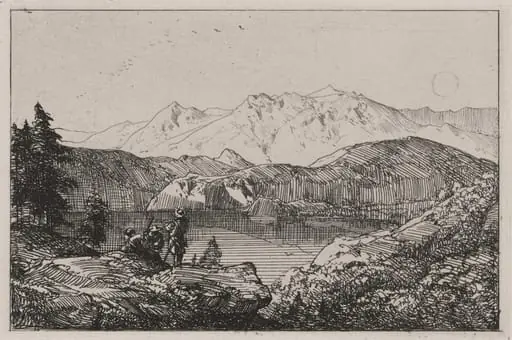 Mountain View with Lake
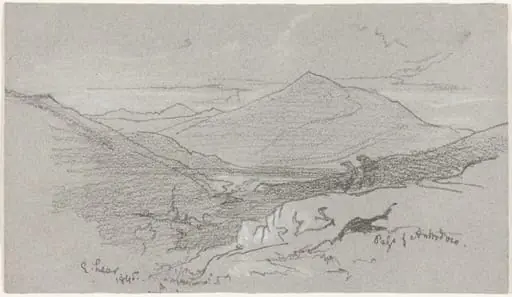 Mountainous View from Antrodoco
![The Alps [recto], by John Singer Sargent](https://artifactworldgallery.com/img/john-singer-sargent--the-alps-recto--be3c1d8551c9fe49-w320.webp) The Alps [recto]
The Alps [recto]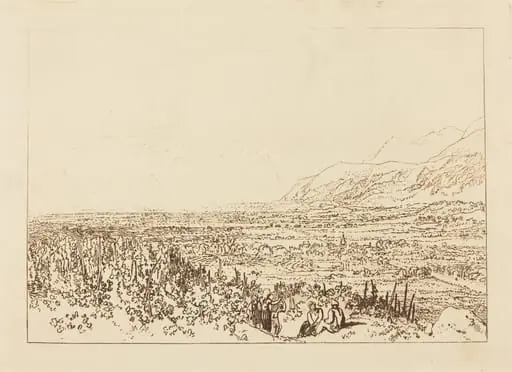 Chain of Alps from Grenoble to Chamberi
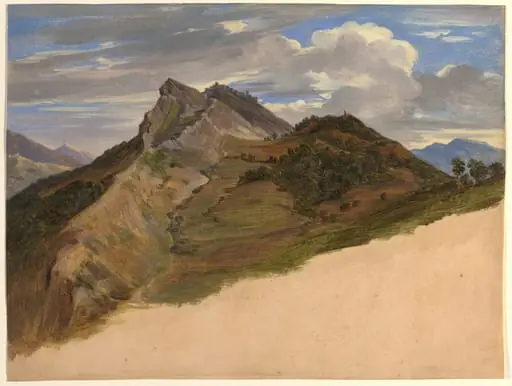 Civitella Seen from the North
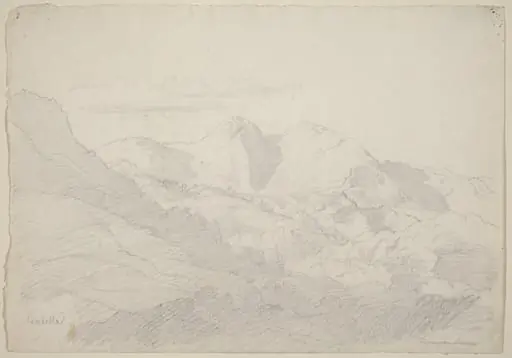 The Sabine Hills and Rocca Santo Stefano Seen from Civitella
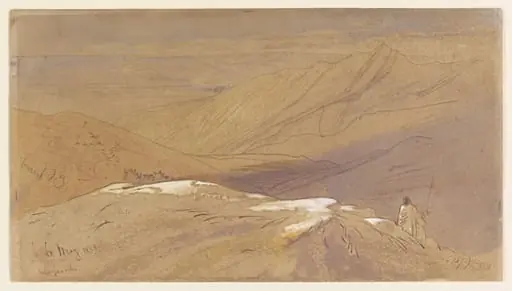 Near Jericho
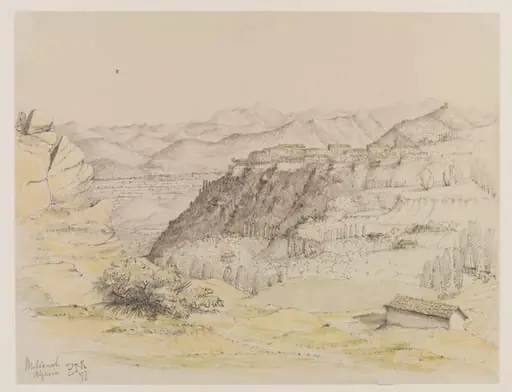 Milianah Algeria
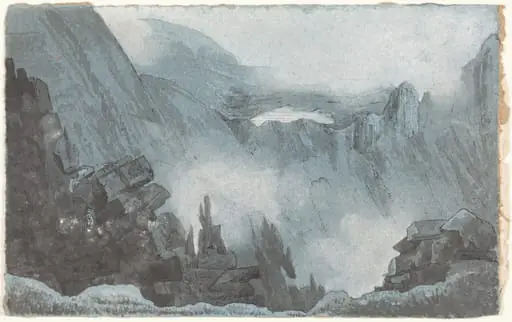 Mountain Scene with Rocks
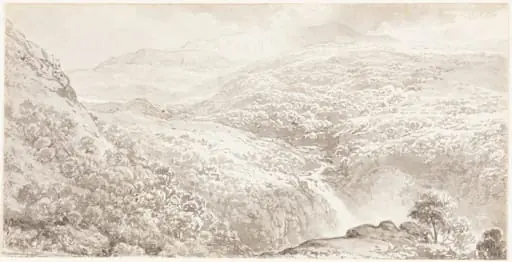 A Mountain Valley with a Waterfall
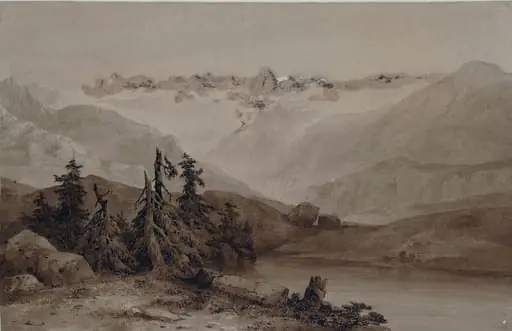 Chain of Mont Blanc
 Swiss Landscape with a Village in the Distance