Artwork
Untitled
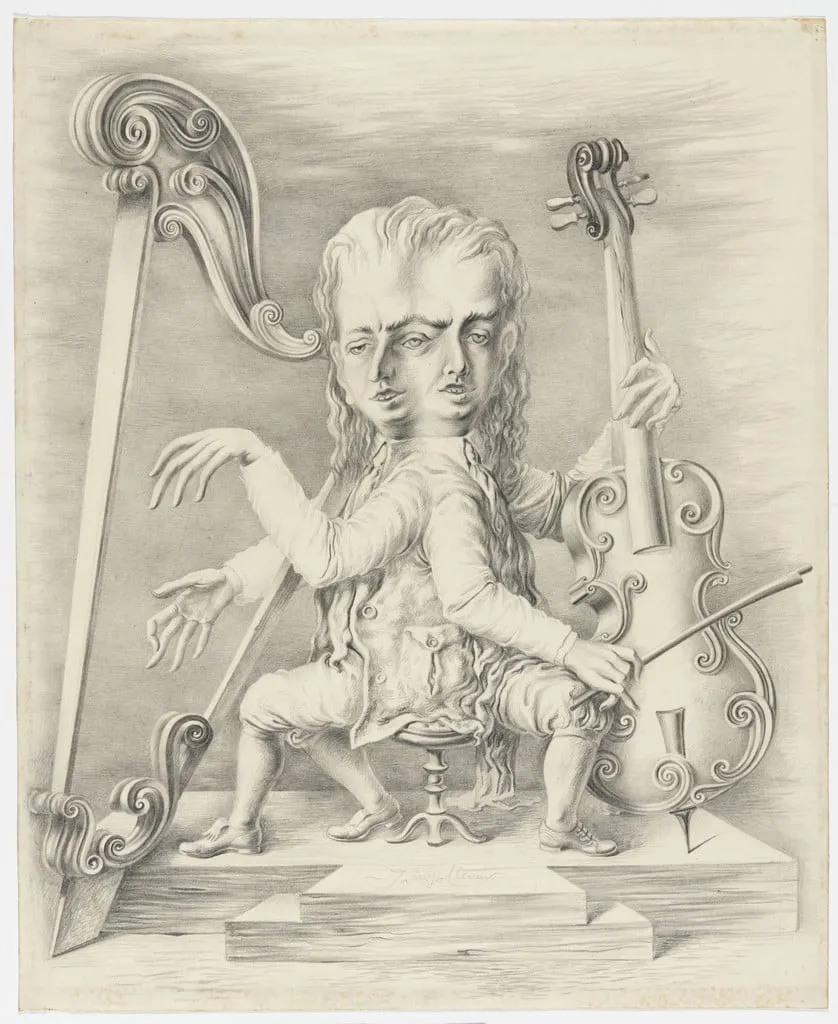
Untitled is a graphite drawing by Fabrizio Clerici. It dates from 1944 and is held in the collection of the Museum of Modern Art.
About this work
Overview
The absence of color and reliance on graphite emphasize texture and form through tonal variation rather than hue.
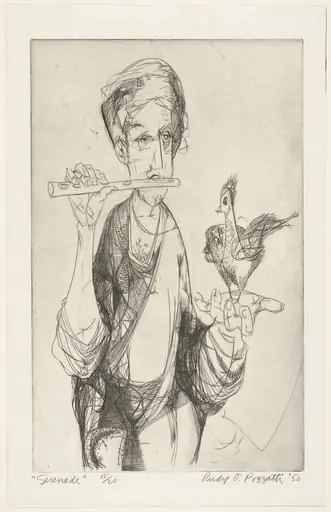
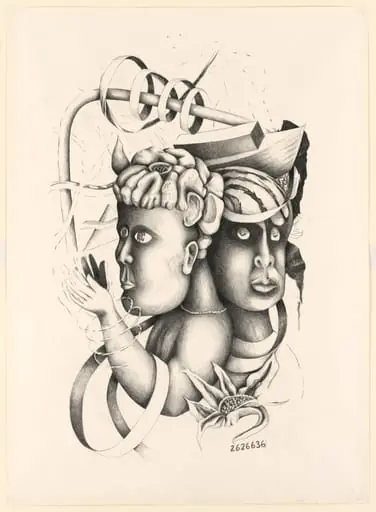
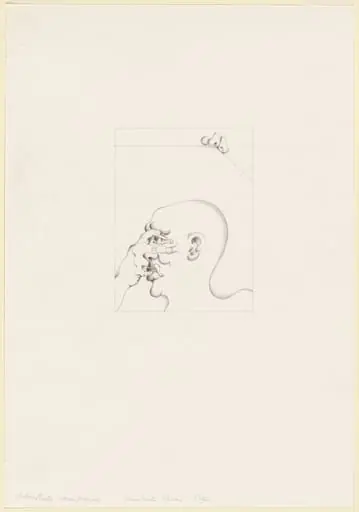
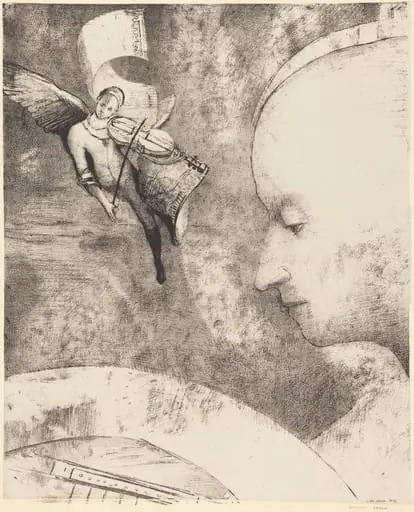
Created in 1944, this pencil drawing by Fabrizio Clerici is part of The Museum of Modern Art’s collection. It depicts a solitary figure engaged in musical performance, rendered with precise, dense linework. The composition centers on a man seated before a cello, surrounded by an ornate architectural element. The absence of color and reliance on graphite emphasize texture and form through tonal variation rather than hue.
Subject & Meaning
The figure, a man with curly hair and loose, puffy-sleeved attire, plays the cello with quiet focus. His expression is serene, yet his posture carries a slight rigidity, suggesting a moment suspended in time. The elaborate curved frame behind him, resembling a decorative mirror or doorway, may imply a threshold between inner contemplation and external space, though no explicit narrative is given.
Technique & Style
Clerici employs tight, layered pencil strokes to model form and depth, particularly in the folds of fabric and the shadowed areas of the figure’s body. Cross-hatching and parallel lines build gradations without smudging, creating a sense of volume through line density alone. The background’s swirling patterns contrast with the figure’s more linear definition, enhancing spatial ambiguity.
History & Provenance
The drawing was completed in 1944 during Clerici’s time in Italy, a period marked by personal and political upheaval. It entered The Museum of Modern Art’s collection later, likely through acquisition or donation. No record of prior ownership or exhibition history before its museum acquisition is publicly documented.
Context
Made during the final years of World War II, the work reflects a retreat into introspective subject matter rather than overt political commentary. Clerici, influenced by surrealism and classical draftsmanship, often merged meticulous technique with enigmatic imagery. This piece aligns with contemporaneous European drawings that favored quiet, symbolic scenes amid widespread turmoil.
Legacy
Though not widely reproduced, the drawing exemplifies Clerici’s ability to merge technical precision with psychological subtlety. It contributes to broader mid-century European drawing practices that valued line and tone over color, emphasizing emotional resonance through restraint. The work remains a quiet reference point in studies of postwar Italian graphic art.
Artist & collection