Artwork
Untitled
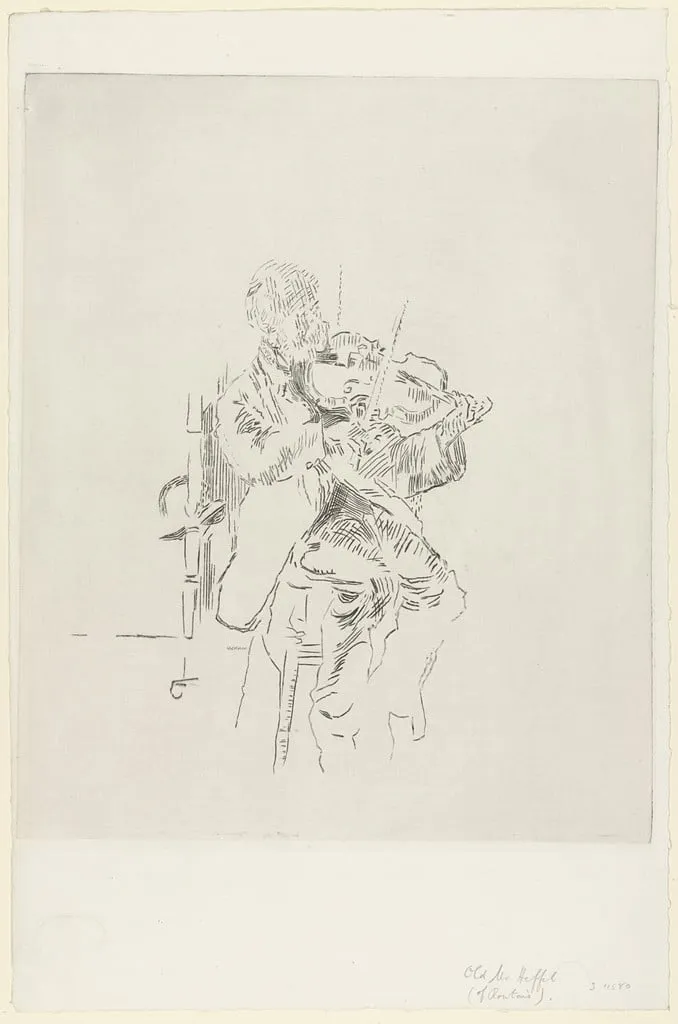
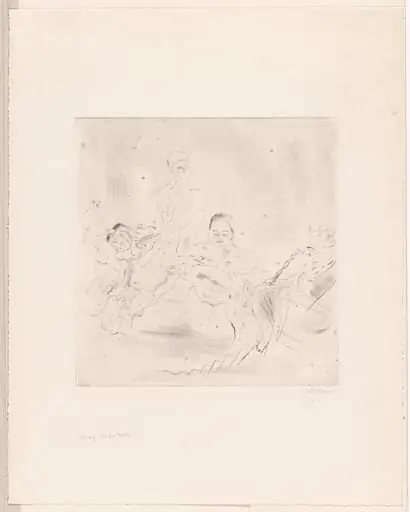
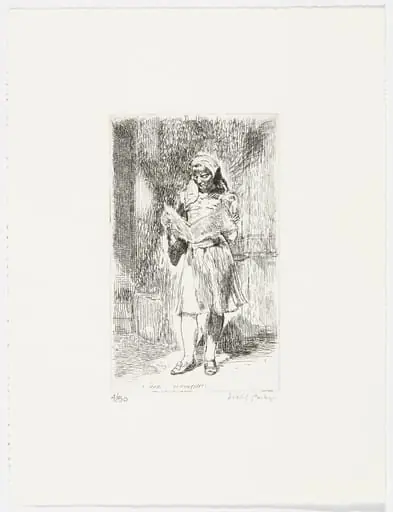
Untitled is an ink print by Walter Sickert. It dates from 1905 and is held in the collection of the Museum of Modern Art. Walter Richard Sickert produced this etching around 1905, during a period when he was deeply engaged with the urban life of London.
About this work
Overview
As a German-born artist who settled in Britain, he worked across painting and printmaking, often focusing on unidealized domestic interiors.
Walter Richard Sickert produced this etching around 1905, during a period when he was deeply engaged with the urban life of London. As a German-born artist who settled in Britain, he worked across painting and printmaking, often focusing on unidealized domestic interiors. This piece exemplifies his preference for intimate, unposed scenes rendered with direct, tactile methods. Etching allowed him to bypass preparatory drawing and work spontaneously on the metal plate.
Subject & Meaning
The image captures a solitary figure hunched over a table in a dimly lit room, suggesting a private, unremarkable moment. There is no narrative clarity—no identifiable activity or emotional cue—only the weight of solitude and the quiet tension of stillness. Sickert’s choice to omit context invites viewers to confront the ambiguity of everyday life, avoiding sentimentality in favor of psychological restraint.
Technique & Style
Sickert employed etching to create sharp contrasts between light and shadow by directly incising lines into a metal plate. His marks are urgent and uneven, avoiding polished refinement in favor of immediacy. The roughness of the lines mimics the flicker of lamplight and the texture of worn surfaces, reinforcing the sense of a fleeting, unposed encounter. This method allowed him to translate observation into gesture without mediation.
History & Provenance
This work emerged from Sickert’s sustained interest in printmaking during the early 1900s, a time when he was increasingly detached from academic traditions. Though the etching is untitled and undated precisely, its style aligns with other works from his Camden Town period. It likely circulated among private collectors and print enthusiasts, reflecting his niche reputation outside mainstream British art institutions.
Context
Sickert operated at the margins of the British art world, influenced by Degas and the French Impressionists but rejecting their luminosity for darker, more introspective tones. His focus on modest interiors and ordinary figures contrasted with the grandeur of Victorian painting. The Camden Town Group, though loosely formed, shared his interest in modern life’s quietude, positioning him as a bridge between realism and early modernist introspection.
Legacy
Sickert’s etchings, including this one, contributed to a broader redefinition of printmaking as a medium for psychological depth rather than reproduction. His direct, unembellished approach influenced later British artists interested in urban alienation and domestic realism. Though not widely celebrated in his lifetime, his work gained recognition for its unflinching portrayal of modern solitude.
Artist & collection
Artist
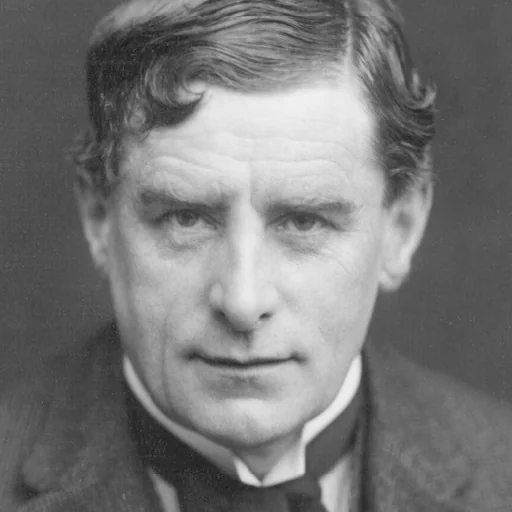
Walter Richard Sickert (31 May 1860 – 22 January 1942) was a German-born British painter and printmaker who was a member of the Camden Town Group of Post-Impressionist artists in early 20th-century London.

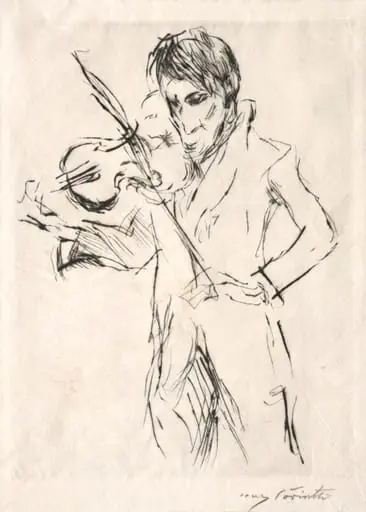 Andreas Weissgaerber
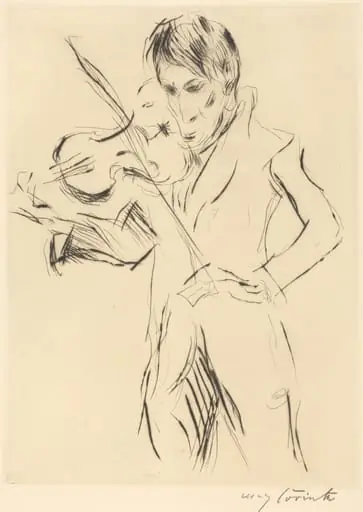 Bildnis Andreas Weissgaerber (Portrait of Andreas Weissgaerber)
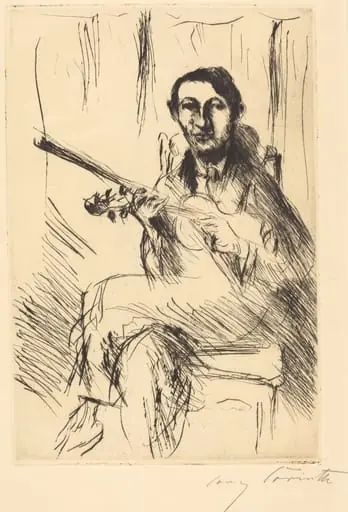 Bildnis Andreas Weissgaerber (Portrait of Andreas Weissgaerber)
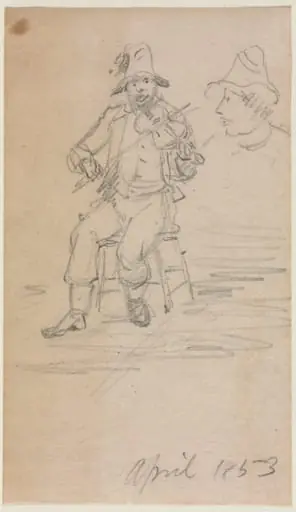 The Fiddling Beggar
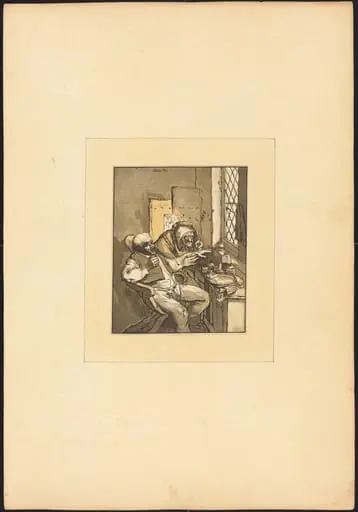 Village Surgeon
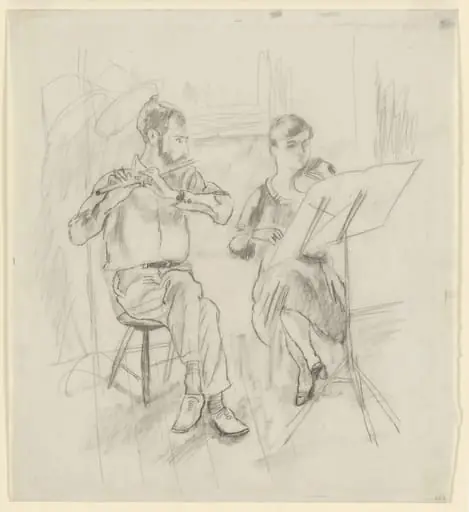 Untitled
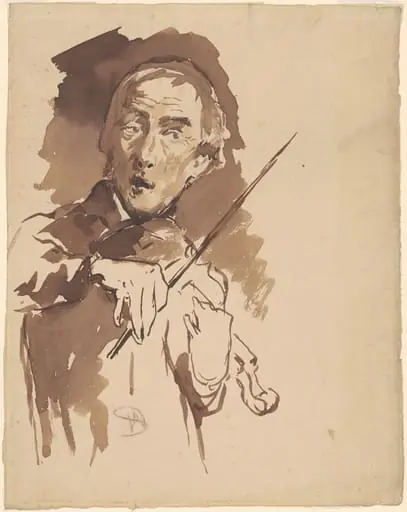 Study for "Toning the Bell"
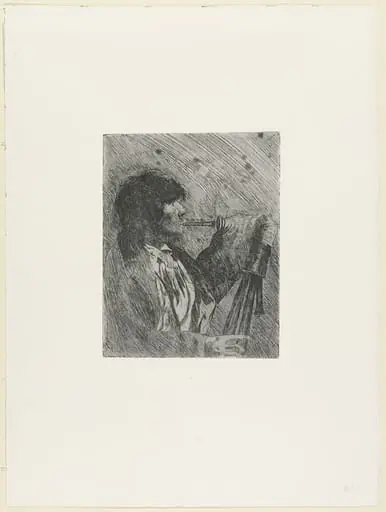 Untitled
 Untitled
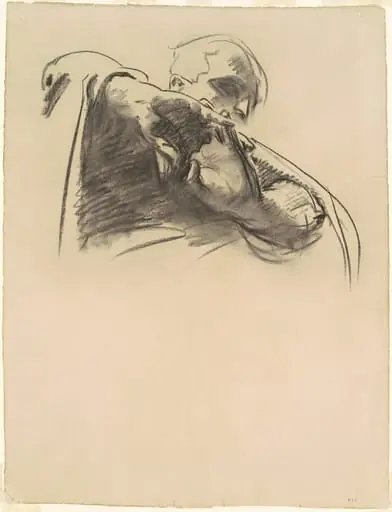 Study for "The Crucifixion and Death of Our Lord"
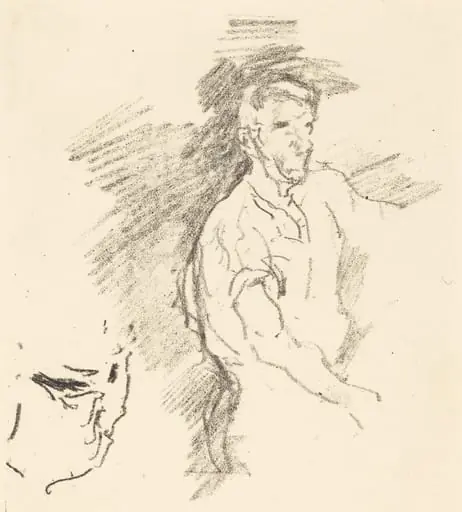 Sketch of a Blacksmith
 Untitled