Artwork
Bildnis Andreas Weissgaerber (Portrait of Andreas Weissgaerber)
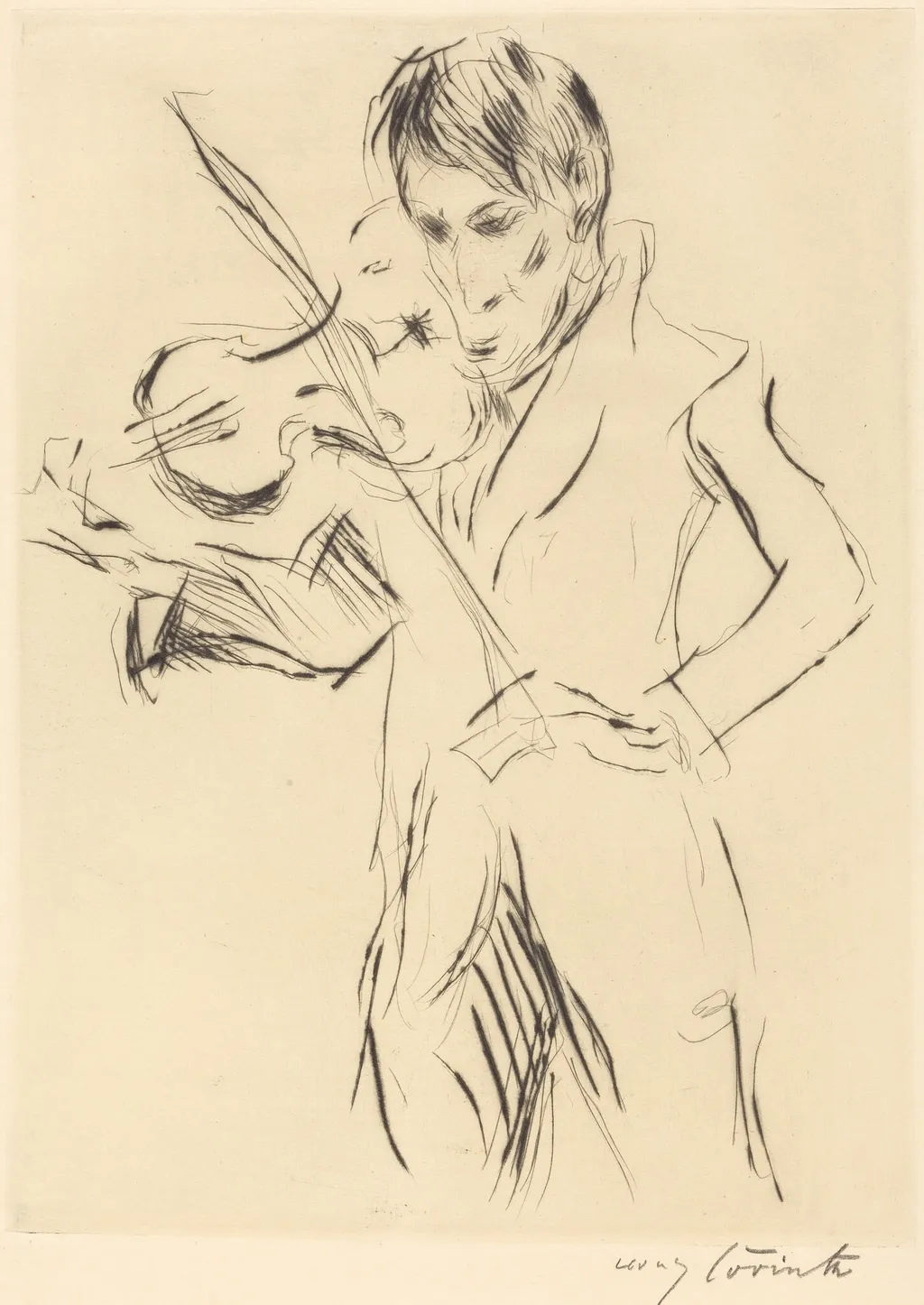
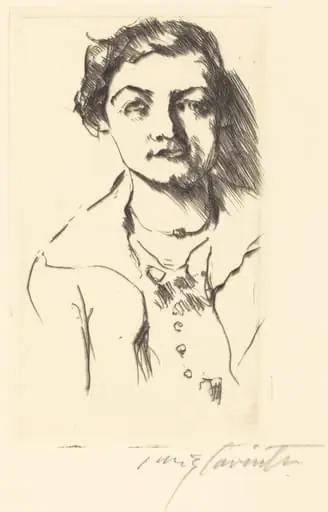
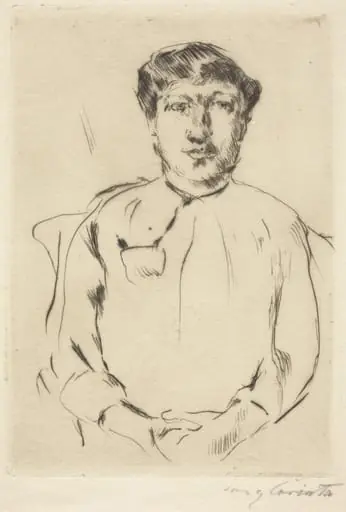
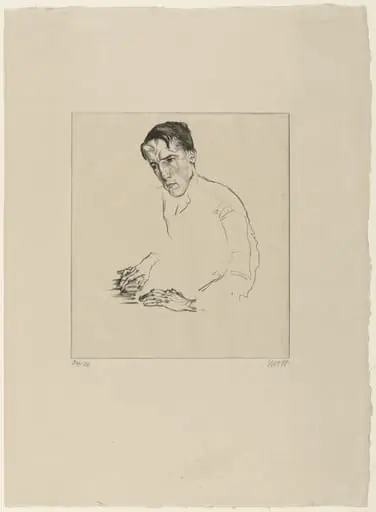
Bildnis Andreas Weissgaerber (Portrait of Andreas Weissgaerber) is an ink print by Lovis Corinth. It dates from 1919 and is held in the collection of the National Gallery of Art.
About this work
Overview
Created in 1919, *Bildnis Andreas Weissgaerber* is a drypoint print on laid paper by the German artist Lovis Corinth.
Created in 1919, *Bildnis Andreas Weissgaerber* is a drypoint print on laid paper by the German artist Lovis Corinth. The work belongs to his mature period, following a stroke in 1911 that reshaped his artistic approach. Corinth, trained in Paris and Munich and later a leader of the Berlin Secession, moved beyond naturalism toward a hybrid style combining impressionist light and expressionist intensity. This portrait exemplifies his refined yet emotionally charged graphic technique.
Subject & Meaning
The sitter, Andreas Weissgaerber, is depicted seated in a plain chair, dressed in a formal suit. His posture is upright, his gaze direct but withdrawn, conveying quiet composure rather than emotional display. Corinth avoids idealization; the portrait captures a sense of inner stillness, perhaps reflecting the psychological weight of postwar Germany. The absence of narrative context focuses attention on the individual’s presence, rendered with psychological subtlety rather than dramatic flourish.
Technique & Style
Corinth employed drypoint to create dense, velvety lines that model the sitter’s face and clothing with tactile precision. The burr of the needle produces soft, blurred edges, enhancing the sense of volume and texture without relying on chiaroscuro. His brushwork in earlier paintings had grown looser after 1911; here, the print medium allows a controlled yet expressive handling of form, merging the immediacy of impressionism with the emotional gravity of expressionism.
History & Provenance
The print was made in Berlin during a period of intense artistic activity for Corinth, who was deeply engaged in portraiture after his stroke. While specific early ownership records are sparse, the work entered public collections in the 20th century, reflecting its recognition within German modernist printmaking. It remains part of institutional holdings that emphasize Corinth’s contribution to graphic arts in the early 1900s.
Context
Produced in the aftermath of World War I, the portrait reflects a cultural moment marked by introspection and social fragmentation. Corinth’s shift from academic naturalism to a more personal, expressive idiom mirrored broader artistic trends in Weimar Germany. Unlike overtly political works of the era, this portrait offers a quiet, humanist counterpoint—emphasizing individual dignity amid collective upheaval.
Legacy
Corinth’s drypoint portraits, including this one, influenced later generations of German printmakers by demonstrating how intimate subject matter could be rendered with technical rigor and emotional depth. The work stands as a key example of how traditional portraiture was reimagined through modernist techniques, bridging 19th-century realism and 20th-century psychological expression without abandoning representational clarity.
Own this work as a print
Artist & collection

Artist
Lovis Corinth was a German artist and writer whose mature work as a painter and printmaker realized a synthesis of impressionism and expressionism.