Artwork
Mystic Marriage of St Catherine
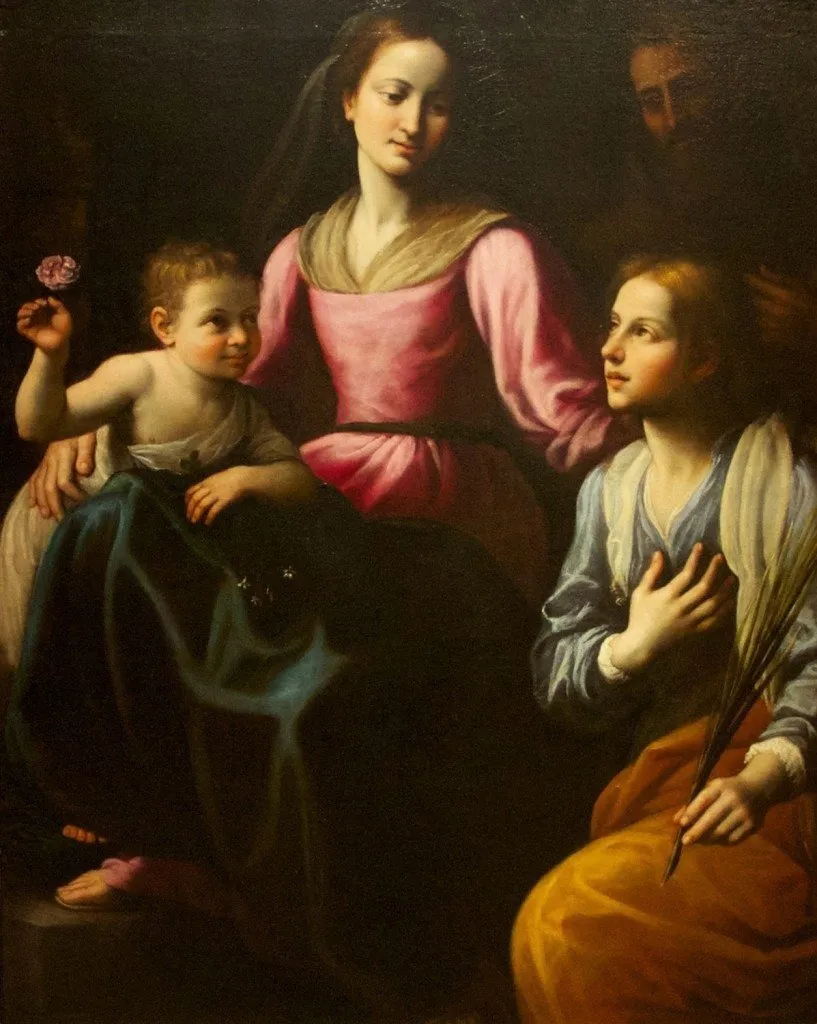
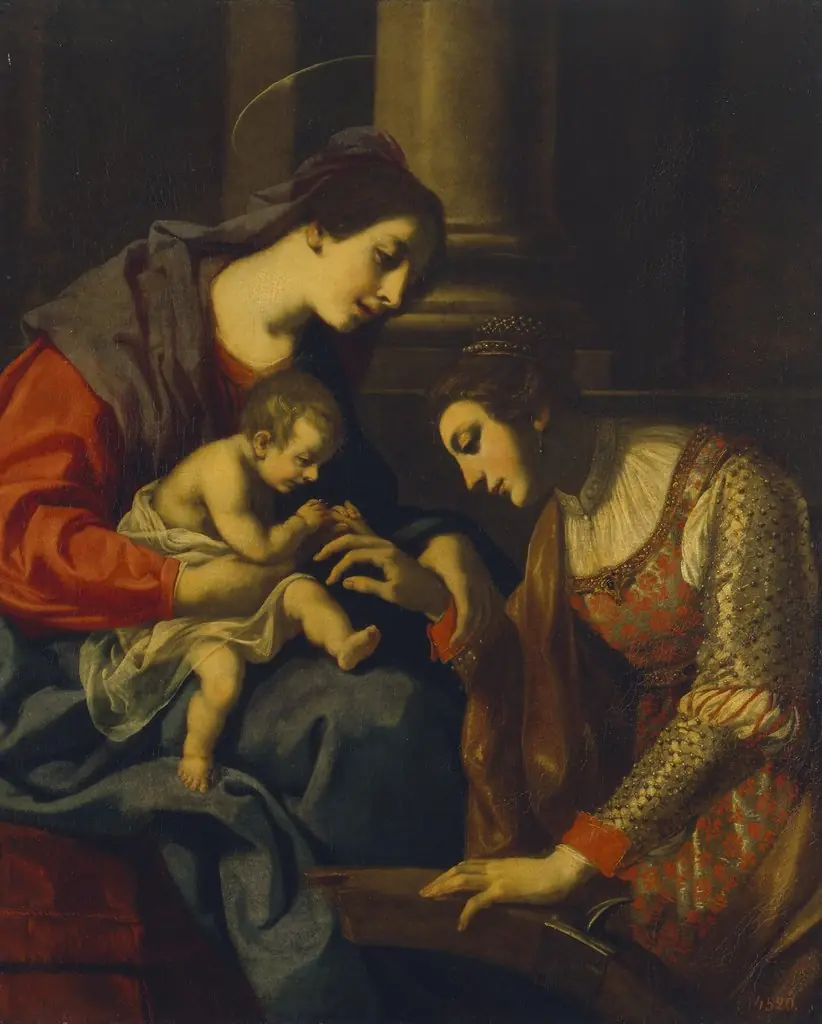
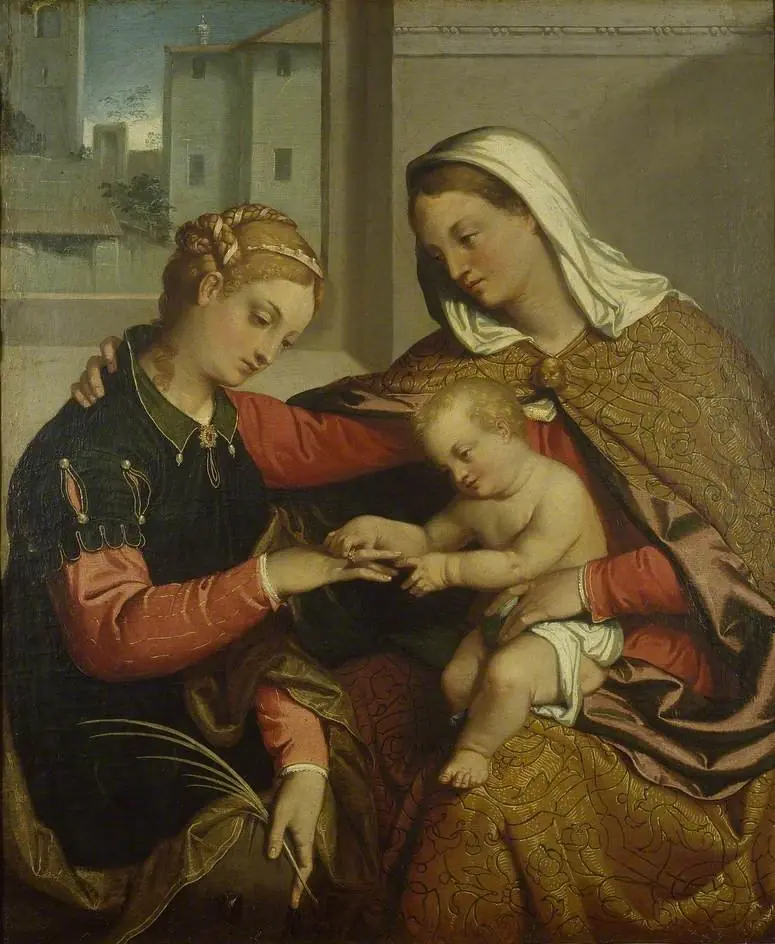
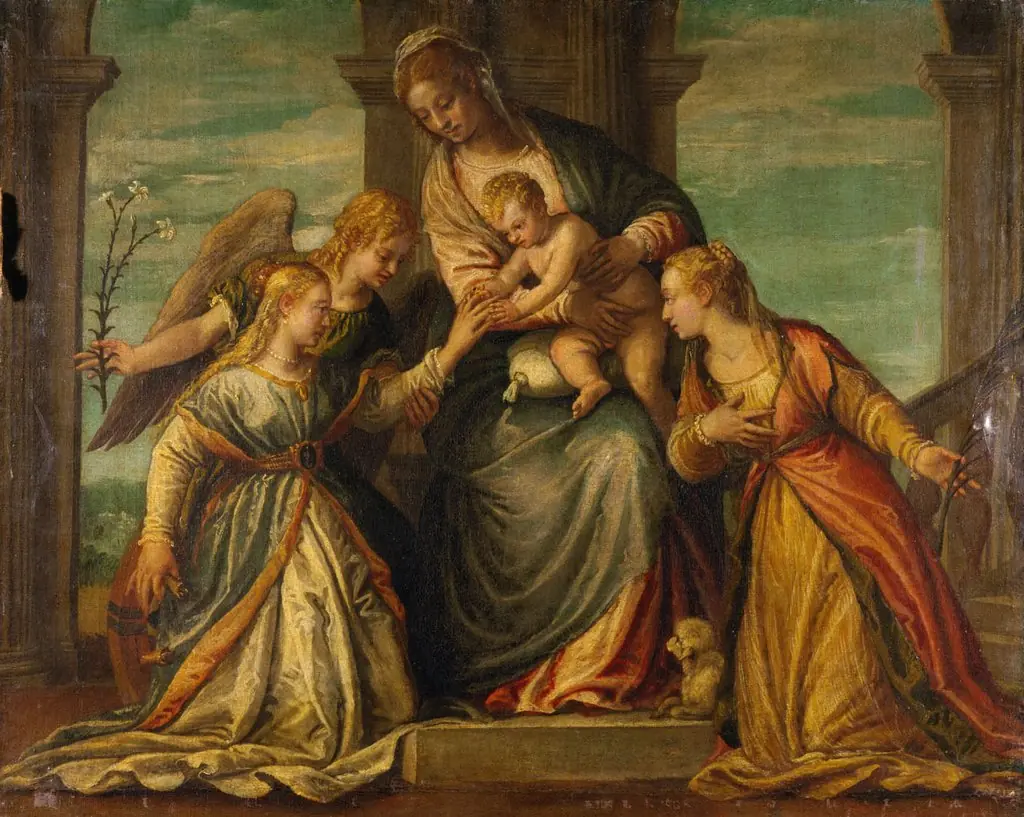
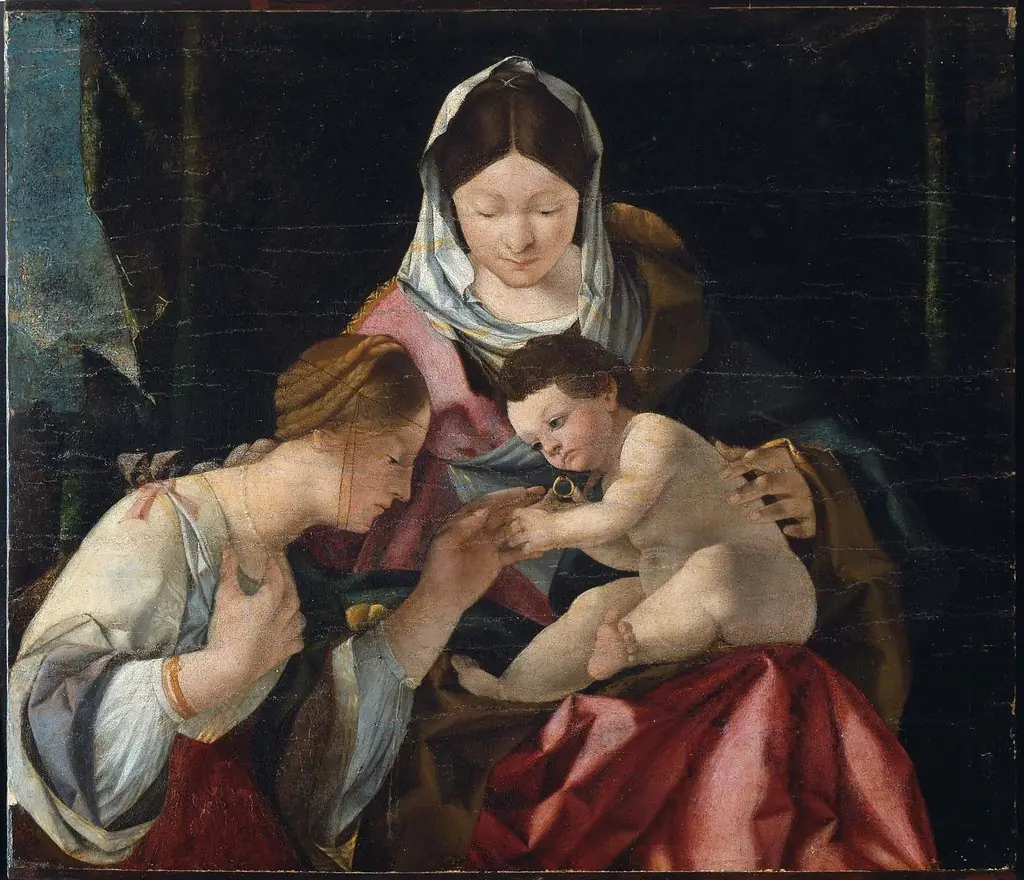
Mystic Marriage of St Catherine is an oil painting by the Early Baroque Italian artist Fabrizio Santafede. It dates from 1614 and is held in the collection of the Hermitage Museum.
About this work
Overview
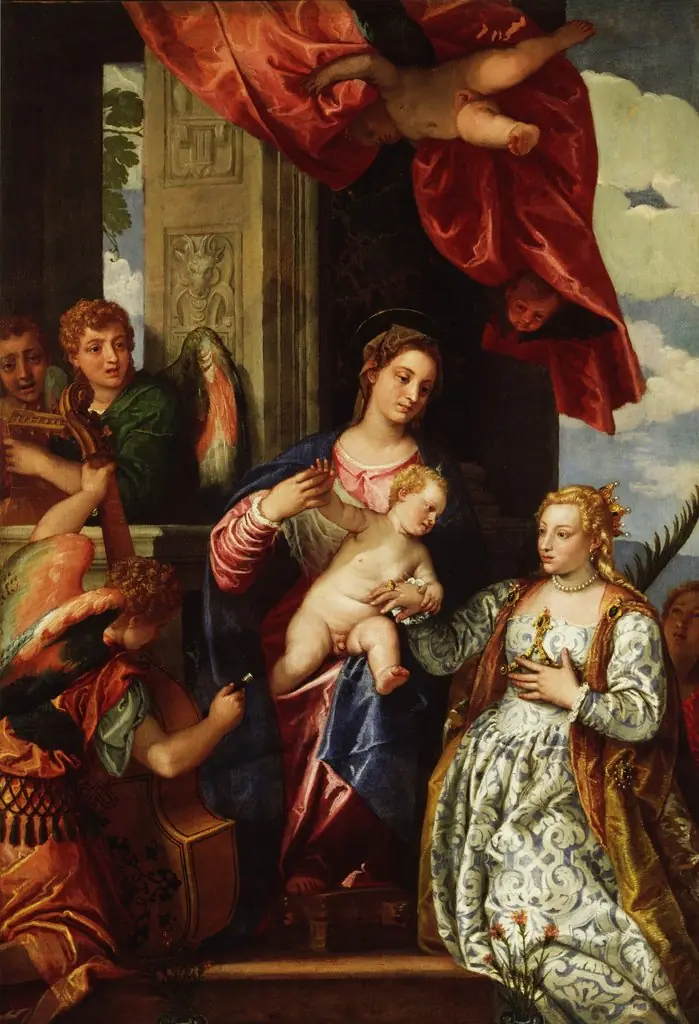
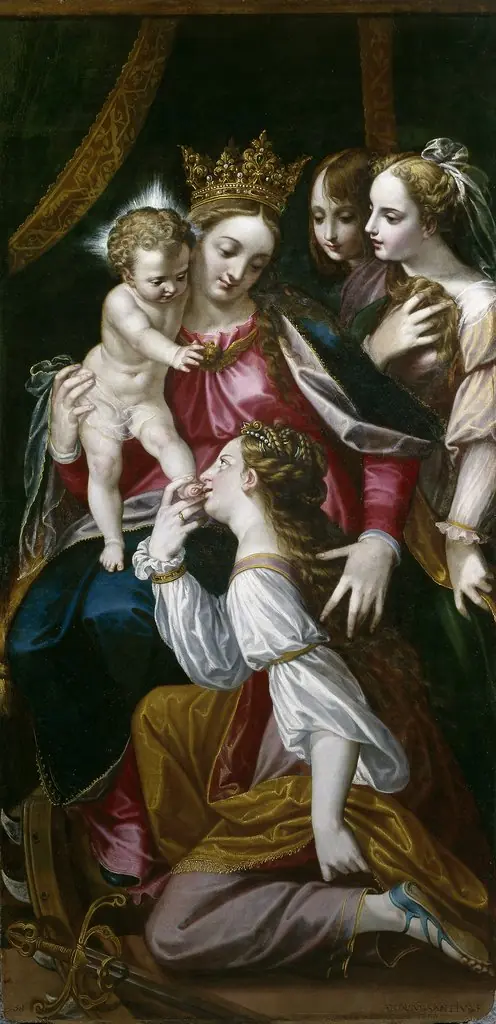
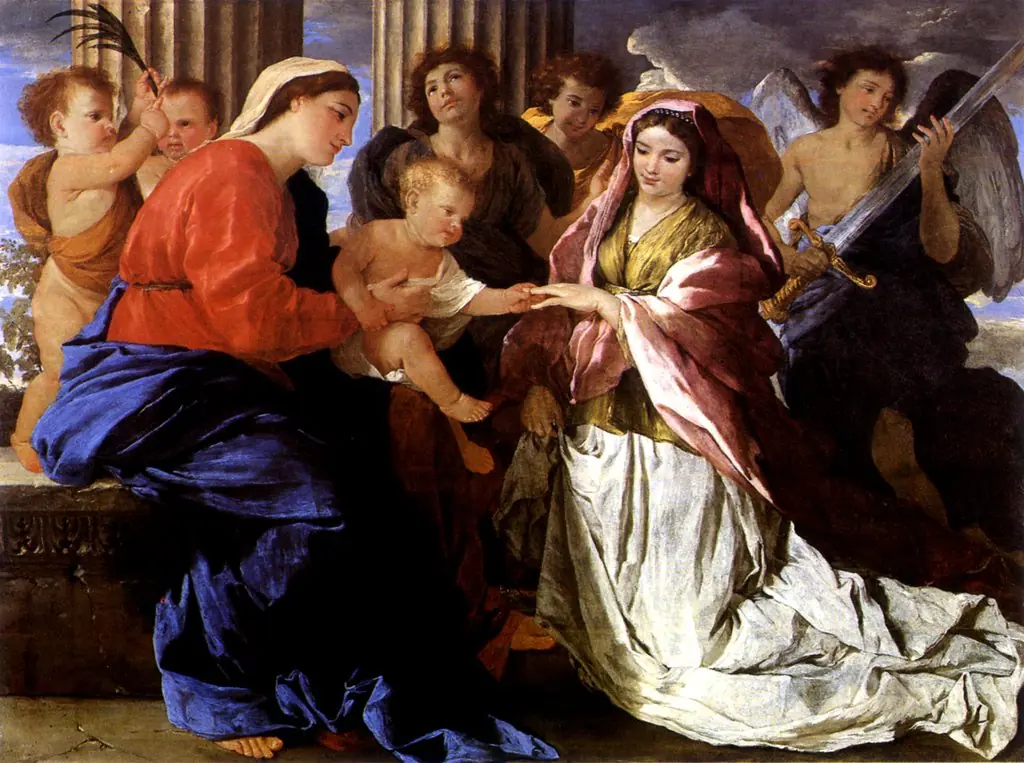
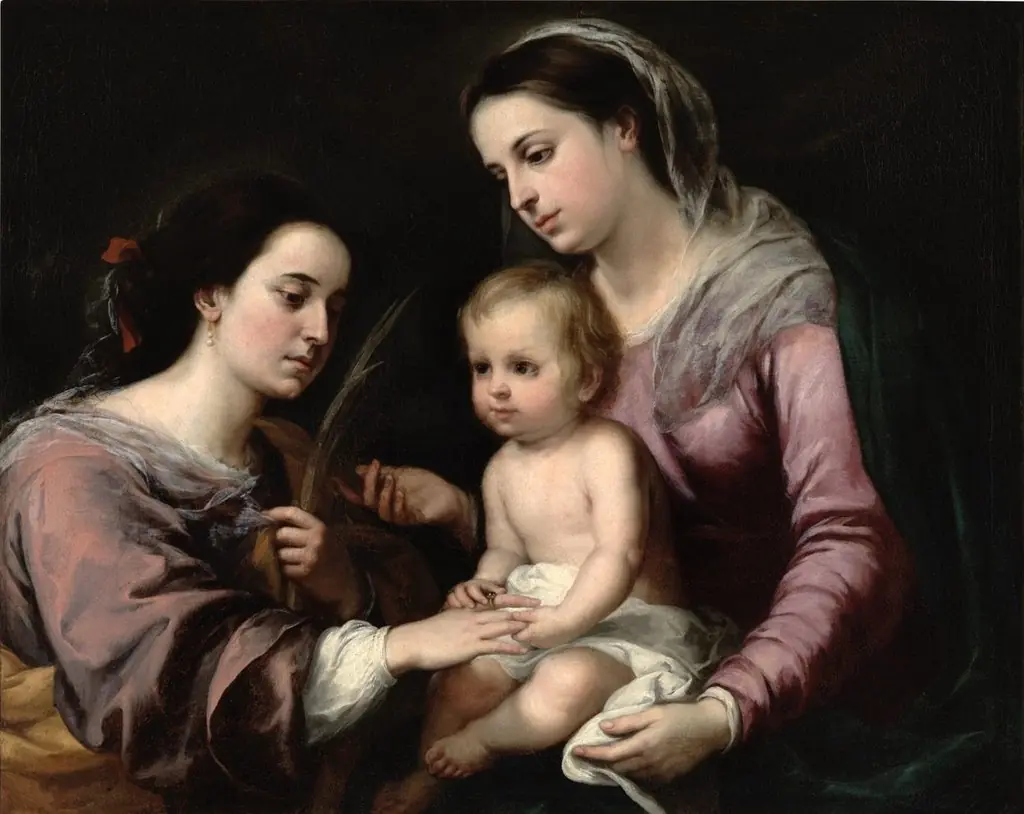
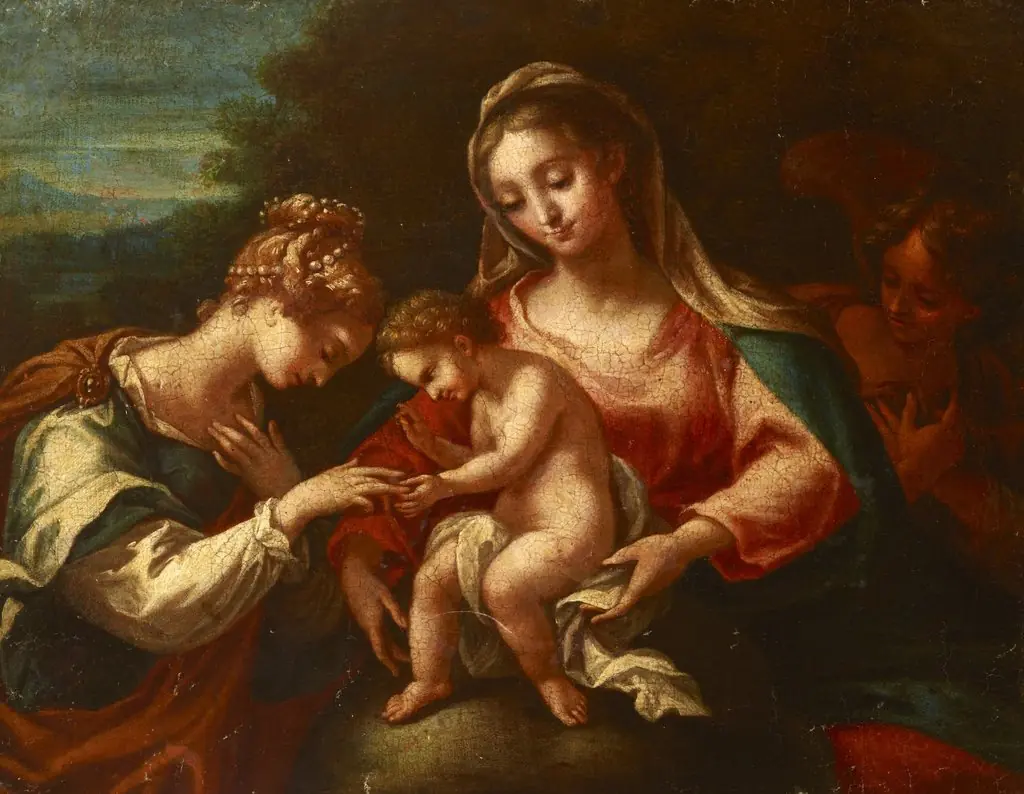
Fabrizio Santafede’s *Mystic Marriage of St Catherine* (1614) is an oil on canvas composition that presents a solemn, dimly lit interior scene. Central to the picture is a woman in a pink garment holding a child, surrounded by a kneeling figure and a partially obscured male presence. The overall palette is dominated by deep shadows, lending the work a grave atmosphere.
Subject & Meaning
The work visualises the legendary mystical marriage between Saint Catherine of Alexandria and the infant Christ. The central female figure, identified as the saint, receives the child, who holds a flower—a symbol of purity and divine love. The surrounding figures, including a kneeling devotee, emphasize the devotional context and the spiritual union celebrated in the legend.
Technique & Style
Executed in early Baroque manner, Santafede employs chiaroscuro to model forms and create depth within the confined space. The brushwork is restrained, avoiding the exaggerated elongation typical of contemporary Neapolitan Mannerism. The subdued color scheme and careful handling of light accentuate the narrative focus on the central figures while reinforcing the painting’s contemplative tone.
History & Provenance
Painted in 1614, the canvas reflects Santafede’s departure from the prevailing Mannerist trends in Naples, aligning instead with emerging Baroque sensibilities. The painting entered the collection of the State Hermitage Museum, where it remains part of the museum’s holdings of Italian Baroque art, offering insight into the artist’s late career and the period’s religious iconography.
Artist & collection
Artist
Fabrizio Santafede or Fabrizio Santaféde (c. 1560–1623/28) was an Italian painter known for his altarpieces. He painted in a style that rejected the Mannerism popular in the Naples of his time and evident in the works of Francesco Curia.