Artwork
Tiger
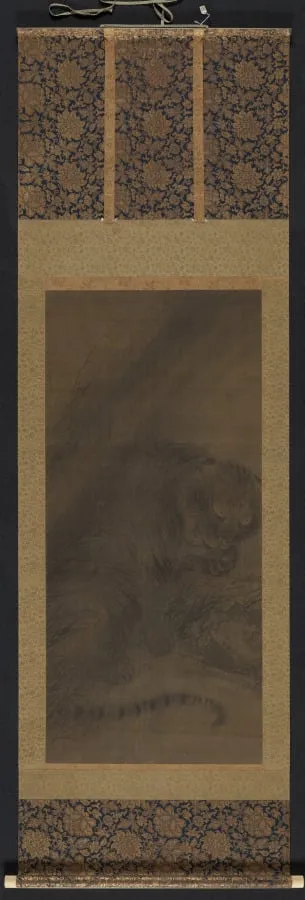
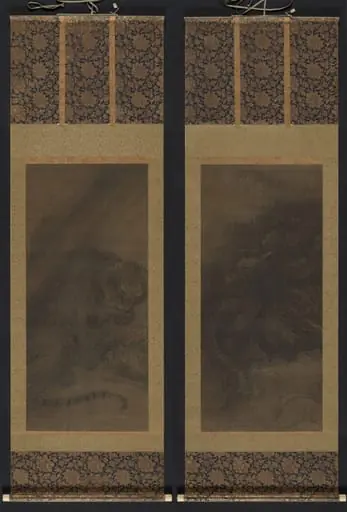
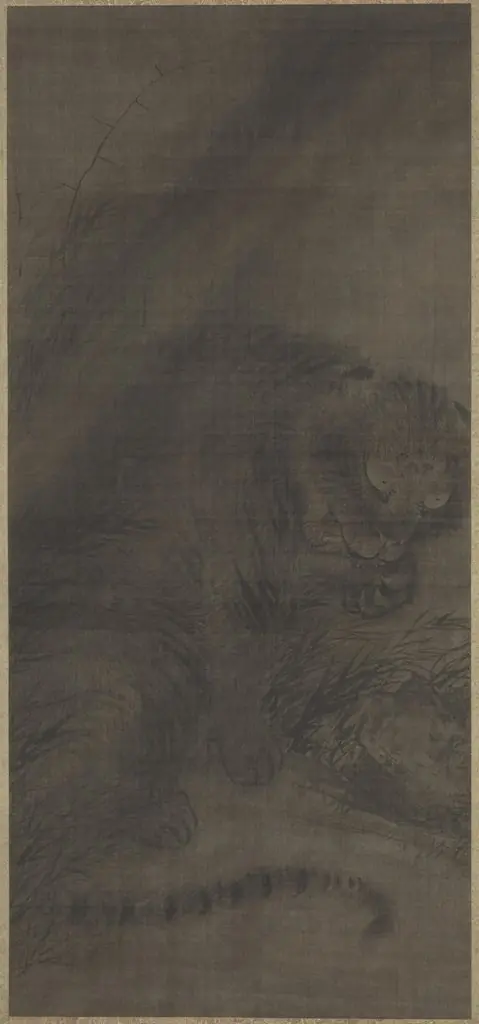
Tiger is an unspecified painting by the Chinese Orthodox School artist Fachang Muqi. It dates from 1264 and is held in the collection of the Cleveland Museum of Art.
About this work
Together they stand for yin and yang—opposite forces that need each other.
You see a tiger licking its paw, filling most of the paper. Its fur is a few quick brushstrokes—no fine detail.
This painting was made for Chan (Zen) Buddhist monks. The tiger isn’t just an animal; it’s half of a pair. The other scroll shows a dragon in mist. Together they stand for yin and yang—opposite forces that need each other. The tiger feels solid and close; the dragon feels light and far away.
To see the other half, look up “Southern Song dynasty (1127-1279).”
Overview
This painting depicts a tiger, part of a pair with a companion dragon scroll, created for a Chan Buddhist context.
Subject & Meaning
The tiger and dragon symbolize the philosophical concept of yin and yang, representing complementary opposites. The tiger's solidity contrasts with the dragon's ethereal quality, conveying their symbolic balance.
Technique & Style
The tiger is rendered with bold brushstrokes, capturing its form without fine detail. The original silk has darkened and some shading has faded over time, affecting the work's appearance.
Context
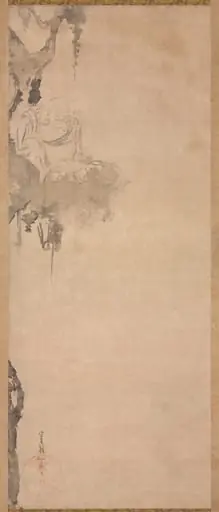
The painting was likely part of a triptych, flanked by the dragon scroll and a central image, such as the Bodhisattva Guanyin, in a Chan Buddhist setting.
Artist & collection