Artwork
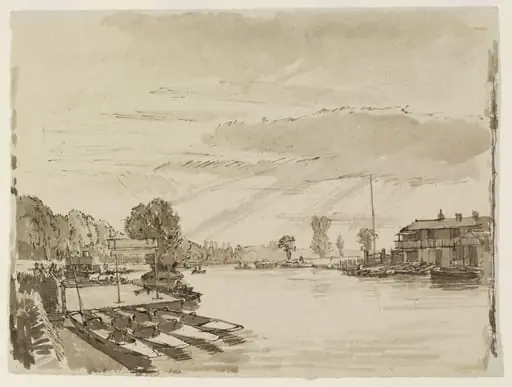
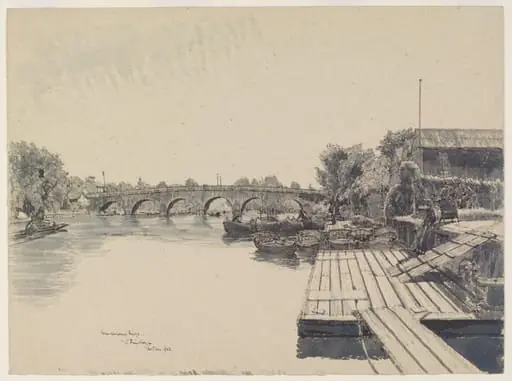
Hambledon Mill from the Road
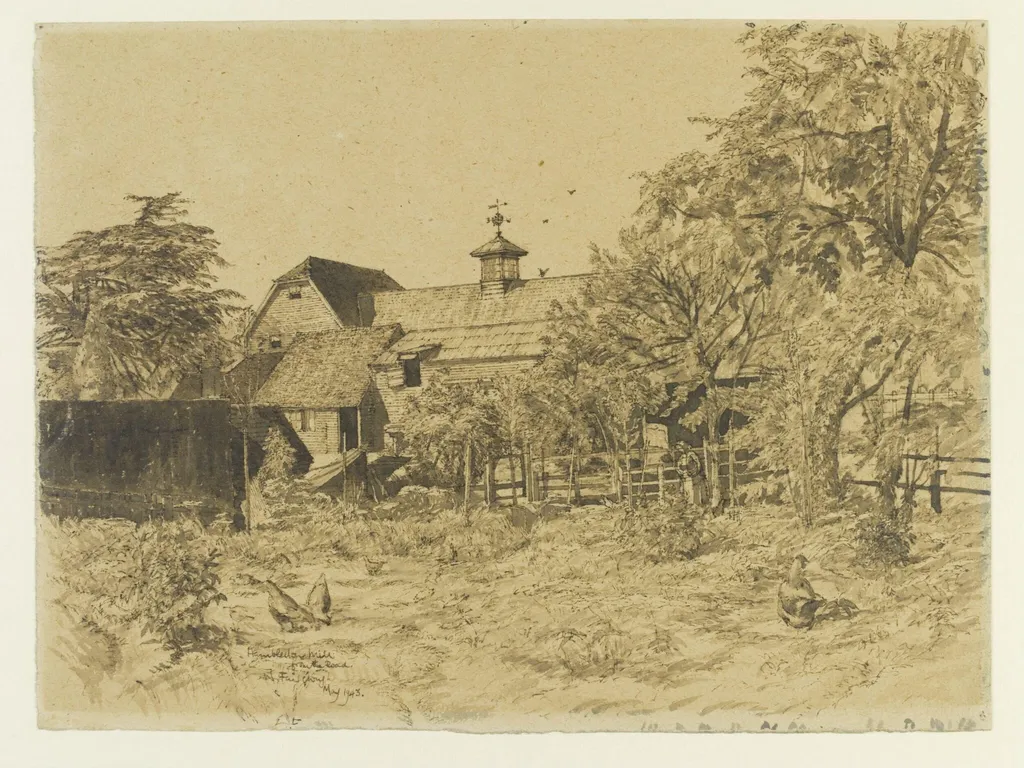
Hambledon Mill from the Road is a watercolor work on paper by Fairclough. It dates from 1943 and is held in the collection of the Victoria and Albert Museum.
About this work
Overview
It was produced as part of the Recording Britain project, a government-backed initiative to visually archive the nation’s rural scenery during wartime.
Hambledon Mill from the Road is a watercolour painting completed in 1943 by artist Fairclough. It was produced as part of the Recording Britain project, a government-backed initiative to visually archive the nation’s rural scenery during wartime. The work is one of more than 1,500 pieces in the collection, all created to capture the character of British landscapes at risk of change or loss due to conflict and modernization.
Subject & Meaning
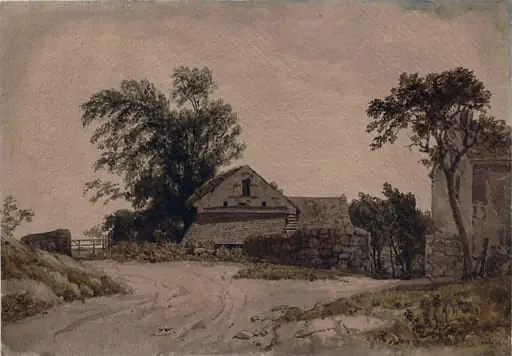
The painting depicts a wooden watermill situated beside a quiet country road, surrounded by trees and undergrowth. A fence or gate appears in the foreground, with birds suggesting subtle movement. The scene conveys stillness and isolation, reflecting the project’s aim to preserve ordinary, unremarkable places that embodied a fading rural England. The mill, neither grand nor industrial, represents the quiet endurance of traditional structures.
Technique & Style
Executed in watercolour, the work employs soft washes and muted tones of brown, green, and grey to evoke a hushed, atmospheric quality. The brushwork is restrained, avoiding sharp definition in favour of gentle transitions between forms. This approach enhances the sense of calm and timelessness, aligning with the project’s preference for lyrical, observational realism over dramatic composition.
History & Provenance
Created in 1943 under the auspices of Sir Kenneth Clark, the painting entered the Recording Britain collection shortly after completion. The collection was assembled to safeguard visual records of Britain’s heritage amid wartime uncertainty. It was later acquired by the Victoria and Albert Museum, where it remains part of a curated archive of wartime topographical art, preserved for its historical and cultural value.
Context
The Recording Britain project emerged during the Second World War as a cultural response to the threat of destruction and societal upheaval. Artists were commissioned to document vernacular architecture and rural landscapes before they disappeared. Hambledon Mill, like many works in the series, reflects a deliberate focus on the uncelebrated corners of the countryside, emphasizing continuity over grandeur.
Legacy
The painting endures as a quiet testament to a moment when art served as a form of preservation. While not widely exhibited, it contributes to a broader understanding of how British artists responded to wartime anxiety through observation rather than heroism. Its inclusion in the Recording Britain archive ensures its role as a historical document, valued for its sincerity and specificity.
Artist & collection
Artist
Fairclough is a surname. A variant form is Faircloth. Notable people with the surname include:Adam Fairclough (historian), British historian of the United States Anna Fairclough, member of the Alaska House of…