Artwork
Seine et Marne
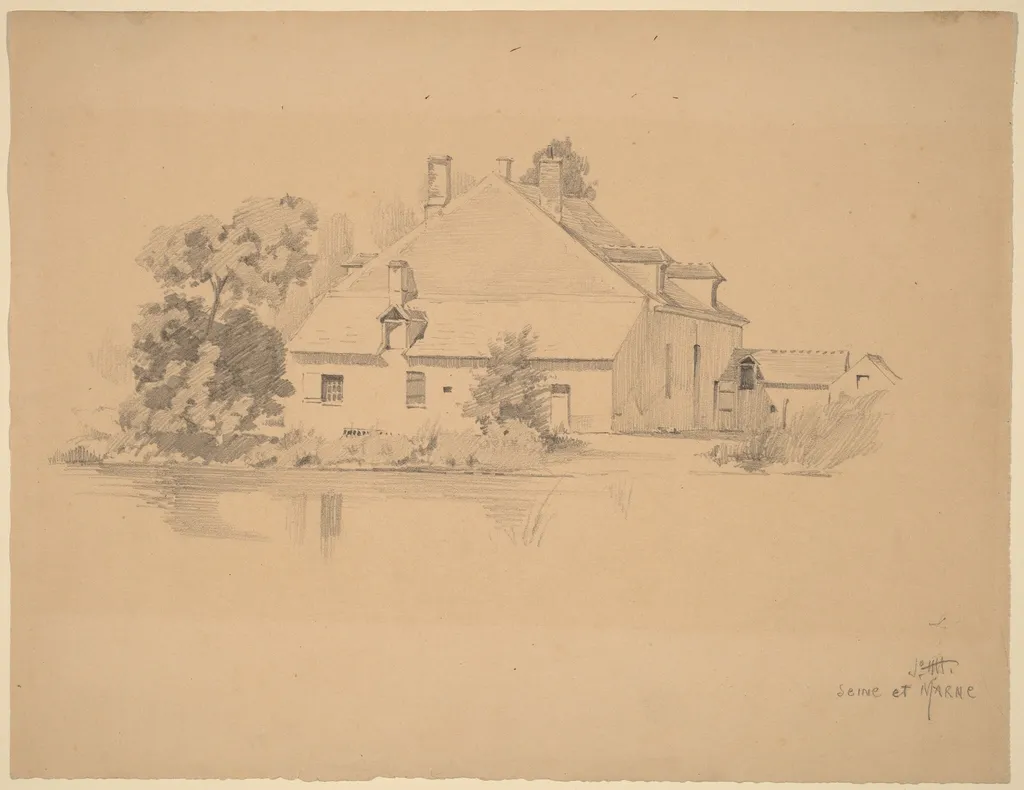
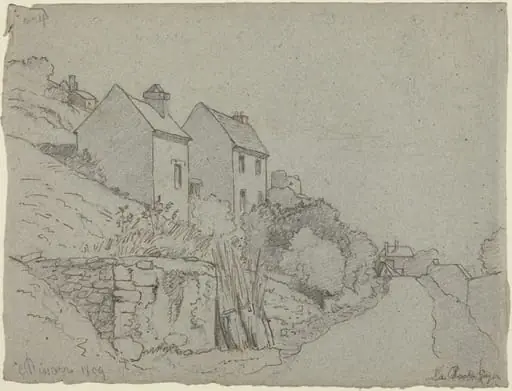
Seine et Marne is a graphite drawing by the Impressionist artist Charles Frederick William Mielatz. It dates from 1892 and is held in the collection of the National Gallery of Art.
About this work
Overview
Seine et Marne is a graphite drawing executed on wove paper in 1892. The work measures the interplay of line and form, presenting a composed view that emphasizes structural clarity. It exemplifies the artist’s dedication to precise rendering within the medium of drawing.
Subject & Meaning
The composition depicts a landscape that incorporates elements of the Seine and Marne river region, rendered with an emphasis on architectural and infrastructural details. The focus on built forms suggests an interest in the relationship between natural settings and human-made structures.
Technique & Style
Created with graphite, the drawing employs fine, controlled strokes that delineate planes and edges with a high degree of accuracy. The use of wove paper provides a smooth surface that supports the artist’s meticulous line work, reflecting a style rooted in architectural illustration.
History & Provenance
The artist, born Karl Friedrich Wilhelm Mielatz in Prussia, later adopted the name Charles Frederick William Mielatz after emigrating to the United States. Known primarily for etchings and graphic prints of architectural subjects, he produced this drawing during a period when his work was gaining recognition among American printmakers.
Artist & collection

Artist
Charles Frederick William Mielatz
Charles Frederick William Mielatz (né Karl Friedrich Wilhelm Mielatz; May 24, 1864 – July 2, 1919) was a Prussian-born American etcher, graphic artist, painter, lithographer, and educator.

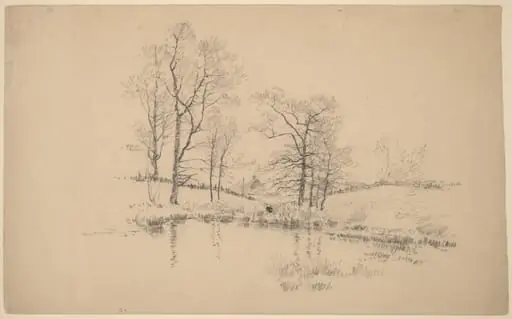
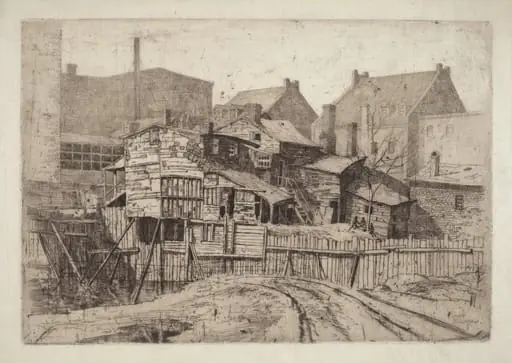
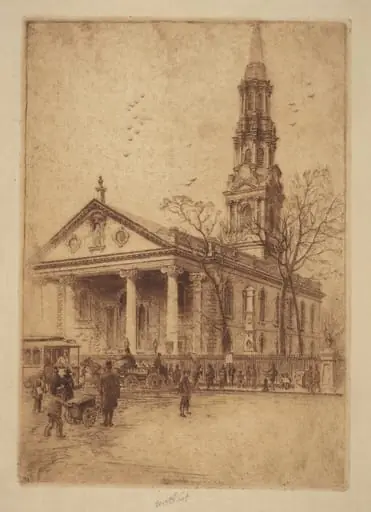
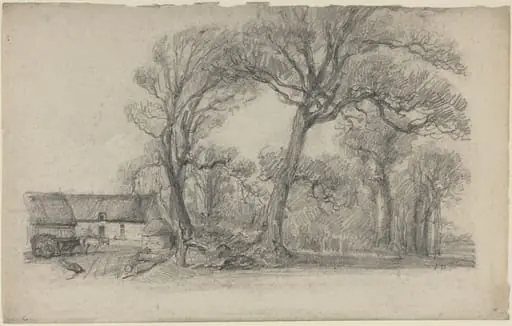 Landscape with Trees, Cottage, and Farm Wagon
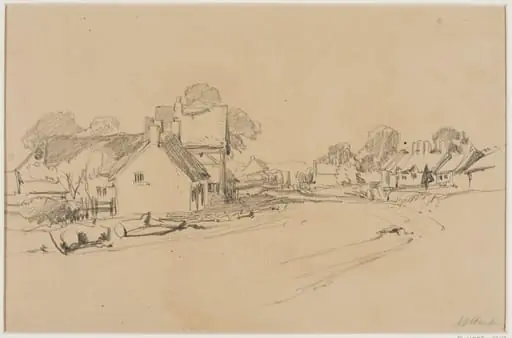 A village street
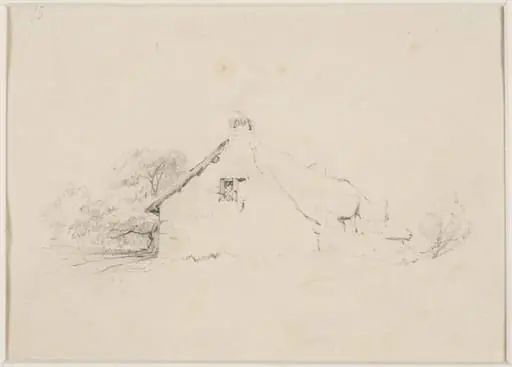 A cottage with trees
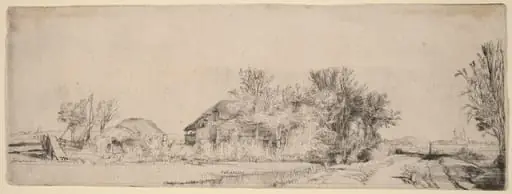 Landscape with a Road beside a Canal
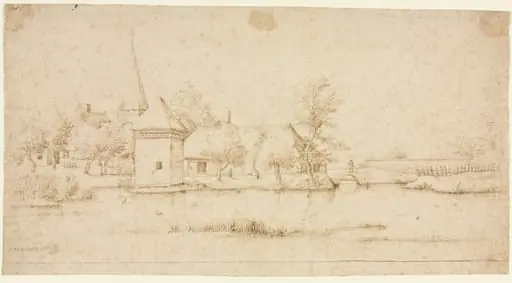 Landscape with a Moated Village
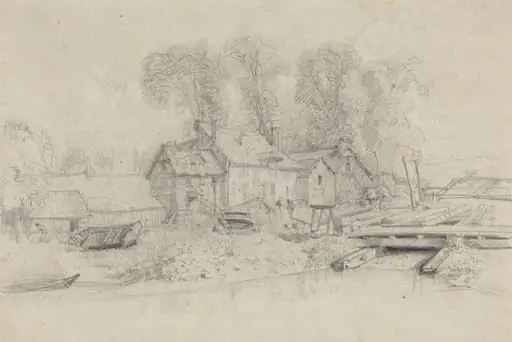 River Landscape with Buildings, Boats, and Figures
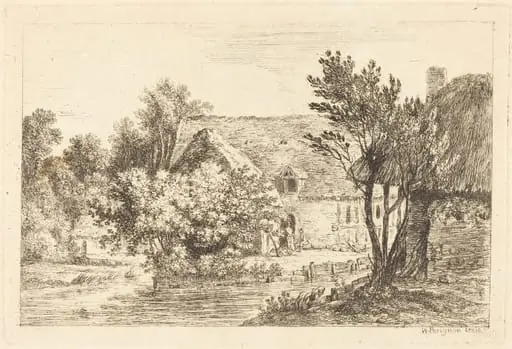 A House and a Shaded Cottage on the Banks of a River
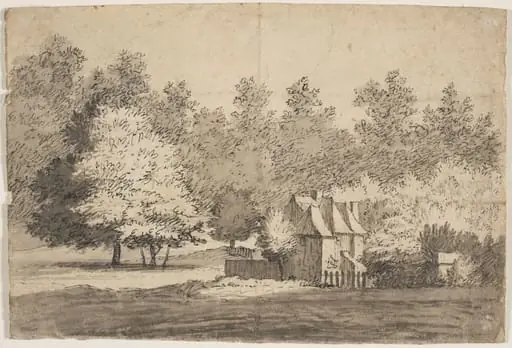 A cottage set among trees
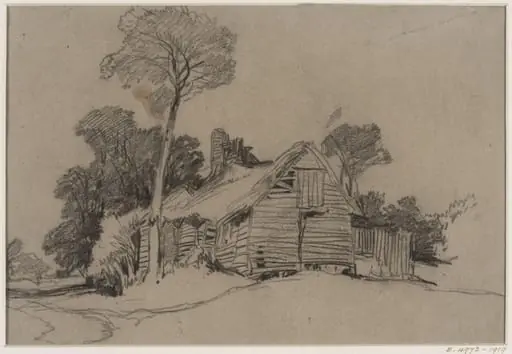 The Ness, Shaldon, Devon
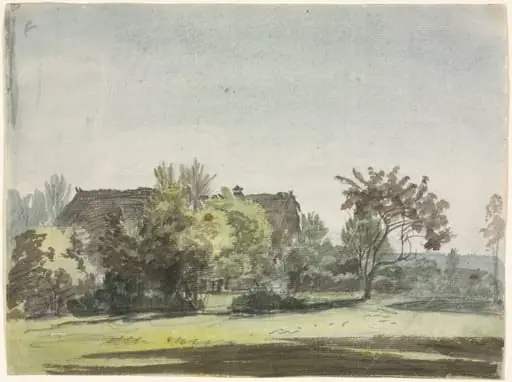 Farmhouse behind Trees
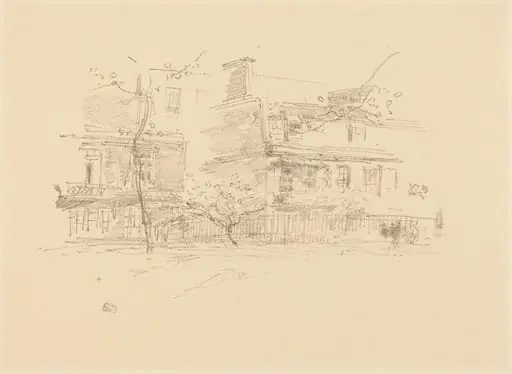 Lindsay Row, Chelsea
 Houses by a Road