Artwork
The Penitent Magdalene
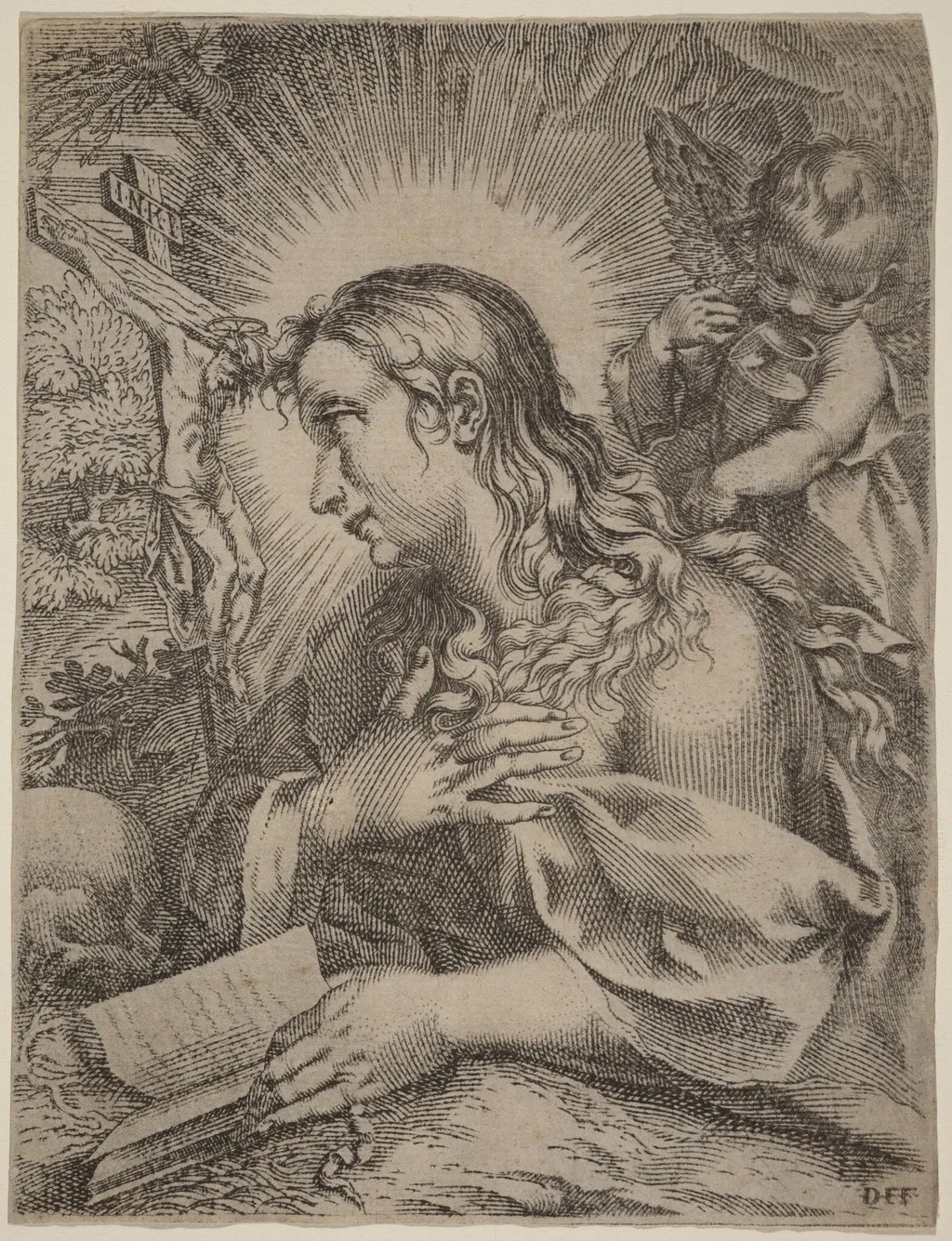
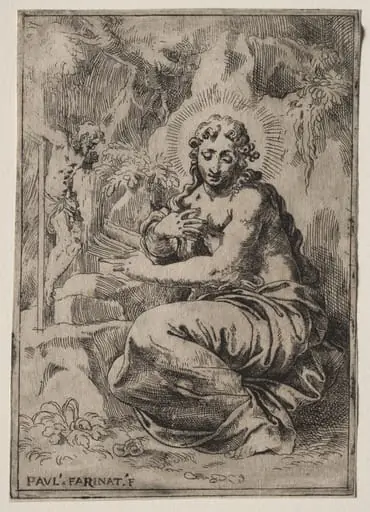
The Penitent Magdalene is an ink print by the Baroque artist Domenico Falcini. It dates from 1601 and is held in the collection of the National Gallery of Art.
About this work
Overview
The Penitent Magdalene is a 1601 engraving on laid paper by Domenico Falcini, depicting a contemplative scene of repentance.
Subject & Meaning
The engraving portrays a woman, identifiable as Mary Magdalene, in a state of penitence. Her downward gaze, clasped hands, and open book symbolize remorse and devotion. A small angel behind her, holding a cross, reinforces the religious and redemptive theme.
Technique & Style
Falcini employed fine lines, cross-hatching, and detailed textures to achieve depth and shading in the engraving. These technical elements enhance the emotional intensity of the subject.
History & Provenance
Created in 1601, the engraving's provenance is not detailed here, focusing instead on its creation by Domenico Falcini in the early 17th century.
Context
This work reflects the Baroque period's emphasis on emotional depth in religious art, with Magdalene being a popular subject for depicting repentance and spiritual transformation.
Legacy
While specific influence or notable exhibitions of 'The Penitent Magdalene' are not provided, it contributes to the broader understanding of early 17th-century religious engraving and the artistic interpretation of biblical figures during that time.
Artist & collection