Artwork
78 Cross Street, Boston, Massachusetts
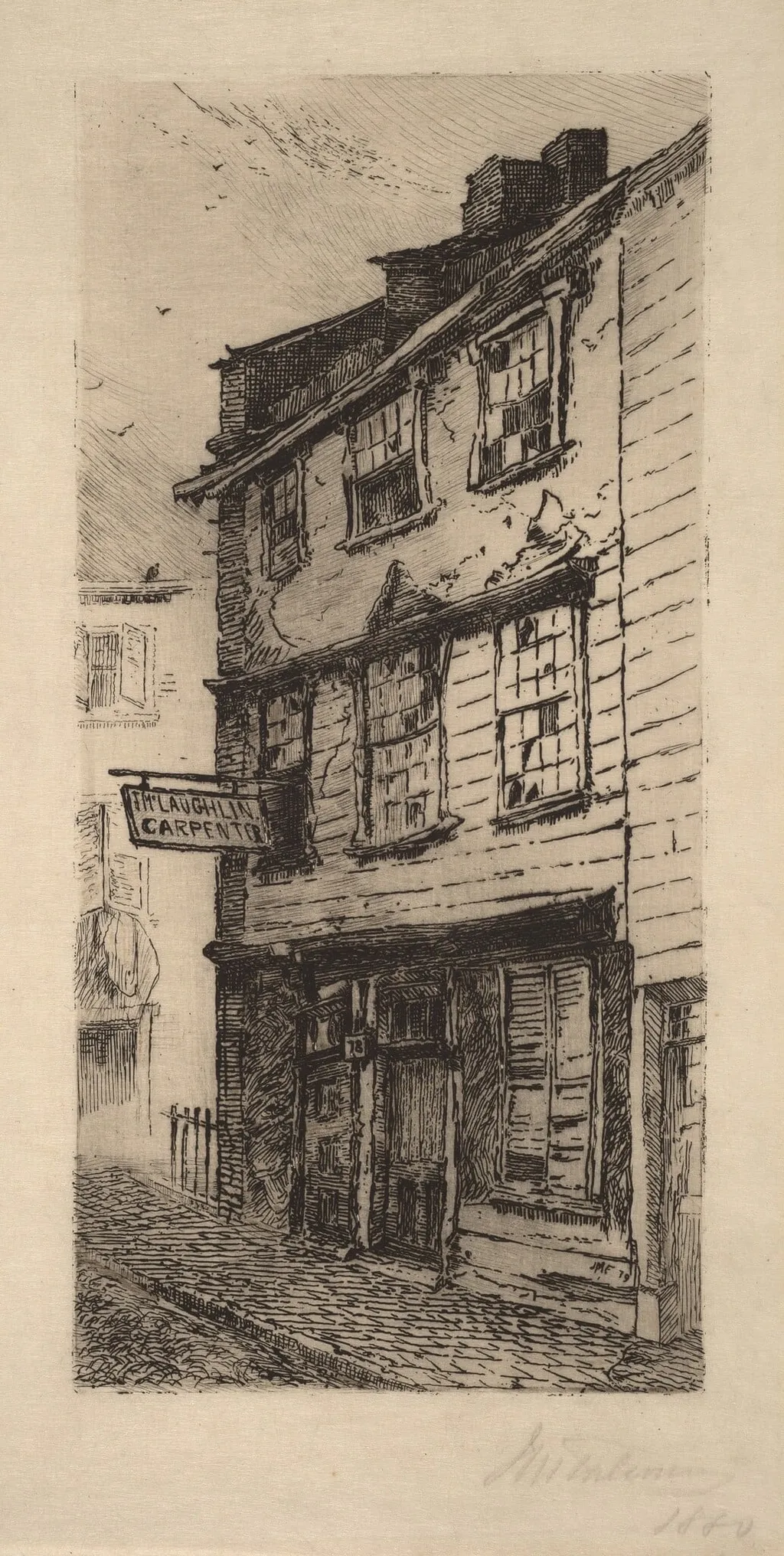
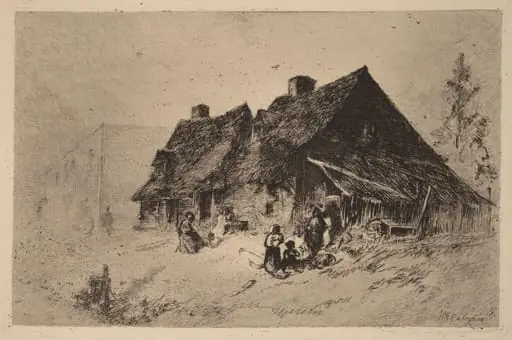
78 Cross Street, Boston, Massachusetts is an ink print by the Impressionist artist John Mackie Falconer. It dates from 1880 and is held in the collection of the National Gallery of Art.
About this work
Overview
Rendered in ink on paper, the work belongs to a tradition of late 19th-century printmaking that emphasized quiet, unadorned urban scenes.
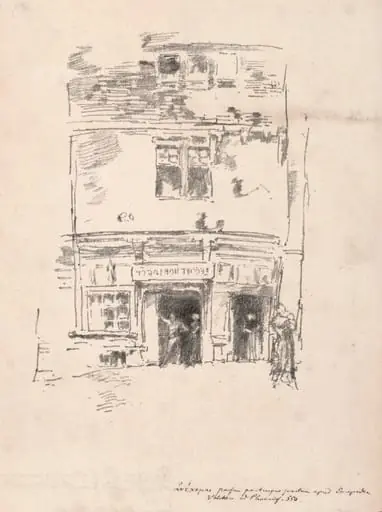
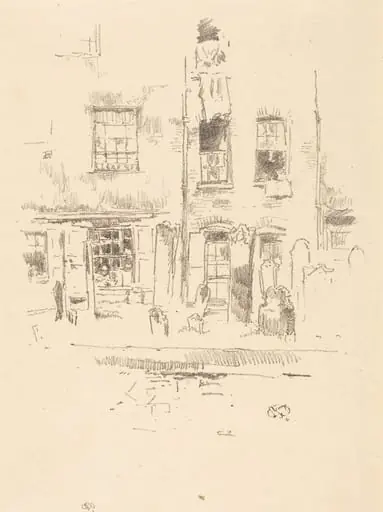
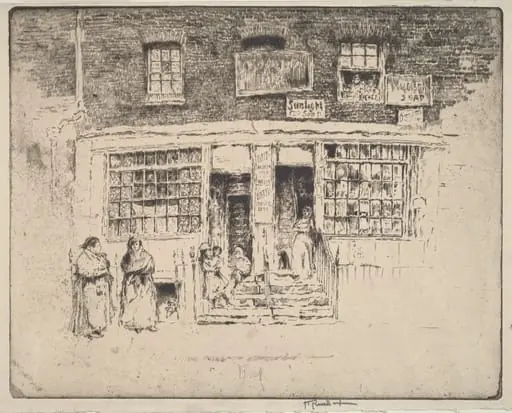
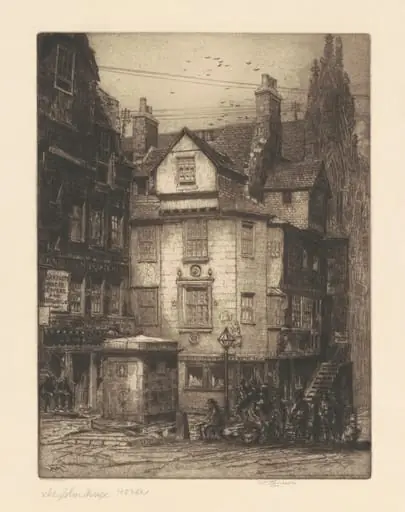
Created in 1880 by John Mackie Falconer, this etching depicts a modest wooden structure at 78 Cross Street in Boston. Rendered in ink on paper, the work belongs to a tradition of late 19th-century printmaking that emphasized quiet, unadorned urban scenes. Falconer’s technique captures the texture of weathered materials and the subtle effects of natural light, reflecting a deliberate focus on the ordinary rather than the monumental.
Subject & Meaning
The building, identified by a sign reading 'Laughlin Carpentry,' suggests a working-class tradesman’s shop. Its narrow form, steep roof, and uneven planks convey the practicality of urban craftsmanship. The wet, muddy street implies recent rain, grounding the scene in a specific moment. No figures appear, yet the presence of daily labor is implied through the building’s function and worn surfaces, evoking the rhythm of everyday life.
Technique & Style
Falconer used etching to render fine linear details: the grooves of weathered wood, the grid of small windowpanes, and the reflective sheen of wet cobblestones. Acid-bitten lines on a metal plate allowed for precise, controlled marks, while tonal variations were achieved through ink density and wiping. The composition avoids dramatic perspective, favoring a low, level view that enhances the scene’s intimacy and realism.
History & Provenance
The etching was produced in 1880 during a period when American artists increasingly turned to urban and domestic subjects. Falconer, active in Boston, documented local architecture with a documentary sensibility. While specific ownership history is not widely recorded, the work aligns with regional print collections of the era, often circulated among local patrons interested in civic identity and vernacular life.
Context
In the late 1800s, American art moved away from idealized landscapes toward scenes of everyday urban existence. Etching experienced a revival as artists sought accessible, reproducible mediums to record transient moments. Falconer’s work fits within this trend, paralleling the efforts of contemporaries who valued authenticity over ornamentation, capturing the quiet dignity of ordinary structures in rapidly changing cities.
Legacy
Though not widely exhibited today, the etching remains a representative example of regional printmaking from post-Civil War Boston. It contributes to the historical record of urban architecture and artisanal life, offering insight into the material culture of working-class neighborhoods. Its preservation underscores the value placed on documenting the mundane as a form of cultural memory.
Artist & collection

Artist
John Mackie Falconer (1820–1903) was a Scottish-born American etcher, painter, and watercolorist. Born in Edinburgh, he came to the United States in 1836.