Artwork
The King's Head, Hackney
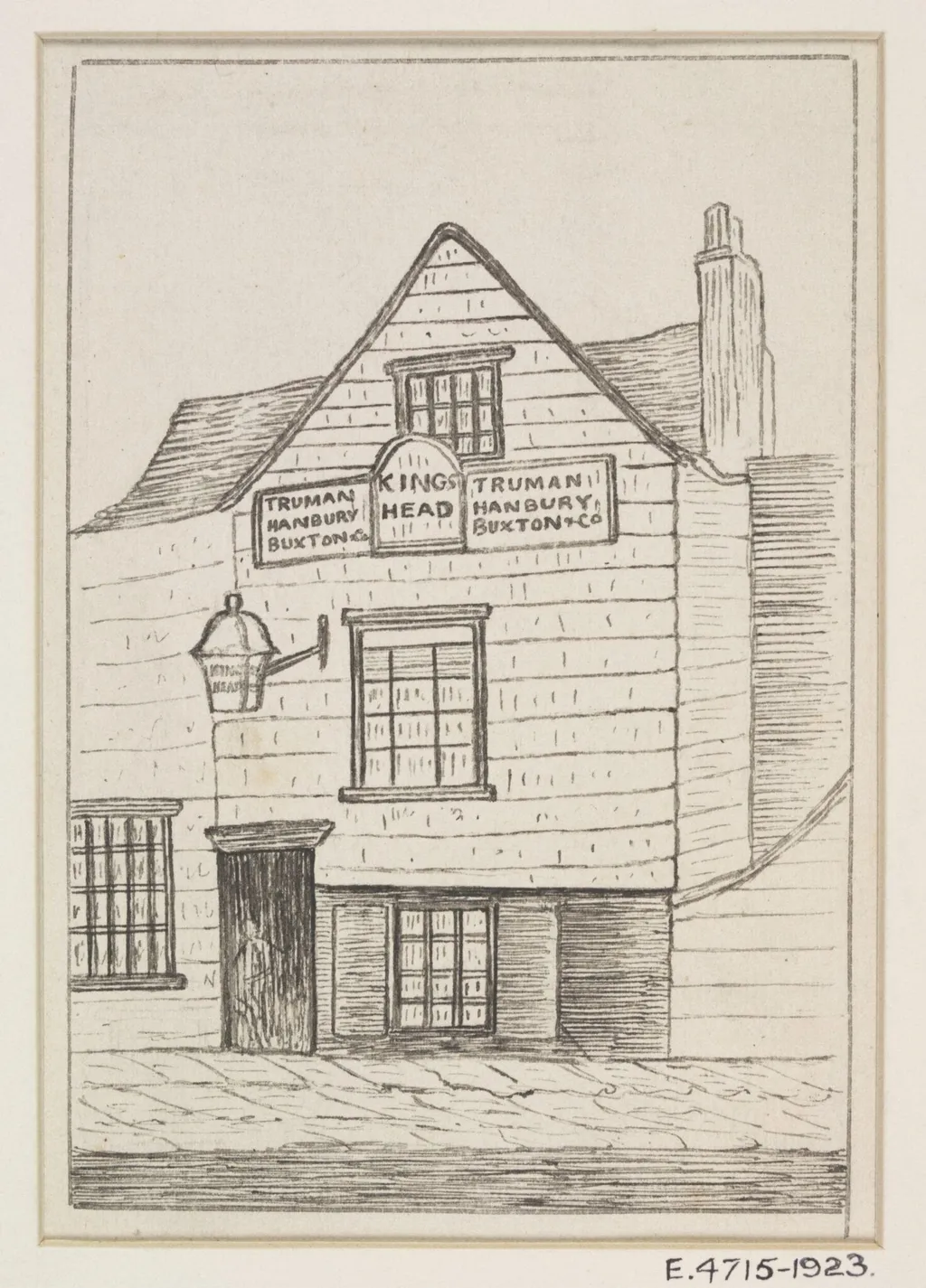
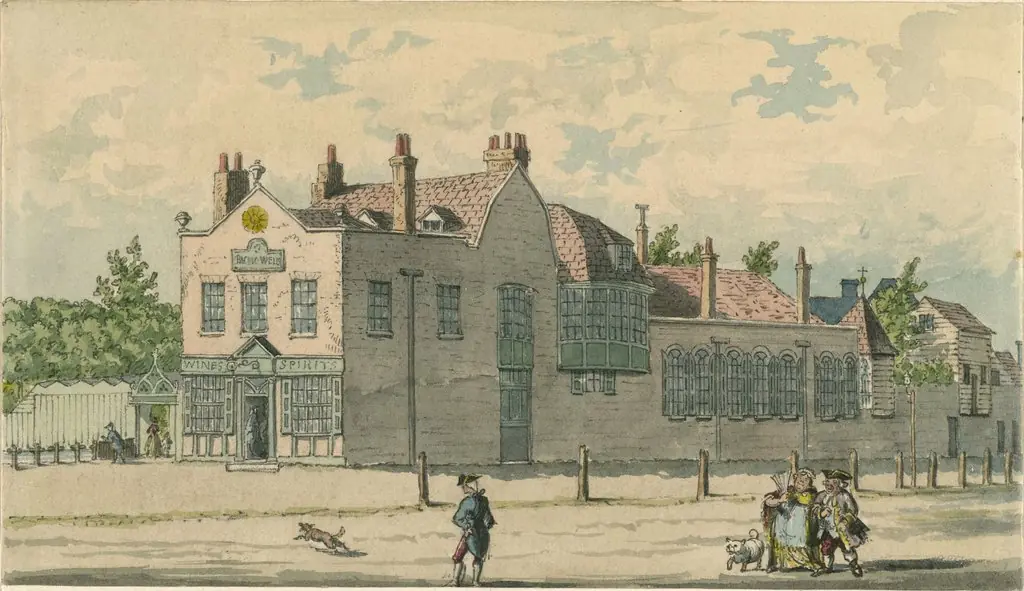
The King's Head, Hackney is a drawing by the Impressionist artist Unknown. It dates from 1850 and is held in the collection of the Victoria and Albert Museum. A pen-and-ink drawing from circa 1850 captures the exterior of the King's Head, a public house in Hackney.
About this work
Overview
Executed with restrained linework, the sketch belongs to a larger group of London topographical studies once owned by John Edmund Gardner.
A pen-and-ink drawing from circa 1850 captures the exterior of the King's Head, a public house in Hackney. Executed with restrained linework, the sketch belongs to a larger group of London topographical studies once owned by John Edmund Gardner. It was later transferred to the Bethnal Green Museum as part of a regional collection, preserving a modest record of everyday urban architecture in mid-nineteenth-century London.
Subject & Meaning
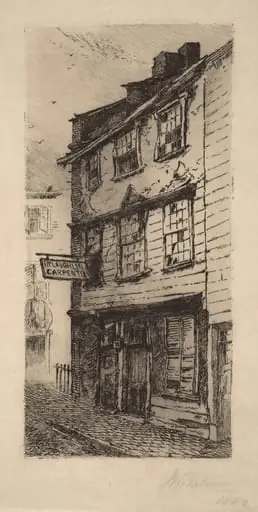
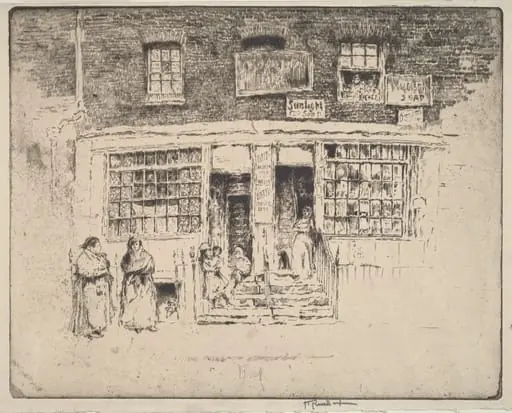
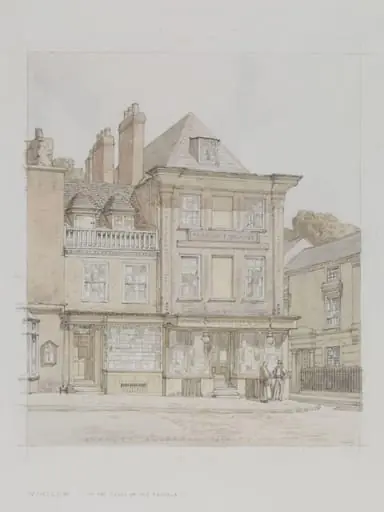
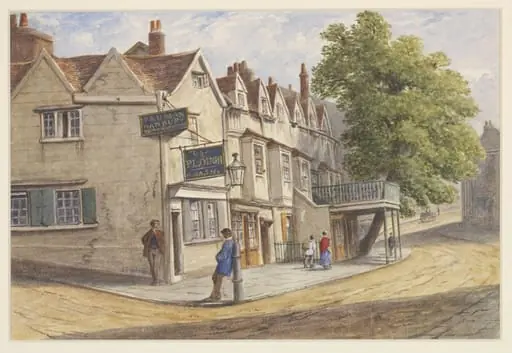
The subject is a two-story timber-framed building with a steeply pitched roof, likely functioning as a local inn or tavern. A wooden sign bearing the name 'The King's Head' hangs above the entrance, accompanied by smaller inscriptions, suggesting its role as a community landmark. The presence of a hanging lantern and uneven cobblestones reinforces its function as a place of evening gathering, reflecting the ordinary rhythms of working-class life in the area.
Technique & Style
The artist employed quick, light pen strokes to suggest form and atmosphere without detail. Shadows are implied through hatching, and the texture of the cobblestones is rendered with minimal, rhythmic lines. The composition avoids embellishment, favoring direct observation. This restrained approach aligns with topographical drawing traditions, prioritizing accuracy over artistic flourish.
History & Provenance
The drawing was originally part of John Edmund Gardner’s collection of London views. It passed through the hands of Edward Coates MP and the Hon. Arthur Villiers before being segregated with other Hackney-related materials. In the late nineteenth century, this subset was donated to the Bethnal Green Museum, now part of the V&A’s holdings, ensuring its preservation as a regional historical document.
Context
In the 1850s, Hackney was transitioning from a semi-rural village into a suburban district of London. Pubs like the King's Head served as social anchors for residents and travelers. Such drawings, often made by amateur or professional topographers, documented buildings before modernization erased them, offering a visual archive of a changing urban landscape.
Legacy
The drawing survives as a quiet testament to the vernacular architecture of London’s outer districts. Its inclusion in institutional collections underscores the value placed on everyday scenes, not just grand monuments. It continues to inform studies of urban development, material culture, and the role of public houses in Victorian community life.
Artist & collection

 Domestic Scene
 Giacomo and Cardinal Marco, investing Andrea, Abbot of San Zeno, with his Benefice
 The Nymph of Fontainebleau
 Portrait of a Woman
 Madonna and Child with Saints in the Enclosed Garden
 Venus and Minerva
 Family Group of Four on Sofa
 Wall painting from Room H of the Villa of P. Fannius Synistor at Boscoreale