Artwork
Bacchus
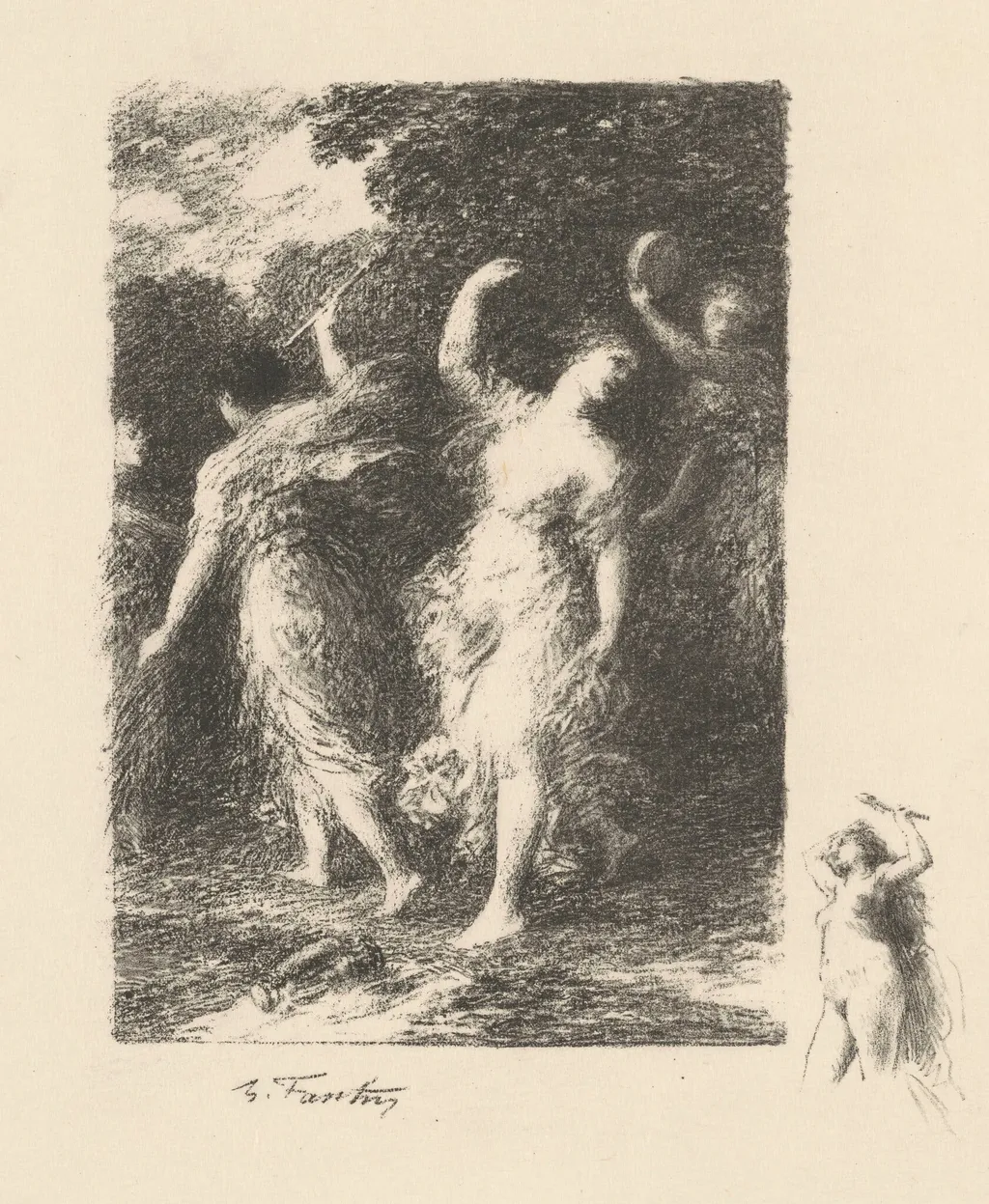
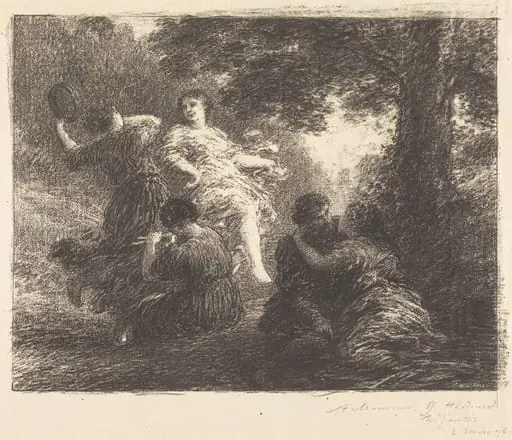
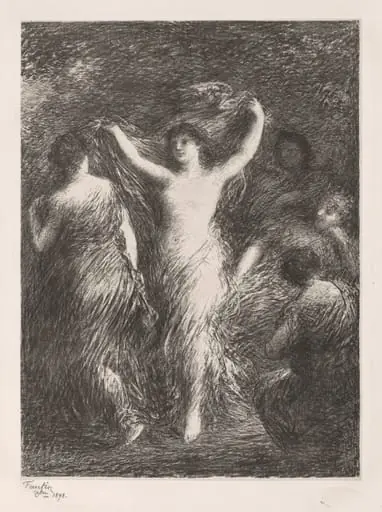
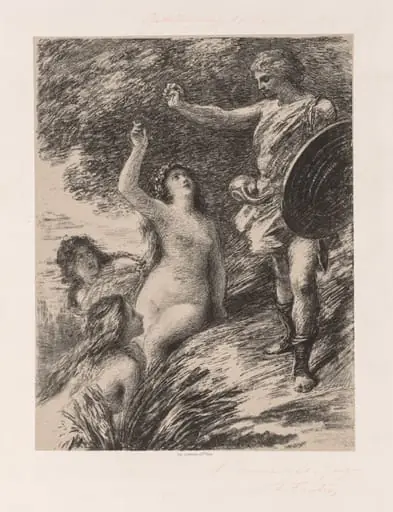
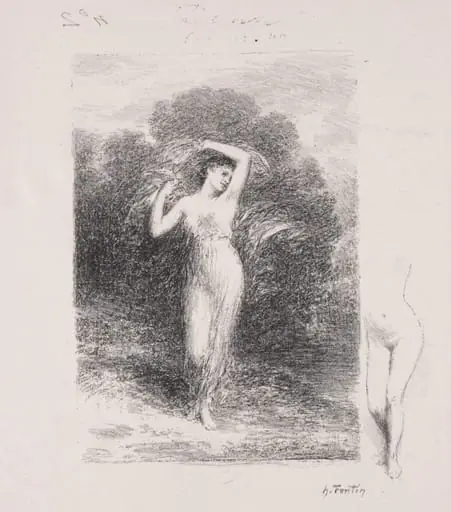
Bacchus is an ink print by Henri Fantin-Latour. It dates from 1903 and is held in the collection of the National Gallery of Art.
About this work
Overview
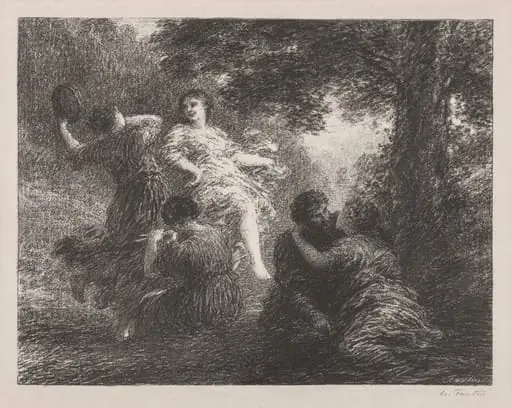
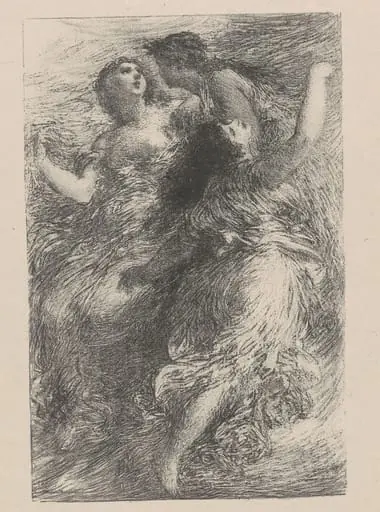
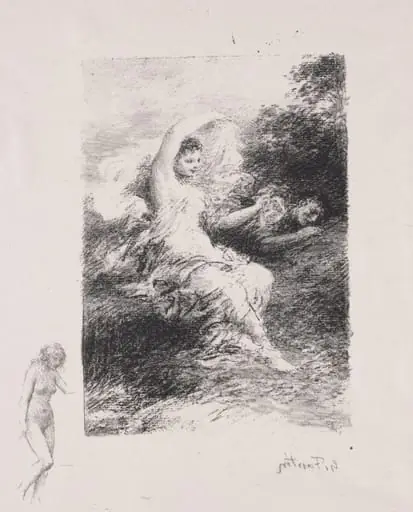
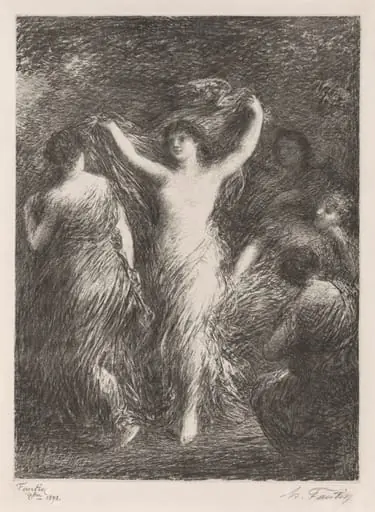
Bacchus is a 1903 lithograph by French artist Henri Fantin-Latour, housed in the National Gallery of Art. Unlike his typical still-life and portrait works, this piece depicts a mythological scene.
Subject & Meaning
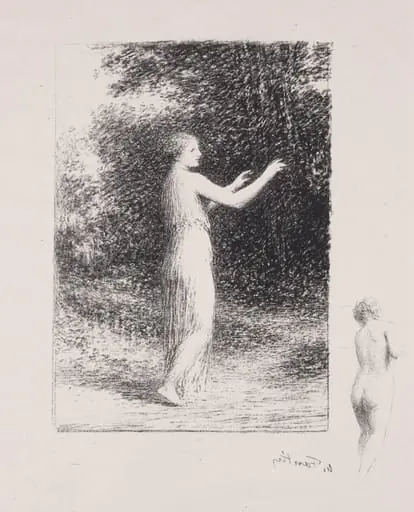
The lithograph portrays two figures in a dark, shadowy environment, one standing with arms raised, holding a crescent moon-like object, and another leaning in with a partially obscured face. The scene is interpreted as a representation of Bacchus, the Roman god of wine and revelry.
Technique & Style
Characterized by rough, scratchy lines reminiscent of quick pencil strokes, the work showcases Fantin-Latour's expressive use of lithography. A small, doodle-like sketch in the bottom right corner suggests spontaneous creative exploration.
History & Provenance
Created in 1903, Bacchus is a lithograph signed by Fantin-Latour. While specific provenance details are not provided, it is now part of the National Gallery of Art's collection.
Context
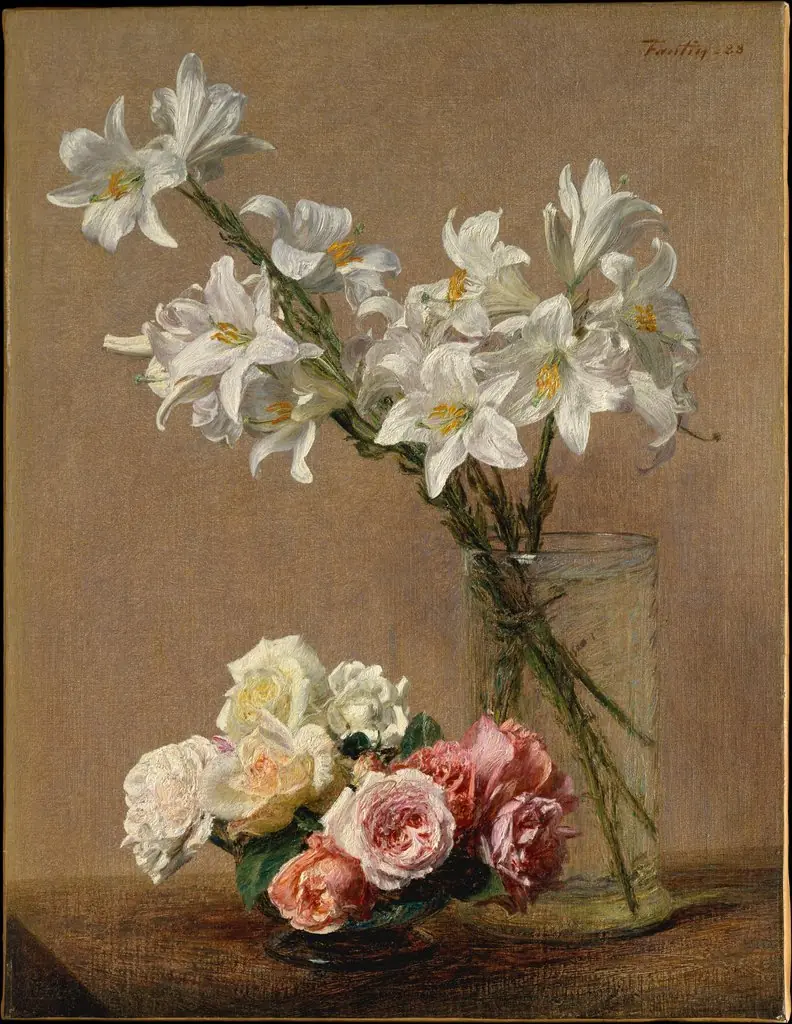
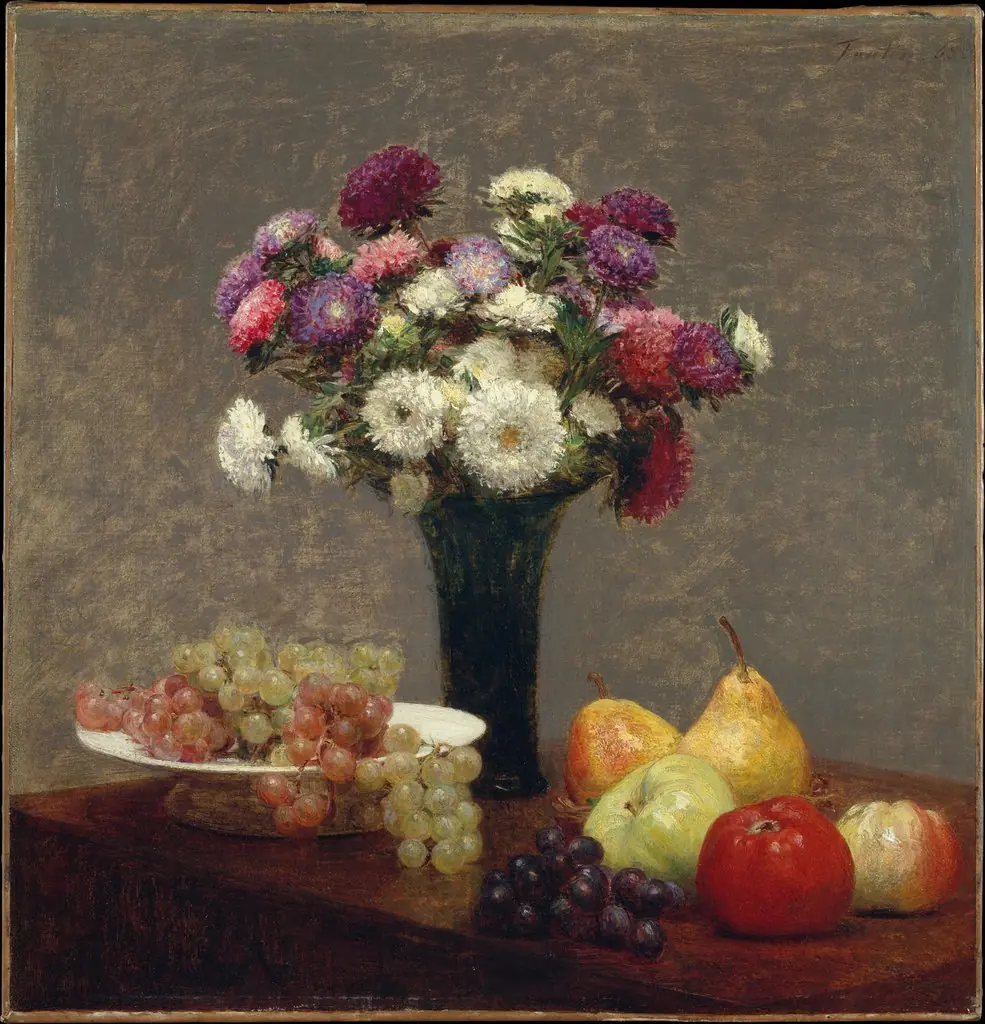
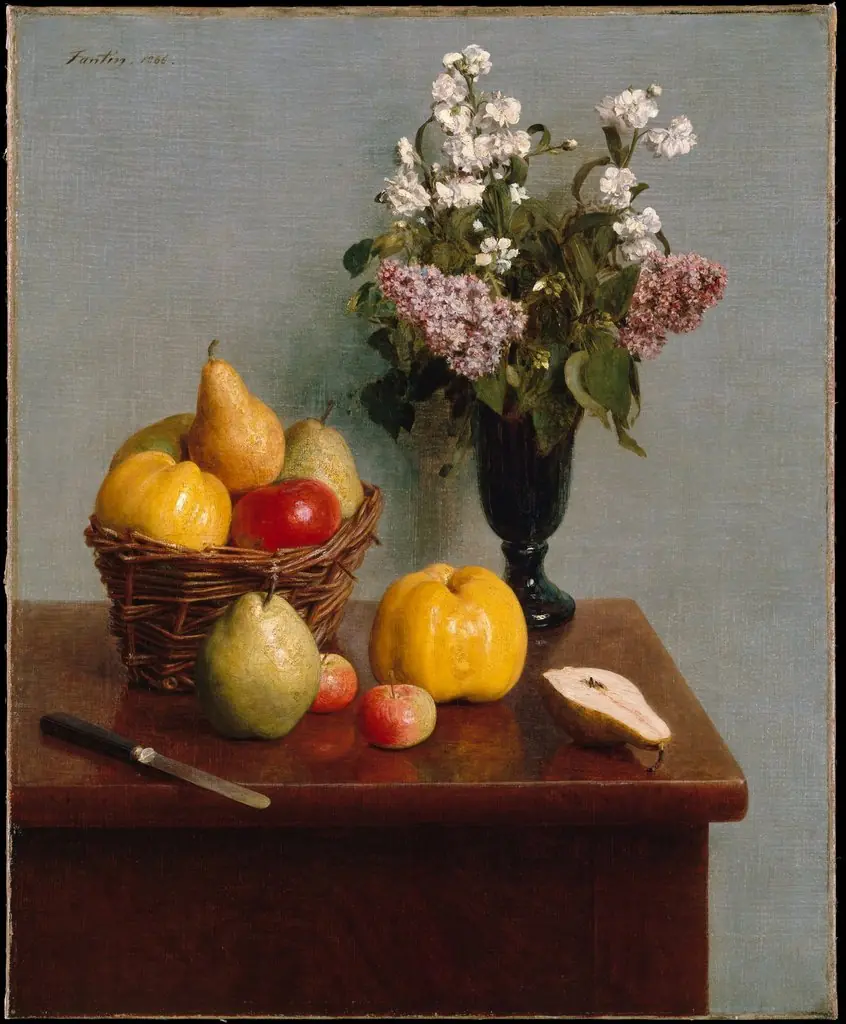
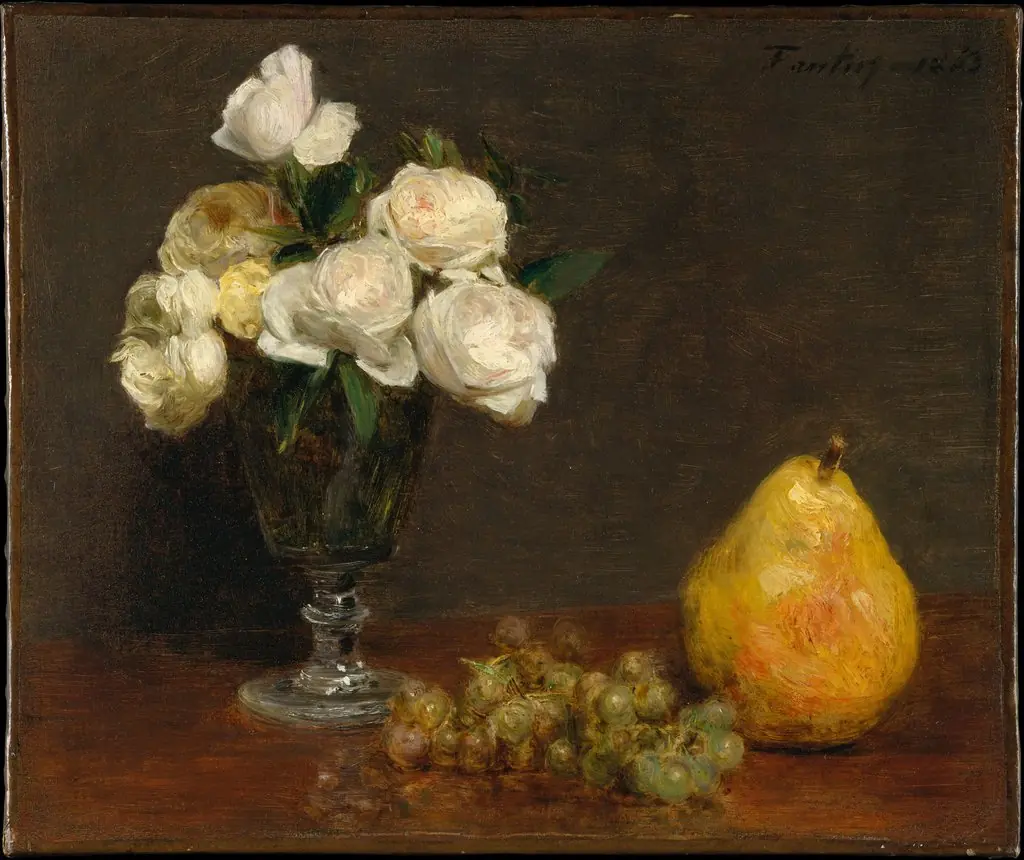
Bacchus diverges from Fantin-Latour's predominant focus on still-life flower paintings and portraits of Parisian artistic circles, highlighting his occasional engagement with mythological subjects.
Legacy
As a lithograph, Bacchus demonstrates Fantin-Latour's skill in translating drawings into prints using stone. The piece contributes to the broader understanding of his artistic range beyond his more renowned genres.
Own this work as a print
Artist & collection
Artist
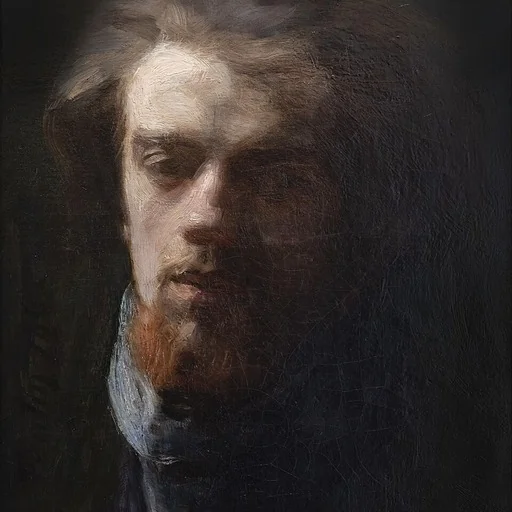
Ignace Henri Jean Theodore Fantin-Latour (French pronunciation: ; 14 January 1836 – 25 August 1904) was a French painter and lithographer best known for his flower paintings and group portraits of Parisian artists and writers.